

Business Auto Insurance: Coverage That Keeps Your Fleet Moving
Fleet downtime costs money. A single accident, vehicle breakdown, or liability claim can derail operations and drain your budget fast.
Business auto insurance protects your vehicles, drivers, and bottom line when incidents happen. At ISU Insurance Solutions Group, we’ve helped countless businesses find coverage that actually fits their fleet needs-not just generic policies that leave gaps.
Why Your Fleet Needs Business Auto Insurance
Liability Claims Cost More Than You Think
Liability claims from a single accident can cost tens of thousands of dollars or more. According to the LexisNexis Auto Insurance Trends Report, bodily injury loss costs continue to rise, driven by uninsured motorists, medical cost inflation, and speeding-related injuries. When a driver working for your business causes an accident, your personal auto policy won’t cover it. Most personal policies explicitly exclude business use, leaving you personally liable for damages, medical bills, and legal fees. Business auto insurance covers bodily injury and property damage liability so claims don’t drain your operating capital.
Vehicle Damage Repair Costs Are Climbing Fast
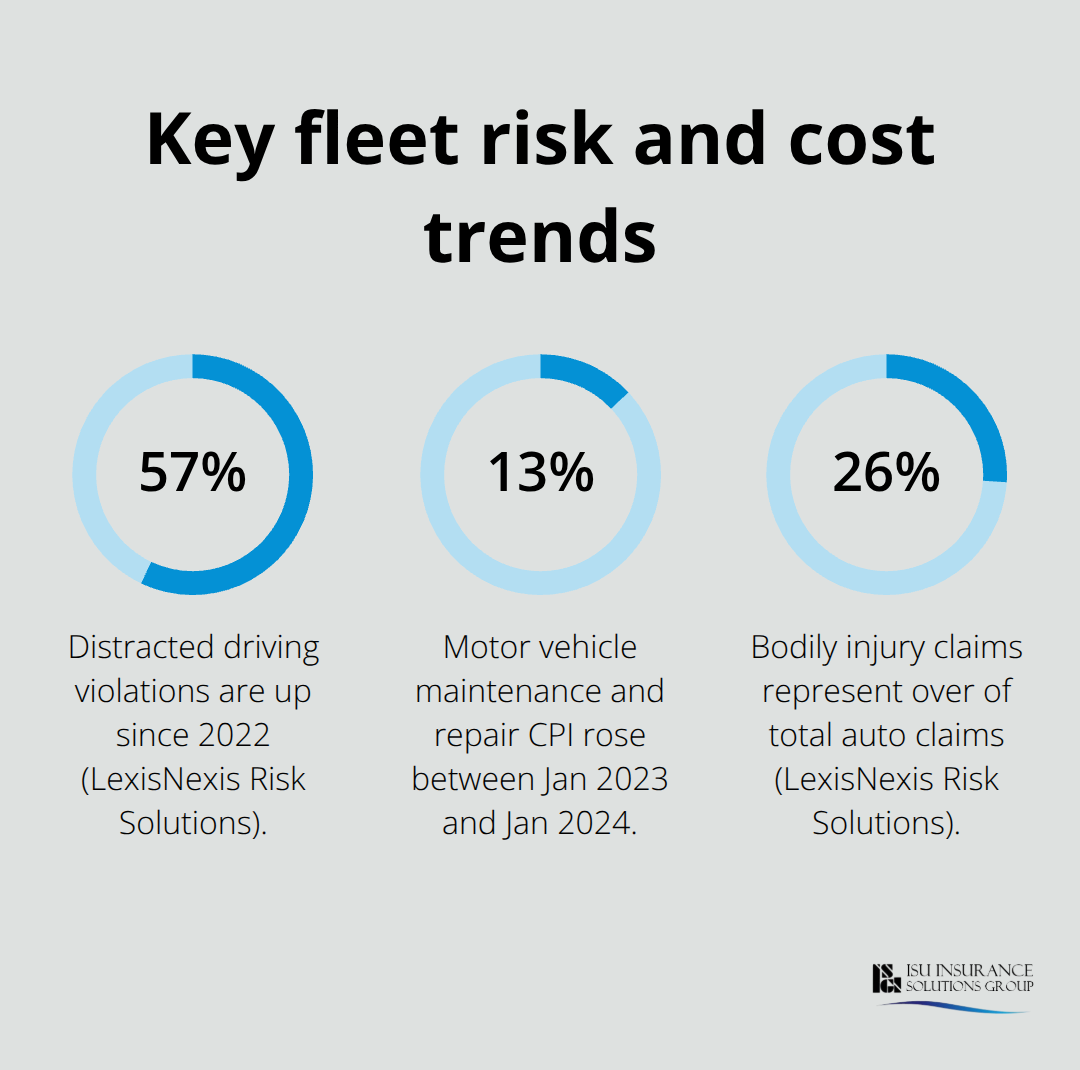
Vehicle damage adds up fast. The CPI for motor vehicle maintenance and repair rose 13% between January 2023 and January 2024, making collision and comprehensive coverage increasingly valuable. A single major repair or total loss can sideline your operations for weeks. Comprehensive coverage protects against theft, vandalism, and weather damage, while collision coverage handles accidents. Without these protections, you absorb repair costs directly, which disrupts service delivery and erodes profitability.
Driver Behavior Creates Hidden Risk
Distracted driving violations are up 57% since 2022 while miles driven increased only 2%, according to LexisNexis Risk Solutions. This shift shows driver behavior, not exposure, is the primary risk. Your fleet faces higher injury costs and litigation exposure from preventable incidents. Business auto insurance with appropriate liability limits protects your business when accidents happen despite your best safety efforts.
Active Risk Management Reduces Claims
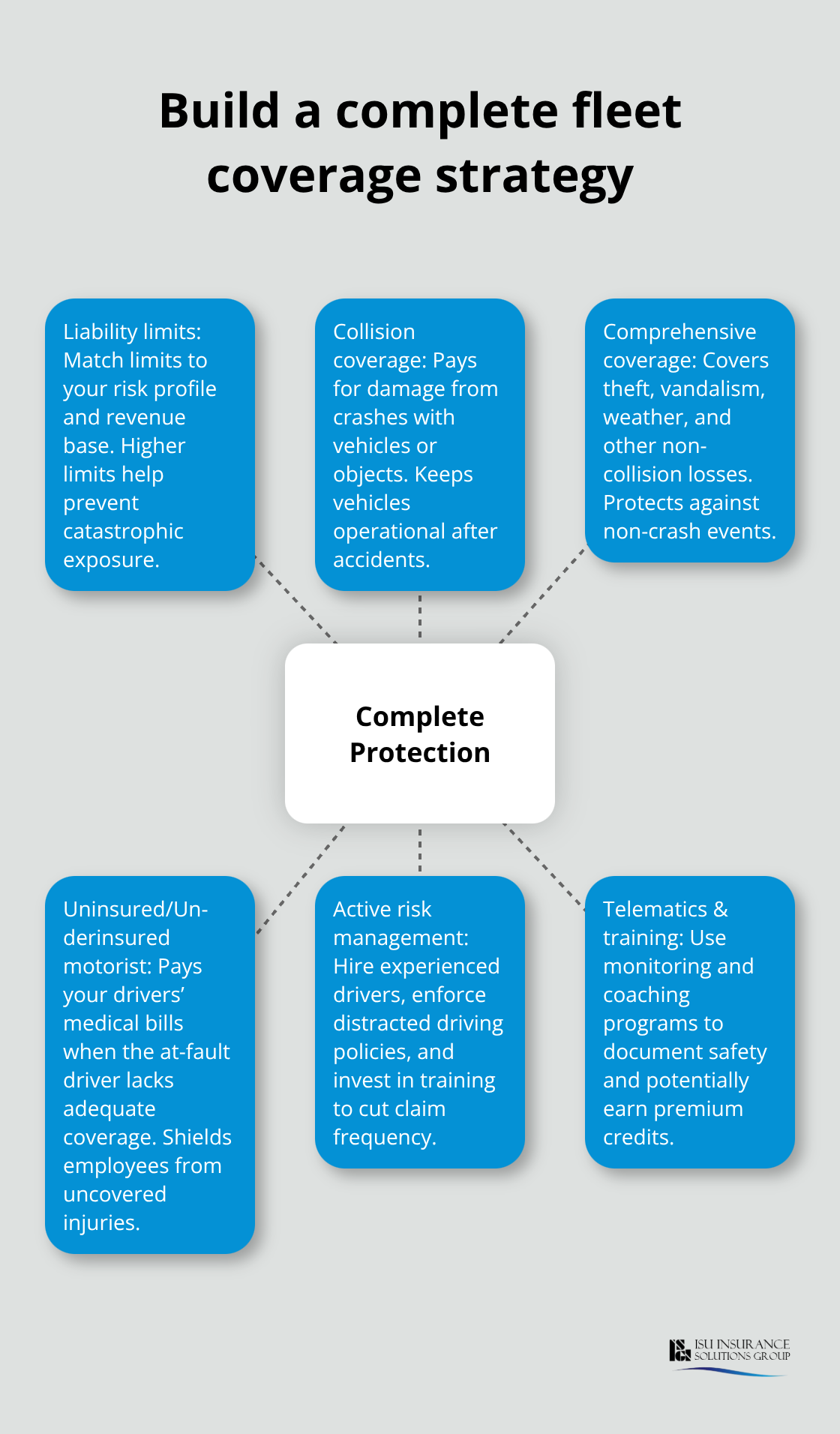
The real competitive advantage comes from pairing strong coverage with active risk management-hire experienced drivers, enforce distracted driving policies, and invest in driver training to reduce claims frequency and help stabilize your premiums over time. These steps lower your exposure and demonstrate to insurers that you take fleet safety seriously. Coverage gaps are expensive. If you’re running a fleet without proper business auto insurance or relying on personal policies, you’re betting your business on avoiding accidents.
Understanding why you need business auto insurance is the first step. The next critical decision involves selecting the right types of coverage for your specific fleet operations.
Types of Business Auto Coverage and What They Protect
Liability Coverage Forms Your Foundation
Liability coverage forms the foundation of any business auto policy, and it’s where most fleet operators make costly mistakes. Bodily injury liability covers medical expenses, lost wages, and pain-and-suffering claims when your driver injures someone else. Property damage liability covers repairs to other vehicles, buildings, or infrastructure your fleet damages. These two coverages work together to protect your business from the financial fallout of accidents your drivers cause.
According to LexisNexis Risk Solutions, bodily injury claims now represent over 26% of total auto claims, making adequate liability limits non-negotiable. This trend means injury costs are outpacing vehicle damage costs, and your business assets become exposed when your policy limits run out. Many fleet operators carry state minimum liability limits, which is a dangerous gamble. A serious accident involving multiple injured parties can easily exceed $100,000 in damages.
Carry liability limits that match your fleet’s risk profile and revenue base, not just the legal minimum. Higher limits cost more upfront but protect your business from catastrophic exposure when accidents happen.
Physical Damage Coverage Protects Your Vehicles
Collision and comprehensive coverage protect your vehicles themselves. Collision covers accidents with other vehicles or objects, while comprehensive handles theft, vandalism, weather damage, and other non-collision losses. The distinction matters because repair costs continue climbing-vehicle maintenance and repair inflation hit 13% between January 2023 and January 2024-making physical damage coverage increasingly expensive to replace out-of-pocket.
Without these protections, you absorb repair costs directly, which disrupts service delivery and erodes profitability. A single major repair or total loss can sideline your operations for weeks. These coverages keep your fleet operational when accidents or unexpected damage occurs.
Uninsured and Underinsured Motorist Protection Shields Your Drivers
Uninsured motorist bodily injury coverage pays your drivers’ medical bills when an uninsured driver causes an accident; underinsured motorist coverage fills the gap when the at-fault driver’s insurance is insufficient. In states with high uninsured driver rates, this protection prevents your employees from absorbing injuries out of their own pockets.
Set your uninsured motorist limits equal to or higher than your liability limits for consistent protection. Skip this coverage and your drivers bear the cost when hit by uninsured motorists, creating liability exposure for your business if they pursue workers’ compensation claims.
Building a Complete Coverage Strategy
The combination of adequate liability limits, collision, comprehensive, and uninsured motorist coverage creates a complete safety net. However, selecting the right coverage limits and types is only half the battle. The other half involves actively managing your fleet’s risk profile through strategic decisions about driver hiring, safety training, and policy enforcement-steps that directly influence both your claims frequency and your insurance costs moving forward.
How to Lower Your Business Auto Premiums Without Sacrificing Protection
Reducing your business auto insurance costs requires a three-part approach: consolidating your policies, building a demonstrable safety culture, and right-sizing your coverage to actual fleet needs. These aren’t theoretical exercises-they directly impact your renewal rates and claims frequency.
Bundle Policies to Unlock Immediate Savings
Combining your business auto policy with general liability, workers’ compensation, or property coverage typically saves 5 to 10 percent on your combined premiums, depending on your state and carrier. Bundling discounts range from 3 to 7 percent depending on the policy combination. However, bundling only works if your bundled policies genuinely reflect your risk profile. Many fleet operators bundle everything and overpay because they fail to audit their actual coverage needs annually.
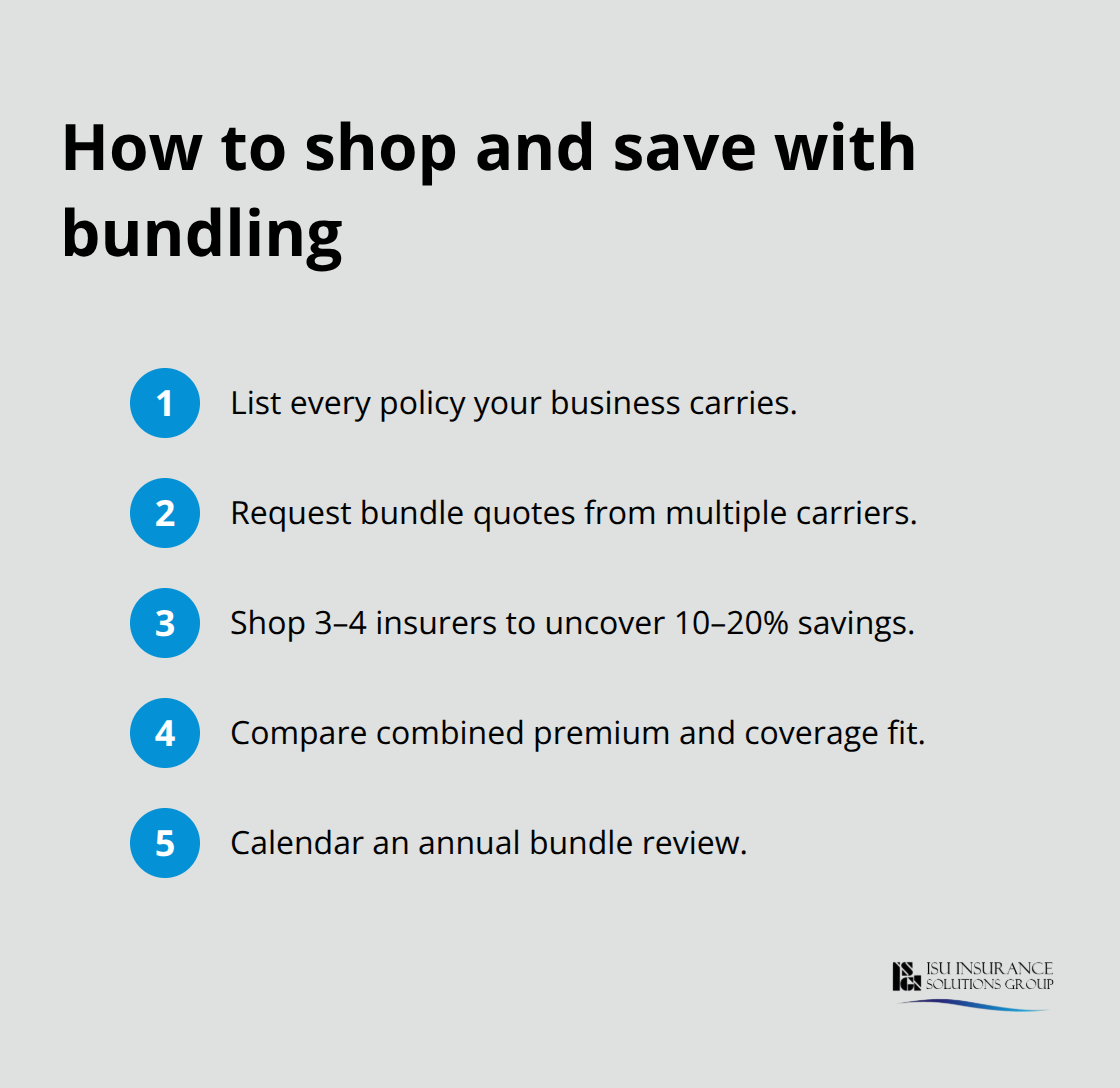
Start by listing every policy your business carries, then contact your agent to request bundle quotes from multiple carriers. Carriers price bundles differently, so shopping bundled rates across three or four insurers typically uncovers 10 to 20 percent savings compared to your current premium. This process takes two hours and pays for itself in the first quarter.
Implement Safety Programs to Reduce Claims Frequency
Safety programs and driver training cut claims frequency, which directly influences your renewal rate and your insurable risk profile. Distracted driving violations jumped 57 percent since 2022 according to LexisNexis Risk Solutions. This data tells insurers that your fleet’s risk stems from driver behavior, not exposure.
Implement a formal distracted driving policy, conduct quarterly safety training, and track driver violations and near-miss incidents. Carriers reward fleets that demonstrate active risk management through lower renewal rates or premium credits. Some insurers offer telematics programs that monitor driver behavior and provide real-time feedback; participation often qualifies you for a 5 to 10 percent discount. The key is documenting your safety culture so your insurer sees measurable risk reduction over time.
Right-Size Your Coverage Limits Annually
Coverage limits require annual review because your fleet’s risk profile changes as your revenue grows, your vehicle mix evolves, or your service territory expands. Many fleet operators lock in the same liability limits year after year without adjusting for business growth. If your revenue doubled but your liability limits stayed flat, you’ve increased your uninsured exposure significantly.
Conversely, if you’re carrying $500,000 in liability limits but your largest potential claim is $150,000, you’re overpaying for protection you don’t need. Work with your agent to model claim scenarios specific to your industry and vehicle types, then set limits that cover realistic worst-case exposure without excess. Commercial umbrella insurance can fill gaps where standard liability limits fall short. The result is better protection where it matters most and lower premiums overall.
Final Thoughts
Business auto insurance protects your fleet when accidents happen, and the data makes the case clear. Bodily injury costs rise steadily, distracted driving violations jumped 57 percent since 2022, and repair expenses continue climbing. Without proper coverage, a single incident drains your operating capital, sidelines your vehicles, and exposes your business to catastrophic liability that personal policies won’t cover.
The right approach combines adequate liability limits that match your actual risk exposure, physical damage protection for your vehicles, and uninsured motorist coverage for your drivers. You also need to actively manage your fleet’s risk through driver hiring, safety training, and distracted driving policies-these steps reduce claims frequency and lower your renewal rates over time. Cost savings come from bundling policies across carriers, implementing measurable safety programs, and adjusting coverage limits annually as your business grows (many fleet operators overpay because they never shop their bundled rates or update limits to match revenue changes).
Contact ISU Insurance Solutions Group for a multi-carrier quote that fits your fleet’s actual needs. Our local agents will review your current coverage, identify gaps, and show you how bundling or adjusting your limits can lower your premiums while strengthening your protection. Fleet downtime costs money, but the right business auto insurance keeps your business moving.
The information provided in this blog is for general informational purposes only and does not constitute legal, financial, or insurance advice. Coverage options, terms, and availability may vary. Please consult with a licensed professional for advice specific to your situation.