Contractor Professional Liability Insurance for Contractors: What Your Policy Should Include

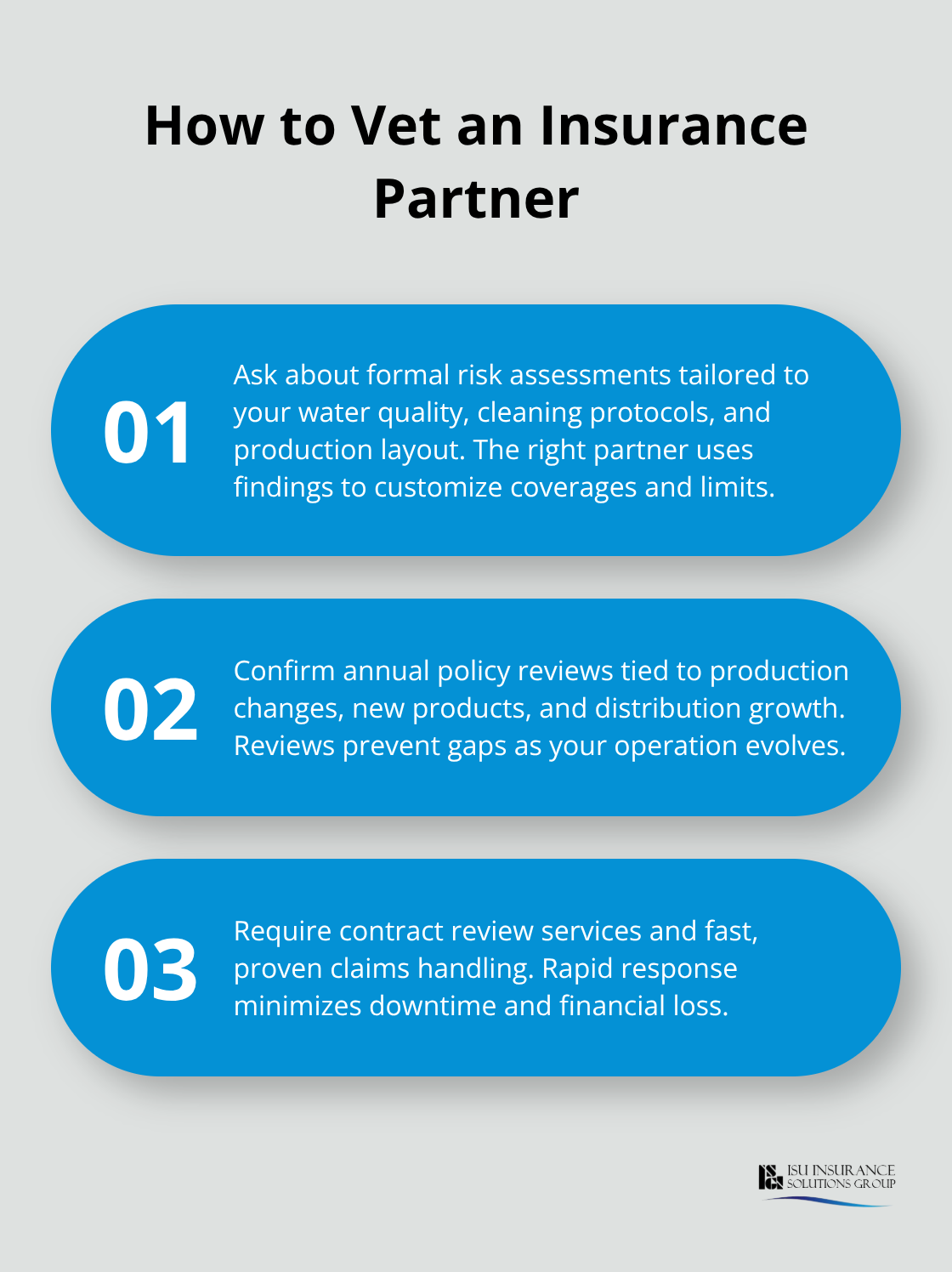
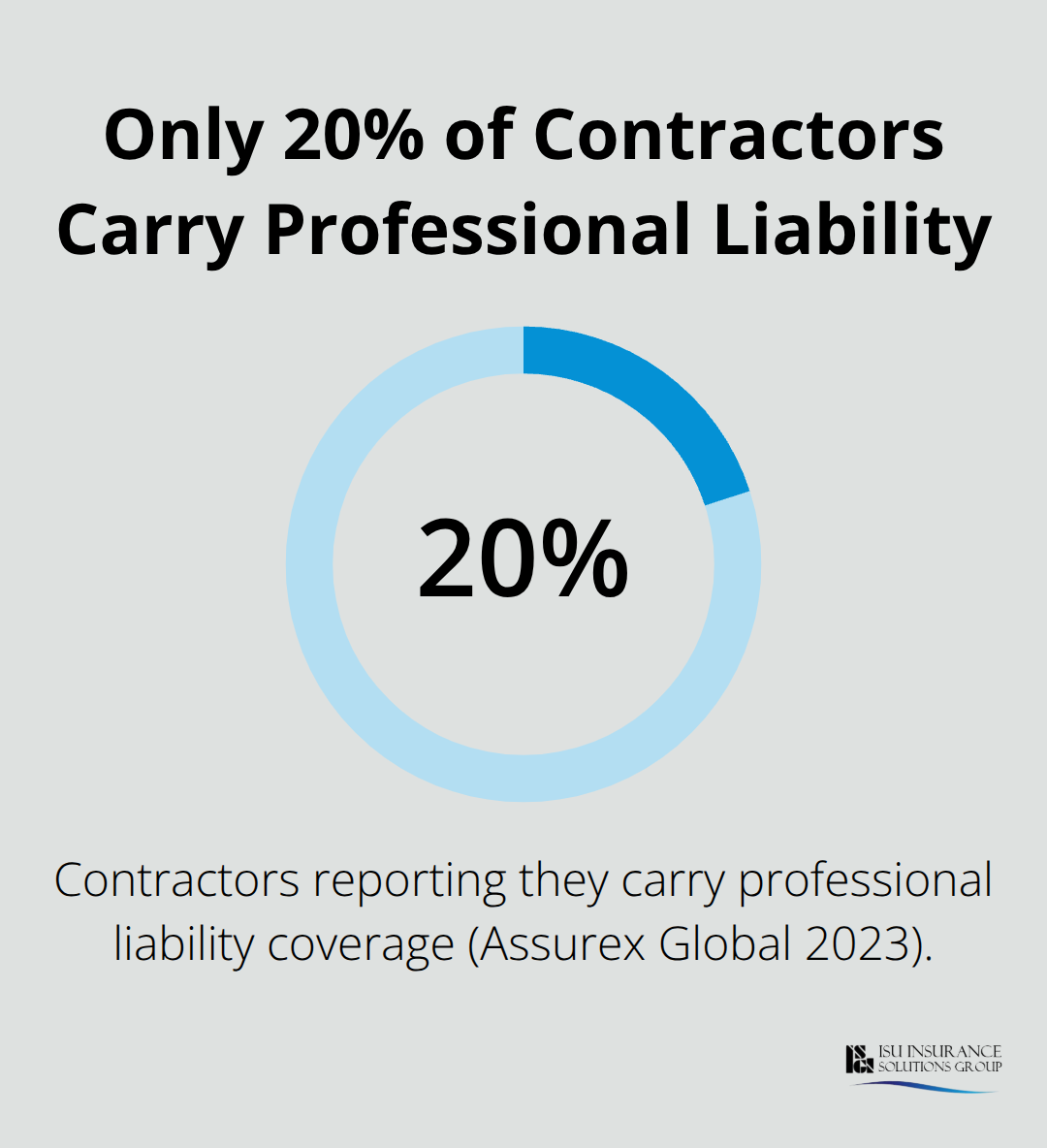
Contractor professional liability insurance protects your business when clients claim you made costly mistakes on their projects. Most contractors think their general liability policy covers design errors and negligence-it doesn’t.

We at ISU Insurance Solutions Group see contractors lose thousands because their policies have hidden gaps. This guide shows you exactly what coverage you need and what to watch out for.

What Your Contractor Professional Liability Policy Actually Covers

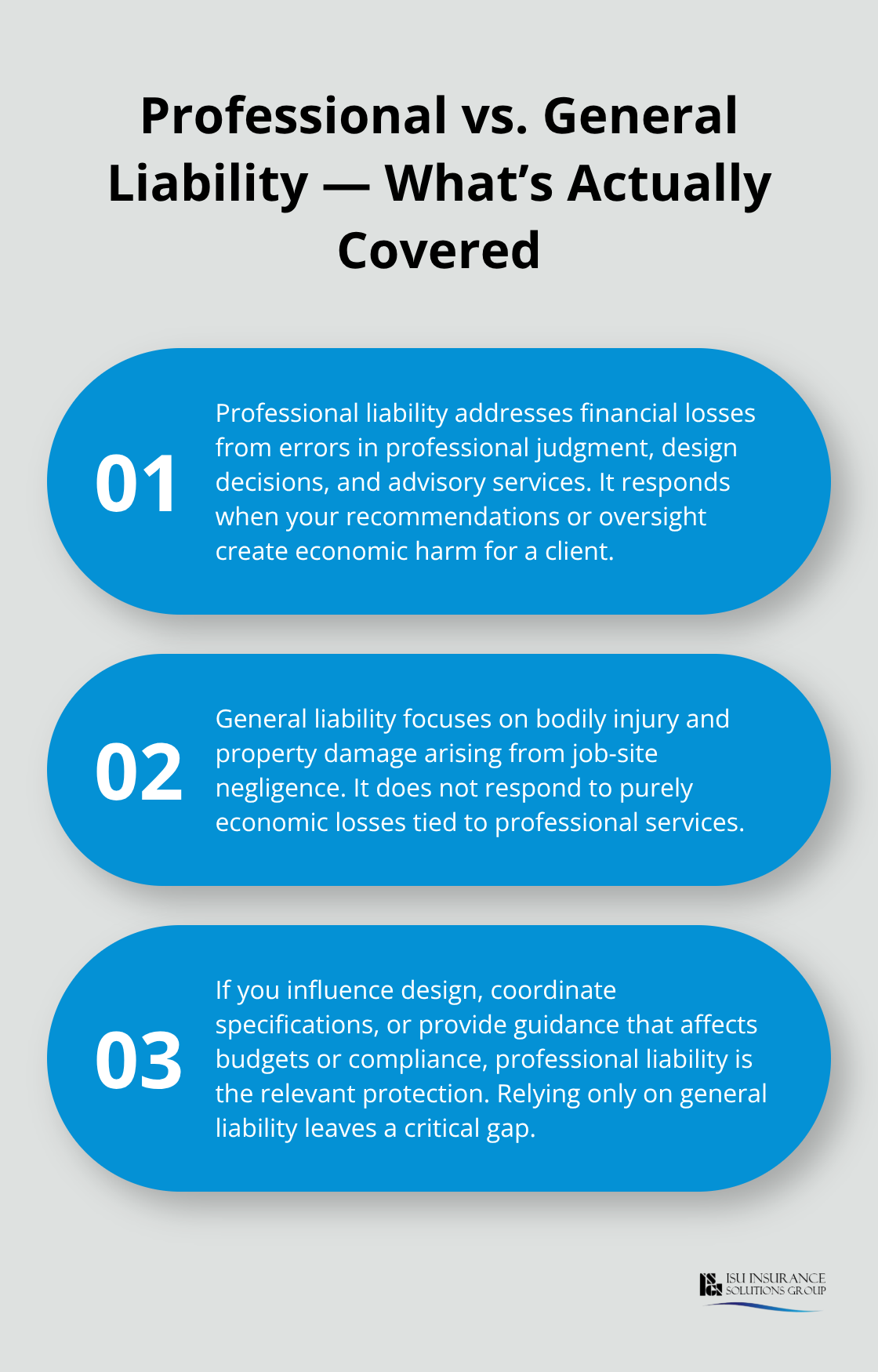
Contractor professional liability insurance covers financial losses when your work causes client harm through errors, omissions, or negligence in professional services. This differs fundamentally from general liability, which covers bodily injury and property damage. Your CPL policy pays for design mistakes, construction management errors, faulty engineering oversight, and negligence claims that arise from the professional judgment you exercise on projects. It covers legal defense costs, settlements, and judgments up to your policy limits. If a client discovers your design work violated building codes, or your construction management missed critical specifications causing delays and cost overruns, CPL steps in where general liability leaves a gap. The policy protects you when you provide design services in-house, hire architects or engineers as subcontractors, or take on construction management responsibilities. These roles create professional liability exposure that standard coverage simply does not address.

Design and Engineering Mistakes Cost Real Money

When you miss a detail in design or fail to catch an engineer’s error, the financial impact extends beyond repair costs. A contractor who revises architectural drawings without obtaining re-stamping from the original architect can face liability for the modified design. Similarly, if you indemnify the owner for negligent design as part of your contract terms, you transfer their liability directly onto yourself. Professional liability coverage for design and engineering work covers these scenarios. The policy also protects against value engineering claims-opinions you provide that later prove problematic. If you manage multiple design professionals on a project, CPL covers negligence by architects and engineers you hire or oversee. Your defense costs alone can exceed $100,000 before a claim settles, so this coverage prevents that expense from destroying your business cash flow.

Subcontractor Negligence and Delegation Risks

When you delegate design work to subcontractors or enter joint ventures with architects, their negligence becomes your problem without professional liability coverage. You remain responsible for the professionals you hire and the work they perform under your supervision. If a design-build subcontractor produces faulty plans that cause construction delays, your CPL policy covers the resulting negligence claim. The policy extends to third-party liability protection, meaning it covers claims from the owner and other parties affected by professional mistakes your team or your subcontractors make. This coverage proves especially valuable because you cannot control every decision a design professional makes, yet you remain liable for their performance. Without CPL, a single subcontractor’s error could eliminate your profit margins on multiple future projects while you handle litigation costs.

What Happens When You Skip This Coverage

Many contractors assume their general liability policy handles professional errors-a costly mistake. General liability explicitly excludes financial losses from professional services, design work, and construction management decisions. You face the full weight of defense costs and settlements on your own. Claims from design deficiencies, code violations, or missed specifications hit your personal assets and business reserves. The contractor who thought they were protected discovers otherwise only after a claim arrives. This gap between what contractors think they have and what they actually have is why professional liability coverage matters so much. Your next step involves understanding which specific coverage elements your policy must include to protect your business from these gaps.

How Much Coverage Do You Actually Need

Match Your Limits to Your Real Exposure

Your professional liability limits should match your project size and revenue, not some arbitrary number your competitor mentions. Contractors often carry $1 million in coverage when their annual revenue exceeds $5 million-a dangerous mismatch.

Chart showing that defense expenses typically consume 40% of professional liability claim payouts. - Contractor professional liability insurance

Most contractors underestimate their exposure because they focus only on direct project costs and ignore defense expenses, which typically consume 40 percent of claim payouts. A design error on a $2 million commercial project can generate $500,000 in cost overruns plus another $300,000 in legal defense before settlement talks begin. Your policy limits need to cover both the potential financial loss from your mistake and the litigation costs required to defend against it.

Understand Per-Claim and Aggregate Limits

If your aggregate limit matches your per-claim limit, you lose all coverage after a single major claim, leaving subsequent projects unprotected for the remainder of your policy year. The Hartford and Progressive Commercial typically offer limits ranging from $250,000 to $5 million per claim, with aggregate limits running 1.5 to 3 times the per-claim amount. Choose limits that exceed your largest potential project exposure by at least 50 percent-this buffer accounts for unexpected cost escalation and extended litigation timelines.

Three key points to set per-claim and aggregate limits for contractor professional liability insurance.

A contractor who fails to maintain adequate aggregate limits faces a scenario where the first major claim exhausts total coverage, and the second claim that year receives zero protection.

Protect Your Past Work with Retroactive Dates

Retroactive date protection matters far more than most contractors realize, yet it remains one of the first things policies strip away during renewal. Your retroactive date marks the earliest point your policy covers claims, meaning incidents before that date fall outside coverage regardless of when the client discovers the problem. A contractor who changes insurers without continuous retroactive date coverage faces an uninsurable gap for past work. If you completed a design-build project in 2024 but your new policy begins in 2026 with a 2026 retroactive date, claims arising from that 2024 work receive zero coverage. Building code violations and design deficiencies often emerge years after project completion when occupants file complaints or property issues surface.

Your policy should carry a retroactive date matching your business formation or the earliest date you performed professional services-whichever is earlier. Extended reporting period endorsements provide additional protection by allowing claims reported after policy expiration to receive coverage if the incident occurred during the active policy period. This tail coverage typically costs 150 to 300 percent of your annual premium but prevents the scenario where your business dissolves or you retire while old claims still arrive.

Why Continuous Coverage Matters More Than You Think

The gap between policies creates real risk that most contractors overlook. When you switch insurers, your new carrier’s retroactive date often resets to the policy start date, leaving all prior work unprotected. A contractor who worked continuously for 15 years but changed insurers three times may discover that only the most recent five years carry coverage. Claims from projects completed under previous policies fall into coverage gaps that no current policy addresses. This exposure intensifies when you sell your business or transition to semi-retirement-old claims can arrive years later, and without proper tail coverage, you face the full liability personally.

The next section examines the specific coverage elements your policy must include to prevent these gaps from destroying your financial security.

Policy Exclusions That Leave You Unprotected

Your professional liability policy contains exclusions that eliminate coverage precisely when you need it most. Many contractors discover these gaps only after filing a claim and receiving a denial letter. Understanding what your policy refuses to cover protects your business from catastrophic financial exposure.

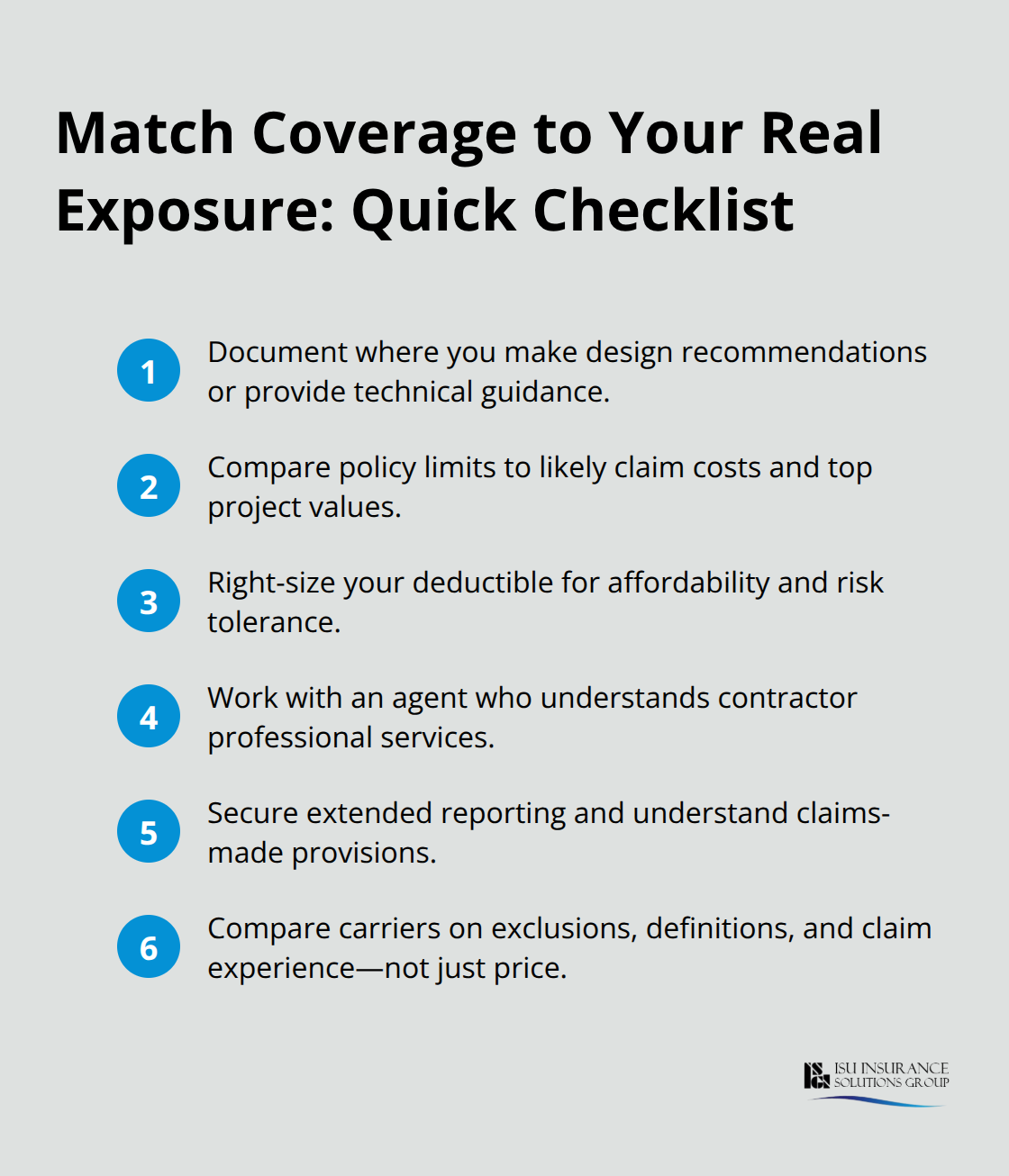
Checklist of contractor professional liability coverage gaps to review and fix.

Contractual Liability Exclusions Create Personal Risk

The most dangerous exclusion involves contractual liability coverage-when your contract requires you to indemnify the owner for design negligence, your standard CPL policy may refuse to cover that obligation. You contractually assume the owner’s liability, but your insurance refuses to pay because you agreed to something the policy doesn’t cover. This creates a scenario where you personally absorb losses that could have been covered under a different policy structure.

Before signing any contract that requires indemnification for professional services, confirm with your agent that your policy includes contractual liability coverage for those specific obligations. Many contractors lose significant amounts on single claims because they signed indemnification clauses their insurance wouldn’t honor. The policy language matters enormously-some insurers offer contractual liability endorsements while others exclude it entirely. Verify your coverage includes contractual indemnity before you bid on projects requiring design responsibility transfer.

Subcontractor Coverage Gaps Extend Beyond Simple Negligence

Subcontractor coverage gaps create another critical vulnerability that extends beyond simple negligence claims. Your policy may cover negligence by architects and engineers you hire directly, but exclude coverage for design errors by subcontractors working under sub-tier agreements or performance-based contracts. If you hire a design-build subcontractor who then hires an engineer, that engineer’s negligence might fall outside your coverage because the chain of responsibility creates ambiguity about who bears liability.

The problem intensifies when multiple tiers of subcontractors exist on your projects. Your policy may explicitly cover first-tier subcontractors but exclude second-tier or third-tier professionals. Request explicit confirmation in writing that your policy covers third-party claims from completed projects and that subcontractor liability extends through the entire supply chain on your projects.

Completed Operations Coverage Time Limits

Completed operations coverage-protection for claims arising from finished work-often carries strict time limits or exclusions that most contractors overlook. A code violation discovered two years after project completion may fall outside your completed operations window, leaving you unprotected for defects that emerge long after handoff. Building code violations and design deficiencies frequently surface years later when occupants file complaints or property issues emerge.

Review your policy’s completed operations endorsement to confirm it extends at least five years after project completion. Many policies limit this coverage to one or two years, which proves insufficient for construction defects that take time to manifest. Confirm in writing that your policy covers third-party claims from completed projects and that the time window matches your actual project lifecycle and local statute of limitations requirements.

Final Thoughts

Your contractor professional liability insurance protects your business only when it covers the actual risks you face. The gaps we’ve outlined-contractual liability exclusions, subcontractor coverage limits, and completed operations time restrictions-represent real financial threats that destroy contractors every year. You need limits matching your project size, retroactive date protection extending to your earliest work, and explicit coverage for the design professionals you hire or oversee.

Pull your current policy and review it against the coverage elements we’ve discussed in this guide. Check your per-claim and aggregate limits against your largest projects from the past three years, confirm your retroactive date hasn’t reset during a recent renewal, and verify that contractual liability coverage applies to indemnification clauses in your standard contracts. Request written confirmation that your policy covers third-party claims from completed work and that subcontractor coverage extends through your entire supply chain.

An independent agent makes this process far simpler because they can compare policies across multiple carriers and identify which coverage elements matter most for your specific business. We at ISU Insurance Solutions Group work with contractors throughout Washington and Oregon to build contractor professional liability insurance policies that actually match your exposure. Contact us for a personalized review of your current coverage and a multi-carrier quote that reflects your actual business needs.

The information provided in this blog is for general informational purposes only and does not constitute legal, financial, or insurance advice. Coverage options, terms, and availability may vary. Please consult with a licensed professional for advice specific to your situation.
Washington Professional Liability Insurance: Local Risk Profiles

Professional liability claims are rising across Washington, with service professionals facing exposure they often underestimate. A single lawsuit can drain your business finances and reputation in ways general liability won’t cover.

We at ISU Insurance Solutions Group know that Washington professional liability insurance isn’t one-size-fits-all. Your coverage needs depend on your specific industry, client base, and local market conditions.

What Claims Actually Happen to Washington Professionals

Real Claims That Damage Real Practices

Healthcare providers, architects, consultants, and attorneys across Washington face concrete liability risks that go far beyond general business disputes. In 2021, healthcare providers in Washington reported 318 new malpractice claims with a median indemnity around $340,000, according to the Washington Office of the Insurance Commissioner. Real estate professionals account for roughly 20 percent of malpractice claims nationwide per the American Bar Association, with errors in title work, disclosure failures, and transaction mistakes creating expensive litigation. Technology and consulting firms encounter failure-to-perform claims regularly-a 2022 Spokane SaaS settlement totaled $425,000 plus $150,000 in defense costs, demonstrating that even software and service work carries substantial financial exposure. Attorneys defending professional liability claims in Washington absorb average defense costs around $87,338 before any settlement or judgment, which means a claim can financially damage your practice before liability is even determined.

How Washington’s Legal System Amplifies Exposure

Washington’s comparative negligence rules and consumer-friendly statutes like the Washington Consumer Protection Act allow courts to treble damages in certain cases, directly increasing settlement values and jury awards. This legal framework means settlements and verdicts in Washington tend to be higher than in states with stricter liability defenses. The state also has over 650,000 small businesses and about 1.4 million employees exposed to liability risk, creating a large, competitive professional marketplace where clients are quick to sue over perceived mistakes.

Two key percentages shaping professional liability risk and pricing in Washington

Coverage Requirements That Block Your Work

Procurement portals increasingly require proof of professional liability insurance with aggregate limits around $2 million before vendors can bid, which means lacking coverage blocks work opportunities. Medical professionals enrolling in insurance networks must carry at least $1,000,000 per occurrence and $3,000,000 annual aggregate to participate. Limited License Legal Technicians must maintain $100,000 per claim and $300,000 annual aggregate or face blocked client work.

Compact list of common minimum professional liability coverage requirements in Washington - Washington professional liability insurance

These aren’t optional preferences-they’re hard requirements imposed by clients, networks, and regulatory bodies that directly affect your ability to operate and grow your practice in Washington. Understanding your specific coverage obligations is the first step toward protecting both your income and your professional standing.

How Washington’s Market and Rules Shape Your Coverage Needs

Regional Economic Clusters Drive Specialized Coverage

Washington’s economic clusters create vastly different professional liability exposures depending on where you operate and what you do. The Puget Sound aerospace sector, wine-region agribusiness, and Spokane’s growing healthcare hub each demand specialized coverage tailored to local risk patterns. King County procurement rules typically require $1,000,000 per occurrence and $2,000,000 aggregate for vendors bidding on public contracts, which means a consultant or architect working on county projects must meet these thresholds or lose the work entirely. Inland areas like Spokane and rural counties impose lower procurement minimums, but the exposure differences between regions are substantial.

How Geography Affects Your Premiums and Coverage Floor

If you serve clients across multiple regions, your highest requirement becomes your baseline coverage floor. Geography also drives premium costs directly: King County and Pierce County professionals typically pay 30 to 50 percent higher premiums than rural areas due to larger verdict pools and higher claim costs in urban centers. A five-attorney law firm in Seattle might pay $7,500 to $15,000 annually for $2,000,000 per occurrence and $4,000,000 aggregate coverage, while the same firm in Spokane could see premiums 30 to 40 percent lower. Washington’s pure comparative negligence system means courts assign fault proportionally, which increases settlement values because plaintiffs recover even when partially at fault. This legal framework pushes carriers to price policies higher in Washington than in states with stricter liability defenses, directly affecting what you pay for coverage.

Regulatory Boundaries That Determine Your Minimum Coverage

Regulatory requirements vary sharply by profession and create hard boundaries you cannot cross. Healthcare providers must report their insurance status and financial responsibility under RCW 7.70.150, and hospitals typically require physicians with admitting privileges to carry malpractice coverage. Architects must demonstrate E&O insurance for public contracts, and the Washington State Bar Association requires attorneys to report their insurance annually, though the WSBA does not independently verify coverage. Real estate professionals face no state mandate, but franchises and individual brokers frequently require E&O as a condition of employment. Technology firms increasingly face procurement demands for cyber-liability coverage bundled with professional liability, especially when handling client data or critical infrastructure.

Client Expectations Now Exceed Legal Minimums

Your specific regulatory obligations depend on your profession and client base, which is why a licensed Washington agent who understands your industry can identify gaps you might miss. Client expectations now routinely exceed legal minimums: many contracts specify minimum coverage limits, require the client to be named as additional insured, or demand proof of coverage within 24 hours of engagement. Dispute resolution in Washington increasingly favors mediation and settlement over litigation, but settlement negotiations still require proof of adequate coverage limits. Without documented insurance, clients assume you are uninsured or hiding risk, which damages trust and can cost you contracts before any claim arises.

Hub-and-spoke diagram showing the core drivers of coverage limits and premium costs in Washington - Washington professional liability insurance

These client-imposed requirements shape your actual coverage floor far more than state law does, making it essential to review your contracts and understand what your buyers and partners demand before you select a policy.

Sizing Coverage to Match Your Actual Exposure

List Your Services and Identify Your Highest-Risk Clients

Start by listing the specific services you provide and identifying your highest-risk client relationships. If you work across multiple sectors or geographies, your coverage floor is determined by your most demanding client, not your easiest one. A consultant serving both small startups and Fortune 500 companies must meet the Fortune 500 requirement, which typically means $1,000,000 per occurrence and $2,000,000 aggregate minimum. Real estate agents working with both residential buyers and commercial developers face the same dynamic: your largest transaction determines your baseline. Pull your last five client contracts and note every insurance requirement embedded in them-many professionals discover they’ve been operating under-insured because they never reviewed what clients actually demanded.

Medical professionals enrolling in insurance networks face non-negotiable minimums of $1,000,000 per occurrence and $3,000,000 annual aggregate, and hospitals often require higher limits for high-risk specialties like surgery or obstetrics. Your specific regulatory obligations depend on your profession and client base, which is why a licensed Washington agent who understands your industry can identify gaps you might miss.

Balance Your Deductible Against Cash Flow and Defense Costs

Your deductible choice matters more than most professionals realize. Increasing from $2,500 to $10,000 cuts premiums roughly 20 percent, but Seattle attorney rates hover around $367 per hour, meaning a $10,000 deductible absorbs 27 billable hours of defense costs before your carrier pays anything. If your cash flow cannot absorb a $10,000 hit immediately, the lower deductible saves money despite higher premiums. A five-attorney law firm in Seattle paying $7,500 to $15,000 annually for standard coverage faces a different risk calculation than a solo practitioner, and claims history reshapes everything: even one $250,000 settlement can lift renewal premiums 20 to 40 percent for three to five years.

Work with Local Agents Who Understand Washington’s Regional Differences

Choosing a local agent matters more than you might think because Washington’s regional differences are dramatic. King County and Pierce County premiums run 30 to 50 percent higher than inland areas due to verdict pools and claim costs, which means a consultant in Spokane should not expect to pay Seattle rates. A Woodinville-based independent agency like ISU Insurance Solutions Group has served Washington and Oregon since 1983 and partners with 20+ carriers, allowing you to access quotes from multiple insurers simultaneously and compare actual pricing instead of guessing.

Request identical coverage limits and deductibles across all quotes so actual rate differences become clear, then compare with quotes from at least two other carriers to verify competitiveness. Washington’s Office of the Insurance Commissioner publishes rate-change lookups by county and insurer, allowing you to benchmark what competing carriers have approved for similar businesses in your area.

Reduce Premiums Through Risk Management and Bundling

Documented risk management can yield 5 to 15 percent premium reductions: written safety protocols, quarterly jobsite inspections, subcontractor minimums, and incident reporting demonstrate underwriting discipline that carriers reward. Bundling professional liability with general liability, property, and commercial auto often yields 10 to 20 percent aggregate savings versus separate policies. When renewing, request your quote 60 to 90 days before expiration so you have time to negotiate or switch carriers without gaps.

Final Thoughts

Your coverage floor is determined by your most demanding client, not your easiest one. Medical professionals need $1,000,000 per occurrence and $3,000,000 aggregate to participate in networks, while attorneys and consultants bidding on King County projects face $1,000,000 per occurrence and $2,000,000 aggregate minimums. These aren’t optional-they’re hard requirements that block work if you fall short.

Geography shapes both your premiums and your coverage needs because King County and Pierce County professionals pay 30 to 50 percent higher premiums than inland areas due to larger verdict pools and higher claim costs in urban centers. Washington’s comparative negligence system means settlements tend to be larger than in other states, which carriers price into your policy. A five-attorney law firm in Seattle pays substantially more than the same firm in Spokane, reflecting these regional differences.

The practical next step is to pull your last five client contracts and identify every insurance requirement embedded in them. Then contact ISU Insurance Solutions Group to request quotes from multiple carriers simultaneously (we’ve served Washington and Oregon since 1983 and partner with 20+ insurers). A licensed local agent who understands your industry and region can identify gaps you might miss and help you avoid both overpaying and underinsuring your Washington professional liability insurance.

The information provided in this blog is for general informational purposes only and does not constitute legal, financial, or insurance advice. Coverage options, terms, and availability may vary. Please consult with a licensed professional for advice specific to your situation.
Professional Liability Insurance Washington: Reducing Risk for Your Practice

One lawsuit can devastate your practice financially. Professional liability insurance in Washington protects you from the costs of client claims, legal defense, and settlements that could otherwise force you to close your doors.

We at ISU Insurance Solutions Group help Washington professionals understand their coverage options so they can focus on their work with confidence. The right policy matches your specific risks and keeps your practice secure.

Why Professional Liability Insurance Matters for Washington Practices

The Real Cost of Client Claims

Washington professionals face genuine financial exposure when clients file claims. A single lawsuit costs thousands in legal defense alone, even if you win. Average defense costs for professional liability claims in Washington average $87,338. For consultants, architects, and medical professionals, these numbers climb higher. Many practices close not because they were negligent, but because they could not absorb the financial hit of defending themselves in court.

Why the Absence of a Legal Requirement Misleads You

Washington law does not mandate professional liability insurance for most professions, but that absence of a legal requirement creates a false sense of security. Many contracts, licenses, and client relationships now require proof of coverage. Real estate professionals, consultants, and building designers frequently discover that lenders, franchises, or major clients will not work with them without a Certificate of Insurance showing active coverage.

Coverage Requirements That Block Your Growth

Medical professionals enrolling in insurance networks must carry minimum coverage of $1,000,000 per occurrence and $3,000,000 annual aggregate to participate. Limited License Legal Technicians must maintain at least $100,000 per claim and $300,000 annual aggregate. These are not suggestions-they are enrollment barriers that block your ability to serve clients and grow revenue.

Quick reference of common minimums and typical limits for Washington professionals - Professional liability insurance Washington

Attorneys in Washington must report their insurance status annually to the Washington State Bar Association, though coverage remains optional. The WSBA does not independently verify that reported coverage is current or adequate, so clients often ask for direct proof. A Certificate of Insurance demonstrates you take risk seriously and protects your reputation when prospects ask about your coverage. Without it, you signal either that you are uninsured or that you are hiding your coverage status, both of which damage client confidence.

The Affordability Factor

The cost of professional liability insurance in Washington is affordable, making it one of the least expensive ways to protect your practice from catastrophic loss. That monthly premium is far cheaper than the legal fees you would pay defending a single claim, and it covers your defense costs, settlements, and judgments up to your policy limits. Understanding what different policy types actually cover-and how they differ-helps you select the right protection for your specific practice.

How Professional Liability Policies Actually Work

Claims-Made Coverage and Your Reporting Window

Most professional liability policies in Washington operate on a claims-made basis, which means coverage applies only to claims filed during your active policy term. This distinction matters more than you might think. If you stop your policy and a client files a claim two years later for work you performed while insured, that claim falls outside your coverage window and you pay for defense entirely out of pocket.

Three key points explaining claims-made coverage, lapse risk, and tail coverage - Professional liability insurance Washington

Tail Coverage Protects Your Transition

Tail coverage extends your reporting period after you leave a practice, retire, or switch carriers. Without tail coverage, you face years of unprotected exposure. The cost of tail coverage typically runs 150 to 300 percent of your annual premium-a significant but necessary expense when you transition practices. Some carriers include a limited tail period automatically, so verify what your current policy offers before assuming you need to purchase extended reporting separately.

Coverage Limits Match Your Risk Exposure

The coverage limits you select directly determine your financial protection in a claim. Washington medical professionals must maintain $1,000,000 per occurrence and $3,000,000 annual aggregate to enroll in insurance networks, but your actual needs depend on your specific risk exposure and contract requirements. Consultants and architects typically carry $1,000,000 per claim with $2,000,000 aggregate, while attorneys often select $1,000,000 per claim with $3,000,000 aggregate based on case complexity and client base.

Deductibles Shape Your Premium and Out-of-Pocket Costs

Your deductible affects both your premium and your out-of-pocket responsibility when a claim occurs. A $2,500 deductible costs less monthly than a $1,000 deductible, but you absorb the first $2,500 of defense costs in any claim. Industry-specific risks shape what coverage you truly need-medical professionals handling complex surgeries face higher exposure than solo practitioners in lower-risk specialties, and this difference should reflect in your policy selection.

Matching Coverage to Your Practice Reality

Your specific practice determines which limits actually protect you. Medical professionals, attorneys, consultants, and architects each face distinct claim patterns and defense costs that demand different coverage strategies. The next section walks you through how to assess your own risk exposure and select limits that match your actual practice rather than simply meeting minimum enrollment requirements.

Matching Your Coverage to Your Practice Risk

Assess Your Specific Services and Client Exposure

Start by listing the specific services you provide and the client relationships that create exposure. An architect designing commercial buildings faces different claim patterns than a solo consultant advising on business strategy. A surgeon performing complex procedures carries higher risk than a family medicine doctor. Medical professionals in Washington enrolling in insurance networks must carry $1,000,000 per occurrence and $3,000,000 annual aggregate minimum, but that floor does not account for your actual practice complexity.

Review your contracts and client agreements to identify any coverage requirements your clients impose. Many hospitals, school districts, and corporate clients demand $2,000,000 or higher per claim before they hire you. Your policy must meet or exceed these contractual minimums, or you cannot accept the work. If you serve multiple client types, your highest requirement becomes your policy floor.

Evaluate Your Claims History and Financial Exposure

Your claims history shapes your risk profile. Attorneys with complex litigation practices face higher defense costs than those handling simple estate planning. Consultants working with startups on financial projections face different exposure than those advising established corporations. If you have never faced a claim, your risk profile still depends on the complexity of your work and the financial stakes your clients hold.

A $500,000 error in a client transaction creates exposure that demands robust coverage. A missed deadline costing a client millions in lost opportunity demands coverage that matches that potential loss. Your actual practice complexity, not minimum enrollment requirements, should drive your coverage selection.

Choose Your Deductible Based on Cash Flow and Risk Tolerance

Your deductible choice directly affects your monthly premium and your financial exposure when a claim occurs. A $2,500 deductible typically costs 20 to 30 percent less monthly than a $1,000 deductible, but you absorb the first $2,500 of defense costs out of pocket in any claim. For practices with strong cash reserves and clean claims histories, higher deductibles reduce premiums significantly. For practices operating on tighter margins or in higher-risk specialties, lower deductibles provide peace of mind even if premiums climb.

Partner with Local Agents Who Know Your Profession

Work with a Washington-licensed agent who understands your specific profession, not a national carrier with generic underwriting. Independent agents access quotes from multiple carriers and match your practice profile to carriers that specialize in your profession. They identify coverage gaps you might miss and explain exclusions that matter to your work.

Many policies exclude coverage for illegal conduct, intentional harm, or discrimination claims, so understand what falls outside your protection. Get multiple quotes and request a Certificate of Insurance within 24 hours of application to compare how quickly each carrier processes your request. Your coverage becomes active only after you receive that certificate, so speed matters when you need protection immediately.

Checklist of benefits when partnering with a local independent insurance agent

Final Thoughts

Professional liability insurance in Washington protects your ability to serve clients and build your practice without fear that one claim destroys everything you have built. List the specific services you provide, review any coverage requirements your clients impose, and identify your actual financial exposure if a claim occurs. Medical professionals need $1,000,000 per occurrence and $3,000,000 aggregate minimum to enroll in insurance networks, while attorneys must report their coverage status to the Washington State Bar Association.

Contact a Washington-licensed agent who understands your profession and accesses quotes from multiple carriers in a single conversation. Request a Certificate of Insurance within 24 hours of application so you can verify coverage is active before you take on new clients. Compare not just premiums but also what each policy covers, what it excludes, and how quickly the carrier processes claims.

We at ISU Insurance Solutions Group have served Washington and Oregon professionals since 1983, helping them select professional liability insurance that matches their specific risks rather than settling for generic policies. Our independent agency partners with 20+ carriers to deliver personalized quotes and hands-on support from local agents who understand Pacific Northwest practices. One call gets you multiple quotes and honest guidance on what coverage actually protects your work.

The information provided in this blog is for general informational purposes only and does not constitute legal, financial, or insurance advice. Coverage options, terms, and availability may vary. Please consult with a licensed professional for advice specific to your situation.