

Contractor Professional Liability Insurance: Protecting Your Trade and Your Clients
One mistake on a project can cost you thousands in legal fees and settlements. Contractor professional liability insurance protects you when clients claim your work caused them financial harm.
At ISU Insurance Solutions Group, we see contractors underestimate this risk every year. The right coverage keeps your business standing when things go wrong.
What Professional Liability Insurance Actually Covers
How Professional Liability Differs from General Liability
One mistake on a project can cost you thousands in legal fees and settlements. Contractor professional liability insurance protects you when clients claim your work caused them financial harm. Unlike general liability, which covers bodily injury or property damage from negligence on a job site, professional liability addresses the financial consequences of mistakes in planning, design decisions, or professional guidance.
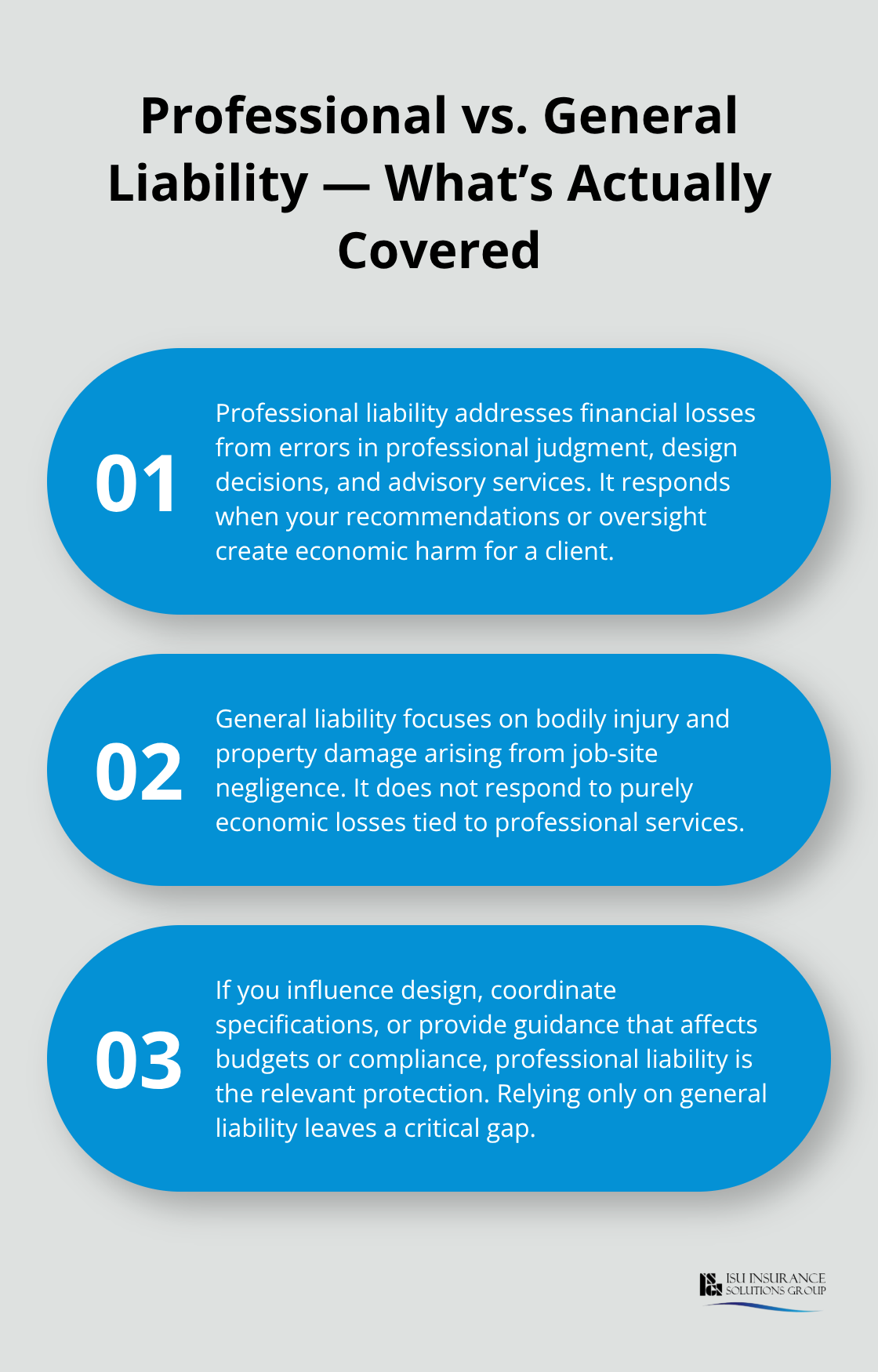
When you recommend changes to mechanical systems, advise on structural approaches, or oversee design-build work, you provide professional services that fall outside general liability protection. A client sues because your design recommendation failed to meet building codes, or your oversight of subcontractor design work created costly delays. General liability won’t cover the financial damages from these scenarios. Professional liability does.
What the Policy Actually Covers
The policy covers legal defense costs, court expenses, settlements, and judgments up to your policy limits. It also covers the investigation and defense of claims themselves, which can run tens of thousands of dollars before a case even reaches court. Design deficiencies that delay project certification, under-designed structural elements that require remediation, or misinterpreted specifications that cause budget overruns all trigger professional liability claims. These scenarios generate financial exposure that personal assets and general liability policies cannot address.
The Growing Professional Liability Gap in Construction
The Assurex Global 2023 Construction Benchmark Report found that only 20 percent of contractors carried professional liability coverage.
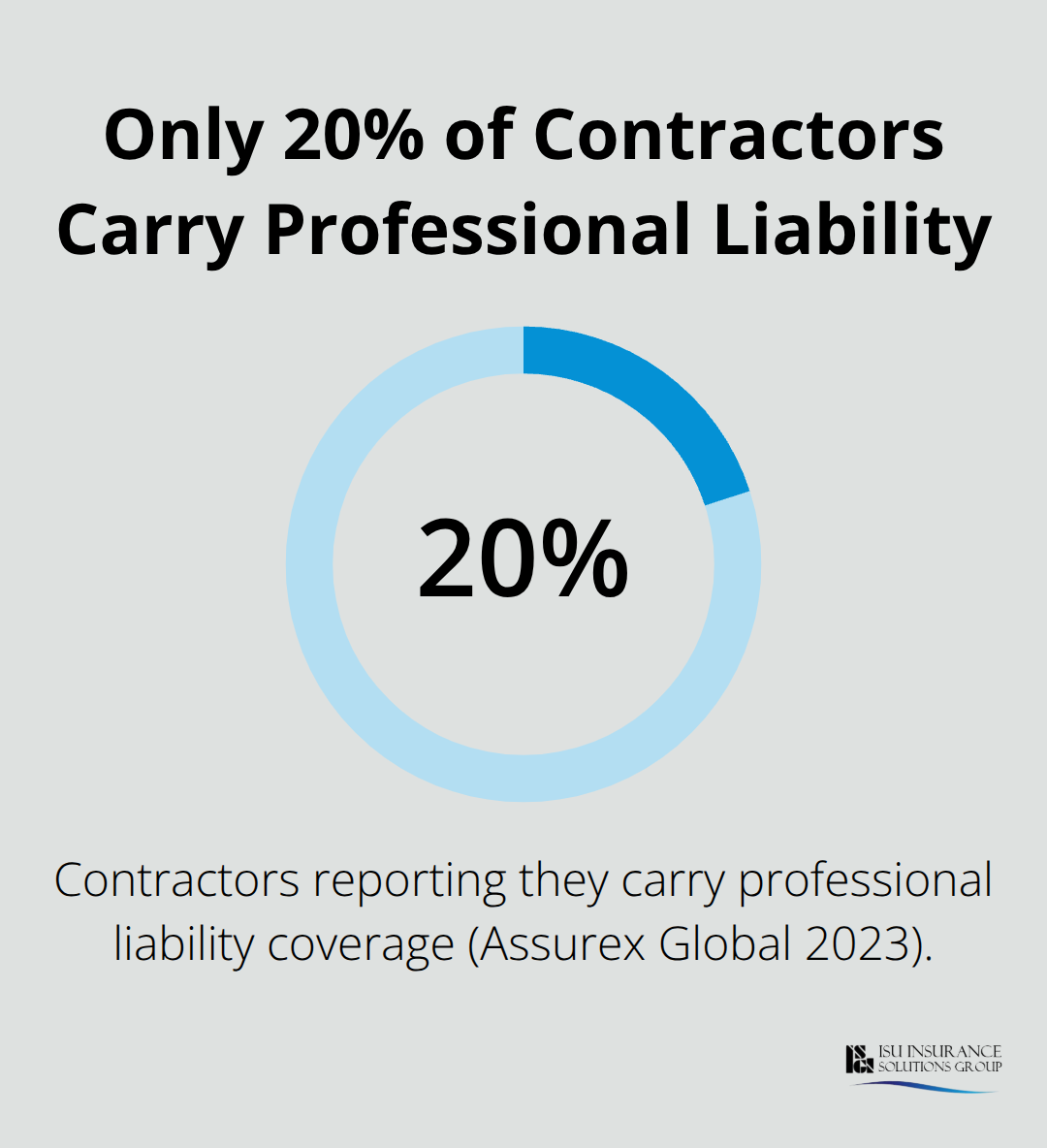
This gap matters because the line between construction work and professional services has blurred significantly. Design-build contracts, construction management agreements, and delegated design responsibilities now pull many contractors into territory where they face professional liability exposure they don’t recognize. You might think professional liability applies only to architects or engineers, but it applies to you when you self-perform design work, coordinate design elements, or make recommendations that affect client finances.
Real-World Professional Liability Exposures
A refrigeration contractor recommends cooling line modifications. A general contractor advises on contractual relationships with subcontractors. A framing contractor suggests structural changes. All three trigger professional liability risk. The financial stakes are substantial-claims worth hundreds of thousands of dollars emerge from design failures, coordination errors, and misguided recommendations. Professional liability insurance addresses these exposures directly, covering the financial damages that your business cannot absorb alone. Understanding which of your daily activities create professional liability exposure helps you assess whether your current coverage protects your trade adequately.
Why Your Trade Needs This Coverage
Financial Exposure from Project Failures
Project failures hit your bottom line immediately. A design recommendation that fails to meet code, oversight of delegated design work that creates costly delays, or a specification you misinterpret that forces expensive remediation-each scenario generates financial damage far beyond the immediate repair costs. Legal defense alone can cost tens of thousands of dollars before settlement negotiations even begin. A single claim involving design deficiencies, structural under-design, or coordination errors can produce damages in the hundreds of thousands. Without professional liability coverage, these costs come directly from your business reserves or personal assets.
Contractors often assume general liability covers these scenarios, but it does not. General liability addresses bodily injury or property damage from negligence on site. Professional liability coverage addresses the financial consequences of mistakes in professional judgment, design decisions, or advisory services. The distinction matters enormously when clients sue for economic losses rather than physical harm.
Client Contracts Now Demand This Protection
Client contracts increasingly demand this coverage as a condition of work. Large projects, design-build arrangements, and construction management agreements now routinely require proof of professional liability insurance before you can bid or sign. Clients add this requirement because they recognize the financial risk when contractors make design decisions or provide professional guidance.
If your competitors carry this coverage and you do not, you lose competitive advantage on the projects that pay most reliably. This gap represents opportunity for contractors willing to invest in proper coverage. Your ability to present a certificate of professional liability insurance signals risk management discipline to clients evaluating bids.
Rising Claims Frequency Across the Industry
Claims frequency in construction continues rising as projects grow more complex and responsibilities blur between traditional construction work and professional services. Design-build delivery, construction management at risk, and integrated project delivery models all push contractors into advisory roles where professional liability exposure accelerates. The more you coordinate design elements, recommend technical approaches, or oversee subcontractor design work, the higher your exposure becomes.
A refrigeration contractor recommends cooling line modifications. A general contractor advises on contractual relationships with subcontractors. A framing contractor suggests structural changes. All three trigger professional liability risk. These daily activities create financial exposure that most contractors do not recognize until a claim arrives. Understanding which of your activities generate professional liability exposure helps you assess whether your current coverage protects your trade adequately-and whether you need to strengthen that protection before the next project begins.
Selecting Coverage That Matches Your Real Exposure
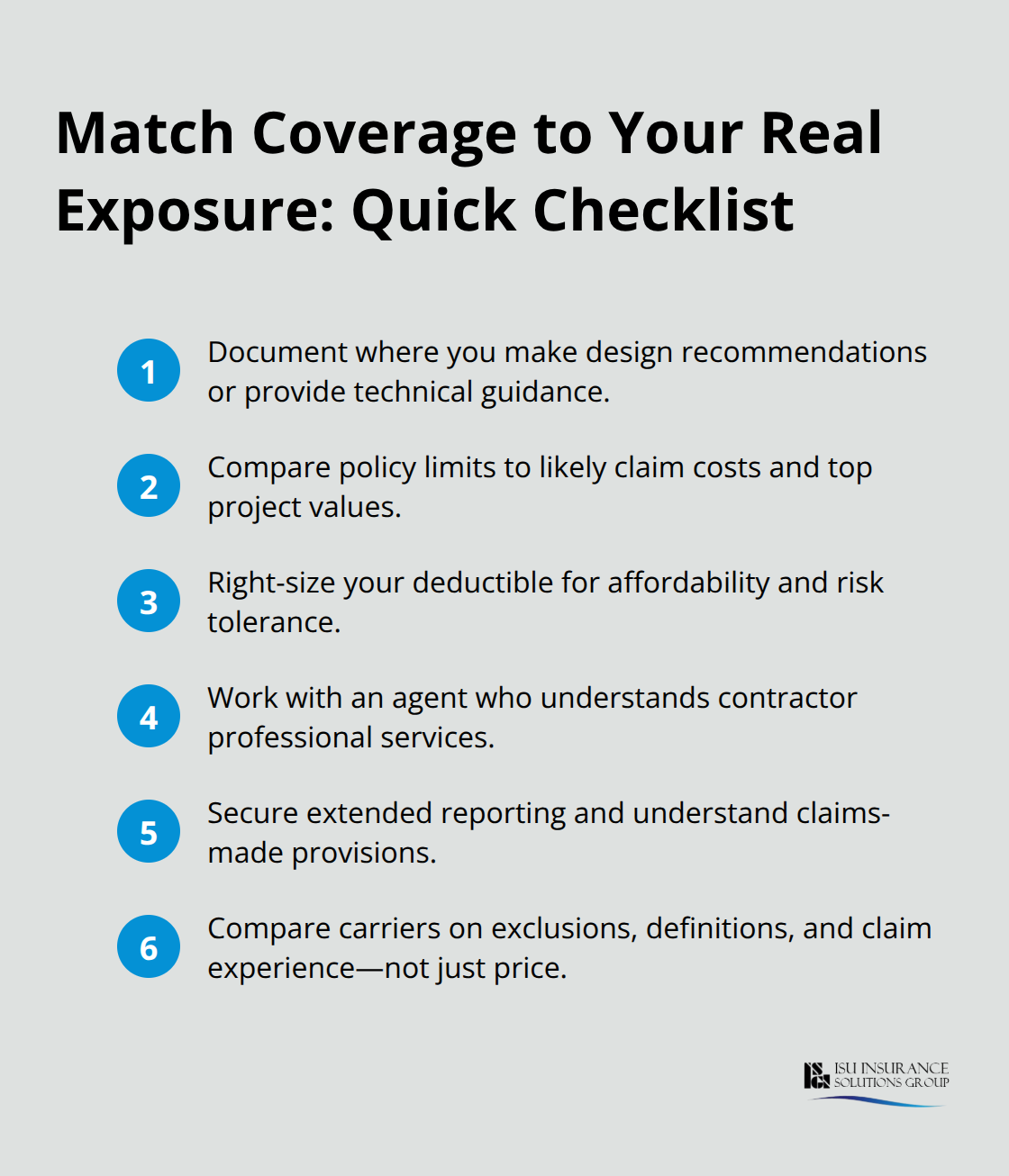
Your professional liability coverage must align with the specific work you perform, not with a generic contractor profile. A refrigeration contractor recommending mechanical modifications faces different exposures than a general contractor managing design-build subcontractors. Start by documenting which projects involve you making design recommendations, coordinating design elements, or providing technical guidance that affects client finances. If you self-perform design work on 40 percent of projects but only coordinate delegated design on the remaining 60 percent, your coverage limits need to reflect that mixed exposure.
Assess Your Coverage Limits Against Real Claim Costs
Many contractors purchase inadequate limits because they underestimate how frequently their daily work crosses into professional liability territory. A single design deficiency claim can easily exceed $250,000 in damages plus defense costs. If your policy limit sits at $100,000, you face personal liability for the remaining exposure. Compare your policy limits against the contract values of your largest projects and the potential financial impact if a design recommendation fails.
Construction management contracts typically justify limits of $500,000 to $1,000,000 because your advisory role creates greater financial exposure to clients. Design-build work with self-performed design similarly demands higher limits than traditional contracting. The extent of professional services you provide should drive your limit selection, not industry averages or competitor policies.
Evaluate Deductibles and Premium Trade-Offs
A higher deductible reduces your premium but increases your out-of-pocket exposure when a claim occurs. Most contractors find deductibles between $5,000 and $10,000 strike the right balance between affordability and manageable risk retention. Deductibles below $5,000 may push premiums so high that coverage becomes uneconomical for smaller operations.
Test different deductible scenarios with your agent to understand how premium changes affect your total cost of risk. A $10,000 deductible might save you $300 annually compared to a $5,000 deductible, but that savings disappears if you file a claim and must pay the higher amount out of pocket.
Work with an Agent Who Understands Contractor Exposures
The most critical step is working with an agent who understands contractor exposures rather than applying generic professional liability templates. An agent familiar with contractor professional liability can review your contracts, identify which clauses create professional liability exposure, and recommend policy language broad enough to cover all your business activities.
Many contractors face claim denials because their policy definitions exclude the exact professional services they performed. Ask potential agents whether the policy covers delegated design, construction management advisory services, and specification interpretation. Confirm that the policy includes defense cost coverage separate from policy limits, because defense expenses alone can consume significant resources before settlement discussions begin.
Prioritize Extended Reporting and Claims-Made Provisions
Request information about extended reporting periods, which protect you for claims reported after project completion. An optional three-year extended reporting period costs modestly but provides critical tail coverage when defects surface months or years after project delivery. Verify that the policy covers ADA and FFHA fines and sanctions, particularly if you work on projects where accessibility compliance failures could trigger regulatory enforcement.
Ask about claims-made versus occurrence coverage. Claims-made policies cover claims reported during the policy period, regardless of when the work occurred, while occurrence policies cover work performed during the policy period regardless of when claims are reported. Claims-made coverage with a circumstance reporting provision allows you to report claims for known circumstances, improving continuity when you discover potential exposures before a formal claim arrives. This distinction matters significantly for long-tail risks in construction where defects emerge years after completion.
Compare Carriers on Coverage Details, Not Just Price
Get quotes from multiple carriers and compare not just price but coverage details, exclusions, and the carrier’s experience with contractor claims. A premium $200 lower annually means nothing if the policy excludes your primary business activity or imposes restrictive definitions that leave you unprotected when claims arise. Verify that each quote addresses your specific trade and the professional services you actually perform on projects.
Final Thoughts
Professional liability insurance protects your business when design decisions, specification interpretation, or advisory services create financial exposure that general liability cannot address. A single claim involving design deficiencies or coordination errors generates hundreds of thousands in damages plus legal defense costs that your business cannot absorb alone. Without contractor professional liability coverage, these expenses threaten your reserves and personal assets, jeopardizing business continuity.
Selecting proper coverage means matching your policy limits, deductibles, and exclusions to the specific professional services you actually perform on projects. A generic policy template fails when your daily work involves design-build responsibilities, construction management advisory services, or delegated design coordination. The right coverage addresses your trade’s actual exposures, includes defense costs separate from policy limits, and provides extended reporting protection for long-tail risks that surface months or years after project completion.
We at ISU Insurance Solutions Group serve contractors throughout Washington and Oregon with the expertise to match your coverage to your real exposure. Our team works with multiple carriers to find contractor professional liability policies that protect your business without unnecessary cost. Contact ISU Insurance Solutions Group today to discuss your specific trade and get a personalized quote that addresses your professional liability exposure.
The information provided in this blog is for general informational purposes only and does not constitute legal, financial, or insurance advice. Coverage options, terms, and availability may vary. Please consult with a licensed professional for advice specific to your situation.