
Distillery Insurance in Washington
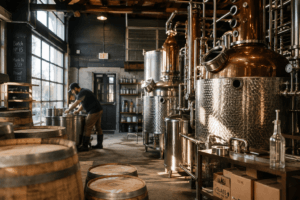 Operating a distillery involves a unique combination of manufacturing, hospitality, property, and business risks. From specialized production equipment and stored inventory to tasting rooms and interactions with customers, distillery owners have a variety of exposures to consider.
Distillery insurance generally refers to a combination of commercial insurance options selected to address the risks associated with producing, storing, distributing, and selling distilled spirits.
What Is Distillery Insurance?
Rather than being a single type of insurance policy, distillery insurance may involve several types of commercial insurance depending on the business’s operations.
A distillery’s insurance needs can vary based on factors such as its size, production methods, property, equipment, number of employees, distribution activities, and whether it operates a tasting room or other customer-facing space.
Understanding Distillery Risks
Distilleries often combine several types of business activities at one location. Production areas may contain specialized equipment, raw materials, finished products, and other valuable property, while other areas may be open to customers or used for events.
Potential risks and exposures can involve:
- Buildings and business property
- Distilling and production equipment
- Stored ingredients and finished inventory
- Equipment breakdowns
- Fire and other property-related hazards
- Customer and visitor interactions
- Product-related risks
- Employee-related exposures
- Transportation and distribution activities
- Business interruptions
The insurance that may apply to a particular event depends on the policies selected and their specific terms, conditions, limits, and exclusions.
Insurance Considerations for Distilleries
Because distilleries can have diverse operations, there are several types of commercial insurance that a business may want to consider.
Depending on the operation, insurance considerations may include commercial property, general liability, equipment-related coverage, commercial auto, workers’ compensation, product-related liability, business interruption, and other specialized insurance options.
Not every distillery requires the same combination of policies, making it important to evaluate the specific characteristics of the business.
Distillery Property and Equipment
Producing distilled spirits often requires a significant investment in equipment and facilities. Stills, tanks, bottling equipment, storage areas, furnishings, computers, and other business property can all represent important assets.
The value and type of property, construction of the building, production processes, and other factors can influence a distillery’s insurance needs.
Managing Distillery Risks
Insurance can be one part of a broader risk management strategy. Distillery owners may also consider workplace safety procedures, equipment maintenance, employee training, property security, fire prevention, and procedures for serving customers and handling products.
As a distillery grows or changes its operations, its risks may change as well. Periodically reviewing insurance needs can help ensure that business owners understand their available options.
Learn More About Distillery Insurance
Every distillery has its own combination of production, property, liability, and operational risks. Understanding those exposures is an important part of building an appropriate commercial insurance program.
An experienced insurance professional can explain available distillery insurance options and help business owners review policy limits, exclusions, and other important considerations.