
Auto Insurance Coverage Options: Find the Right Fit for Your Drive
Picking the right auto insurance coverage options feels overwhelming when you’re staring at policy documents and coverage limits. We at ISU Insurance Solutions Group know that most drivers don’t understand what they actually need or why certain protections matter.
This guide breaks down your state’s requirements, explains each coverage type, and shows you how to match your policy to your actual situation. You’ll have the clarity to make decisions that protect both your wallet and your vehicle.
What Coverage Does Your State Actually Require?
Washington and Oregon mandate liability coverage, but the minimum limits differ between states and won’t fully protect your assets. In Washington, you need at least minimum liability limits of $25,000 for one person’s bodily injury, $50,000 total per accident, and $25,000 for property damage. Oregon requires 25/50/20, a slightly lower property damage threshold. These minimums exist because they’re the legal floor, not because they’re adequate. The Insurance Information Institute recommends carrying higher limits to shield your future earnings and assets, yet most drivers stick with state minimums and assume they’re sufficient. That assumption costs people thousands when accidents exceed those limits.
Why Minimum Coverage Leaves You Exposed
A serious accident involving multiple vehicles or injuries can easily generate $100,000 or more in damages. If you carry only the state minimum and cause that accident, you’re responsible for anything above your policy limits. Medical bills, lost wages, and property damage accumulate quickly, and the other party’s attorney will pursue your personal assets. Many states allow wage garnishment for unpaid judgments, meaning your paycheck can be reduced for years. Raising your liability limits from the minimum to 100/300/100 costs surprisingly little-often just $20 to $40 more per month depending on your driving history and vehicle. That small increase eliminates most financial exposure in typical accidents.
What Happens When You Skip Coverage Entirely
Driving uninsured in Washington or Oregon carries immediate and lasting consequences. Both states suspend your driver’s license and vehicle registration, and you cannot legally operate a vehicle until you provide proof of insurance. The Financial Responsibility Law holds you personally liable for all accident damages, meaning judgments against you can follow you for years. Court fines range from $300 to $1,000 or more, and you may face jail time depending on circumstances and prior violations. If authorities catch you uninsured multiple times, penalties escalate significantly. An uninsured accident creates a permanent gap in your driving record that insurers flag for years, making future coverage substantially more expensive when you finally obtain it.
Moving Beyond State Minimums
State minimums protect other people, not you. Your vehicle and medical expenses receive no coverage under liability alone, which is why collision and comprehensive protection matter for your own financial security. Understanding what each coverage type actually covers helps you build a policy that matches your vehicle’s value and your personal risk tolerance.
Types of Auto Insurance Coverage Explained
Collision and Comprehensive Coverage: What Sets Them Apart
Collision coverage pays for damage to your vehicle when you hit another car, object, or structure, regardless of who caused the accident. Comprehensive coverage handles everything else-theft, vandalism, weather damage, animal strikes, and glass breakage. The distinction matters because they work differently and cost differently. Collision typically costs $400 to $600 annually depending on your deductible and vehicle value, while comprehensive runs $150 to $300 per year. If your car is financed or leased, your lender requires both coverages. If you own the vehicle outright, the decision hinges on whether repair costs would strain your finances. For vehicles worth less than $5,000, comprehensive and collision premiums often exceed the benefit you’d receive from a claim, making these coverages economically questionable.
Uninsured and Underinsured Motorist Protection: Your Safety Net
Uninsured and underinsured motorist coverage protects you when the other driver lacks adequate insurance or carries none at all. Washington and Oregon require this coverage as part of your policy, though you can decline it in writing. If an uninsured driver causes an accident and injures you, this coverage pays your medical bills, lost wages, and pain and suffering up to your policy limits. The Insurance Information Institute strongly recommends keeping your uninsured motorist limits equal to your liability limits-if you carry 100/300/100 liability, maintain 100/300 uninsured motorist coverage. This costs roughly $50 to $100 annually but prevents catastrophic gaps. Underinsured motorist coverage activates when the at-fault driver’s insurance is insufficient to cover your damages, filling the gap between their limits and yours.
Medical Payments and Personal Injury Protection: Immediate Coverage
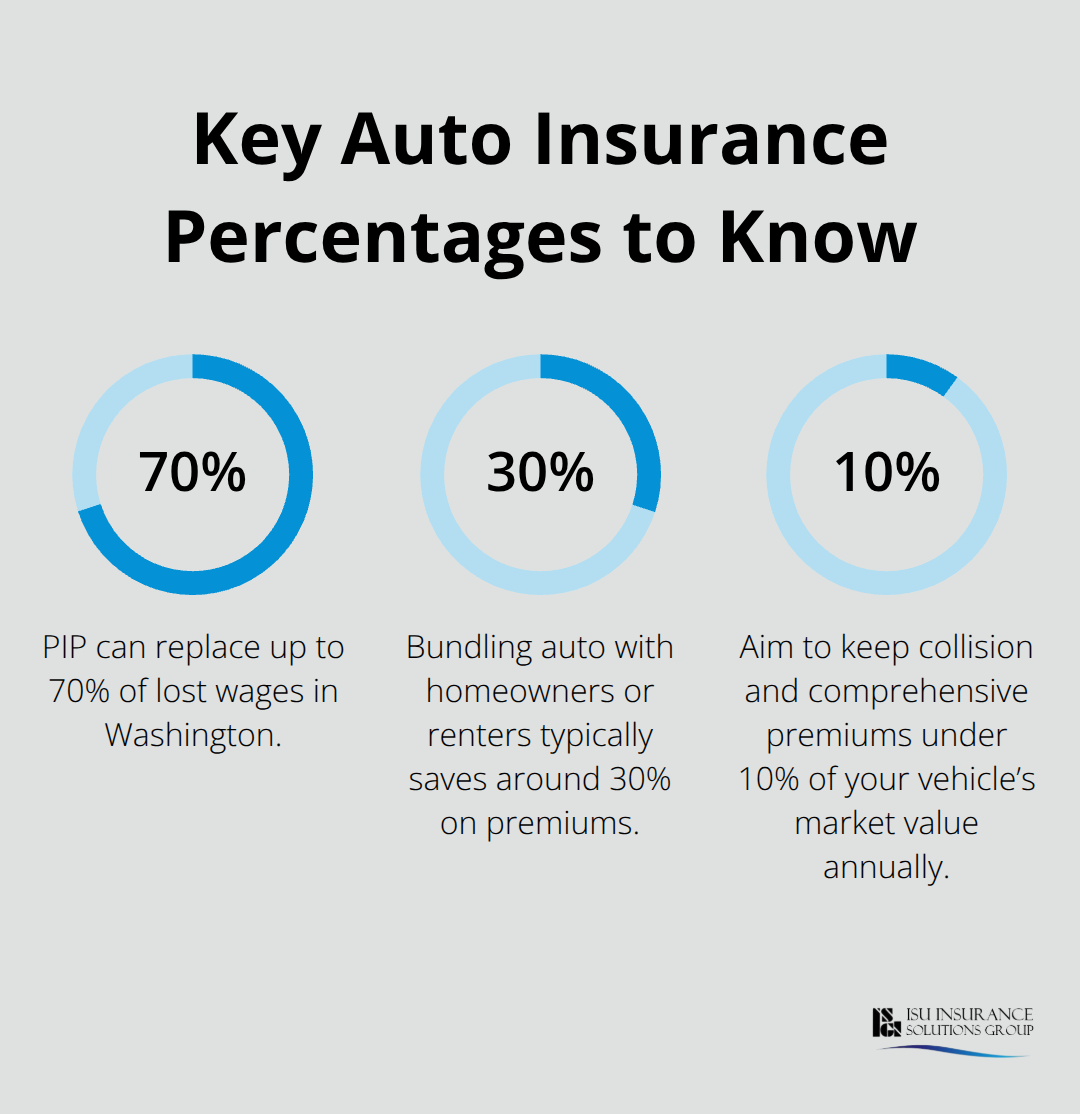
Medical payments and personal injury protection serve different purposes depending on your state. Oregon allows medical payments coverage, which reimburses medical and funeral expenses for you and passengers injured in any accident, regardless of fault. This coverage typically costs $10 to $25 per year and has low deductibles. Washington requires personal injury protection in most situations, which is broader than medical payments-it covers medical expenses, lost wages, and replacement services like childcare or housework if you’re injured in a vehicle accident. PIP benefits replace up to 70 percent of lost wages and typically extend for three years. Both coverages provide immediate payment without waiting for liability determination, which matters when you face medical bills immediately after an accident.
Evaluating Medical and PIP Coverage for Your Situation
When you evaluate your actual needs, consider your health insurance deductible and whether you have emergency savings. If you carry a high-deductible health plan, medical payments or PIP becomes more valuable because it covers costs your health insurance won’t immediately pay. If you have no dependents and minimal wage-loss exposure, the coverage becomes less critical. Pricing varies significantly across carriers-some insurers charge $8 annually while others charge $35 for identical coverage. Shopping around for these specific coverages alone can save $100 to $150 per year across your policy term, which is why comparing quotes from multiple carriers matters when you build your policy.
The coverage types you select form the foundation of your protection, but your actual needs depend on your vehicle’s value, your financial situation, and your state’s requirements. The next step involves matching these coverages to your specific circumstances so you pay for what protects you without overpaying for unnecessary options.
Choosing the Right Coverage for Your Situation
Assessing Your Vehicle’s Value and Age
Your vehicle’s value determines whether certain coverages make financial sense, and that calculation changes dramatically based on age and condition. A five-year-old sedan worth $18,000 justifies collision and comprehensive coverage because repair costs would devastate most household budgets. A ten-year-old vehicle worth $6,000 tells a different story-your annual collision premium of $400 to $500 means you’d need to file a claim every nine to twelve years just to break even, which rarely happens. Consumer Reports found that drivers who dropped collision and comprehensive on older vehicles saved a median of $461 annually, a significant reduction for cars where the coverage premium exceeds potential benefits.
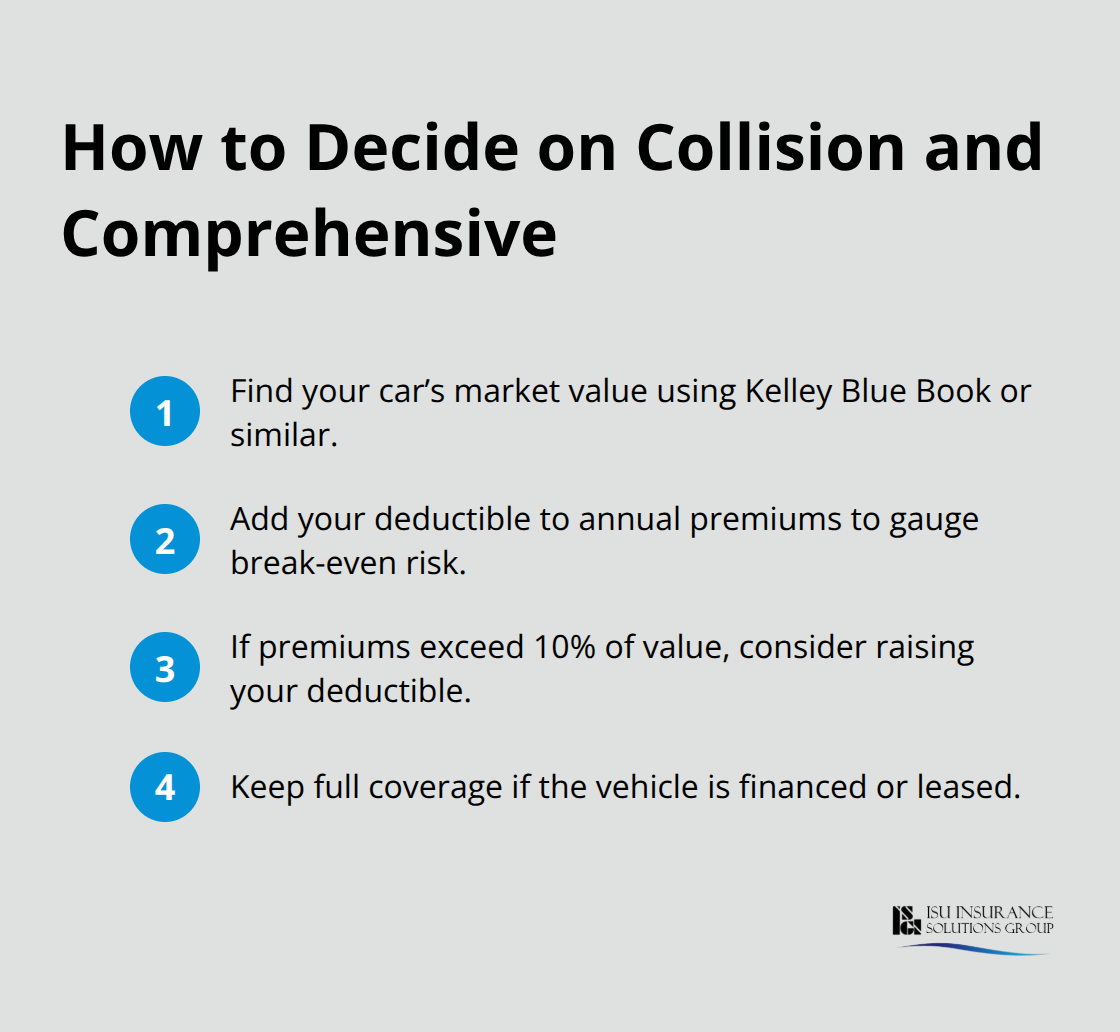
Calculate your vehicle’s actual market value using resources like Kelley Blue Book, then compare that figure against your deductible plus annual premium costs. If premiums consume more than ten percent of your vehicle’s value annually, raising your deductible becomes the smarter move. For financed or leased vehicles, your lender removes this choice entirely-they require full coverage regardless of economics because they own the collateral.
Evaluating Your Driving Habits and Risk Factors
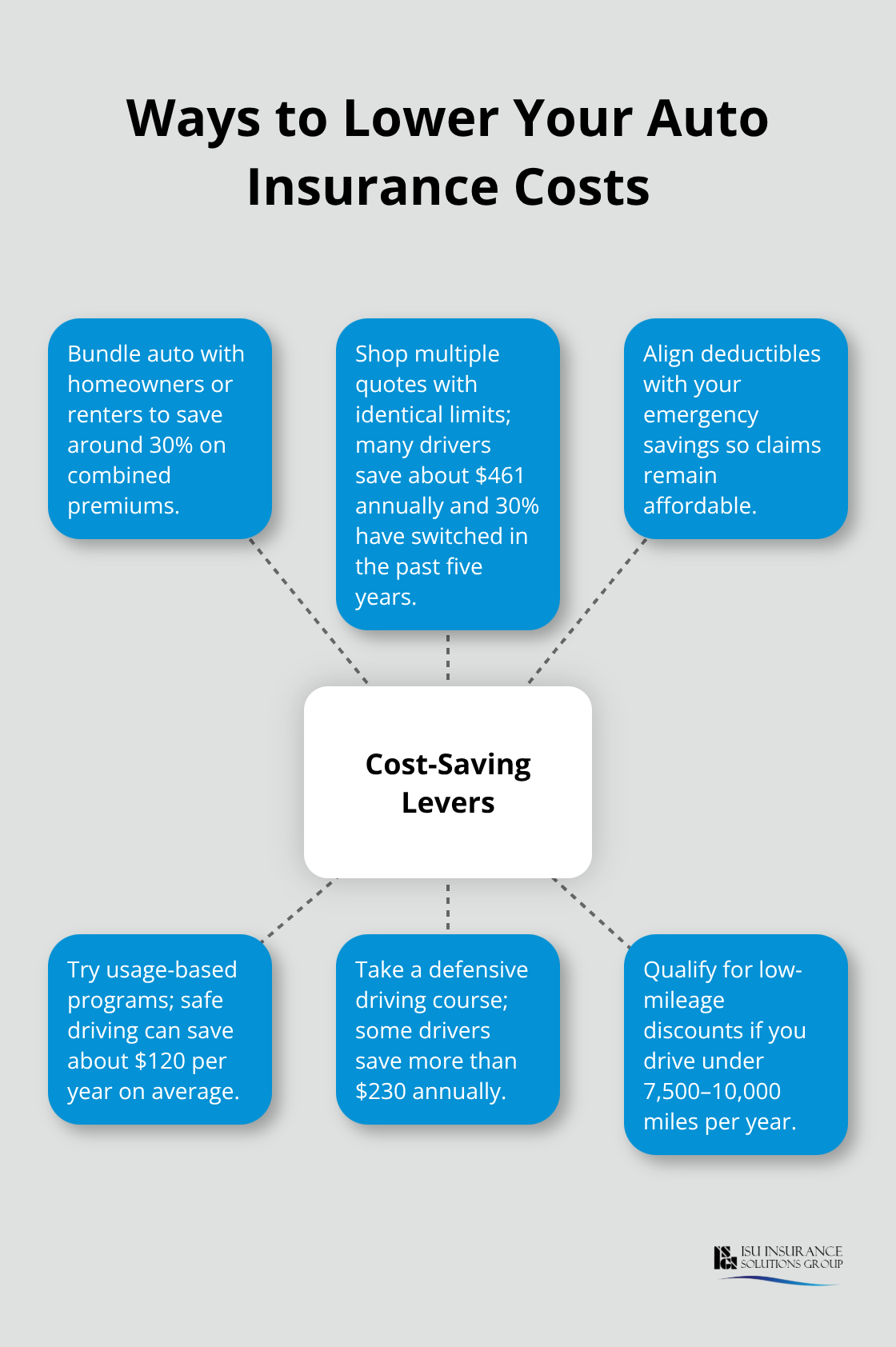
Your driving habits and accident history shape your risk profile more than any other factor, and honest assessment prevents overpaying or underprotecting. If you drive fewer than 10,000 miles annually, you qualify for low-mileage discounts with typical thresholds under 7,500-10,000 miles per year, though programs and discounts differ by insurer. Conversely, if you have an at-fault accident or moving violation in the past three years, raising your deductible from $500 to $1,000 can reduce your rate by twenty to twenty-five percent, offsetting the higher out-of-pocket cost you’d face in a claim. Your ZIP code matters more than most drivers realize-high-theft areas carry collision premiums thirty to fifty percent higher than safer neighborhoods. Some insurers offer usage-based programs that monitor actual driving behavior, and Consumer Reports found these programs save drivers approximately $120 annually on average when you demonstrate safe habits. Defensive driving courses cut premiums by more than $230 per year in some states, making the $20 to $50 course fee essentially free within a single year.
Balancing Cost with Protection Needs
Bundling your auto policy with homeowners or renters coverage typically saves around thirty percent on premiums across both policies, though results vary by carrier. Shopping multiple quotes with identical coverage limits and deductibles reveals genuine price differences-Consumer Reports’ 2024 survey showed drivers who switched insurers saved a median of $461 annually, with thirty percent of drivers making that switch within the past five years. Your financial cushion determines your optimal deductible strategy more than any other consideration.
If you have $1,000 in emergency savings, a $500 deductible aligns with your capacity to handle claims. If you have $5,000 available, a $1,000 deductible reduces your premium without creating genuine hardship. Never select a deductible you cannot afford to pay within thirty days, because that financial strain creates pressure to skip claims you should file, which defeats coverage entirely.
Final Thoughts
Selecting the right auto insurance coverage options requires matching your policy to three concrete factors: your state’s legal requirements, your vehicle’s actual value, and your personal financial capacity. Washington and Oregon mandate liability coverage, but carrying only state minimums exposes your assets to judgment and wage garnishment when accidents exceed those limits. Raising your liability limits to 100/300/100 costs roughly $20 to $40 monthly and eliminates most financial exposure.
For your vehicle, collision and comprehensive coverage makes sense only when annual premiums stay below ten percent of your car’s market value. Older vehicles often fail this test, making higher deductibles the smarter choice. Your deductible should match what you can actually pay within thirty days without financial strain, because selecting an amount you cannot afford defeats the entire purpose of having coverage.
Multiple quotes from different carriers reveal genuine price differences that save you hundreds annually-Consumer Reports found that drivers who shopped around saved a median of $461 per year. Bundling auto coverage with homeowners or renters insurance typically reduces your total premium by around thirty percent, while usage-based programs that monitor your driving habits save approximately $120 annually on average. Contact ISU Insurance Solutions Group to secure quotes that match your actual needs and budget, then select coverage that protects both your vehicle and your financial future.
The information provided in this blog is for general informational purposes only and does not constitute legal, financial, or insurance advice. Coverage options, terms, and availability may vary. Please consult with a licensed professional for advice specific to your situation.