
Craft Brewery Product Liability: Protecting Every Sip and Batch
Craft breweries face unique product liability challenges that most business owners don’t anticipate until something goes wrong. A single contamination incident, mislabeled allergen, or defective bottle can trigger recalls, lawsuits, and lasting damage to your reputation.
At ISU Insurance Solutions Group, we’ve seen how quickly these risks can derail a thriving operation. The good news is that understanding your exposure and securing the right coverage makes all the difference.
Where Craft Breweries Face the Biggest Liability Threats
Contamination: The Silent Threat to Your Operation
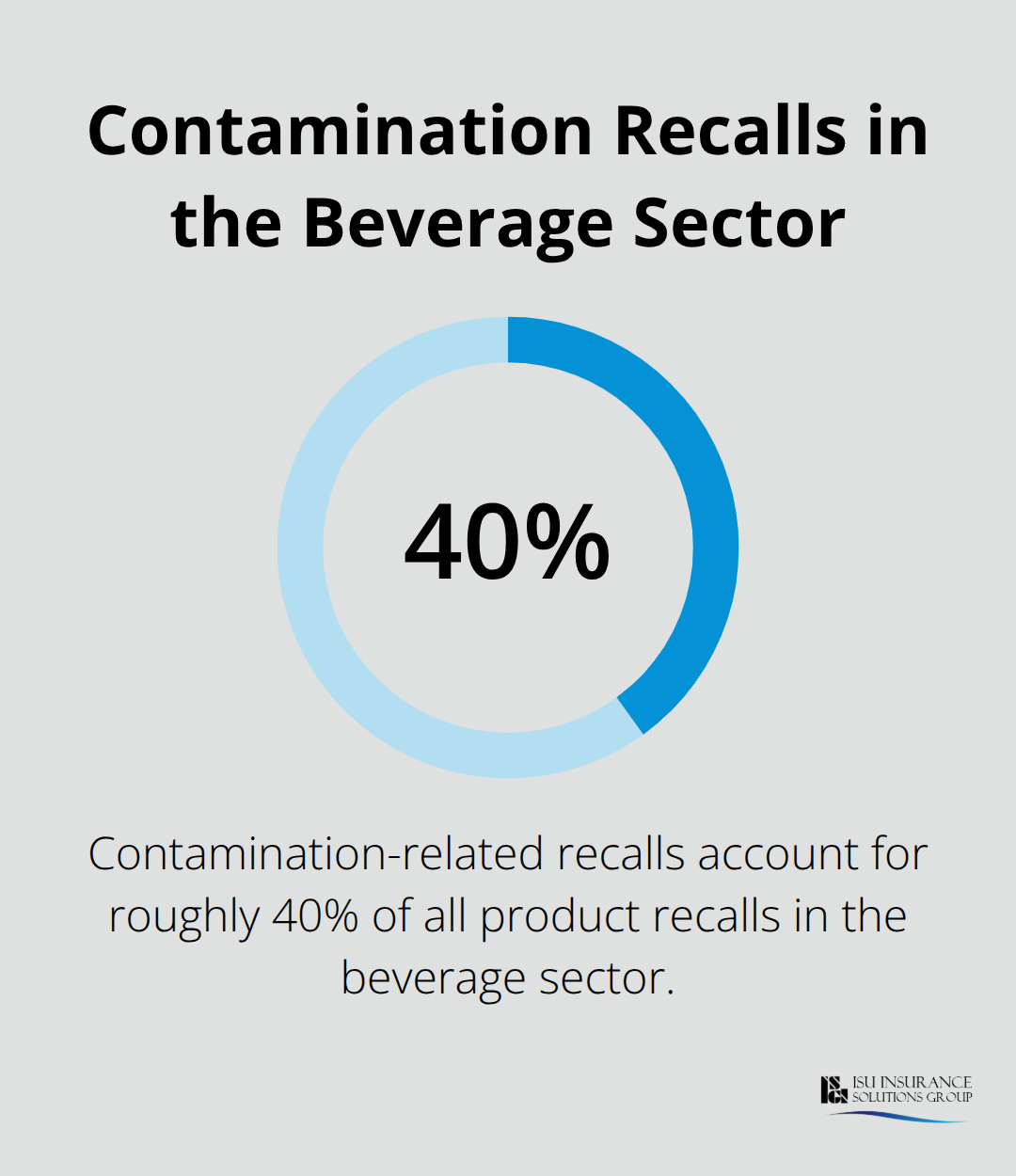
Contamination incidents cost craft breweries far more than replacement product alone. The FDA reports that food and beverage recalls increased significantly over the past decade, with contamination-related recalls accounting for roughly 40% of all product recalls in the beverage sector. A single batch contamination-whether from foreign objects, bacterial growth, or cross-contamination during production-forces you to pull inventory from shelves, notify distributors, and absorb the financial hit immediately.
Quality control failures happen even at well-run operations. The problem intensifies when contamination reaches consumers. You face medical claims, potential lawsuits, and damage to your brand that takes years to recover from. Most craft breweries operate with tight margins, so a major recall can threaten your survival.
Building Quality Control Into Your Process
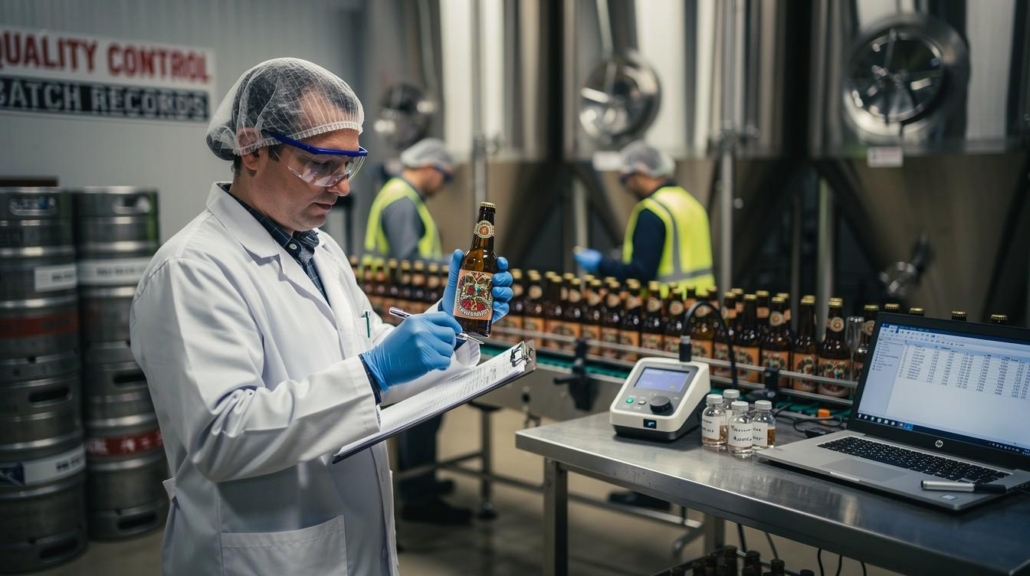
Implement strict environmental monitoring in your brewery. Test your water source regularly, establish documented cleaning protocols for all equipment, and conduct monthly product testing before release. Temperature control failures during storage and distribution also cause quality degradation that consumers notice and report. Inspect your facility for potential contamination sources-dust accumulation, pest activity, or improper storage conditions-and address them immediately.
Maintain detailed records of every quality check you perform. This documentation protects you if a claim arises and shows regulators that you took reasonable precautions. Work with your equipment suppliers to establish maintenance schedules that prevent breakdowns during critical production periods.
Labeling Mistakes and Allergen Exposure
Labeling mistakes represent another significant exposure that brewery owners underestimate. Federal law requires accurate allergen disclosure for ingredients like peanuts, tree nuts, milk, and soy, yet labeling errors remain a top source of recalls among craft breweries. A single missing allergen warning or incorrect ingredient statement triggers regulatory action and liability claims from consumers who suffered allergic reactions.
Distribution chain liability compounds this risk-your product passes through multiple hands before reaching consumers, and each transfer point introduces exposure. You cannot control how distributors or retailers handle your product once it leaves your facility, yet you remain liable for labeling accuracy throughout the supply chain.
Packaging Failures and Bottle Integrity
Defective packaging and bottle integrity problems create immediate injury risks. Exploding bottles, caps that fail to seal properly, or glass fragments in product generate direct injury claims. These failures often stem from equipment wear, improper bottle sourcing, or inadequate quality checks before filling. One exploding bottle at a bar or restaurant generates not just the direct injury claim but also premises liability exposure for the venue, which sometimes circles back to you.
Establish documented supplier agreements with your bottle manufacturer that include quality guarantees and testing protocols. Inspect incoming bottles for defects before use, maintain your filling equipment according to manufacturer specifications, and keep detailed batch records that show when and where each product was produced. This traceability becomes critical if you need to execute a targeted recall rather than pulling your entire inventory.
Understanding these three liability categories-contamination, labeling, and packaging-reveals why comprehensive insurance coverage matters so much for your brewery. The right policies protect you when these incidents occur, but they work best alongside strong operational practices that prevent problems from happening in the first place.
Insurance Coverage That Actually Protects Your Brewery
Foundation Coverage: General and Product Liability
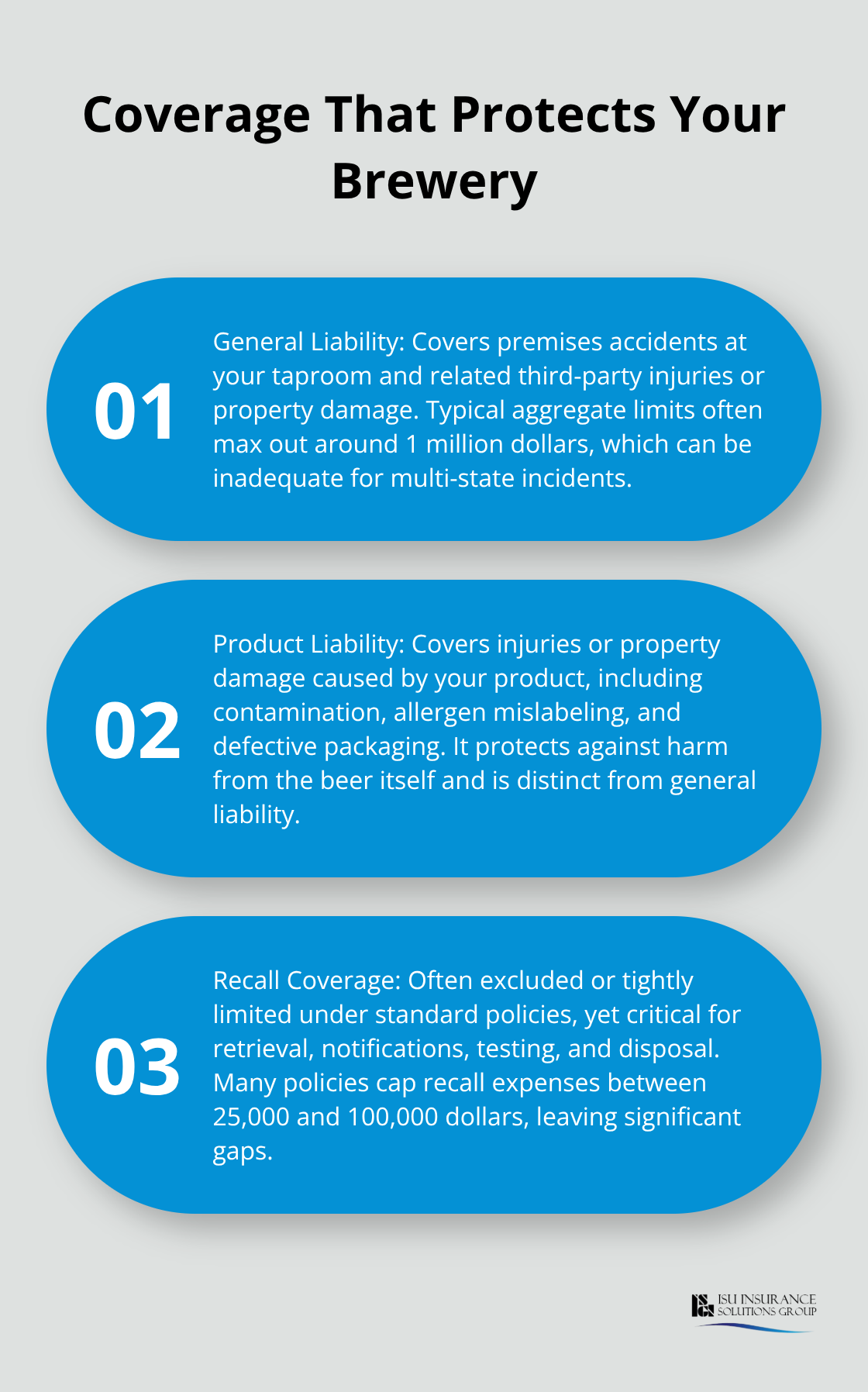
General liability and product liability insurance form the foundation of your protection, but most craft breweries carry inadequate limits that leave them exposed. Standard general liability policies typically max out at 1 million dollars in aggregate coverage, which sounds substantial until you face a serious contamination incident affecting multiple batches distributed across several states. Product liability insurance specifically covers injuries or property damage caused by your product, including contamination claims, allergic reactions from mislabeled allergens, and injuries from defective packaging. The difference matters: general liability covers premises accidents at your taproom, while product liability covers harm from the actual beer itself.
We recommend minimum coverage of 2 million dollars in product liability limits for any brewery distributing beyond local markets, with 5 million dollars preferred if you sell through multiple distribution channels. Underinsured breweries face devastating out-of-pocket costs when claims exceed their policy limits, which happens frequently in multi-state recalls involving serious injuries.
Recall Coverage: The Hidden Gap in Most Policies
Recall coverage deserves separate attention because standard product liability policies often exclude or severely limit recall expenses. Recall coverage pays for the actual cost of retrieving contaminated product from shelves, notifying distributors and consumers, testing replacement batches, and managing the logistics of destruction or safe disposal. Most policies cap recall expenses at 25,000 to 100,000 dollars.
Crisis management coverage extends further by covering public relations expenses, legal defense costs, and regulatory investigation fees that accumulate rapidly during serious incidents. This additional layer protects your brand reputation when media attention intensifies during recalls.
Traceability Systems: Your Best Defense Against Broad Recalls
Batch segregation and traceability systems reduce your actual recall costs by allowing targeted withdrawals instead of full-scale recalls. Implement lot coding that tracks production dates, equipment used, and ingredient sources so you can isolate affected batches within hours rather than days. Digital traceability systems like blockchain-based platforms cost between 5,000 and 15,000 dollars annually but pay for themselves by preventing unnecessary broad recalls that damage your brand and inventory.
When you combine strong traceability with adequate recall coverage, you transform a potential catastrophe into a manageable incident. The next section examines real-world incidents that show exactly how these protections work when breweries face actual product liability claims.
What Actually Happens When Recalls Hit Craft Breweries
Foreign Objects and Glass Contamination
Foreign object contamination remains the most common recall trigger for craft breweries, and the financial damage extends far beyond replacing a few cases. In 2024, a mid-sized Pacific Northwest brewery discovered glass fragments in a single batch after a filling machine component fractured during production. The brewery pulled 8,000 cases across five states, costing approximately 120,000 dollars in product replacement alone. Distributor notification, retailer coordination, and FDA reporting requirements pushed the total to 180,000 dollars. The brewery had adequate general liability coverage but carried only 50,000 dollars in recall expense coverage-leaving them personally responsible for 130,000 dollars.
This scenario repeats constantly across the industry because most breweries underestimate how quickly recall logistics consume budget. Your product moves through distributors to retailers to consumers in multiple states simultaneously, meaning you cannot execute a surgical recall without contacting dozens of locations within hours.
Allergen Mislabeling and Consumer Injury
Allergen mislabeling creates even sharper exposure because injury claims follow immediately. A Colorado craft brewery mistakenly omitted a peanut allergen warning on labels in 2023, resulting in one consumer hospitalization and a 425,000 dollar settlement before litigation even began. The brewery’s 1 million dollar product liability limit covered the claim, but only barely. State attorneys general increasingly pursue craft beverage companies aggressively on allergen violations because consumer harm is straightforward and preventable.
Distribution Chain Liability Exposures
Distribution chain liability exposes you to claims originating outside your facility entirely. A craft brewery in Oregon shipped product to a distributor who stored it improperly in a warm warehouse for three weeks, causing off-flavors and potential microbial growth. When consumers complained of illness, they sued the brewery rather than the distributor because breweries hold consumer trust and appear as the responsible party. Your insurance must cover liability arising from distributor negligence that affects your product, yet many standard policies contain exclusions for third-party handling failures.
Protecting Against Underinsurance
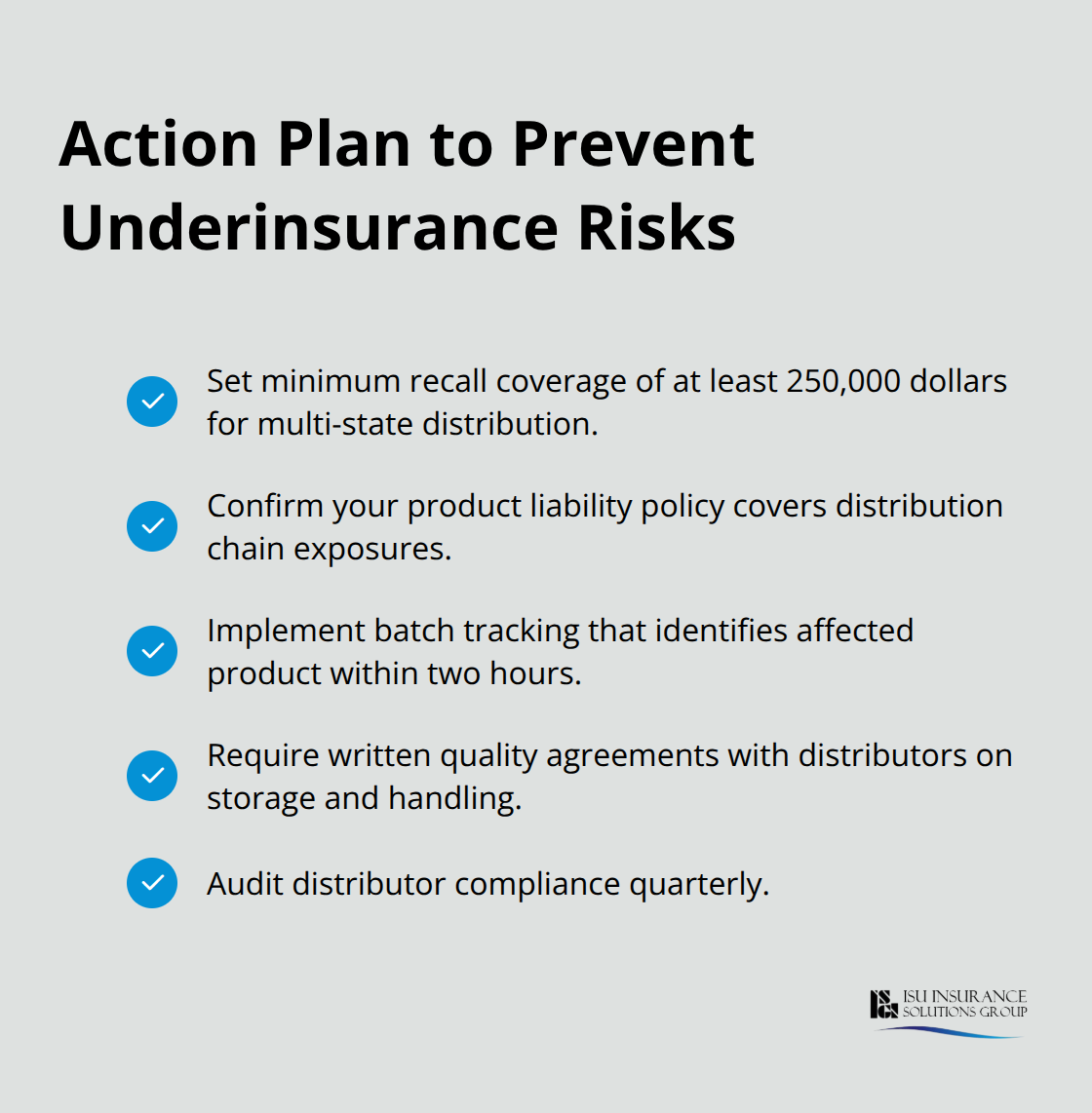
Underestimating recall costs and distribution exposure creates financial catastrophe regardless of insurance coverage limits. Verify your recall coverage reaches minimum 250,000 dollars for any brewery distributing across multiple states, and confirm your product liability policy explicitly covers distribution chain exposures. Implement batch tracking systems that identify affected product within two hours of discovering contamination, reducing the scope of recalls from thousands of cases to hundreds. Require written quality agreements with your distributors specifying storage temperature, humidity, and handling protocols, then audit compliance quarterly.
These operational controls work directly with your insurance coverage to transform potential disasters into contained incidents.
Final Thoughts
Craft brewery product liability doesn’t vanish through wishful thinking or hoping nothing goes wrong. The incidents we’ve covered-contamination, allergen mislabeling, packaging failures, and distribution chain exposures-happen to real breweries every year, and they cost far more than most owners anticipate. Your brewery’s survival depends on two parallel strategies working together: operational excellence that prevents problems, and comprehensive insurance coverage that protects you when incidents occur despite your best efforts.
The breweries that weather recalls and claims successfully maintain detailed batch records, implement traceability systems that identify affected product within hours, establish written quality agreements with distributors, and carry adequate insurance limits matched to their actual distribution footprint. A brewery selling across five states needs fundamentally different coverage than one operating a single taproom. Your product liability limits should reflect your real exposure, not an arbitrary number that sounds reasonable. Work with an agency that understands craft brewery operations and can quote coverage through multiple carriers to find the best protection at competitive rates-ISU Insurance Solutions Group has served Washington and Oregon breweries since 1983, offering specialty coverage designed specifically for your industry through partnerships with over 20 carriers.
Your brewery’s reputation and financial stability depend on managing craft brewery product liability before it becomes a crisis. Start today by reviewing your current coverage limits, implementing batch traceability if you haven’t already, and establishing quality protocols that prevent contamination at every production stage.
The information provided in this blog is for general informational purposes only and does not constitute legal, financial, or insurance advice. Coverage options, terms, and availability may vary. Please consult with a licensed professional for advice specific to your situation.