

Auto Insurance for Drivers: Getting the Right Coverage
Picking the right auto insurance for drivers is one of the most important financial decisions you’ll make. Most people don’t understand their coverage options, which often leads to either overpaying or being underprotected.
We at ISU Insurance Solutions Group created this guide to walk you through the coverage types that matter, the factors that shape your rates, and how to select a policy that actually fits your life.
Understanding Auto Insurance Coverage Types
Liability Coverage: The Legal Foundation
Liability coverage forms the foundation of every auto insurance policy, and most states legally require it. This coverage pays for damage or injuries you cause to other people and their property when you’re at fault in an accident. Most states set minimum liability limits, but these minimums are dangerously low. In Washington and Oregon, the minimum is typically 25/50/25, meaning $25,000 per person and $50,000 per accident for bodily injury, plus $25,000 for property damage. A single serious accident can wipe out these limits in seconds. One injury claim alone can easily reach $100,000 or more, which means you’d pay anything above your policy limit from your own pocket. We at ISU Insurance Solutions Group recommend carrying at least 100/300/100 limits, and higher if you have significant assets to protect.
Collision and Comprehensive Coverage for Your Vehicle
Your liability coverage won’t pay for damage to your own vehicle-that’s where collision and comprehensive coverage come in. Collision coverage pays to repair or replace your car when you hit another vehicle, object, or structure, regardless of who’s at fault. Comprehensive coverage handles everything else: theft, vandalism, weather damage, animal strikes, and glass breakage. These two coverages are optional if you own your car outright, but lenders and leasing companies require them. The key decision is your deductible-the amount you pay before insurance kicks in. A $500 deductible means lower premiums but higher out-of-pocket costs when damage occurs, while a $1,000 deductible reverses that trade-off.
Protection Against Uninsured and Underinsured Drivers
Uninsured motorist protection covers you if someone without insurance hits you, while underinsured motorist protection covers you when their policy limits fall short of your medical bills or repair costs. These coverages protect you and your passengers and matter especially in Oregon and Washington, where uninsured driver rates remain significant. Choosing appropriate limits across all these coverage types requires understanding your vehicle’s value, your financial situation, and your tolerance for risk. The next step involves looking at what actually shapes your rates-because your coverage choices are only half the equation.
Factors That Affect Your Auto Insurance Rates
Driving History: Your Most Expensive Record
Your driving history is the single most powerful factor determining your insurance cost, and insurers scrutinize it heavily. A clean record with no accidents or violations typically qualifies you for the best rates available, while driving history impacts auto insurance rates can increase your premium significantly. Multiple violations compound the damage-a DUI can raise rates by 300 to 400 percent for years. Insurance companies in Washington and Oregon pull your Motor Vehicle Report, which shows every violation, accident, and claim from the past three to five years. This means a speeding ticket from four years ago still matters today.
If you have a poor driving history, shopping around becomes essential because different carriers weight violations differently. Some insurers specialize in higher-risk drivers and offer significantly better rates than standard carriers, even with multiple incidents on your record.
Vehicle Type and Safety Features
Your vehicle’s characteristics determine both the cost to repair it and the likelihood you’ll file a claim, which directly impacts your premiums. A new Honda Civic with advanced safety features like automatic emergency braking and lane departure warning costs less to insure than an older sports car, even if both vehicles have the same value. Insurance companies use the National Highway Traffic Safety Administration’s crash test ratings and claim data from the Insurance Institute for Highway Safety to calculate risk.
Vehicles with high theft rates-particularly pickup trucks and certain luxury models-carry higher comprehensive coverage costs. Your annual mileage matters significantly too; drivers who commute 50 miles daily pay substantially more than those who drive only 5,000 miles yearly because more time on the road means higher accident probability.
Age, Location, and Mileage Patterns
Age and location round out the equation: drivers under 25 pay roughly double what 30-year-olds pay for identical coverage, while urban Oregon drivers typically pay 15 to 25 percent more than rural Washington drivers due to higher accident and theft rates in populated areas. When shopping for coverage, disclose your actual annual mileage accurately and explore whether your employer offers commute reduction programs, since some insurers offer discounts for carpooling or remote work arrangements.
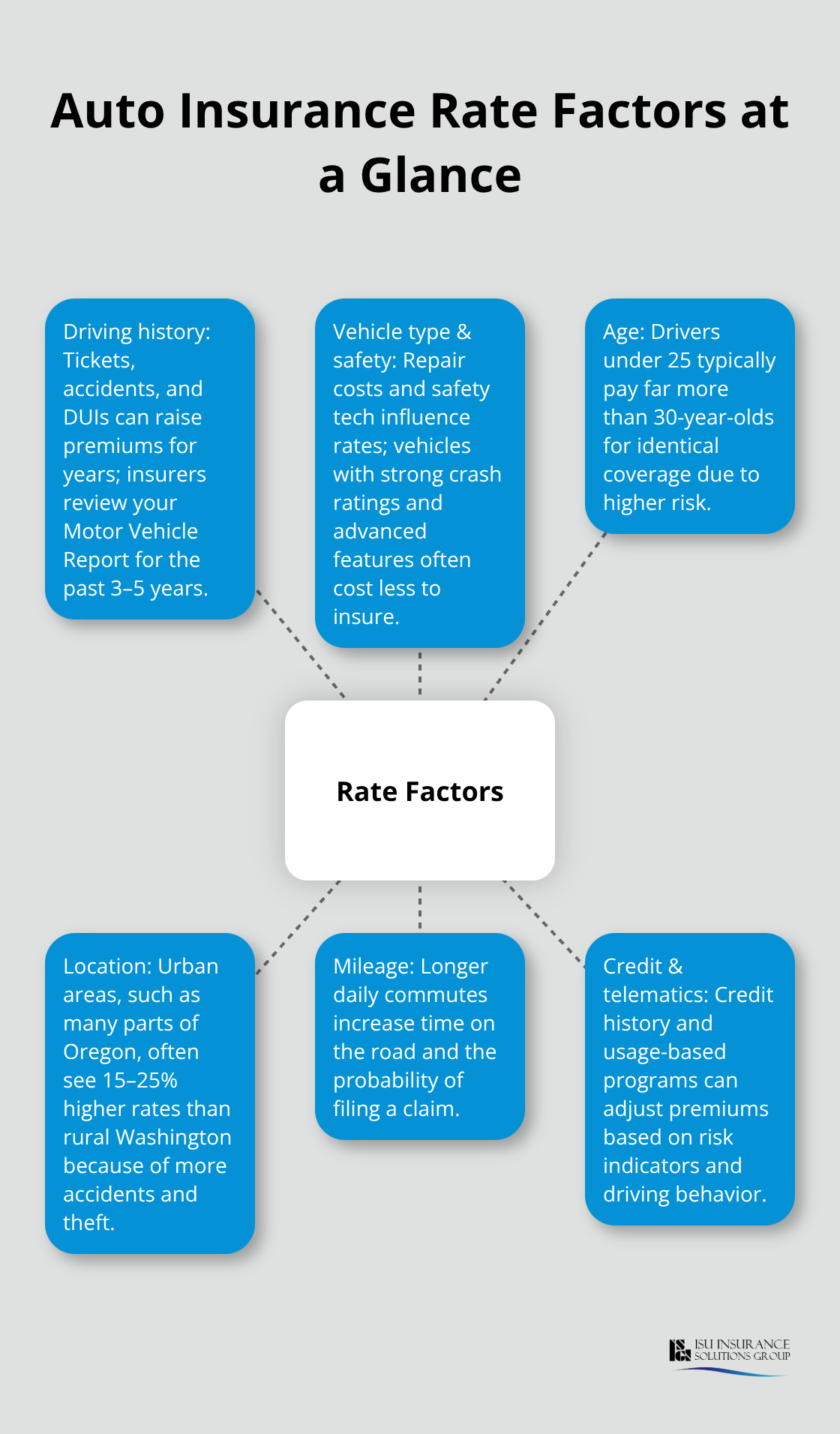
Beyond these core factors, credit history and usage-based programs also influence what you’ll pay. These rate factors work together to shape your premium, but they’re only part of the picture. The real opportunity lies in how you select coverage limits and deductibles that match your specific situation-and that’s where the right guidance makes all the difference.
How to Choose the Right Coverage for Your Needs
Match Your Coverage to Your Financial Reality
The mistake most drivers make is selecting coverage based on what sounds safe rather than what actually protects their specific situation. Start by writing down three things: your vehicle’s current market value, your total liquid assets (savings, investments, retirement accounts), and how many miles you drive annually. These three numbers determine whether you’re underinsured, properly covered, or wasting money on unnecessary protection.
If your vehicle is worth $8,000 and you have $15,000 in savings, carrying $250,000 in liability coverage makes sense because a serious accident could wipe out your savings and expose future income to garnishment. Conversely, if you drive a 12-year-old paid-off sedan worth $4,000 and have minimal assets, dropping collision coverage entirely might be the right call-your maximum loss is that $4,000, so paying $40 monthly for collision protection costs $480 yearly. If you can absorb a $4,000 loss without financial stress, you’re throwing money away. This isn’t about being reckless; it’s about matching your coverage to your actual financial exposure.
Optimize Your Deductible Strategy
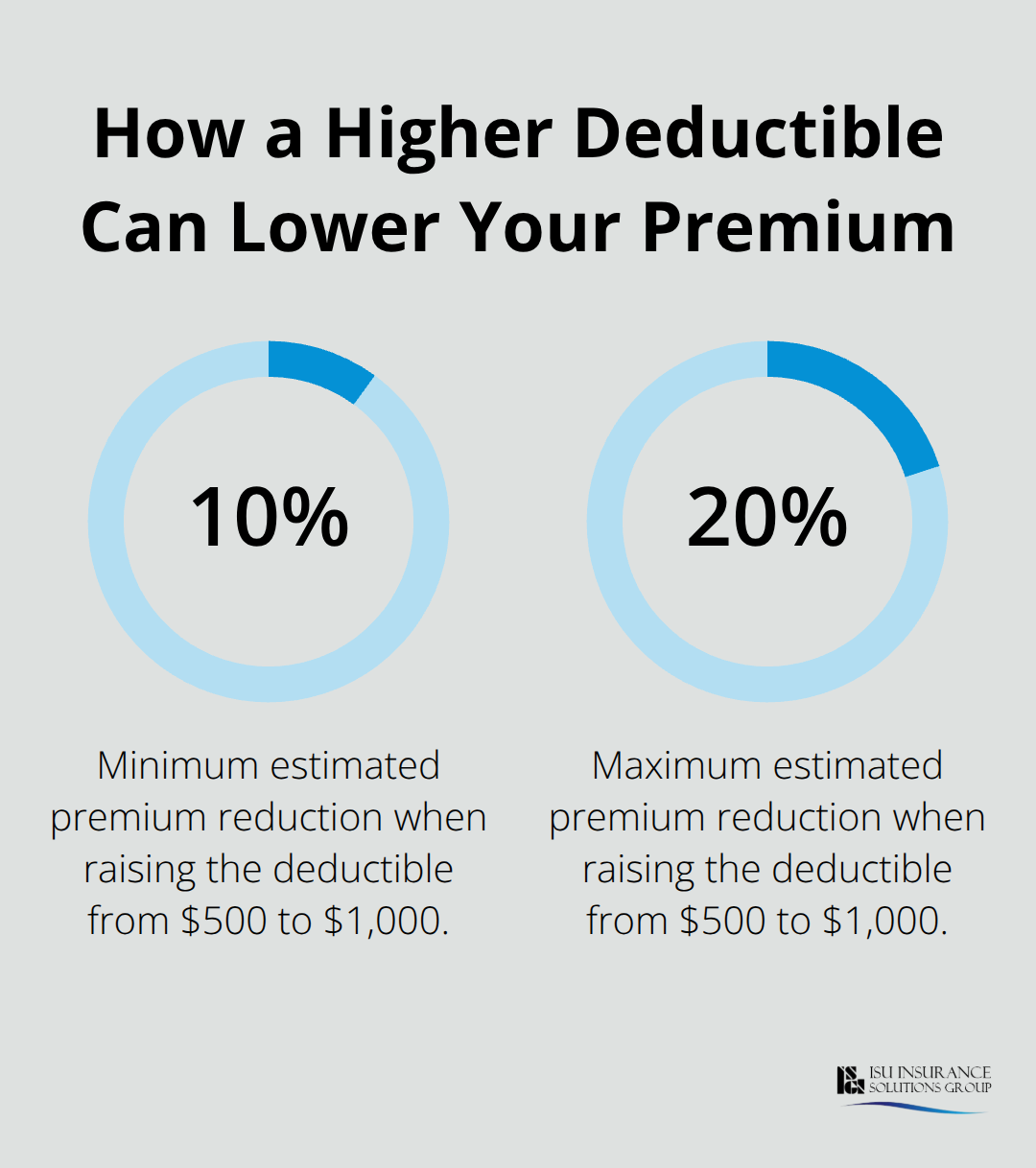
Your deductible choice directly controls your monthly payment and deserves serious attention. Moving from a $500 to $1,000 deductible may reduce premiums by 10 to 20 percent. If you have consistent monthly cash flow and an emergency fund covering $1,000, that higher deductible pays for itself in about four to six months of savings.
However, if unexpected expenses regularly drain your checking account, a lower deductible prevents the scenario where you avoid filing a claim because you can’t afford the out-of-pocket cost-which defeats the entire purpose of carrying insurance. The right deductible balances your premium savings against your ability to pay when damage occurs.
Compare Quotes Across Multiple Carriers
Comparing quotes from multiple carriers is non-negotiable because rate variation for identical coverage is substantial. A 35-year-old driver with one speeding ticket might pay $1,200 annually with one carrier and $850 with another for the same limits and deductibles. Try getting quotes from at least three carriers before deciding, and local agents can pull one-call multi-carrier quotes showing you side-by-side comparisons with different deductible options.
This approach eliminates guessing about price and shows exactly what each carrier charges for your specific risk profile. Don’t settle for online quotes alone-local agents understand regional factors like Oregon weather patterns and Washington urban congestion that impact your actual claim likelihood and rates.
Final Thoughts
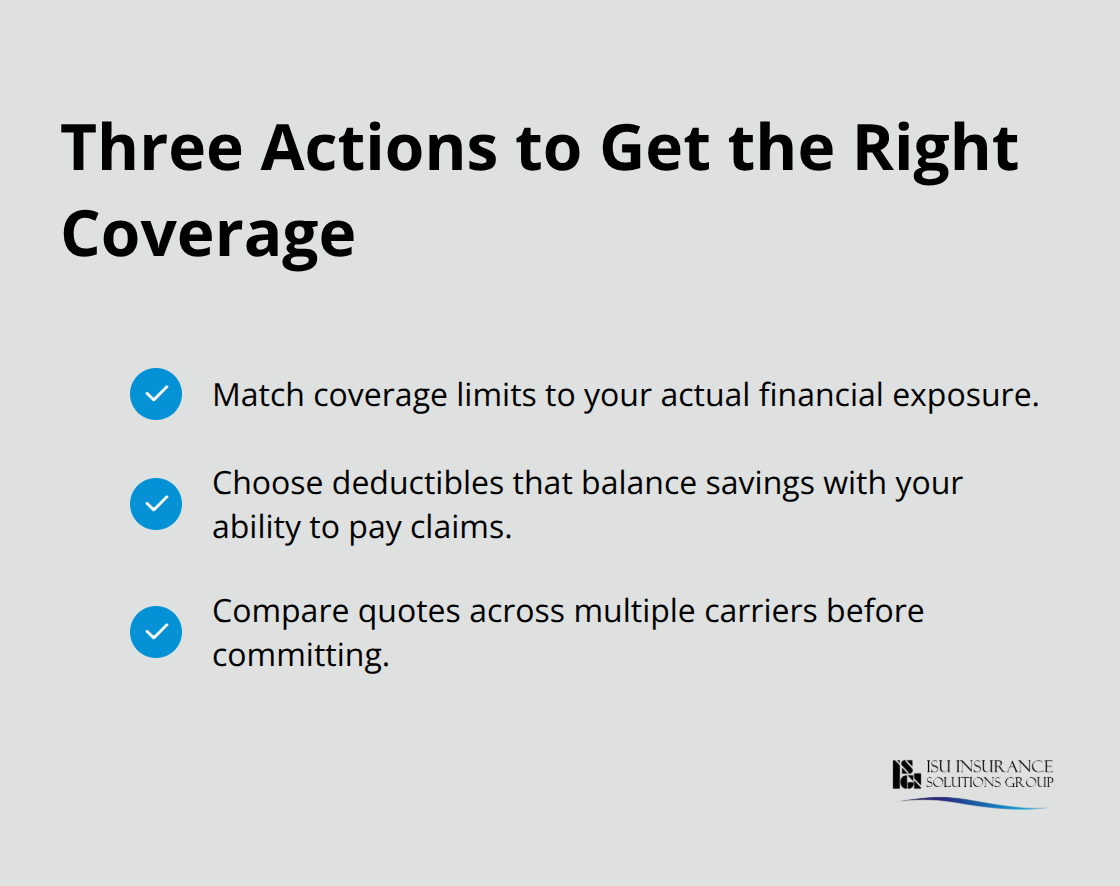
Selecting the right auto insurance for drivers requires three concrete actions: match your coverage limits to your actual financial exposure, choose deductibles that balance savings against your ability to pay claims, and compare quotes across multiple carriers before committing to any policy. Your vehicle’s value, your driving patterns, your assets, and your risk tolerance all point toward different coverage decisions than someone else’s circumstances would suggest. Generic advice fails here because overpaying for unnecessary protection and being underinsured both create real financial damage.
Working with a local agent becomes valuable because they understand your region’s specific risks-Oregon’s weather patterns, Washington’s urban congestion, local theft rates-and identify coverage gaps you might miss on your own. An agent can pull quotes from multiple carriers simultaneously, showing you side-by-side comparisons that reveal exactly where you’ll save money and where you need stronger protection. This approach eliminates guessing about price and gives you confidence that your coverage matches your needs.
Contact ISU Insurance Solutions Group to get personalized quotes and guidance tailored to your specific situation. Our agents will walk you through your options without pressure, answer questions about coverage limits and deductibles, and help you build a policy that protects what matters most. Reach out to a local agent, provide your vehicle and driving information, and review quotes from multiple carriers.
The information provided in this blog is for general informational purposes only and does not constitute legal, financial, or insurance advice. Coverage options, terms, and availability may vary. Please consult with a licensed professional for advice specific to your situation.