
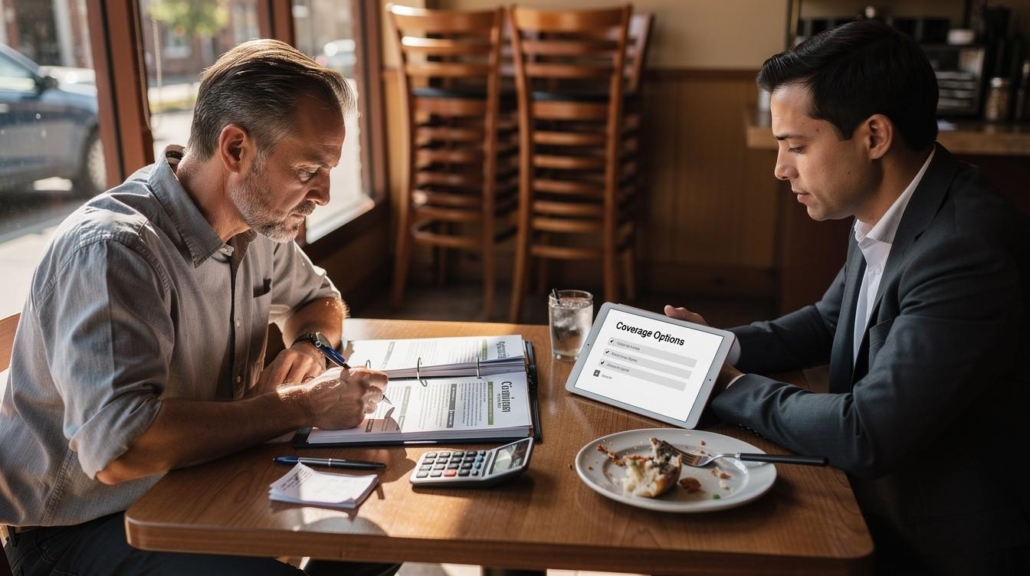
Washington Restaurant Coverage Options: Finding the Right Fit
Running a restaurant in Washington means navigating complex insurance requirements that most owners don’t fully understand. The wrong coverage leaves you exposed to costly claims, while over-insuring wastes money you could spend elsewhere.
We at ISU Insurance Solutions Group help restaurant owners cut through the confusion and find Washington restaurant coverage options that actually fit their business. This guide walks you through what you need to know.
Understanding Washington Restaurant Insurance Requirements
State-Mandated Coverage Types
Washington requires all restaurants to maintain workers’ compensation insurance, with coverage mandated at a minimum of $1,000,000 per claim. Operating without it violates state law and exposes you to personal liability. General liability insurance ranks equally essential, protecting against bodily injury and property damage claims that occur on your premises.
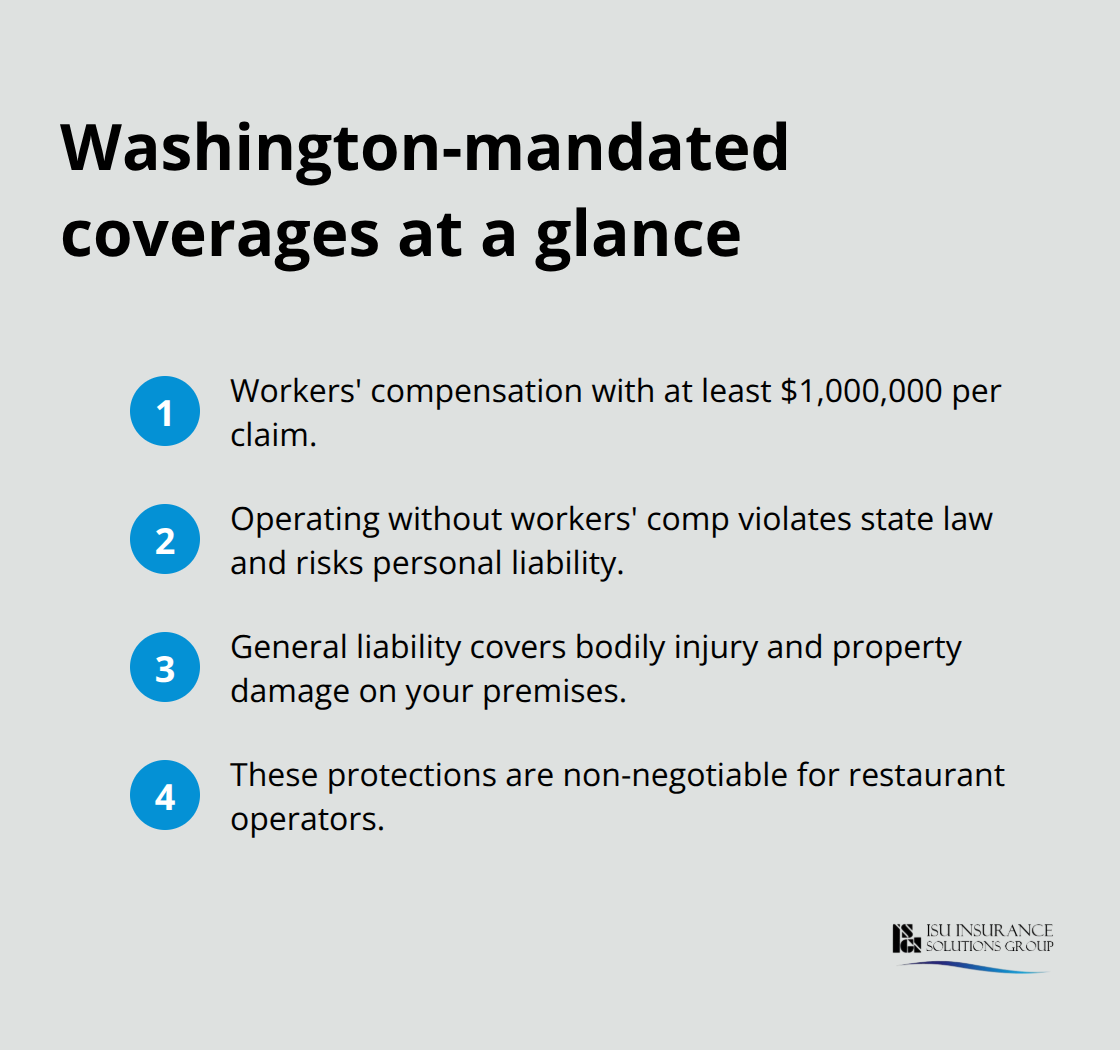
Food service operations face specific risks that standard retail businesses don’t encounter, making these protections non-negotiable for any restaurant operator.
Liability Exposure in Food Service Operations
Foodborne illness claims can cost $50,000 to $500,000 depending on severity and number of affected customers. Slip-and-fall incidents in restaurants occur at rates significantly higher than other service industries. If you serve alcohol, liquor liability coverage becomes mandatory in Washington. Without it, you face personal responsibility for damages caused by intoxicated patrons, including injuries, property damage, and third-party accidents. This single exposure can bankrupt a restaurant owner.
Common Claims and Cost Drivers in the Industry
Most restaurants need property insurance covering kitchen equipment, inventory, and building improvements, since equipment replacement costs exceed $100,000 for full kitchen setups in established locations. Employment practices liability insurance protects you from wrongful termination, discrimination, and harassment claims-critical given the high turnover in food service where annual turnover rates hover around 150 percent according to the Bureau of Labor Statistics. Cyber liability coverage matters more than restaurant owners realize, especially if you process credit cards or maintain customer data. A single data breach can cost $4,000 to $10,000 in notification and remediation expenses, plus potential regulatory fines. Equipment breakdown coverage prevents catastrophic losses when your walk-in cooler fails or your HVAC system collapses during summer service (a broken cooler can cost $3,000 to $8,000 in emergency repairs and spoiled inventory).
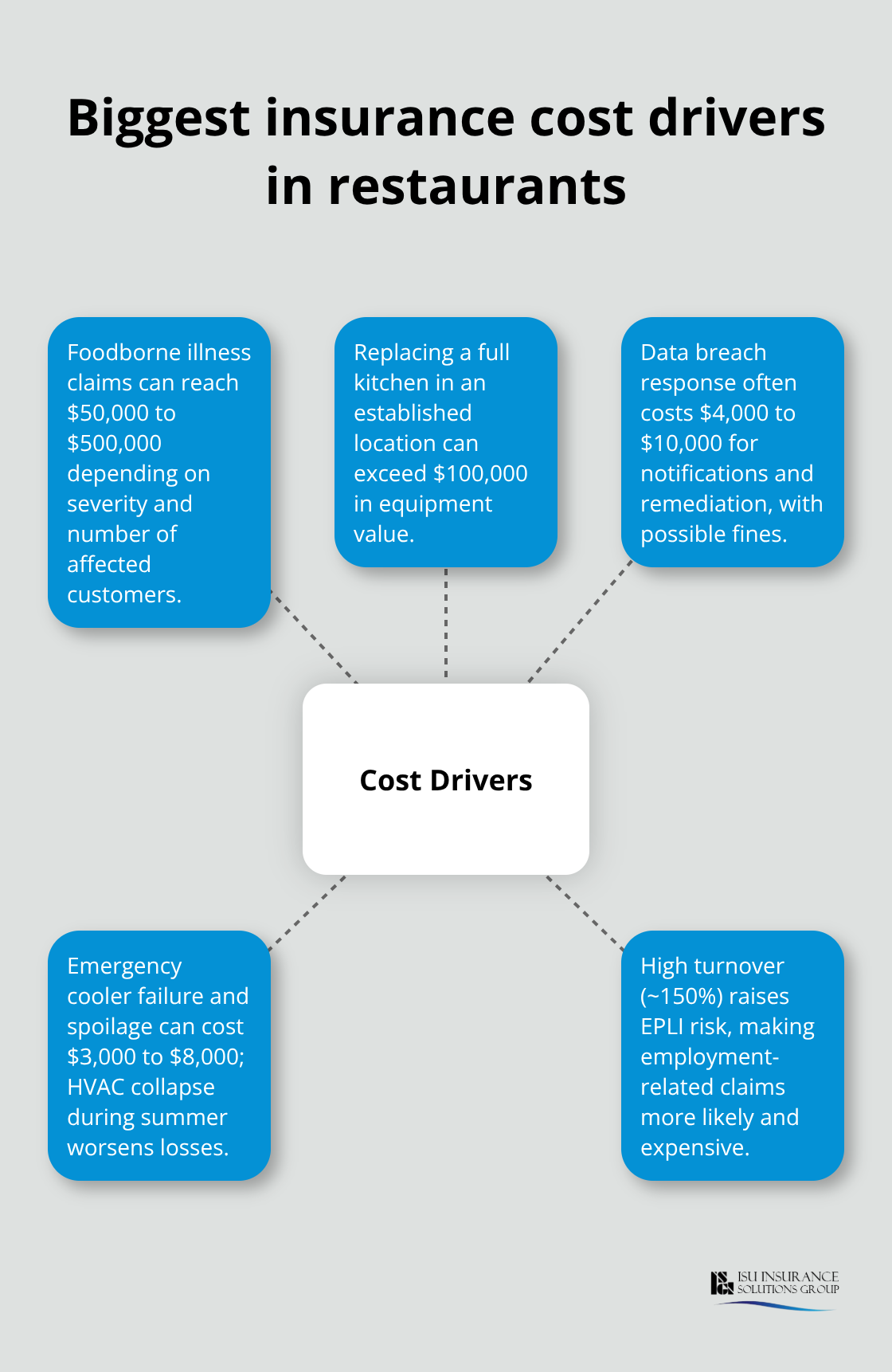
These aren’t theoretical concerns-they’re daily operational realities that separate well-protected restaurants from those facing financial crisis after a single incident.
Beyond state requirements, your specific risk profile demands additional protections that many restaurant owners overlook. The coverage options available to you vary significantly based on your operation’s size, menu offerings, and staffing levels. Understanding which protections address your actual exposures helps you build a policy that covers what matters most to your business.
Types of Restaurant Coverage Available
General Liability and Property Insurance
General liability and property insurance form the foundation of restaurant protection, but most owners misunderstand what these policies actually cover. General liability protects you when a customer slips on a wet floor, gets burned by hot oil, or suffers foodborne illness at your establishment. Property insurance covers your physical assets-kitchen equipment, inventory, furniture, and building improvements if you own the space. The National Restaurant Association reports that the average general liability claim in food service runs between $15,000 and $75,000, depending on injury severity.
Many restaurant owners underestimate their property values and carry insufficient coverage limits. A commercial kitchen with walk-in coolers, ovens, grills, and prep stations easily exceeds $150,000 in equipment value, yet some owners insure these assets at $50,000 limits. When equipment fails or fire damage occurs, this gap becomes catastrophic. You should conduct a detailed equipment inventory before requesting quotes-document serial numbers, purchase dates, and replacement costs for everything from your POS system to your hood vents.
Workers’ Compensation and Employment Practices Liability
Workers’ compensation and employment practices liability address your biggest ongoing expense: staff. Washington’s workers’ compensation insurance covers medical costs and lost wages when employees suffer job-related injuries. Restaurants experience higher injury rates than most industries due to burns, cuts, and repetitive strain injuries. Employment practices liability insurance protects against wrongful termination claims, discrimination suits, and harassment allegations-critical given the Bureau of Labor Statistics data showing 150 percent annual turnover in food service.
This coverage typically costs $1,000 to $3,000 annually for small restaurants but prevents single lawsuits from exceeding $50,000 in legal defense costs alone. The investment pays for itself after one employment dispute.
Liquor Liability and Specialized Protections
Liquor liability insurance becomes non-negotiable if you serve alcohol; Washington law holds establishments liable for damages caused by intoxicated patrons. A single incident involving an intoxicated customer causing injury or property damage can trigger claims exceeding $100,000. This exposure alone justifies the annual premium cost.
Specialized protections round out comprehensive coverage-cyber liability for credit card processing and customer data breaches, equipment breakdown for cooler and HVAC failures, and product liability if you sell packaged goods. The cost of these specialized policies ranges from $300 to $1,200 annually depending on your operation, yet many restaurants skip them entirely, betting they won’t need the protection. Understanding your actual risk profile helps you determine which specialized coverages matter most for your specific operation.
Selecting Coverage That Matches Your Restaurant’s Needs
Assess Your Property and Equipment Values
Start by documenting exactly what you own and what could go wrong. Walk through your restaurant with a notebook and photograph every piece of equipment-your POS system, espresso machine, walk-in cooler, hood vents, tables, chairs, and inventory. Record purchase dates and replacement costs for each item. Most restaurant owners underestimate their property values by 40 to 60 percent, which means they’re massively underinsured. A full kitchen setup in an established location easily reaches $150,000 to $250,000 in replacement value. Without an accurate inventory, you’ll request quotes based on guesses, and your policy won’t cover the actual losses when something fails.
Map Your Staffing and Operations
Calculate your annual payroll and categorize employees by role-kitchen staff face different injury risks than front-of-house workers. This information directly impacts your workers’ compensation premium and helps carriers understand your specific exposure. Document whether you serve alcohol, what types of food you prepare, if you have outdoor seating, and whether you host private events. Each factor changes which coverages matter most and what premiums you’ll actually pay.
Request Quotes from Multiple Carriers
Request quotes from at least three carriers and provide each one with identical details about your operation. This forces apples-to-apples comparisons instead of pricing based on incomplete information. Most restaurants receive quotes from only one or two carriers, which means they never discover they’re overpaying by 30 to 50 percent. When comparing quotes, ignore the total premium price initially and instead examine the coverage limits, deductibles, and what’s actually included versus excluded.
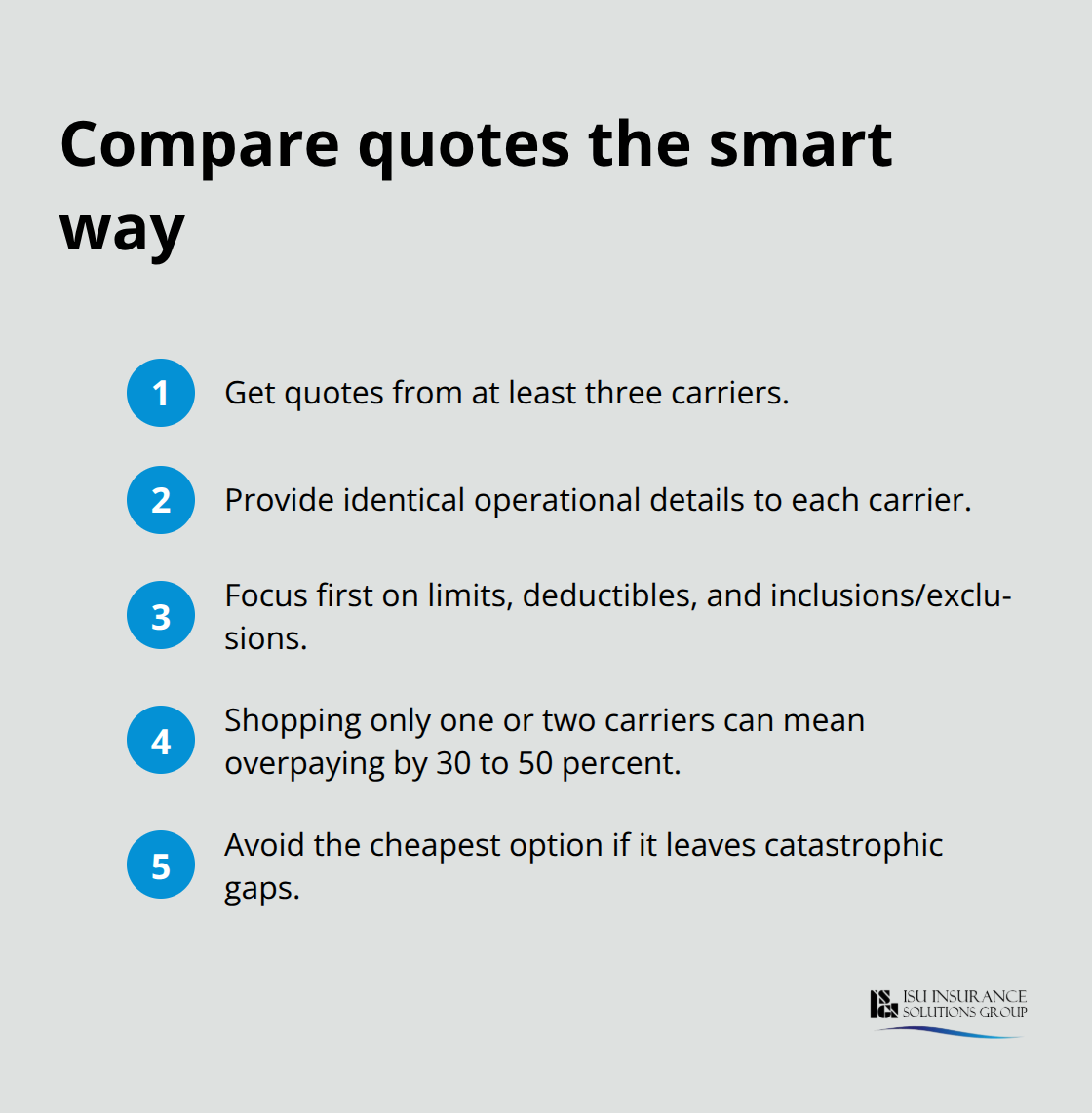
A $2,000 annual premium with a $5,000 deductible and $500,000 general liability limits differs drastically from a $1,800 premium with a $2,500 deductible and $1,000,000 limits. The cheaper option might leave you catastrophically exposed.
Identify Coverage Gaps and Exclusions
Ask each carrier specifically what they exclude-many policies don’t cover liquor liability claims, cyber breaches, or equipment breakdown unless you add riders. These exclusions often cost $300 to $1,200 annually to add but prevent devastating gaps in protection. A policy that appears affordable might hide expensive gaps that surface only after a claim occurs. Carriers frequently structure their base offerings to look competitive while burying critical protections in optional add-ons.
Build Your Custom Policy Stack
Start with state-mandated coverage, then add specialized protections based on your actual risk profile rather than what you think you might need someday. Your equipment inventory, staffing structure, and operational details (whether you serve alcohol, host events, or sell packaged goods) determine which additional riders matter most for your restaurant.
Final Thoughts
Getting your Washington restaurant coverage options right protects your business from the financial devastation that follows a single claim. Most restaurant owners either carry too little coverage and face catastrophic gaps, or they overpay for protections they don’t actually need. The middle ground exists, but finding it requires honest assessment of your specific operation rather than guessing at what might be necessary someday.
Start by completing the inventory work outlined in this guide-document your equipment values, staffing structure, and operational details so carriers understand exactly what they’re protecting. Request quotes from multiple carriers using identical information, then compare coverage limits and exclusions rather than just premium prices. A cheaper policy with dangerous gaps costs far more than a slightly higher premium that actually covers your losses.
We at ISU Insurance Solutions Group have served Washington and Oregon businesses since 1983, and we work with 20+ carriers to find coverage that matches your actual needs rather than forcing you into one-size-fits-all packages. Contact us today to request quotes from multiple carriers in a single conversation, then compare options side-by-side with a local agent who understands the specific risks restaurants face in our region. Review your policy annually as your restaurant evolves, since equipment purchases, staffing changes, menu additions, and operational shifts all affect which coverages matter most.
The information provided in this blog is for general informational purposes only and does not constitute legal, financial, or insurance advice. Coverage options, terms, and availability may vary. Please consult with a licensed professional for advice specific to your situation.