

Winery Insurance Quotes: Compare Policies for Your Winery
Running a winery means managing risks most other businesses never face. From fermentation accidents to tasting room injuries, the threats are real and expensive.
At ISU Insurance Solutions Group, we help winery owners find the right coverage. Getting multiple winery insurance quotes lets you compare what different carriers actually offer and what they charge.
Why Wineries Face Unique Insurance Gaps
Standard Policies Leave Wineries Exposed
Standard business insurance policies don’t cover winery operations. Most general liability policies exclude alcohol-related claims, which means your tasting room guests, distribution accidents, and fermentation mishaps fall through the cracks. Wine industry data shows that product liability claims against wineries average between $50,000 and $500,000 depending on severity, with some cases exceeding $1 million when multiple consumers are affected. A single contamination incident or allergic reaction at your tasting room can wipe out an entire year’s profit.
Property Risks Threaten Your Entire Operation
Property risks are equally serious for wineries. Your operation holds massive value in inventory, equipment, and facilities that standard policies undervalue. A fire in your barrel room doesn’t just destroy wine-it halts production for months while you rebuild. Business interruption becomes catastrophic for wineries since fermentation cannot pause. If your facility becomes unusable during harvest season, you lose that entire vintage and the revenue it would have generated (potentially hundreds of thousands of dollars for mid-sized operations).
Tasting Room Liability Requires Specialized Protection
Tasting room operations create liability exposures that most business owners underestimate. Your visitors consume alcohol on your premises, use your facilities, and interact with your staff-each interaction carries legal risk. If a guest has an accident at your tasting room and claims you over-served them, a standard liability policy likely won’t defend you. Wine liability policies specifically address these hospitality exposures and include protections for liquor service.
Employment practices liability matters too since winery staff handle alcohol and work in potentially hazardous production environments. These workers face risks that typical employment coverage doesn’t anticipate (chemical exposure, equipment operation, heavy lifting in temperature-controlled spaces). Specialized winery insurance accounts for these realities and protects your business from employment-related claims.
Getting the Right Coverage Matters
We at ISU Insurance Solutions Group work with winery owners across Washington and Oregon to identify these gaps and build customized coverage that actually protects your operation. The goal isn’t just getting a quote-it’s getting the right coverage for every risk your winery actually faces. Understanding what coverage types address each specific threat helps you compare quotes more effectively.
Key Coverage Types for Winery Operations
General Liability and Liquor Liability Work Together
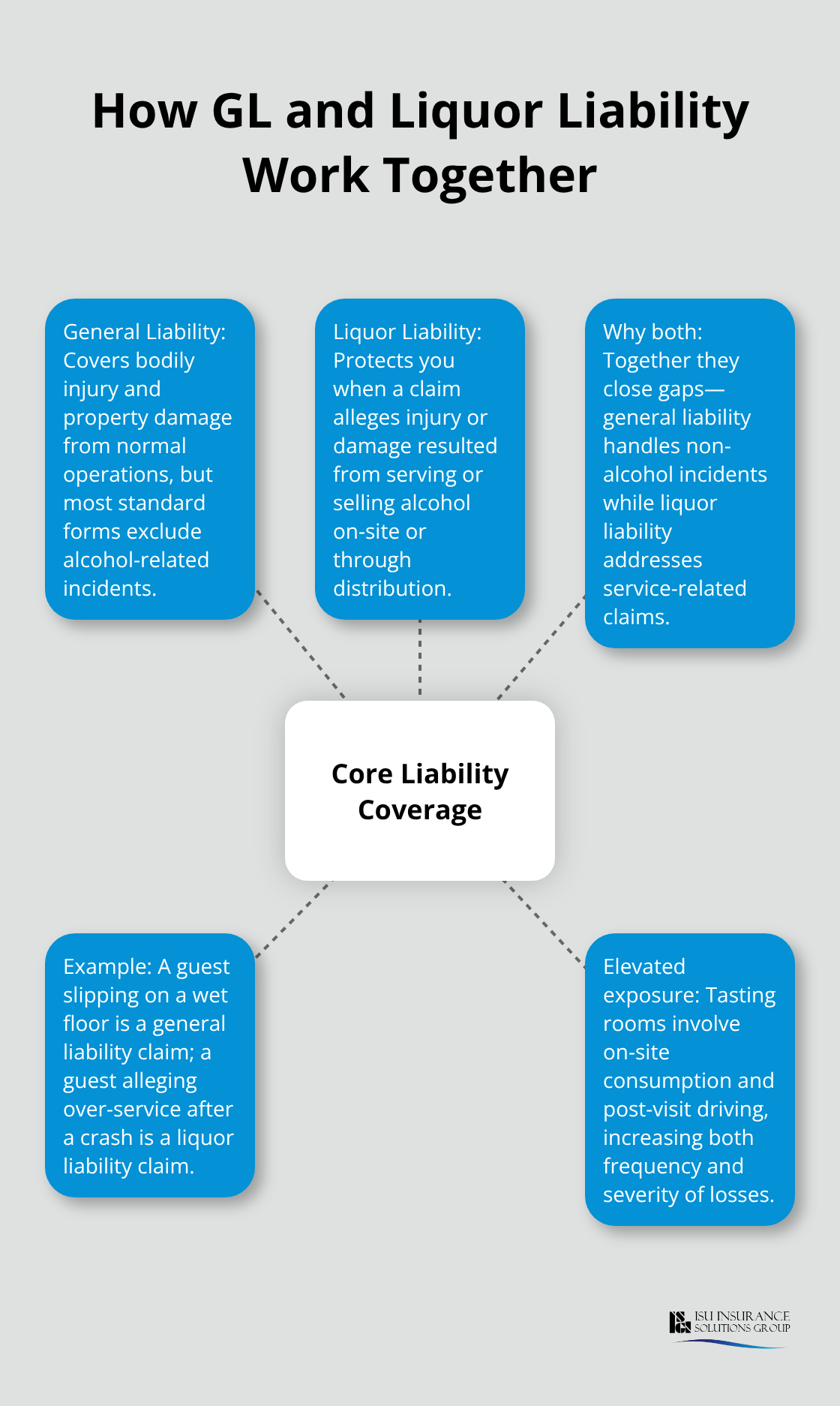
General liability and liquor liability form the foundation of winery protection, but they serve different purposes. General liability covers bodily injury and property damage claims that arise from your business operations, yet most standard policies explicitly exclude alcohol-related incidents. Liquor liability specifically protects you when someone claims injury or damage resulted from serving or selling alcohol at your tasting room or through distribution.
The Insurance Information Institute reports that liquor liability claims average $250,000 to $500,000 for hospitality businesses, and wineries face elevated exposure because guests consume alcohol on-site while operating vehicles afterward. You need both policies working together-general liability handles non-alcohol claims like a guest slipping on your floor, while liquor liability covers the guest who claims over-service led to an accident.
Property Insurance Protects Your Inventory and Facilities
Property insurance for your vineyard, barrel room, and tasting facility protects against fire, theft, weather damage, and equipment breakdown that could halt operations mid-harvest. Wine inventory represents significant value that standard property policies often underinsure, so you need coverage specifically rated for your barrel stock, bottled inventory, and climate-control equipment.
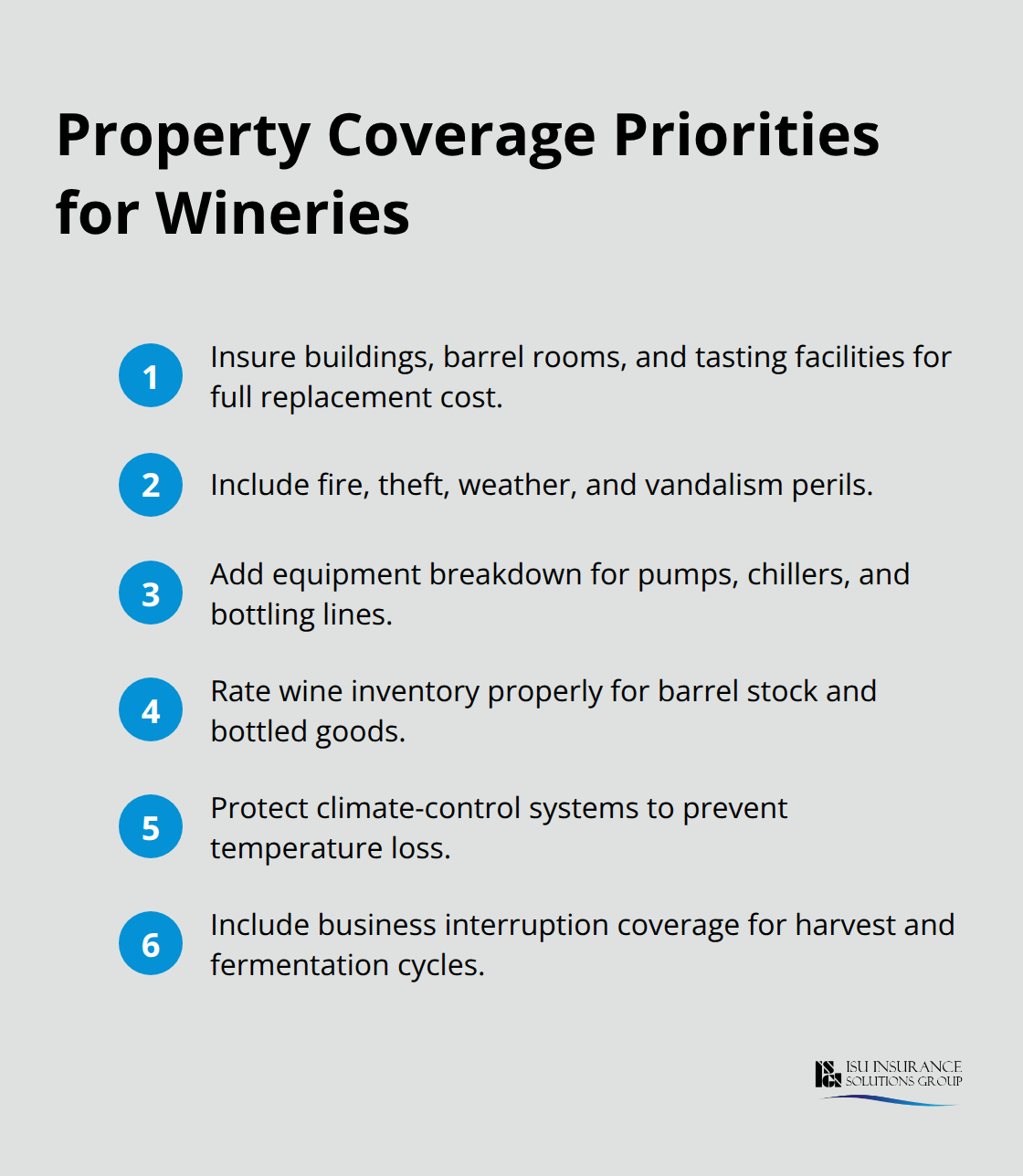
Fermentation rooms require specialized protection because temperature fluctuations or equipment failure destroy an entire vintage worth $50,000 to $250,000 or more depending on your production volume. Your operation holds massive value in inventory, equipment, and facilities that standard policies undervalue, making targeted property coverage essential.
Workers Compensation and Employment Practices Liability
Workers compensation is non-negotiable in Oregon and Washington for any winery with employees, but the coverage becomes critical given your industry’s specific hazards. Winery workers handle heavy equipment, work in temperature-controlled environments, lift barrels and cases repeatedly, and operate machinery during production.
Employment practices liability protects you separately against claims of wrongful termination, discrimination, or harassment-incidents that standard workers compensation doesn’t cover. A wrongful termination claim can cost $100,000 to $300,000 in legal fees and settlements even when you ultimately prevail, making this protection essential for any winery with more than a handful of staff.
Review Coverage Limits When Your Operation Changes
Your coverage limits require annual review since vineyard expansion, new tasting room construction, or increased production volume changes your risk profile significantly. These adjustments prevent gaps from developing as your winery grows and shifts its operational focus.
Comparing Quotes Without Missing Critical Details
Focus on Coverage Limits, Not Just Price
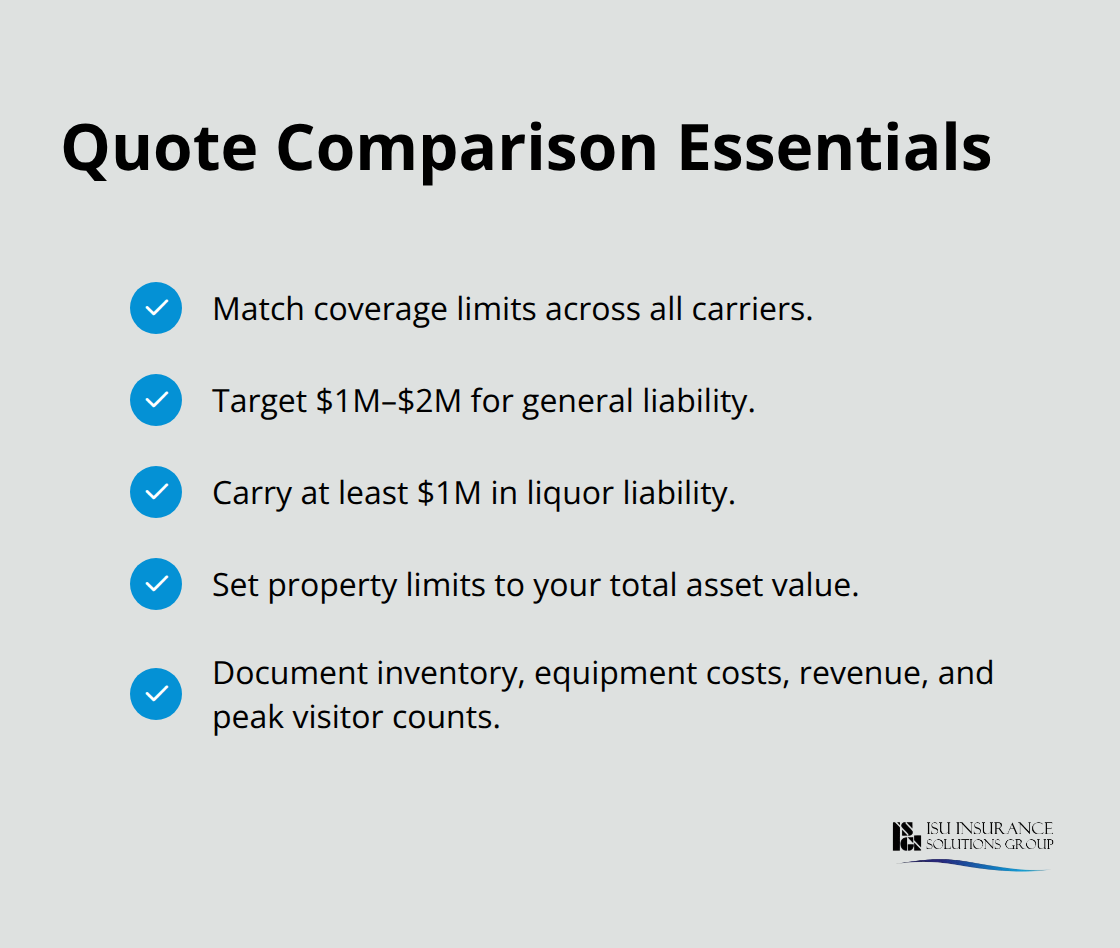
When you request winery insurance quotes from multiple carriers, most owners focus on price first-a mistake that costs thousands later. Coverage limits matter far more than premium differences because a $500 annual savings disappears instantly when a claim falls outside your policy boundaries. Start by listing your operation’s specific values: total inventory worth, equipment replacement cost, annual revenue, and peak visitor numbers during harvest season.
Request quotes with identical limits across all carriers so you’re comparing apples to apples, not a $1 million limit from one insurer against a $2 million limit from another. Most wineries need general liability limits between $1 million and $2 million, liquor liability coverage of at least $1 million, and property coverage matching your total asset value.
Choose Deductibles You Can Actually Afford
Deductibles create real financial impact-a $2,500 deductible costs significantly less than $500, but you’ll pay that difference from your own pocket when a claim occurs. Calculate which deductible level you can absorb without straining cash flow during slow seasons. Many winery owners select $1,000 deductibles as the practical middle ground between premium savings and manageable out-of-pocket expenses.
Verify Carrier Financial Strength and Claims Performance
Financial stability of your insurance carrier matters as much as coverage terms because a cheap quote means nothing if the company denies your claim or disappears during a crisis. Check A.M. Best ratings (the insurance industry standard) and verify carriers hold at least an A- rating, indicating strong financial health.
When comparing claims handling, contact each carrier’s local representatives and ask specifically how they’ve handled winery claims-fermentation losses, tasting room incidents, and product liability situations. This conversation reveals whether the carrier understands your industry or treats you like any other business.
Evaluate Specialized Endorsements and Add-Ons
Specialized endorsements separate adequate coverage from comprehensive protection: look for endorsements covering spoilage from equipment breakdown, hired and non-owned liquor liability for events where you serve wine, and coverage for wine club operations if you ship direct to consumers. Some carriers offer endorsements for cyber liability (critical if you process credit cards or maintain customer databases), while others provide coverage for special events or off-premise tastings.
Request detailed endorsement pricing from each quote so you understand exactly what additions cost rather than discovering gaps after a claim. The cheapest quote often excludes these specialized protections entirely, pushing you toward inadequate coverage that creates real exposure.
Final Thoughts
Winery insurance requires specialized coverage that standard business policies simply don’t provide. You need general liability and liquor liability working together, property protection for your inventory and facilities, and workers compensation that accounts for your industry’s specific hazards. Employment practices liability rounds out comprehensive protection by covering claims that workers compensation excludes.
Comparing winery insurance quotes effectively means looking beyond premium costs to evaluate what each carrier actually covers. Financial stability matters because cheap quotes mean nothing if a carrier denies your claim or lacks the resources to pay it. Specialized endorsements separate adequate protection from comprehensive coverage that addresses fermentation losses, tasting room incidents, and product liability situations unique to wine production.
Contact ISU Insurance Solutions Group to request winery insurance quotes with identical limits across multiple carriers. Our independent agency partners with over 20 carriers, which means one call gets you multiple quotes tailored specifically to your winery’s risks rather than generic business coverage. Our local agents understand Pacific Northwest wineries and the exposures you face during harvest season, tasting room operations, and distribution.
The information provided in this blog is for general informational purposes only and does not constitute legal, financial, or insurance advice. Coverage options, terms, and availability may vary. Please consult with a licensed professional for advice specific to your situation.