
Winery Risk Management Oregon: Best Practices for Wineries
Oregon wineries face unique operational challenges that demand serious attention. From contamination risks to equipment failures, the threats to your business are real and costly.
At ISU Insurance Solutions Group, we’ve helped countless winery operators protect their operations through smart risk management and proper insurance coverage. This guide walks you through the specific risks your winery faces and the practical steps to address them.
What Risks Keep Oregon Winery Owners Up at Night
Contamination during production ranks among the costliest threats to Oregon wineries. A single batch of wine affected by mold, bacteria, or chemical contamination forces you to destroy thousands of gallons and face liability claims from distributors and retailers who relied on that product. The Oregon wine and wine grape industries generated an estimated $8.17 billion in total economic impact in 2024, which means the financial stakes are enormous-one contamination incident wipes out months of profit. Equipment failures compound this risk because fermentation tanks, bottling lines, and temperature control systems operate continuously during harvest and production. When a refrigeration unit fails mid-fermentation or a bottling machine malfunctions, you lose time, product quality, and revenue simultaneously.
Wildfire Smoke Exposure Threatens Your Harvest
Wildfire smoke presents a contamination pathway that’s uniquely challenging in Oregon. Smoke-derived compounds like guaiacol and methylguaiacol absorb into grape skins during growth, creating volatile phenols that persist through fermentation and alter wine flavor. Testing for these compounds through labs like ETS Laboratories or Sunrise Analytical costs money upfront, but skipping this step risks releasing wine with off-flavors that destroy your reputation and trigger customer returns. Oregon faces increasing wildfire frequency, and the 463 wineries operating in the state face real exposure during fire season.
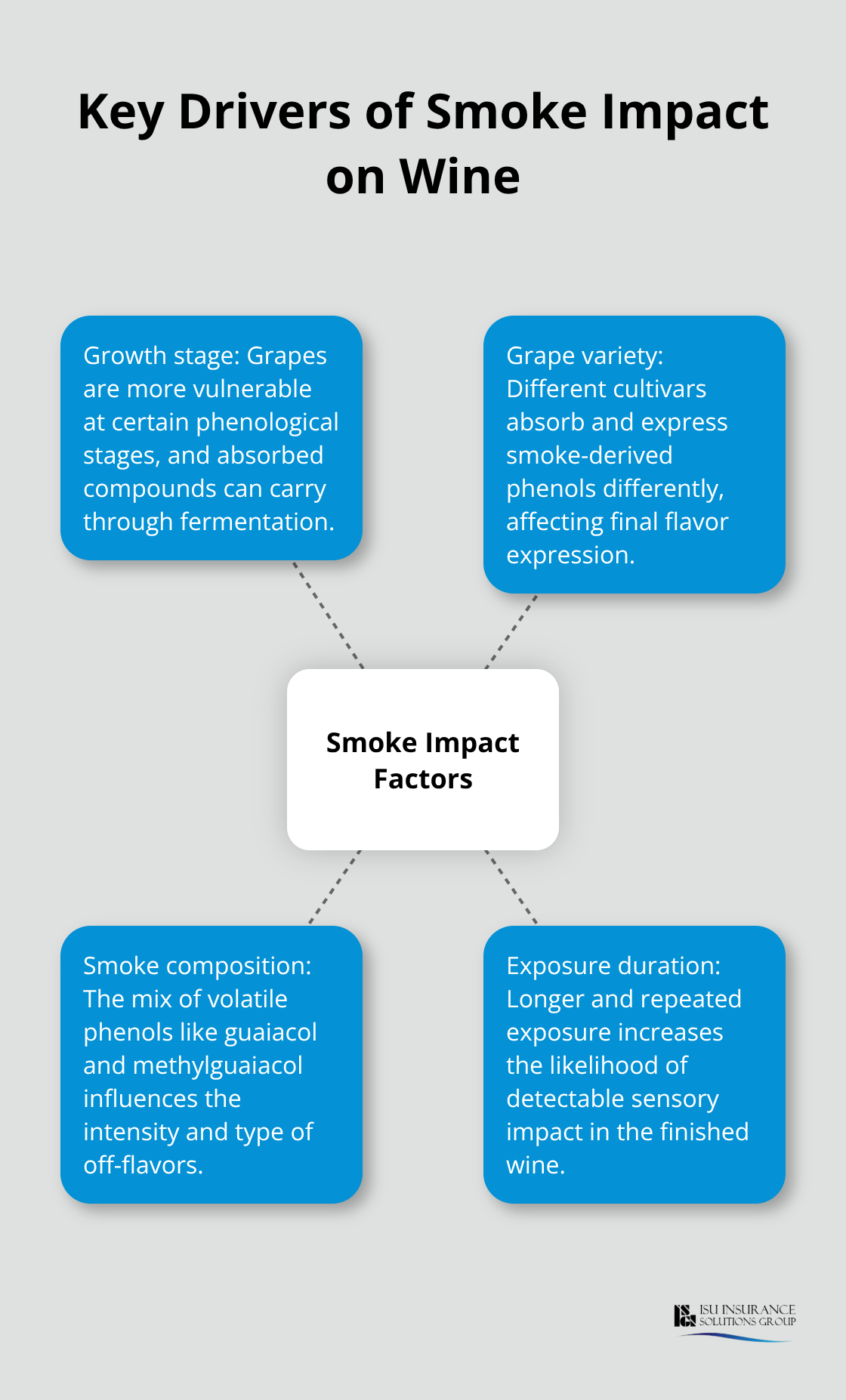
Smoke impact depends on growth stage, grape variety, smoke composition, and exposure duration-factors you cannot control but must assess.
Practical Steps During Smoke Events
The Oregon Wine Board’s Wildfire Smoke Toolkit provides actionable guidance when smoke threatens your vineyard. Hand harvest during smoke events, exclude leaves, keep fruit cool, and separate press fractions to isolate potentially affected material. Small-scale fermentation trials using suspect grapes give you sensory feedback within days, helping you decide whether to release or hold wine before full analytical results arrive. Property damage from fire extends beyond direct flames to include smoke contamination of inventory, making advance preparation essential.
Worker Safety Demands Constant Attention
Worker injuries in wineries occur during harvest, equipment operation, and chemical handling. Oregon OSHA enforces strict safety rules, and citations combined with workers compensation claims escalate costs rapidly. Maintain detailed safety protocols, conduct regular equipment inspections, and document all training sessions to create a defensible record if an injury occurs. Air quality during wildfire events also affects worker safety-Oregon Health Authority guidance emphasizes monitoring the Air Quality Index and providing protective equipment when smoke is heavy.
These operational risks demand more than hope. They require systematic identification, measurement, and mitigation before incidents happen. Understanding what threatens your operation sets the foundation for selecting the right insurance coverage to protect your business.
What Insurance Coverage Does Your Oregon Winery Actually Need
Standard business insurance leaves wineries dangerously exposed. A general commercial policy covers basic liability and property damage, but it excludes the specific exposures that threaten wine production-fermentation tank failures, contamination during processing, inventory loss from smoke exposure, and product liability claims from retailers who receive defective wine. Oregon’s 463 wineries operate in a high-risk environment where a single contamination event or wildfire smoke incident destroys months of inventory and revenue. Specialized winery insurance addresses these gaps by covering production equipment, in-process inventory, and finished goods stored on premises. This coverage matters because standard policies treat wine like any other product, ignoring the unique risks of fermentation, temperature control, and smoke exposure that define Oregon winemaking.
Production and Equipment Protection Requires Specificity
Your fermentation tanks, bottling lines, refrigeration systems, and laboratory equipment represent substantial capital investment. A standard property policy covers these assets at replacement cost, but winery-specific policies extend further by including coverage for spoilage losses when equipment fails and product is destroyed. If a refrigeration unit malfunctions during harvest and fermentation tanks warm above safe temperatures, the wine becomes unusable-a total loss that standard coverage often disputes because it classifies spoilage as business interruption rather than property damage. Specialized winery policies clarify this distinction and reimburse you for the full value of inventory lost due to equipment failure.
Smoke exposure creates an additional coverage need because contaminated grapes and wine represent inventory loss that occurs before the product reaches your property. Some carriers exclude smoke-related losses entirely, while winery-focused policies include coverage for smoke-tainted inventory if you maintain testing records from labs like ETS Laboratories or Sunrise Analytical. Document all testing and sensory assessment results because insurers require this evidence to validate claims.
Product Liability Coverage Protects Your Market Position
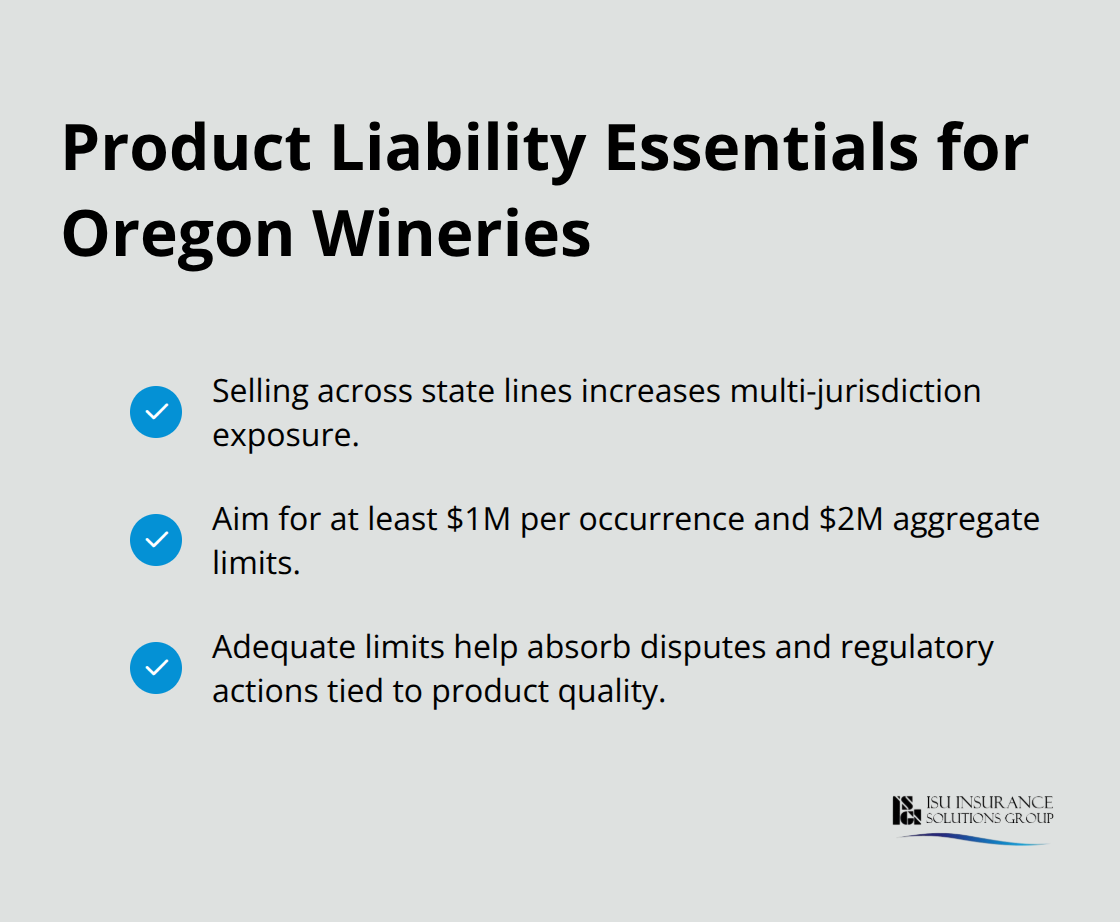
Product liability coverage becomes critical when you release wine to distributors and retailers because any customer complaint about off-flavors, contamination, or health effects triggers potential claims. Oregon wineries selling across state lines face exposure in multiple jurisdictions, making adequate liability limits essential. Most carriers recommend minimum limits of $1 million per occurrence and $2 million aggregate for mid-sized operations. This protection shields your business from the financial impact of customer disputes and regulatory actions that arise from product quality issues.
Inventory and Finished Goods Coverage Protects Your Revenue
Wine stored in barrels, tanks, or bottles represents your most valuable asset, yet standard property policies often undervalue inventory or exclude it entirely if stored off-site. Specialized winery policies include inventory coverage that reflects actual replacement cost and accounts for the full value of work-in-progress. A barrel of fermenting wine three months from release has different value than finished wine ready for sale, and winery policies adjust coverage based on production stage.
Fire damage presents the most obvious threat, but smoke exposure and contamination from nearby fires also damage inventory without direct flame contact. The Oregon Wine Board’s Wildfire Smoke Toolkit emphasizes that smoke particles contaminate wine through multiple pathways-directly absorbed by grapes in the vineyard and then through smoke exposure of finished inventory if fires threaten your facility. Maintain detailed inventory records with dates, barrel numbers, and production stage documentation to strengthen your ability to prove loss if an incident occurs.
Temperature Control and Storage Risks
Temperature fluctuations during storage threaten wine quality, and some carriers offer coverage for losses caused by HVAC failures that fall outside traditional property damage definitions. Review your current policy language carefully because many standard policies use vague language around spoilage and contamination that creates disputes when you file claims. Winery-specific policies clarify what losses qualify for reimbursement and eliminate ambiguity that standard commercial policies leave unresolved.
The gap between what standard insurance covers and what your winery actually needs determines whether you recover fully from a loss or absorb costs that threaten your operation. Selecting the right coverage requires understanding both your specific production risks and the policy language that protects against them-a foundation that shapes how you respond when equipment fails, smoke threatens your harvest, or a product liability claim arrives.
Stop Equipment Failures Before They Cost You Thousands
Equipment failures destroy wine faster than any other operational threat at Oregon wineries. A refrigeration system malfunction during peak fermentation, a temperature controller that drifts unnoticed, or a bottling line that jams forces you to dump inventory worth tens of thousands of dollars. The only way to prevent these losses is systematic maintenance that catches problems before they escalate into disasters.
Create a Maintenance Schedule That Protects Your Investment
Schedule equipment inspections quarterly during off-season months and monthly during harvest and active production. Write down every inspection with dates, findings, and corrective actions completed because this record protects you when equipment fails and your insurer questions whether you maintained the asset properly. Most carriers require documented maintenance schedules before they’ll cover spoilage losses from equipment failure, so this documentation directly impacts your ability to recover financially.
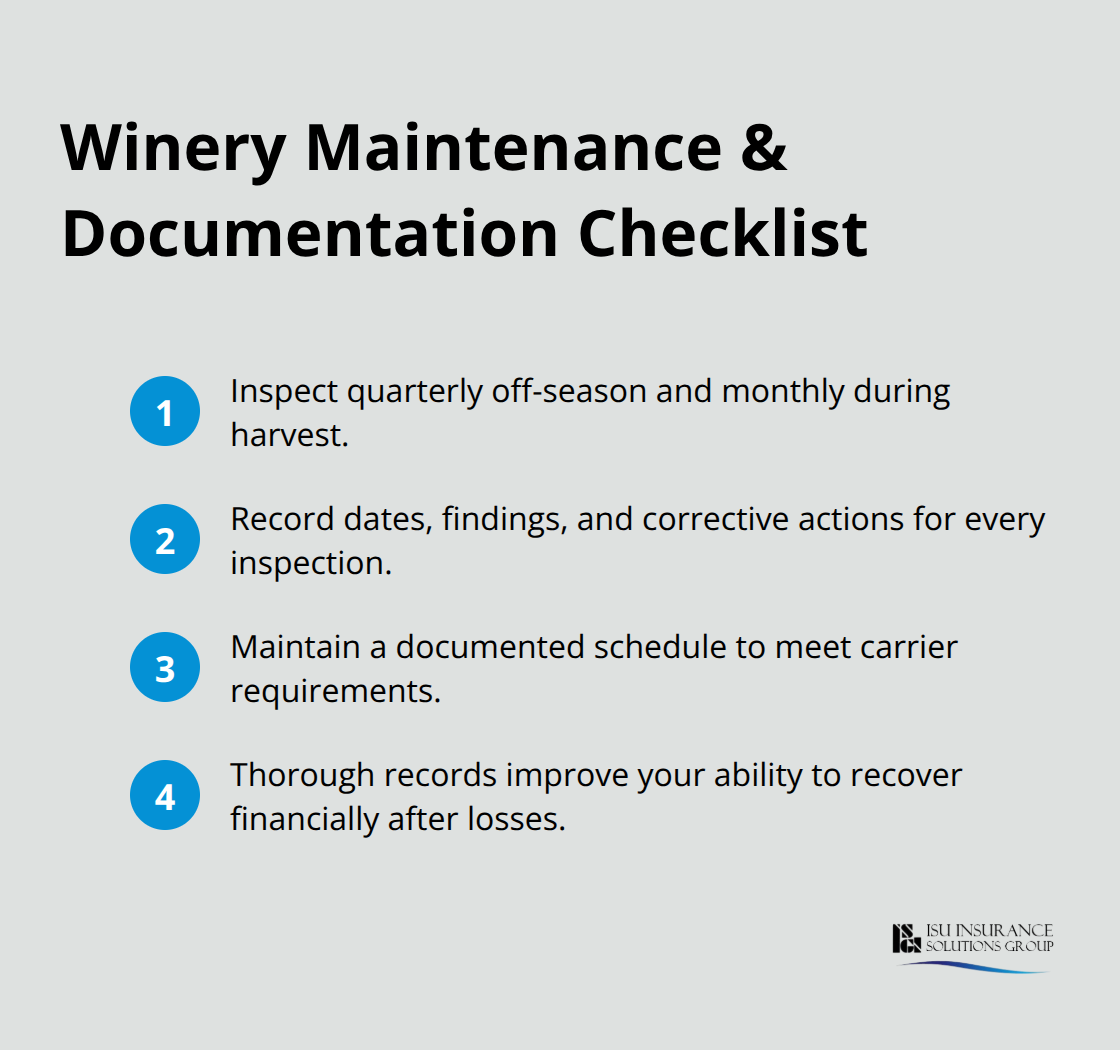
Assign one team member responsibility for maintenance tracking and create a simple log that records filter changes, temperature calibrations, seal replacements, and any repairs performed by outside technicians. When you sell a piece of equipment or retire it, retain those maintenance records for at least five years because they establish your diligence if disputes arise later.
Develop Safety Protocols Specific to Your Operation
Worker safety protocols must be specific to your operation, not generic templates downloaded from the internet. Write out exactly how your team handles fermentation tank entry, chemical storage procedures, equipment operation during harvest, and emergency response to injuries. Oregon OSHA requires written safety procedures, and violations combined with workers compensation claims create escalating costs that proper documentation prevents.
Train every new employee on these procedures before they touch equipment or handle chemicals, and conduct refresher training annually with documented attendance records. During wildfire season, add Air Quality Index monitoring to your daily safety checklist and establish clear thresholds for providing respirators or suspending outdoor work, referencing Oregon Health Authority guidance to justify your decisions if workers challenge them.
Document Everything to Demonstrate Systematic Safety
Maintain detailed records of every training session completed, injuries reported, near-misses documented, and corrective actions taken because these records demonstrate to regulators and insurers that your operation prioritizes safety systematically rather than reactively. This documentation becomes your strongest defense when OSHA inspectors arrive or workers compensation claims surface. Your records show that you identified hazards, trained staff to address them, and followed through with consistent enforcement.
Final Thoughts
Oregon winery risk management requires you to address three interconnected threats simultaneously: contamination from wildfire smoke, equipment failures during critical production windows, and worker safety incidents. Each threat carries the potential to destroy months of work and revenue, and the $8.17 billion economic impact generated by Oregon’s wine industry in 2024 underscores why these risks demand serious attention rather than reactive responses after losses occur. Comprehensive insurance coverage closes the gaps that standard commercial policies leave exposed, protecting your fermentation equipment, in-process inventory, finished goods, and product liability exposure in ways that generic business insurance cannot.
Documented maintenance schedules, written safety protocols, and detailed training records demonstrate to insurers that you manage risks systematically, and this documentation directly impacts whether claims are approved or disputed when incidents happen. Regular equipment inspections prevent spoilage losses, safety protocols reduce worker injuries and OSHA citations, and smoke testing protocols protect your reputation when wildfire events threaten your harvest. None of these actions eliminate risk entirely, but they substantially reduce the financial impact when problems occur.
Your next step involves connecting with an insurance partner who understands winery operations specifically. ISU Insurance Solutions Group has served Washington and Oregon businesses since 1983 and specializes in winery and brewery coverage through partnerships with over 20 carriers, allowing local agents to assess your specific operation, identify coverage gaps in your current policy, and deliver multi-carrier quotes that reflect the true value of your equipment and inventory.
The information provided in this blog is for general informational purposes only and does not constitute legal, financial, or insurance advice. Coverage options, terms, and availability may vary. Please consult with a licensed professional for advice specific to your situation.