
Craft Brewery Insurance: Coverage That Keeps Your Hops Hopping
Craft breweries face unique insurance challenges that most standard business policies simply don’t cover. From contaminated batches to customer injuries at your taproom, the risks are real and costly.
We at ISU Insurance Solutions Group work with breweries across the country to build protection plans that actually fit your operation. This guide walks you through the coverage types that matter most for your brewery’s survival and growth.
What Makes Brewery Risks Different From Other Businesses
Standard commercial insurance policies treat all manufacturing equally, but breweries operate in a completely different risk universe. The Brewers Association reports that 97 percent of U.S. breweries are regional craft operations or microbreweries, each with their own exposure patterns that generic policies simply miss. A contaminated batch doesn’t just cost you inventory-it triggers product liability claims, potential FDA enforcement, customer illness, and brand damage that can take years to recover from. Equipment breakdowns hit harder at smaller operations because you lack redundancy; a glycol leak that destroys a fermentation tank and spoils thousands of gallons of in-progress beer stops your revenue immediately while repair timelines stretch weeks. Washington’s 400-plus independent breweries face this reality constantly, especially operations aging barrels or running multiple production lines. Property insurance alone won’t protect you when your chiller fails during a heat wave and spoilage losses mount faster than you can document them.
Your Production Facility Needs Protection Beyond Standard Coverage
Commercial property insurance covers your building and equipment, but you need replacement-cost valuation that reflects actual rebuild expenses in today’s real estate market, not depreciated book value. Aging barrels, fermentation tanks, canning lines, and specialty build-outs require scheduled values because standard limits often fall short when you actually need to replace them. Equipment breakdown coverage-sometimes called Boiler & Machinery insurance-protects against sudden failures of your chillers, boilers, and production equipment, plus the business interruption costs while repairs happen. This matters enormously because the time to source replacement parts for specialized brewery equipment often runs four to eight weeks, and you need income protection during that gap. Washington breweries also face spoilage and temperature-fluctuation risks that standard property policies exclude; a power outage, compressor failure, or refrigeration breakdown destroys thousands of dollars in finished inventory in hours. Product recall coverage reimburses the actual costs of recalls-stock destruction, retailer chargebacks, notification expenses, and regulatory fees-which the Brewers Association data shows hit independent craft breweries harder than larger competitors because you lack economies of scale.
Liquor Liability Creates Exposure That General Policies Exclude
Dram shop laws in Washington and Oregon make you liable for injuries caused by intoxicated patrons you served, and this exposure extends beyond your taproom to any off-site events where you pour beer. General liability policies exclude alcohol-related claims, so liquor liability coverage must stand alone with limits that match your on-premises service volume and event frequency. If your taproom hosts 200 people on a Friday night or you run weekly events, your exposure justifies $2 million in combined single-limit liquor liability coverage, not the $1 million minimum many breweries think is adequate. Staff training on over-service prevention and age verification reduces claims, but training alone doesn’t eliminate the risk-coverage does. Premises liability claims at taprooms include slip-and-fall incidents on wet floors, injuries from tour groups in production areas, and accidents during large gatherings, all of which can trigger six-figure settlements.
Tours and Guest Interactions Introduce Unique Liability Exposure
Tours and guest interactions at breweries introduce liability that large-scale brewers never face, so your coverage must account for the specific risks of inviting customers into production spaces where equipment, chemicals, and hazards exist. A single incident during a brewery tour-whether a customer trips on uneven flooring, encounters hot wort, or suffers an injury near fermentation tanks-can result in substantial claims. Workers’ compensation in Washington routes through the state fund under L&I, but if you operate across multiple states or contract with temporary staff, private coverage gaps emerge that state-fund limits don’t address. These multi-state operations require specialized attention because your exposure profile changes when you distribute beer across state lines or host events in different jurisdictions.
Understanding these distinct risks positions you to build an insurance program that actually protects your operation. The next section walks through the specific coverage types that address each of these exposures and how to structure them for maximum protection.
The Four Coverage Types That Actually Protect Your Brewery
General Liability and Product Liability Form Your Foundation
General liability and product liability protect your brewery in different ways, and you need both. General liability covers third-party bodily injury and property damage claims that arise from your operations-a customer slips on wet taproom floors, someone gets burned during a tour, a delivery vehicle damages property. Product liability covers injuries or illnesses caused by your beer itself, whether contamination, improper labeling, or allergenic ingredients weren’t disclosed. The Brewers Association data on craft brewery claims shows that premises liability incidents at taprooms rank among the top claim categories, which means your general liability limits should reflect actual risk, not guesswork. For breweries that host regular events or tours, $2 million combined single-limit coverage is the practical minimum; smaller taproom-only operations might operate at $1 million, but you’re gambling if you go lower. Product liability limits should mirror your annual gross revenue because a widespread contamination event or mislabeling incident can trigger multi-state claims and retailer chargebacks that dwarf your expectations.
Property Insurance Requires Specialized Valuation
Property insurance demands a fundamentally different approach than general liability because standard replacement-cost coverage often undervalues specialized brewery assets. Your fermentation tanks, chillers, canning equipment, and barrel-aging facilities need scheduled values rather than blanket limits because equipment breakdown during a heat wave or power failure destroys inventory faster than you can document losses.
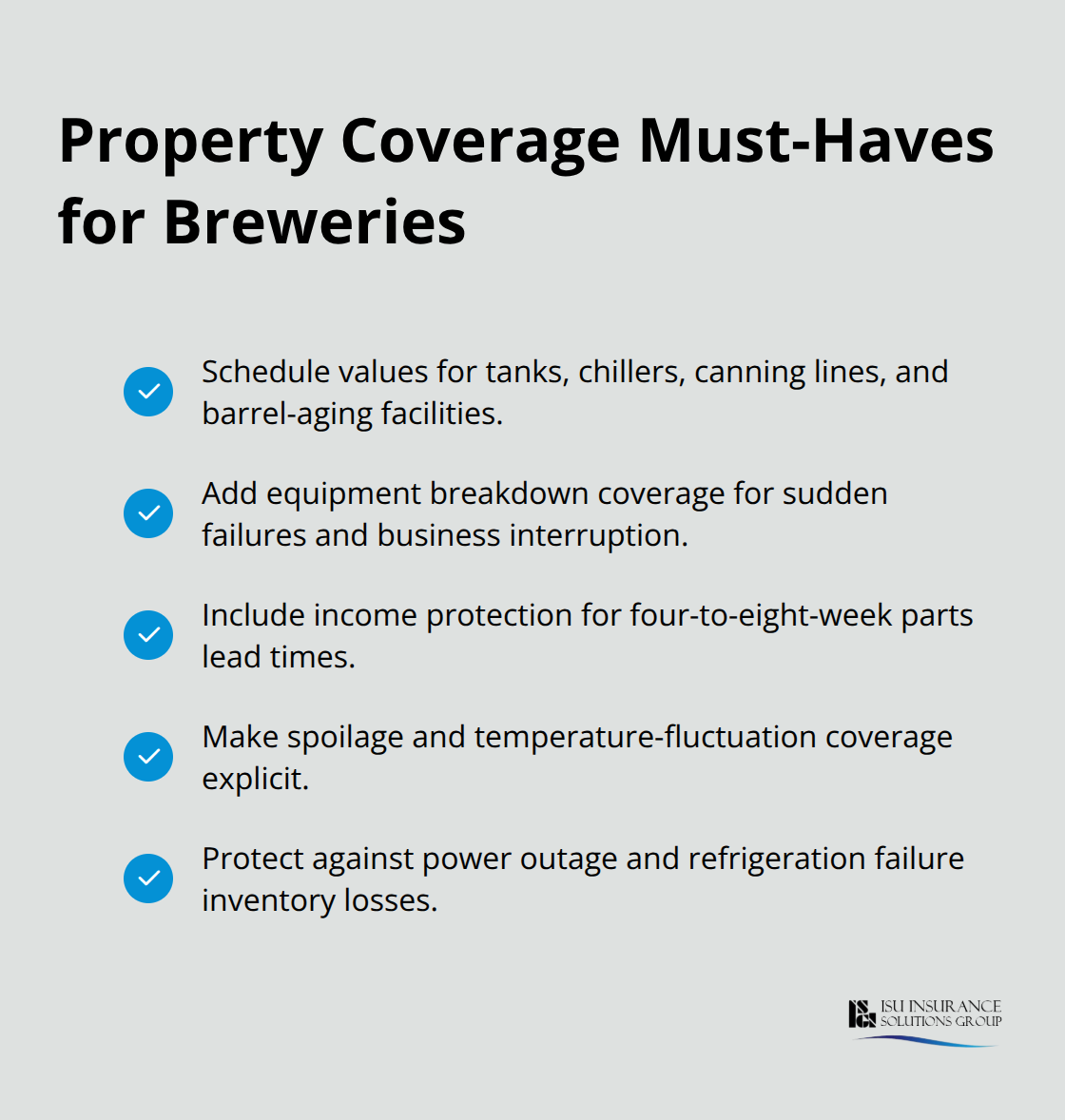
Equipment breakdown coverage (sometimes called Boiler & Machinery insurance) protects against sudden failures of production equipment plus the business interruption costs while you wait for repairs and replacement parts-a critical gap because sourcing specialized brewery equipment can stretch four to eight weeks. Spoilage and temperature-fluctuation coverage must be explicit in your policy because standard property policies exclude losses from power outages or refrigeration failures, yet these incidents destroy thousands of dollars in inventory in hours.
Workers’ Compensation and Multi-State Operations
Workers’ compensation in Washington routes through the state L&I fund for in-state employees, but if you operate multi-state locations or contract temporary labor, private coverage gaps emerge that state-fund limits don’t address. These gaps matter because your exposure profile changes when you distribute beer across state lines or host events in different jurisdictions. Common brewery injuries include back strains from lifting kegs and burns from hot wort, and state-fund coverage may not extend to all your operational locations.
Liquor Liability Stands Separate and Demands Adequate Limits
Liquor liability stands entirely separate from general liability and covers injuries caused by intoxicated patrons at your taproom or off-site events-dram shop law makes you liable for harm your service caused, and this exposure justifies limits matching your on-premises volume. If your taproom runs 200-person events weekly, $2 million liquor liability coverage reflects actual risk; $1 million leaves you exposed to settlement costs that exceed your limit. Staff training on over-service prevention and age verification reduces claims, but training alone doesn’t eliminate the risk-coverage does.
Your distribution footprint and event frequency should drive how you structure these four coverage types. The next section examines the real-world claims that breweries face and the specific prevention strategies that reduce both incidents and insurance costs.
What Breweries Actually Claim For
Contamination Incidents Cost More Than Inventory Loss
Contamination incidents remain the costliest claim category for craft breweries, and they rarely happen the way you’d expect. A single batch contamination destroys inventory and cascades into retailer chargebacks, customer notification costs, potential FDA enforcement actions, and brand damage that lingers for years. The FDA’s Food Safety Modernization Act requires breweries to implement HARPC-based food safety plans, which means you need documented hazard controls, sanitation protocols, and traceability systems that prevent contamination before it happens. Most breweries discover contamination during quality checks or when retailers report customer complaints, but by then the beer has distributed across multiple states and your recall costs explode. Product recall coverage reimburses stock destruction, retailer chargebacks, notification expenses, and regulatory fees-costs that independent craft breweries absorb far harder than large competitors because you lack economies of scale.
Your practical defense starts with daily sanitation checklists in production areas, annual equipment inspections for corrosion or biofilm buildup, and supplier audits for ingredient quality. If you age barrels, contamination risk intensifies because barrel-storage facilities require robust sanitation, temperature control, and inventory segregation to prevent cross-contamination between batches. Document everything-temperature logs, cleaning schedules, supplier certifications-because this documentation protects both your operations and your insurance claims when incidents occur.
Workplace Injuries Demand Specific Prevention Strategies
Back strains from lifting kegs, burns from hot wort, and chemical exposures from cleaning compounds drive workers’ compensation claims at breweries, yet many operations ignore basic ergonomic safeguards and safety training. OSHA-focused staff training on equipment operation, hazard recognition, and injury reporting costs little but prevents claims that cost thousands. Install clear signage near hazards, maintain consistent lighting throughout production and tour areas, and establish pre-event safety walkthroughs before hosting large gatherings. If you run brewery tours, keep routes confined to safe areas away from production equipment, establish maximum group sizes, and use trained guides who can identify hazards and respond to incidents.
Taproom Incidents and Assault Coverage Matter
Slip-and-fall incidents at taprooms spike during high-traffic events because wet floors, poor lighting, and unclear walkways create liability exposures that general liability policies cover but your business interruption doesn’t-a customer injury lawsuit drains management time and reputation regardless of insurance. Assault and battery incidents at taprooms require separate sublimits in your liquor liability policy because standard assault coverage often excludes alcohol-related altercations; if your taproom runs late-night events, this sublimit matters enormously. Washington law requires separate liquor liability coverage for on-premises service, and staff training on over-service prevention and age verification reduces claims, but training alone doesn’t eliminate risk-coverage does. If your taproom runs 200-person events weekly, structure assault and battery sublimits that match your event frequency and taproom hours, ensuring your coverage reflects actual exposure rather than guesswork.
Conclusion
Craft brewery insurance protection requires matching your coverage to the specific risks your operation faces, not settling for generic policies that miss the exposures threatening your business. The contamination incidents, equipment failures, and taproom injuries we’ve covered happen regularly across Washington’s 400-plus independent breweries, and they cost far more than most owners anticipate. Your general and product liability limits, property valuations, equipment breakdown coverage, and liquor liability protection must work together as a system, not as separate policies you assembled years ago.
Specialized insurance agents who understand craft brewing identify coverage gaps that generalist brokers miss, recognizing that your fermentation tanks need scheduled values, your spoilage exposure justifies explicit temperature-fluctuation coverage, and your taproom assault risk requires separate sublimits in your liquor liability policy. These agents also understand Washington’s specific regulatory environment-L&I workers’ compensation requirements, Liquor and Cannabis Board licensing prerequisites, and the multi-state distribution complexities that affect your coverage structure. Generic agents treat your brewery like any other manufacturing operation and leave you exposed to losses that proper coverage would prevent.
We at ISU Insurance Solutions Group have worked with breweries across Washington and Oregon since 1983, building customized coverage that actually protects your operation. Our independent agency structure means we quote your brewery through multiple carriers to find the combination that fits your production volume, distribution footprint, and risk profile. Contact ISU Insurance Solutions Group for a comprehensive review of your current coverage and a multi-carrier quote that reflects what your brewery actually needs.
The information provided in this blog is for general informational purposes only and does not constitute legal, financial, or insurance advice. Coverage options, terms, and availability may vary. Please consult with a licensed professional for advice specific to your situation.