

Brewery Insurance Requirements: What Brewers Need to Know
Running a brewery means managing more than just great beer. You’re operating a business with significant liability exposure, regulatory obligations, and operational risks that demand proper protection.
At ISU Insurance Solutions Group, we’ve helped countless breweries navigate their insurance requirements and build coverage strategies that actually work. The right brewery insurance requirements protect your operation, your employees, and your customers from the ground up.
The Three Insurance Pillars Every Brewery Must Have
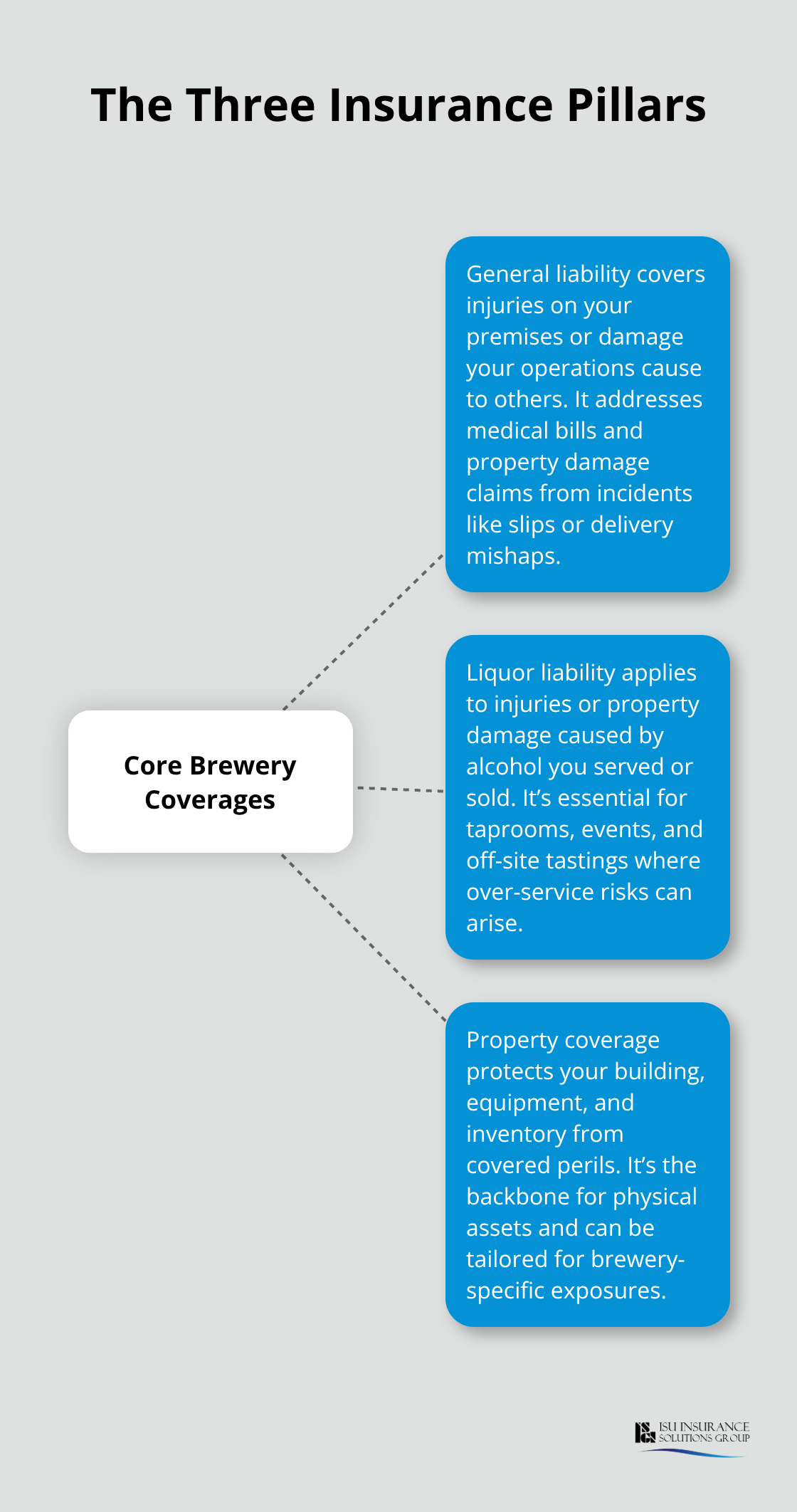
General liability insurance protects your brewery when someone gets hurt on your premises or your operations damage their property. If a visitor slips on a wet floor during a brewery tour, or your delivery truck hits a parked car, general liability covers the medical bills and property damage claims. Most breweries need at least $1 million per occurrence and $2 million aggregate, though this depends on your taproom traffic and event activity. The cost typically ranges from $1,000 to $6,000 annually based on your square footage, number of employees, and claims history.
Liquor Liability: The Coverage You Can’t Ignore
Liquor liability stands apart from general liability and many breweries underestimate its importance. This coverage applies specifically to injuries or property damage caused by alcohol you served or sold, whether at your taproom, during events, or through off-site tastings. A single incident involving over-service can generate claims exceeding $100,000. Annual liquor liability premiums generally run $1,200 to $10,000 depending on your on-premise sales volume and whether you host live events.
Property Coverage for Your Physical Assets
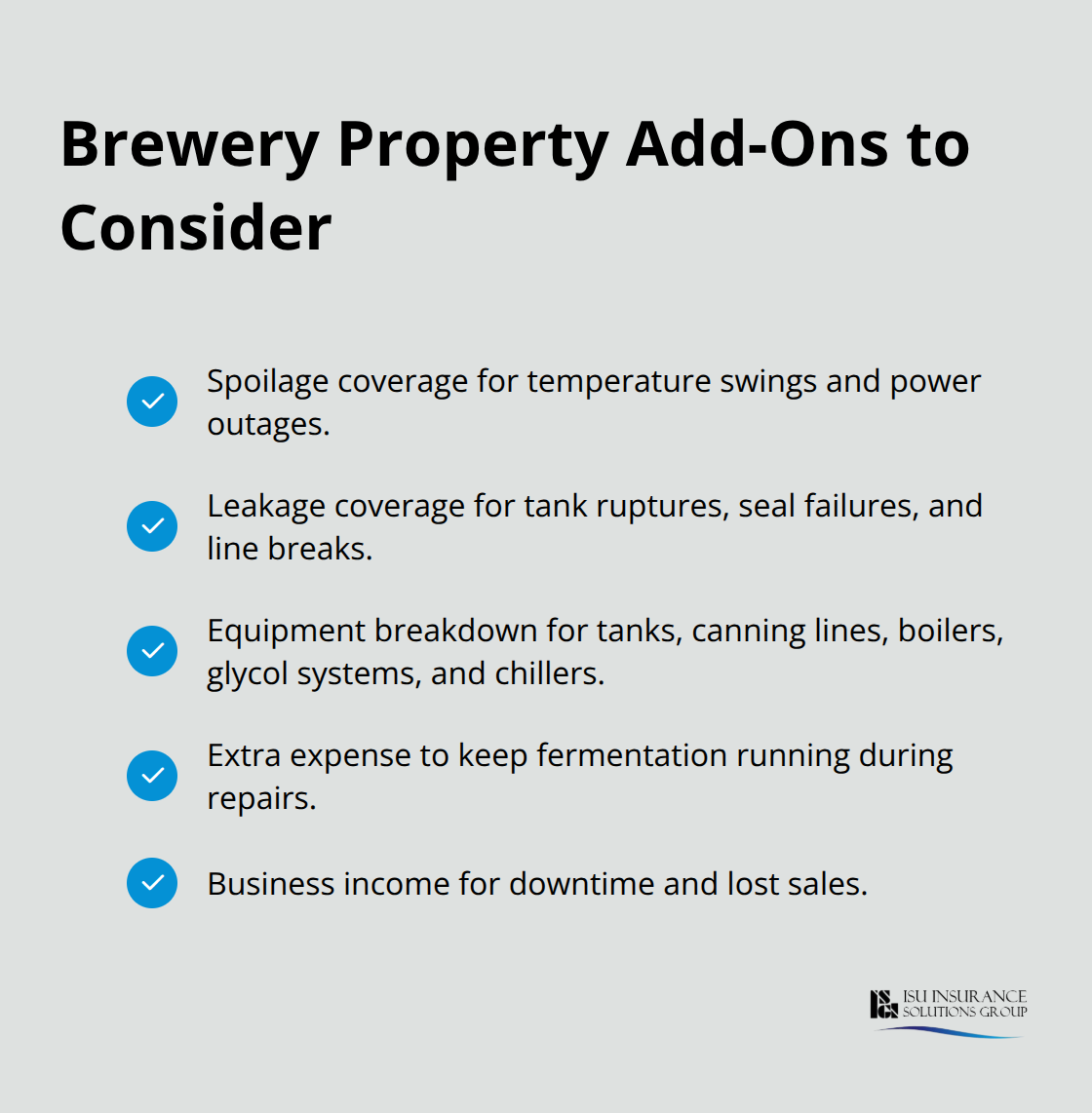
Property insurance protects the building, equipment, and inventory that form the backbone of your operation. Standard coverage addresses direct physical loss from fire, weather, theft, and vandalism, typically costing $1,000 to $12,000 annually depending on your building value and equipment investment. However, standard property policies often miss brewery-specific exposures.
Spoilage coverage protects your operation because temperature fluctuations, power outages, and equipment failures can destroy thousands of dollars in ingredients and finished product in hours. Leakage coverage protects against losses from tank ruptures, seal failures, and line breaks that contaminate your inventory. Equipment breakdown insurance protects your fermentation tanks, canning lines, boilers, glycol systems, and chillers against mechanical and electrical failures, costing roughly $400 to $3,000 annually. This coverage also covers the extra expenses needed to keep fermentation running during repairs and the lost income from downtime.
Product Liability and Recall Protection
Product liability insurance covers contamination or defects in your beer that cause bodily injury or property damage to consumers. This includes mold contamination, glass fragments, or chemical exposure. Product recall coverage reimburses notification costs, transportation, and lost revenue when you need to pull product from shelves due to quality issues. These endorsements transform a basic property policy into brewery-specific protection that addresses your actual operational risks and prepare you for the regulatory landscape ahead.
What Regulatory Compliance Actually Requires
Breweries operate within a three-tier regulatory framework that directly impacts your insurance needs, and most brewers underestimate how tightly these requirements connect. The federal Alcohol and Tobacco Tax and Trade Bureau requires you to maintain specific insurance minimums before they issue your permit, though the exact amounts vary based on your production volume and distribution model. Federal regulations mandate that you hold general liability coverage, but the TTB doesn’t specify a dollar amount-instead, they require proof that you can cover potential damages to third parties, which is why most underwriters push for $1 million minimum.
State-Level Insurance Mandates
State regulators take federal requirements further. Washington and Oregon both require breweries to carry liquor liability insurance as a condition of their on-premise license, with minimum limits typically set at $1 million per occurrence. If you plan to distribute beyond your taproom, many states mandate that your delivery vehicles carry commercial auto coverage with cargo protection, and some require proof of this coverage before they approve your wholesale license. State licensing agencies also conduct periodic audits to verify your coverage remains active, so lapses aren’t just risky-they can trigger license suspension.
Local Zoning and Safety Requirements
Local jurisdictions add another layer that catches many brewers off guard. Your city or county zoning board may require specific safety equipment (sprinkler systems, CO2 monitoring, proper ventilation, electrical upgrades) before you operate a production facility, and your property insurance underwriter will factor these into your premium. Many municipalities also require premises liability coverage as a condition of your conditional use permit, particularly if you host tours or events. Some counties in Washington and Oregon have enacted grain dust explosion prevention standards that directly affect equipment breakdown insurance requirements and your facility’s overall risk profile.
Building Your Compliance Strategy
Contact your city’s planning department and county health department before finalizing your insurance strategy, not after. They’ll tell you exactly what coverages they expect to see listed on your permits, and this information shapes whether you need umbrella liability, higher equipment breakdown limits, or specialized endorsements. Your insurance agent should request a copy of your local ordinances and state licensing requirements, then build your coverage to exceed those minimums rather than merely meet them. Regulators change requirements periodically-Washington’s TTB office updates guidance roughly every 18 months-so annual policy reviews aren’t optional.
Staying Ahead of Regulatory Changes
The regulatory landscape shifts faster than many breweries anticipate. A new state requirement or local ordinance can suddenly make your current coverage inadequate, leaving you exposed to fines or license suspension. Working with an independent agent who tracks Pacific Northwest regulatory changes helps you adjust coverage proactively rather than scrambling when a new requirement takes effect. This foundation of compliance sets the stage for the operational risks that demand equally thoughtful protection.
How to Protect Your Workforce and Keep Operations Running
Workers Compensation: Your Legal and Financial Foundation
Workers compensation coverage isn’t optional for breweries with employees, and it’s far more than a legal checkbox. Washington and Oregon both mandate it once you hire your first full-time or part-time worker, with penalties for non-compliance reaching thousands of dollars plus potential criminal liability. The real value lies in what it covers: medical treatment, rehabilitation, and wage replacement for employees injured during brewery work. A fermentation tank rupture that sends someone to the hospital, a slip on a wet production floor, or a back injury from manual ingredient handling-workers comp handles all of it.
Your annual premium depends directly on your payroll and job classifications. Brewing roles carry higher rates than office work because they involve physical hazards, pressure systems, and chemical exposure. A brewery with three full-time brewers and two packaging staff typically pays $8,000 to $15,000 annually, while a larger operation with fifteen employees might pay $25,000 to $40,000. The cost seems steep until you calculate what an uninsured claim would cost: a single serious injury can easily exceed $100,000 in medical bills and lost wages, potentially bankrupting a small operation.
Building a Safety Culture That Reduces Claims
Implement mandatory safety training for all staff-focus on proper lifting techniques, equipment operation, and spill response. Document every near-miss incident in a safety log, not because regulators require it, but because patterns in near-misses predict where actual injuries will happen. Many breweries reduce claims by installing slip-resistant mats in production areas, providing proper footwear, and conducting quarterly safety meetings.
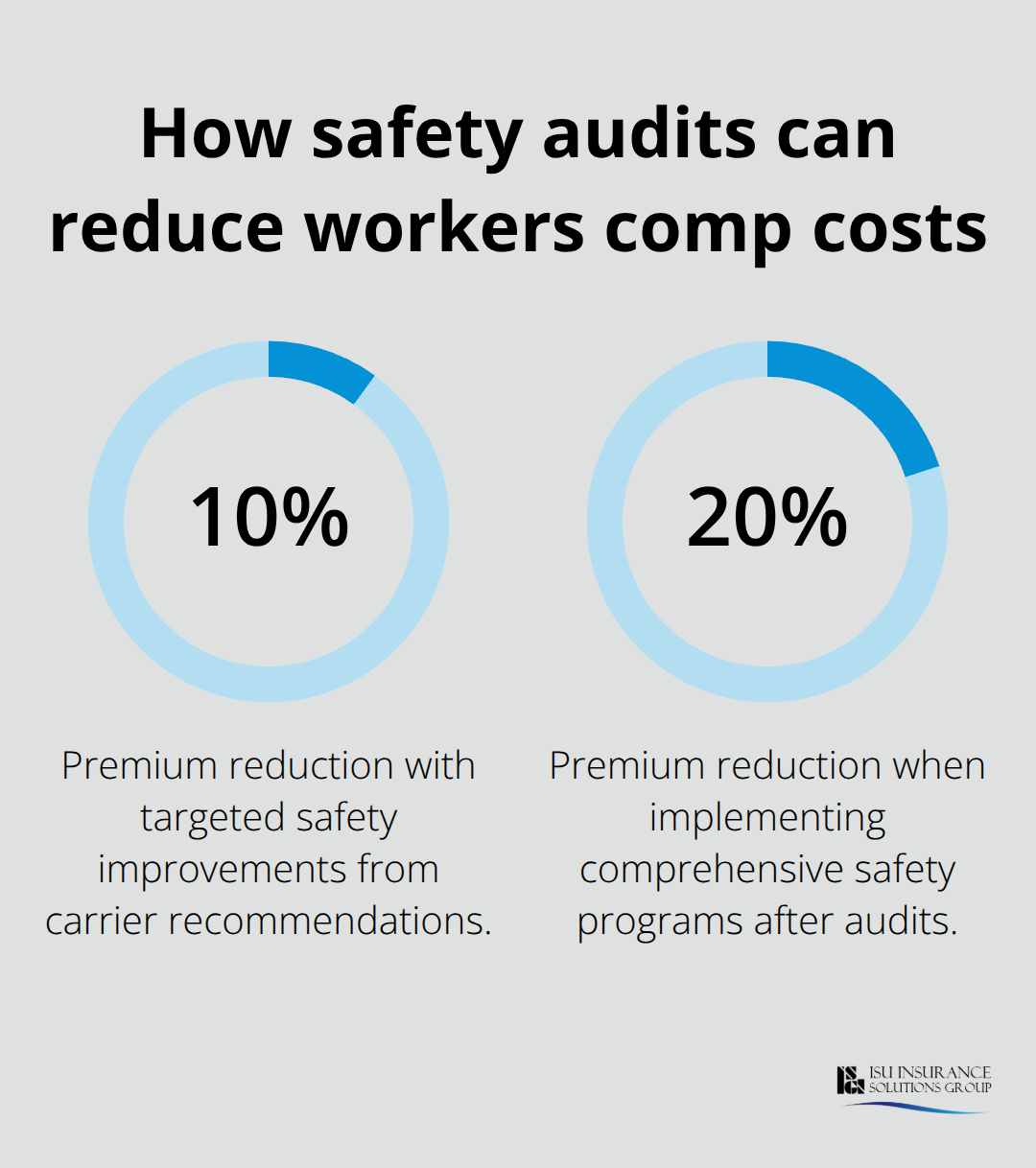
Your workers comp carrier likely offers risk control resources; use them. Most carriers send consultants to audit your facility and recommend specific safety improvements that can lower your premium by 10 to 20 percent. These audits identify hazards you might miss and provide actionable steps to protect your team.
Business Interruption: Protecting Revenue During Shutdowns
Business interruption insurance protects your revenue stream when equipment failures, fires, or other covered events force you to halt production. The coverage allows businesses to pay fixed expenses, including costs incurred while operating at an offsite location. A three-day production halt from a boiler failure might seem manageable, but the actual cost isn’t just the repair-it’s the lost sales, unfulfilled wholesale orders, and disappointed taproom customers.
Many breweries experience 10 to 14 days of downtime after major equipment failures, translating to $15,000 to $50,000 in lost revenue depending on your production volume and distribution reach. Business interruption premiums typically run $800 to $2,500 annually depending on your revenue size and the waiting period you select. Choosing a 30-day waiting period instead of 7 days cuts your premium roughly in half, but leaves you vulnerable to significant losses from shorter disruptions that happen frequently. Most breweries should select a 7 to 14-day waiting period as the practical sweet spot.
Combining Coverage for Complete Protection
Pair business interruption coverage with equipment breakdown insurance, which covers the repair costs themselves. Together, these two policies create comprehensive protection against operational shutdowns. Test your backup systems quarterly-if you have backup glycol systems or redundant fermentation capacity, actually run them under load to confirm they work when needed.
Maintain detailed maintenance logs for all critical equipment and share them with your insurance agent; documented maintenance often qualifies you for lower premiums and faster claim settlements. Track your daily production volumes and sales figures for the past three years before requesting a quote, because insurers use this data to calculate your business interruption limits accurately.
Final Thoughts
Brewery insurance requirements span far more ground than most brewers realize when they first open their doors. You need general liability to protect against third-party injuries, liquor liability to address alcohol-specific exposures, property coverage for your physical assets, workers compensation for your team, and business interruption protection to keep revenue flowing during shutdowns. Each coverage type addresses a specific operational vulnerability, and gaps in any one area can derail your business financially or legally.
The regulatory framework compounds this complexity because federal, state, and local authorities all impose insurance mandates that directly affect your coverage strategy, and these requirements shift periodically. Staying compliant means more than checking boxes on a license application-it means building a coverage foundation that exceeds minimum standards and adapts as regulations change. Specialized insurance providers understand your production process, your distribution model, your regulatory environment, and the actual risks that keep brewery owners awake at night.
Contact ISU Insurance Solutions Group to discuss your brewery insurance requirements with agents who understand Pacific Northwest brewery operations deeply. We work with multiple carriers to find the right combination of coverages at competitive rates, and our local team handles the complexity so you can focus on brewing great beer. Bring your business details, production volumes, and distribution plans when you reach out, and we’ll build a personalized coverage strategy that protects your operation.
The information provided in this blog is for general informational purposes only and does not constitute legal, financial, or insurance advice. Coverage options, terms, and availability may vary. Please consult with a licensed professional for advice specific to your situation.