
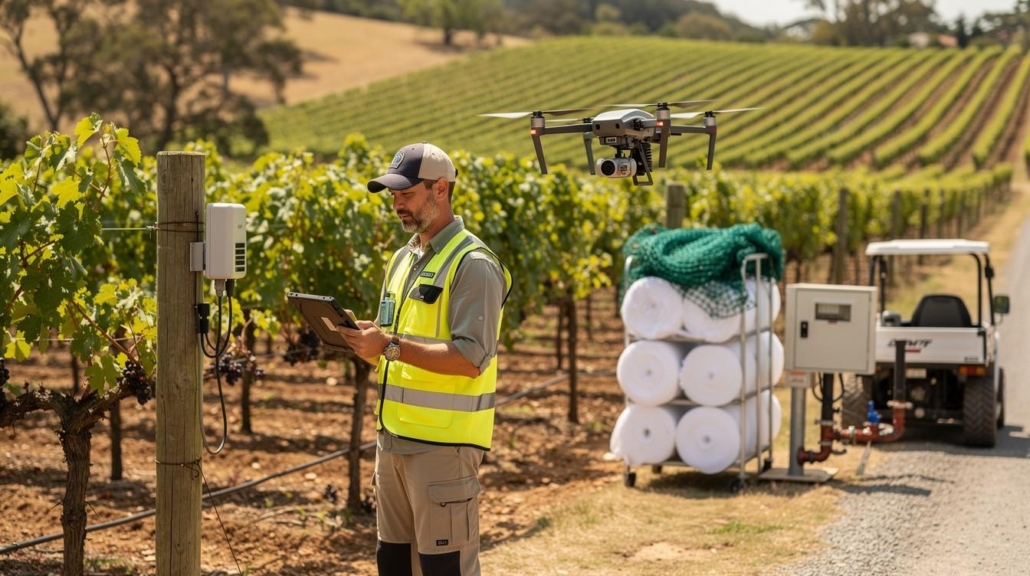
Winery Risk Management: Proactive Protection for Vineyards
Wineries face unique threats that most businesses never encounter. Frost can wipe out an entire vintage, contamination can destroy your reputation, and a single accident in the tasting room can trigger costly lawsuits.
At ISU Insurance Solutions Group, we’ve worked with vineyard owners across multiple regions who thought they were protected-only to discover gaps in their coverage when disaster struck. Winery risk management isn’t about hoping for the best; it’s about building a defense strategy that covers every angle of your operation.
Weather and Environmental Risks in Vineyards
Frost Damage: The Silent Vintage Killer
Frost remains the most destructive force in viticulture, capable of eliminating 50 to 100 percent of a vintage in a single night. The 2021 spring freeze in Oregon and Washington destroyed an estimated 50 to 90 percent of buds across affected regions, costing growers millions in lost production. Unlike other agricultural threats, frost strikes fast-there’s no gradual warning or time to implement preventive measures once temperatures drop below the critical threshold.

Vineyard owners often assume standard property insurance covers crop loss, but most policies exclude frost damage entirely or require separate endorsements. Standard homeowners and commercial property policies treat vineyards as agricultural operations with significant exclusions. The gap between what owners think they have and what they actually have becomes painfully obvious after frost hits. Specialized agricultural coverage accounts for vintage-specific risks and the reality that some frost events warrant specific policy language tailored to your operation’s location and elevation.
Drought and Water Management Pressures
Drought creates different but equally serious financial pressure on vineyard operations. California experienced severe drought conditions from 2012 to 2016, reducing yields by 20 to 40 percent in affected areas and forcing some operations to purchase water at triple normal rates. Water management liability becomes critical when vineyards rely on shared water systems, wells, or irrigation agreements-disputes over water rights have triggered expensive litigation in wine regions across the West.

Coverage that goes beyond basic property protection makes the difference between surviving a drought and facing financial collapse. Business interruption provisions compensate for lost production during recovery periods and account for the seasonal nature of vineyard operations. Operations in the Pacific Northwest face their own specific threats, including excessive moisture that promotes fungal diseases and unpredictable spring conditions that create frost vulnerability.
Pest and Disease Outbreaks
Pest and disease outbreaks like powdery mildew and phylloxera require immediate intervention and can force temporary vineyard closure during treatment periods. These environmental risks demand coverage that activates during your most vulnerable periods and protects against the operational disruptions that treatment creates. Specialized winery insurance accounts for regional variations and the specific threats your vineyard faces based on location and climate patterns.
The combination of these environmental pressures means your coverage strategy must address multiple threat categories simultaneously. Your protection plan needs to reflect the actual risks your operation encounters, not generic agricultural assumptions. This foundation of environmental risk management sets the stage for addressing the operational and liability challenges that wineries face daily.
Operational and Liability Risks for Wineries
Worker Safety and Employment Practices Liability
Worker injuries inside wineries create substantial financial exposure that extends far beyond immediate medical costs. The wine industry reports higher injury rates than many manufacturing sectors, with crush season presenting acute dangers from heavy machinery, fermentation tanks, and chemical handling. A single serious injury triggers workers’ compensation claims exceeding $500,000 when accounting for medical treatment, lost wages, and potential permanent disability benefits.
Employment practices liability becomes equally critical when disputes arise around hiring, termination, or workplace conduct. Legal defense costs alone reach $50,000 to $150,000 even for cases that don’t result in settlement. Wineries operating multiple locations face compounded exposure, and seasonal workers create additional compliance challenges around wage classifications and safety training documentation.
Standard commercial policies frequently exclude or severely limit coverage for agricultural operations, leaving vineyard owners with gaps that surface only after an incident occurs. Specialized winery coverage addresses these worker-related exposures directly rather than forcing operations into generic commercial categories.
Product Liability and Contamination Threats
Product liability and contamination represent existential threats to winery operations because reputation damage compounds the financial impact. A contamination event affecting multiple batches forces product recalls costing $100,000 to $500,000 depending on distribution scope and batch size. The wine industry has experienced high-profile contamination incidents involving glass fragments, mold toxins, and chemical exposure-each case resulted in lawsuits, regulatory penalties, and permanent brand damage.
Tasting rooms and events create additional liability exposure through alcohol service, guest injuries on premises, and third-party incidents involving intoxicated visitors. A guest fall during a wine tasting event or an accident caused by an intoxicated attendee generates liability claims reaching $1 million or more, particularly when punitive damages become possible under dram shop laws.
Securing Adequate Coverage for Your Operation
Standard policies designed for retail operations typically underestimate winery-specific exposure across product liability, contamination response, and host liquor liability protection. Events held on vineyard property demand event-specific coverage that addresses equipment rental, hired entertainment, and guest medical coverage rather than relying on annual facility policies.
These operational and liability challenges require coverage tailored to how wineries actually operate. Once you’ve addressed worker safety and guest liability, your protection strategy must extend to professional liability insurance and risk mitigation approaches that prevent losses before they happen.
Insurance Solutions Tailored to Winery Operations
Coverage That Matches How Wineries Actually Operate
Wineries need insurance structured around their actual operations, not around generic agricultural or retail templates. Standard commercial general liability layered with property coverage leaves dangerous gaps because most insurers don’t understand fermentation timelines, seasonal staffing patterns, or contamination risks specific to wine production. Specialized winery policies account for vintage-year losses, product recall costs reaching $500,000 for moderate contamination events, and host liquor liability claims exceeding $1 million in jurisdictions with aggressive dram shop laws. Your property coverage must include business interruption provisions that account for months required to replant after frost damage or recover from disease treatment. Workers’ compensation limits need elevation beyond standard manufacturing rates because crush season injuries involving fermentation tanks and heavy equipment generate medical costs and permanent disability benefits that typical policy limits cannot cover.
Comprehensive Protection for Products and Events
Product liability coverage must protect not just the wine itself but also liability exposure from events held on vineyard property, hired entertainment, and guest medical coverage that standard annual policies ignore. Event-specific coverage for harvest celebrations, wine club tastings, and weddings held at your location costs $500 to $2,000 per event but prevents scenarios where guest injuries force you to defend yourself with inadequate protection.

Tasting room liability decreases when you implement alcohol service training, maintain incident logs, and establish clear policies around intoxication limits and guest transportation options. These event-specific endorsements address the reality that your vineyard operates as both a production facility and a hospitality venue simultaneously.
Loss Prevention Strategies That Reduce Costs
Loss prevention starts with documented safety protocols that actually reduce insurance costs rather than serving as theoretical exercises. Wineries that implement formal crush season safety training programs, maintain equipment inspection logs, and document employee certifications see premium reductions of 10 to 20 percent because insurers recognize measurable risk reduction. Chemical handling procedures for pest and disease treatment require written protocols specifying storage, application methods, and protective equipment requirements-this documentation becomes critical if an employee exposure claim surfaces. Temperature monitoring systems for fermentation areas and storage facilities prevent product loss and demonstrate to insurers that you actively manage contamination risks.
Working with Specialists Who Understand Your Region
An independent agency representing multiple carriers matters significantly because winery coverage varies dramatically between insurers-some treat vineyards as agricultural operations with severe exclusions, while others offer true winery-specific programs. An agent familiar with Pacific Northwest wine regions understands the frost risks in Willamette Valley operations, the water pressure in California operations, and the phylloxera management challenges specific to your location. This regional expertise translates directly into appropriate coverage limits and endorsements that match your actual exposure rather than generic assumptions. ISU Insurance Solutions Group, a Woodinville-based independent agency serving Washington and Oregon since 1983, partners with 20+ carriers to deliver personalized winery coverage and competitive rates through one-call multi-carrier quotes.
Final Thoughts
Winery risk management requires more than hoping your current insurance covers the disasters that actually threaten your operation. Frost eliminates entire vintages in one night, contamination destroys your reputation and forces costly recalls, and a single incident in your tasting room triggers lawsuits exceeding $1 million. The wineries we’ve worked with at ISU Insurance Solutions Group discovered coverage gaps only after losses occurred-gaps that specialized protection would have prevented.
Your protection plan must address environmental threats specific to your region, operational exposures from crush season through harvest, and liability risks that standard commercial policies consistently underestimate. Worker safety protocols and documented safety training reduce premiums by 10 to 20 percent while actually preventing injuries that would devastate your operation financially and personally. A frost-damaged vineyard in Oregon faces different recovery timelines than a drought-stressed operation in California, yet both need business interruption coverage that accounts for months of lost production.
The difference between adequate coverage and catastrophic exposure comes down to one decision: working with someone who understands winery operations or accepting generic agricultural assumptions. Regional expertise matters because an agent familiar with Pacific Northwest conditions knows the frost risks in Willamette Valley, the water pressure in California operations, and the disease management challenges specific to your location. Contact us to discuss how tailored protection can secure your vineyard against the specific threats your operation faces.
The information provided in this blog is for general informational purposes only and does not constitute legal, financial, or insurance advice. Coverage options, terms, and availability may vary. Please consult with a licensed professional for advice specific to your situation.