
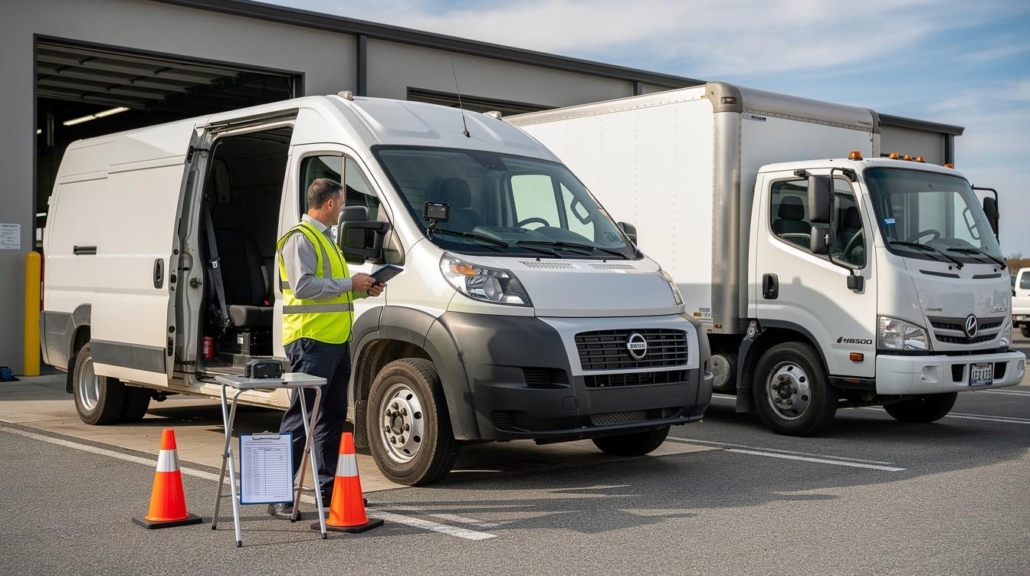
Commercial Vehicle Risk Management: Proactive Steps for Your Fleet
Fleet operators face mounting pressure to reduce accidents, equipment failures, and theft losses. Commercial vehicle risk management isn’t optional-it’s the foundation of a profitable operation.
We at ISU Insurance Solutions Group know that most fleet problems are preventable with the right strategy. This guide walks you through proven tactics to protect your vehicles, drivers, and bottom line.
Where Your Fleet Risks Actually Come From
Driver Error Remains Your Biggest Threat
Driver error causes roughly 94% of serious crashes, according to the National Highway Traffic Safety Administration. Distracted driving, speeding, and fatigue top the list, yet most fleet operators treat these as inevitable rather than preventable. That mindset costs money. Drivers who complete formal safety training cut accident rates by 20-30%, and fleets that monitor real-time driver behavior through telematics reduce collisions by up to 40%.

This approach isn’t about installing cameras to punish drivers-it’s about identifying risky patterns before they become costly claims.
Mechanical Failures Drain Profitability Faster Than You Think
A single breakdown costs $500-$1,500 in towing, repairs, and lost revenue, depending on cargo type and distance from service. The American Trucking Associations reports that preventable maintenance failures account for approximately 17% of all vehicle downtime. Fleets that skip regular inspections and defer maintenance end up replacing engines, transmissions, and brake systems prematurely-expenses that compound quickly across multiple vehicles. Neglecting maintenance schedules transforms small repair costs into catastrophic capital expenditures.
Cargo Theft and Liability Claims Create Dual Exposure
The FBI estimates cargo theft losses exceed $15-$20 billion annually in North America, with organized theft rings targeting high-value shipments. Liability claims from accidents, property damage, or injury present an equally serious threat. A single incident can exceed $1 million, especially when hazardous materials or multiple vehicles are involved. Fleets without proper coverage documentation or safety procedures face financial devastation and legal liability that extends far beyond insurance limits.
Reactive Responses Cost More Than Prevention
The most dangerous assumption fleet operators make is believing these risks are manageable through reactive responses. Waiting until accidents happen, equipment fails, or cargo disappears means you’re already losing money and reputation. Operators who succeed treat risk management as an operational priority, not an afterthought. Understanding where your specific vulnerabilities lie sets the stage for building a layered protection strategy that actually works.
Building a Prevention-First Fleet Operation
Driver Training Stops Accidents Before They Happen
Driver training transforms accident statistics from inevitable to manageable. Fleets implementing structured safety programs cut collision rates by 20-30%, but consistency matters more than the program itself. One-time training sessions accomplish almost nothing-programs that refresh every 12-18 months with scenario-based instruction on actual hazards your drivers face produce measurable results. Your drivers need training on how your specific routes, cargo types, and customer sites create unique risks. Generic defensive driving videos fail to address real-world conditions. Pair classroom instruction with in-vehicle coaching from experienced drivers or safety professionals who correct bad habits in real time. Telematics systems amplify training effectiveness by flagging individual driver behaviors-hard braking, speeding, rapid acceleration-and creating coaching opportunities before minor infractions become major incidents. The American Trucking Associations reports that fleets combining training with continuous monitoring reduce accident frequency by 40% compared to those relying on training alone.
Predictive Maintenance Replaces Costly Breakdowns
Maintenance schedules must shift from reactive to predictive. Skipping inspections saves money today but guarantees expensive failures tomorrow, and breakdowns in remote locations multiply costs exponentially. Create a preventive maintenance calendar tied to manufacturer recommendations and your vehicle’s actual mileage, not just calendar intervals. Many fleets waste resources maintaining vehicles on fixed schedules regardless of usage patterns; high-utilization vehicles need more frequent attention. Implement pre-trip inspections with documented checklists covering brakes, tires, lights, and fluid levels-drivers who complete these daily catch problems early.

Telematics systems track engine diagnostics and alert you to degrading components before failure occurs, allowing planned maintenance instead of emergency roadside repairs. Document every service, inspection, and repair in a centralized system accessible to dispatchers and maintenance teams.
Safety Policies Address Your Specific Operation
Safety policies must address the specific risks your operation faces. Fleets hauling hazardous materials need different protocols than those moving general freight. Your policies should cover driver qualification requirements, vehicle inspection standards, accident reporting procedures, and escalation paths for safety violations. Communicate these policies in writing, train every driver on them, and enforce them consistently. Inconsistent enforcement destroys policy effectiveness faster than having no policy at all. Make safety performance part of driver compensation and advancement decisions-fleets that tie bonuses to accident-free records see sustained improvement because drivers understand consequences matter.
Coverage Gaps Expose You to Financial Risk
Prevention reduces incidents, but it doesn’t eliminate them. The right insurance coverage protects your fleet when accidents, theft, or mechanical failures occur despite your best efforts. Commercial auto policies vary significantly in what they cover, and gaps in coverage can leave you personally liable for damages that exceed policy limits.
What Insurance Actually Protects Your Fleet
Liability Coverage Meets Legal Requirements-But Often Falls Short
Liability coverage is mandatory in every state, and it covers bodily injury and property damage your drivers cause to others. Most states require minimums of $30,000 per person, $60,000 for multiple people, and $15,000 for property damage, but that threshold is dangerously low for commercial operations. A single serious injury claim easily reaches $100,000 to $500,000 depending on medical costs and lost wages. Standard policies leave you exposed the moment your actual damages exceed state minimums, which happens regularly in commercial vehicle incidents. Carriers will pay up to your policy limit, then you pay the rest from your own pocket. That gap between coverage and real-world claim costs bankrupts unprepared fleet operators.
Physical Damage Coverage Protects Your Assets From Loss
Physical damage coverage protects your own vehicles from collision, theft, or weather-critical for fleets where vehicle replacement costs $30,000 to $150,000 per truck. A single total loss without this coverage forces you to absorb the full replacement cost while still making payments on the damaged vehicle. Collision coverage pays for accidents your drivers cause; comprehensive coverage handles theft, vandalism, weather, and animal strikes. Most lenders require both if you finance vehicles, but owner-operators often skip comprehensive to cut premiums, then lose vehicles to theft or weather events. That false economy costs far more than the premium savings.
Workers Compensation and Cargo Insurance Address Overlooked Exposures
Workers compensation covers medical bills and lost wages when your drivers get injured on the job, and it’s required in every state for employees (though owner-operators face different rules depending on state). Cargo insurance protects the goods you’re transporting, separate from vehicle coverage and essential if you haul high-value shipments. A theft loss or damaged cargo claim falls outside vehicle policies entirely, leaving you liable to customers for full shipment value. Many fleets haul cargo worth more than their vehicles, yet they carry no cargo protection. That exposure creates liability claims when customers demand compensation for lost goods.
Specialized Coverage Fills Gaps Standard Policies Ignore
Specialized coverage for hazardous materials, contractors equipment, or hired and non-owned vehicles addresses specific operational needs that standard policies exclude entirely. If your operation uses rented equipment or borrowed vehicles, standard policies won’t cover those assets. Hazmat coverage adds protection when you transport regulated materials, which standard commercial auto policies specifically exclude. The mistake fleets make is assuming broader coverage costs proportionally more-in reality, targeted policies addressing your actual risks cost less than paying out-of-pocket for claims that fall outside basic coverage.
Match Coverage to Your Operation’s Real Exposure
When evaluating quotes, demand detailed explanations of what each policy covers and what it excludes, then match coverage to your specific operation’s revenue, asset value, and liability exposure. Compare policies side-by-side using the same coverage limits and deductibles across carriers-premium differences then reflect actual underwriting differences rather than coverage variations. Ask carriers directly what scenarios fall outside coverage, then test those answers against your actual operations. A policy that looks affordable often contains exclusions that leave you unprotected for your most likely losses.

Final Thoughts
Fleet risk management requires operators to treat prevention and insurance as interconnected systems rather than separate expenses. Your prevention efforts-driver training that refreshes regularly, maintenance schedules tied to actual vehicle usage, and safety policies enforced consistently-reduce incidents by 40% or more and directly improve your bottom line through lower premiums, fewer emergency repairs, and reduced downtime. Insurance fills the gap prevention cannot eliminate entirely, protecting your operation when incidents occur despite your best efforts, and the mistake most operators make is buying the cheapest policy available, then discovering critical gaps when claims happen.
Strong safety practices lower your risk profile, which carriers reward with better rates, while proper coverage protects your fleet when accidents, theft, or mechanical failures strike. Coverage mismatches cost far more than premium differences, and liability gaps leave you personally liable for damages that exceed policy limits. A comprehensive approach means your prevention efforts and insurance coverage work together to create a protection strategy that actually functions.
We at ISU Insurance Solutions Group help fleet operators in Washington and Oregon build commercial vehicle risk management strategies tailored to their specific operations. Our agents work with multiple carriers to find coverage that matches your actual risks at competitive rates, and if you’re ready to evaluate your current protection strategy, contact ISU Insurance Solutions Group for a detailed review of your fleet’s protection gaps.
The information provided in this blog is for general informational purposes only and does not constitute legal, financial, or insurance advice. Coverage options, terms, and availability may vary. Please consult with a licensed professional for advice specific to your situation.