
Brewery Property Coverage: Protecting Your Craft Facility
Craft breweries face insurance challenges that standard commercial policies simply don’t address. Your fermentation tanks, cooling systems, and temperature-controlled storage require specialized protection that most insurers overlook.
At ISU Insurance Solutions Group, we’ve seen too many brewery owners discover coverage gaps only after a loss occurs. Brewery property coverage designed specifically for your operation can mean the difference between a manageable setback and a business-threatening disaster.
Why Brewery Equipment Demands Different Protection
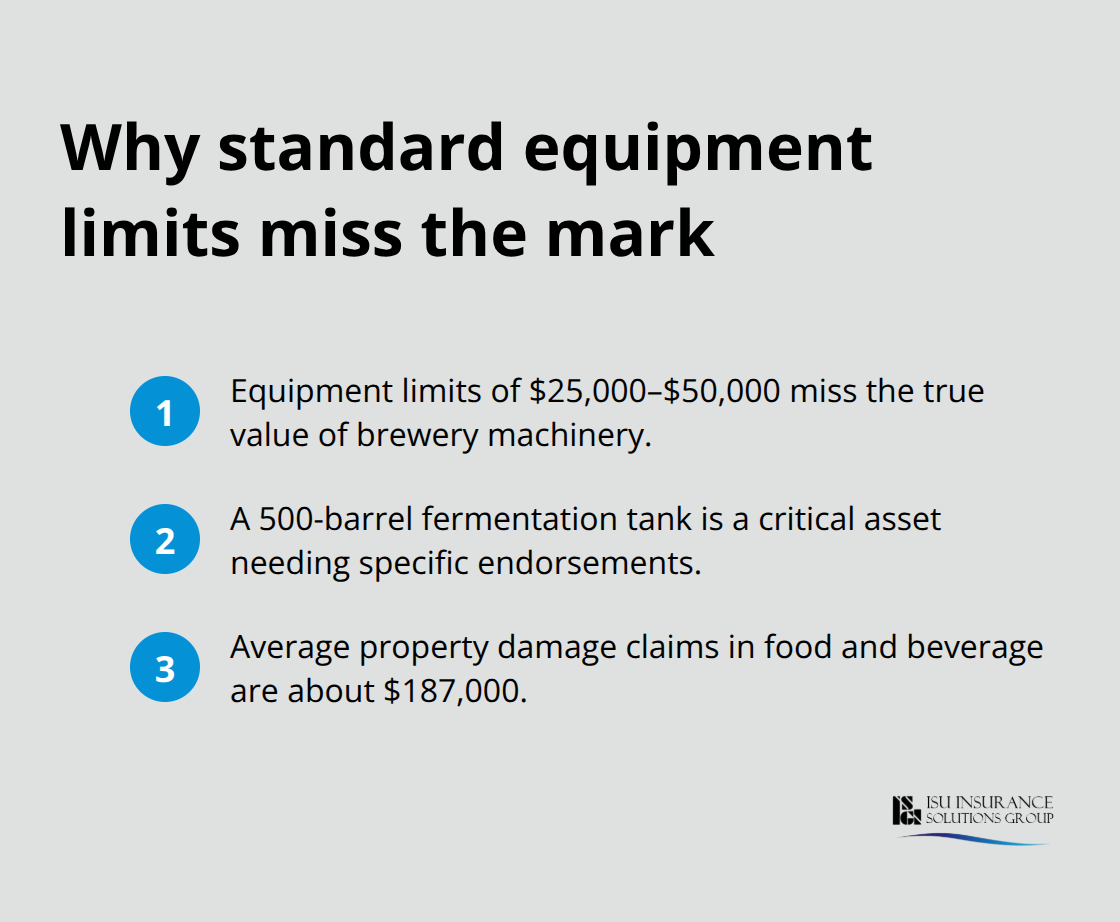
Brewery operations involve specialized assets that standard commercial policies treat as generic industrial equipment. Your fermentation tanks, glycol chillers, and temperature control systems represent hundreds of thousands of dollars in investment, yet most off-the-shelf policies cap coverage or exclude them entirely. A 500-barrel fermentation tank isn’t just another piece of machinery-it’s a critical production asset that requires specific coverage limits and endorsements. Standard policies typically set equipment limits between $25,000 and $50,000, which falls drastically short for breweries with multiple tanks, compressors, and automated systems. Insurance Information Institute data shows that property damage claims for food and beverage operations average $187,000, yet most breweries operate with coverage ceilings that would leave them severely underinsured after a single incident.
The Temperature Control Reality
Temperature fluctuations represent your biggest financial threat, yet most insurers treat spoilage as a secondary concern. A single day without refrigeration destroys thousands of dollars in finished product and work-in-progress batches. Standard commercial policies rarely cover spoilage losses unless you purchase a specific endorsement, and even then the limits fall short. Breweries typically maintain inventory worth $50,000 to $150,000 at any given time across fermentation, conditioning, and finished goods storage. When cooling systems fail, you lose not just the product cost but also months of fermentation time and the revenue that batch would have generated. Many breweries find their policies exclude temperature-related losses entirely, treating them as maintenance failures rather than insurable events.
Fire and Explosion Exposure
Breweries operate with pressurized vessels and alcohol vapors that create legitimate explosion risks standard insurers underestimate. Your CO2 systems, pressurized fermentation tanks, and grain dust in storage areas present hazards that require specific risk assessment and coverage modifications. A grain dust explosion, while rare, can cause catastrophic damage-the 2008 Georgia Nut Company explosion resulted in $100 million in damages and fatalities. Insurance carriers unfamiliar with brewery operations often either decline coverage or apply blanket restrictions that make your operation uninsurable. Carriers that understand these specific risks can structure coverage that reflects your actual exposure rather than applying generic manufacturing rules.
Finding the Right Coverage Partner
Standard insurers lack the expertise to properly assess brewery-specific risks, which means you need an agency that works with carriers experienced in craft operations. An independent agency with deep brewery knowledge can access multiple carriers and match your operation with insurers who understand pressurized systems, temperature control requirements, and product liability exposure. The difference between working with a generalist and a specialist often means the difference between adequate coverage and dangerous gaps that surface only after a loss occurs.
What Coverage Your Brewery Actually Needs
Your brewery’s physical assets fall into three distinct categories, and each demands different protection levels than what standard commercial policies provide. Building coverage protects your structure and permanent installations, equipment coverage handles your production machinery, and product liability coverage addresses the risks of serving alcohol on-premise or selling packaged products. Most breweries underestimate the value of their equipment and inventory, then purchase coverage based on incomplete assessments.
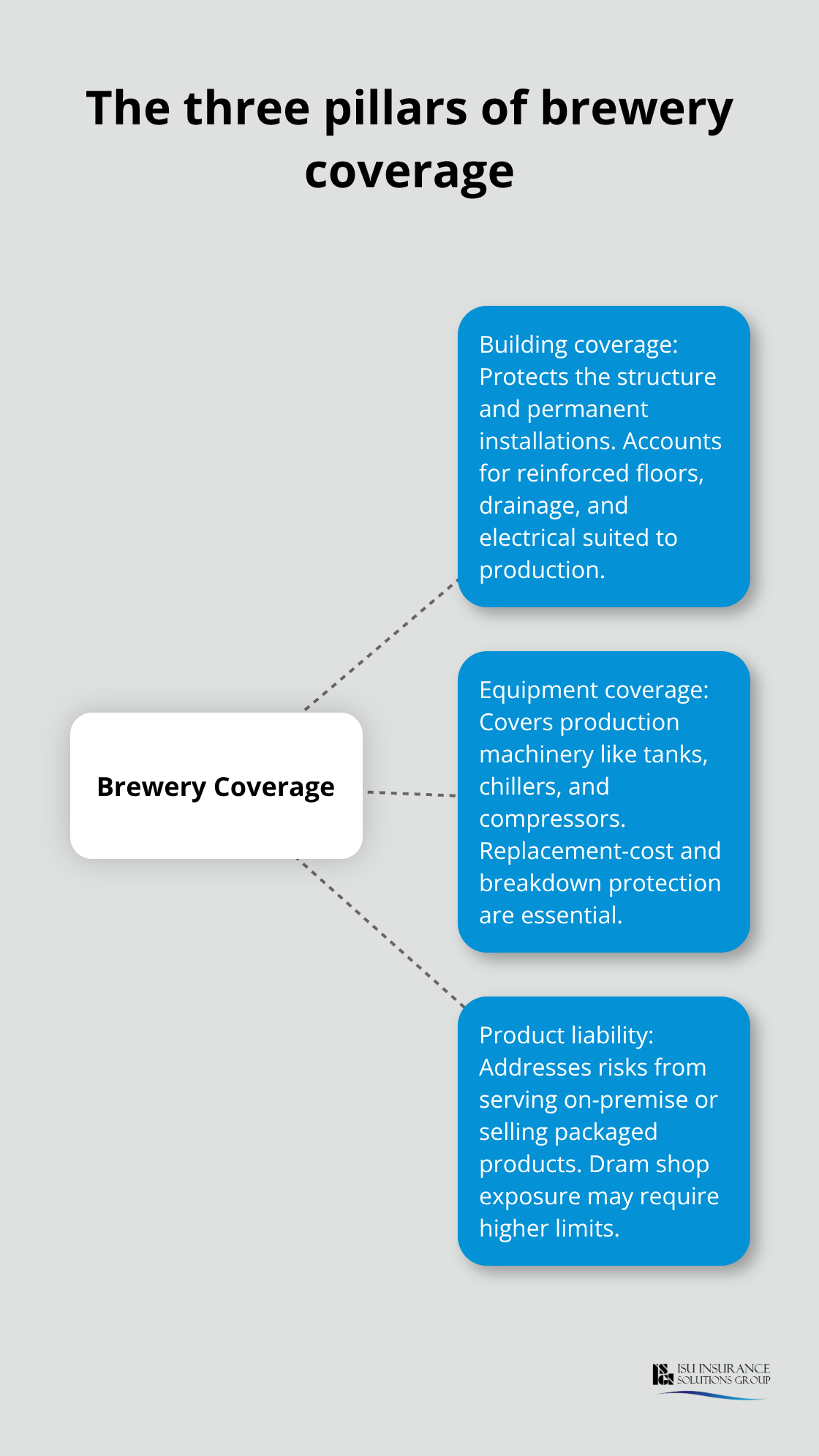
A typical 10-barrel brewpub operation carries between $200,000 and $400,000 in equipment value alone, yet many owners quote coverage based on rough estimates rather than detailed asset inventories. You need an itemized list of every significant asset-tanks, chillers, compressors, kegging lines, bottling equipment, and point-of-sale systems-with replacement costs, not depreciated values. This inventory becomes your baseline for determining whether your coverage limits are realistic or dangerously low.
Building and Installation Protection
Your brewery building requires coverage that accounts for specialized installations that standard policies treat as standard construction. Reinforced flooring for heavy fermentation tanks, drainage systems designed for washdown operations, and electrical infrastructure sized for your production capacity all represent building improvements that exceed typical commercial spaces. Most policies cap building improvements coverage at 10 to 15 percent of your building limit, which proves inadequate when your brewing systems represent 30 to 40 percent of your total facility investment. Additionally, your HVAC systems likely include industrial-grade components and humidity controls that standard commercial policies undervalue. You should obtain a detailed appraisal of your building improvements from someone familiar with brewery construction costs, not just a general commercial appraiser. This appraisal becomes your justification for requesting higher improvement limits or separate sublimits for brewing-specific installations. Without this documentation, insurers default to their standard percentages, leaving your specialized infrastructure underprotected.
Equipment That Requires Specific Endorsements
Fermentation tanks, glycol chillers, and CO2 systems demand coverage endorsements that specify their replacement cost and breakdown protection. Standard equipment coverage typically excludes or severely limits coverage for items that require regular maintenance or have high replacement costs. A 500-barrel fermentation tank costs $40,000 to $60,000 to replace, yet many policies cap single-item coverage at $15,000 to $25,000. You need equipment breakdown coverage that includes the cost of spoilage during repair periods. When your glycol chiller fails during fermentation season, you lose the batch in progress plus the revenue that beer would have generated. Equipment breakdown policies from carriers experienced with breweries typically cover both the repair or replacement costs and the product loss during downtime, but only if you specifically request these endorsements. Kegging and bottling equipment represents another significant asset category that often receives inadequate limits. A semi-automatic bottling line costs $50,000 to $150,000, yet appears on many policies with generic equipment limits that provide less than half the replacement cost.
Product Liability and On-Premise Exposure
Product liability coverage for breweries needs significantly higher limits than standard food and beverage policies because alcohol consumption creates additional risk exposure. Most policies come with $1 million per occurrence limits, but a serious injury claim from someone served alcohol at your taproom can easily exceed that threshold. Dram shop liability, which covers claims arising from serving alcohol to someone who causes injury, requires separate endorsements on top of your general product liability policy. Your state’s dram shop laws determine your legal exposure-Washington state holds alcohol servers liable for injuries caused by intoxicated patrons, which means your exposure extends beyond your facility to anyone harmed by someone who drank at your location. A $2 million per occurrence limit with a $5 million annual aggregate represents a more realistic baseline for breweries with on-premise consumption areas. If you distribute your beer through retail channels, your product recall coverage becomes critical. A contamination issue or labeling problem that requires a recall can cost $100,000 to $500,000 depending on distribution scope. Product recall coverage specifically reimburses recall costs, including product destruction, notification expenses, and replacement inventory costs that your standard product liability policy excludes.
Matching Coverage to Your Operation’s Reality
The coverage gaps that plague most brewery policies stem from insurers applying generic commercial templates to specialized operations. An independent agency with brewery experience can access multiple carriers and match your operation with insurers who understand pressurized systems, temperature control requirements, and product liability exposure. ISU Insurance Solutions Group, serving Washington and Oregon since 1983, works with 20+ carriers to structure brewery coverage that reflects your actual assets and risks rather than applying blanket restrictions. The difference between working with a generalist and a specialist often means the difference between adequate coverage and dangerous gaps that surface only after a loss occurs. Your next step involves conducting that detailed asset inventory and connecting with an agency that can translate your specific equipment and operations into appropriate coverage limits and endorsements.
Common Gaps in Standard Commercial Policies for Breweries
Equipment Coverage Falls Short of Actual Replacement Costs
Most brewery owners discover their coverage gaps the hard way: after equipment fails, product spoils, or a customer files a liability claim. Standard commercial policies treat breweries as generic food and beverage operations, which means they systematically underestimate your actual exposure and equipment values. Your fermentation tanks, glycol chillers, and CO2 systems fall into coverage gaps because standard policies either cap equipment limits at $15,000 to $25,000 per item or exclude them entirely as high-maintenance equipment. A single 500-barrel fermentation tank costs $40,000 to $60,000 to replace, which means a standard policy leaves you responsible for 60 to 75 percent of the replacement cost out of pocket.
The problem isn’t that these policies are poorly written-it’s that they were designed for restaurants and food manufacturers, not for operations that maintain hundreds of thousands of dollars in pressurized fermentation equipment and temperature-sensitive inventory. Equipment breakdown coverage from carriers experienced with breweries typically covers both repair or replacement costs and product loss during downtime, but only if you specifically request these endorsements. Kegging and bottling equipment represents another significant asset category that often receives inadequate limits. A semi-automatic bottling line costs $50,000 to $150,000, yet appears on many policies with generic equipment limits that provide less than half the replacement cost.
Spoilage Coverage Leaves You Exposed During System Failures
Spoilage coverage represents the second critical gap in standard brewery policies. When your cooling system fails during fermentation season, you lose not just the physical product but also the time investment-a batch in progress represents months of work plus the future revenue that beer would have generated. Most standard policies treat spoilage as a maintenance issue rather than an insurable loss, which means temperature control failures fall outside your coverage entirely unless you’ve purchased a specific endorsement.
Breweries typically maintain inventory worth $50,000 to $150,000 at any given time across fermentation, conditioning, and finished goods storage. A single day without refrigeration destroys thousands of dollars in finished product and work-in-progress batches. Standard commercial policies rarely cover spoilage losses unless you purchase a specific endorsement, and even then the limits fall short of your actual exposure.
On-Premise Liability Exposure Exceeds Standard Limits
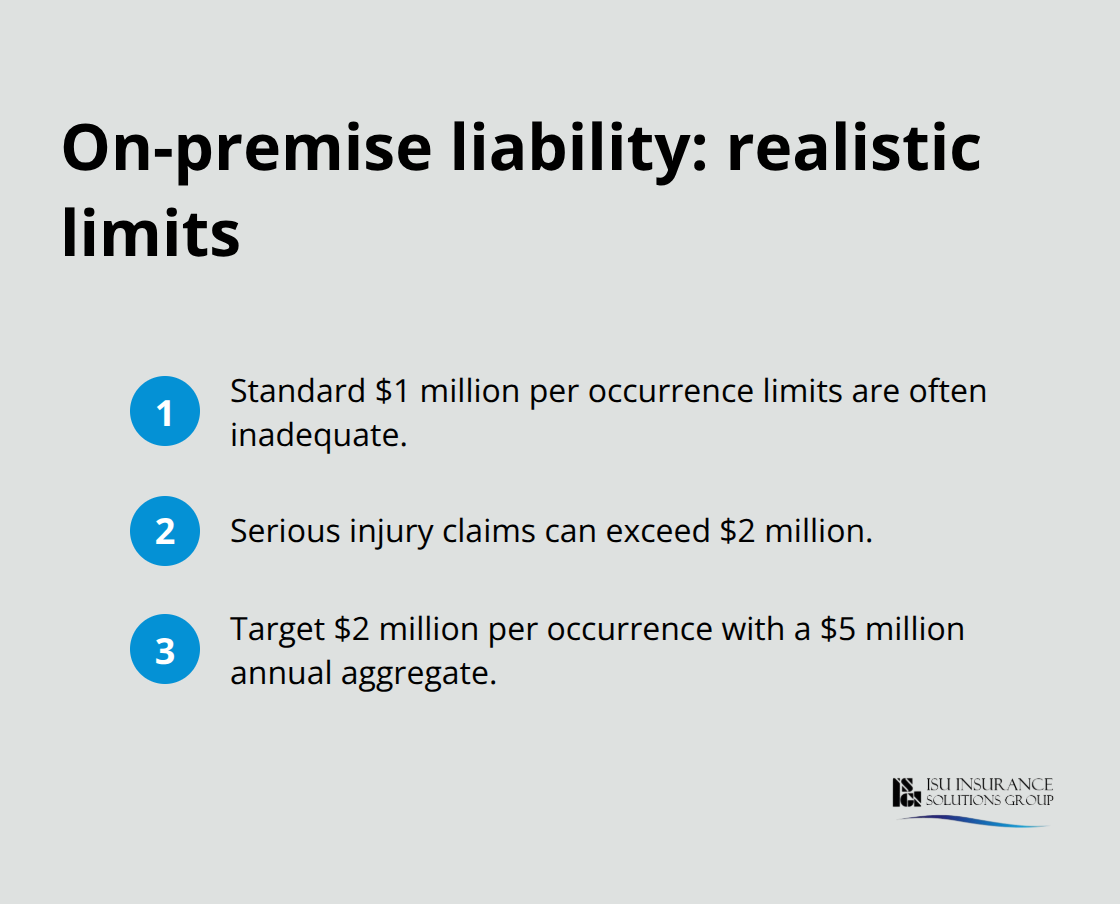
On-premise consumption areas create liability exposure that standard policies severely underestimate. A customer injured at your taproom after consuming your beer can file a dram shop claim, and depending on your state’s laws, your liability can extend beyond your facility to injuries caused by someone who drank at your location. Washington and Oregon both impose significant dram shop liability on alcohol servers, which means your exposure is substantial and your standard $1 million per occurrence limit provides inadequate protection.
A serious injury claim from an intoxicated patron can easily exceed $2 million, yet most breweries operate with limits designed for standard restaurants. Dram shop liability requires separate endorsements on top of your general product liability policy. A $2 million per occurrence limit with a $5 million annual aggregate represents a more realistic baseline for breweries with on-premise consumption areas.
Product Recall Costs Fall Outside Standard Coverage
Product recall coverage represents another overlooked gap that impacts breweries with retail distribution. A contamination issue, labeling error, or ingredient recall can force you to pull product from shelves across multiple states, with costs ranging from $100,000 to $500,000 depending on distribution scope. Standard product liability policies exclude recall costs entirely-they cover injury claims but not the expense of destroying contaminated product, notifying retailers, or replacing inventory.
Product recall coverage specifically reimburses recall costs, including product destruction, notification expenses, and replacement inventory costs that your standard product liability policy excludes. If you distribute your beer through retail channels, your product recall coverage becomes critical to protecting your business from financial devastation. An independent agency with brewery experience can access carriers who understand these specific gaps and structure coverage that actually matches your assets and risks rather than applying blanket restrictions that leave you dangerously underinsured.
Final Thoughts
Brewery property coverage separates operational resilience from financial catastrophe because standard commercial policies fail breweries systematically. Your fermentation tanks, temperature control systems, and on-premise liability exposure demand specialized protection that only carriers experienced with craft operations understand. The gaps throughout this article represent real financial exposure that surfaces only after a loss occurs, when adjusting your coverage becomes impossible.
Start with an honest assessment of what you actually own and document every significant asset with replacement costs, not depreciated values. List your fermentation tanks, chillers, kegging equipment, bottling lines, and point-of-sale systems, then calculate your typical inventory value across fermentation, conditioning, and finished goods. Identify whether you serve alcohol on-premise, distribute through retail channels, or both, since this determines your liability exposure and the coverage limits you actually need.
The insurance partner you choose matters more than the specific carrier because a generalist agent applies template policies that leave gaps while an agency with deep brewery expertise accesses multiple carriers and matches your operation with insurers who understand pressurized systems and temperature control requirements. ISU Insurance Solutions Group works with 20+ carriers to structure brewery property coverage that reflects your actual assets and risks rather than applying blanket restrictions. Contact us to connect with an agency that understands your operation well enough to identify gaps before they cost you money.
The information provided in this blog is for general informational purposes only and does not constitute legal, financial, or insurance advice. Coverage options, terms, and availability may vary. Please consult with a licensed professional for advice specific to your situation.