

Commercial Auto Risk Management: Reducing Fleet Exposure
Fleet accidents cost U.S. businesses over $60 billion annually, with driver behavior and vehicle maintenance accounting for the majority of claims. Commercial auto risk management isn’t optional-it’s the foundation of protecting your bottom line.
At ISU Insurance Solutions Group, we’ve seen firsthand how proactive fleets reduce accidents by up to 30% through targeted strategies. This guide walks you through proven methods to lower your exposure and insurance costs.
Common Commercial Auto Risks and Exposures
Driver Behavior Remains Your Biggest Liability
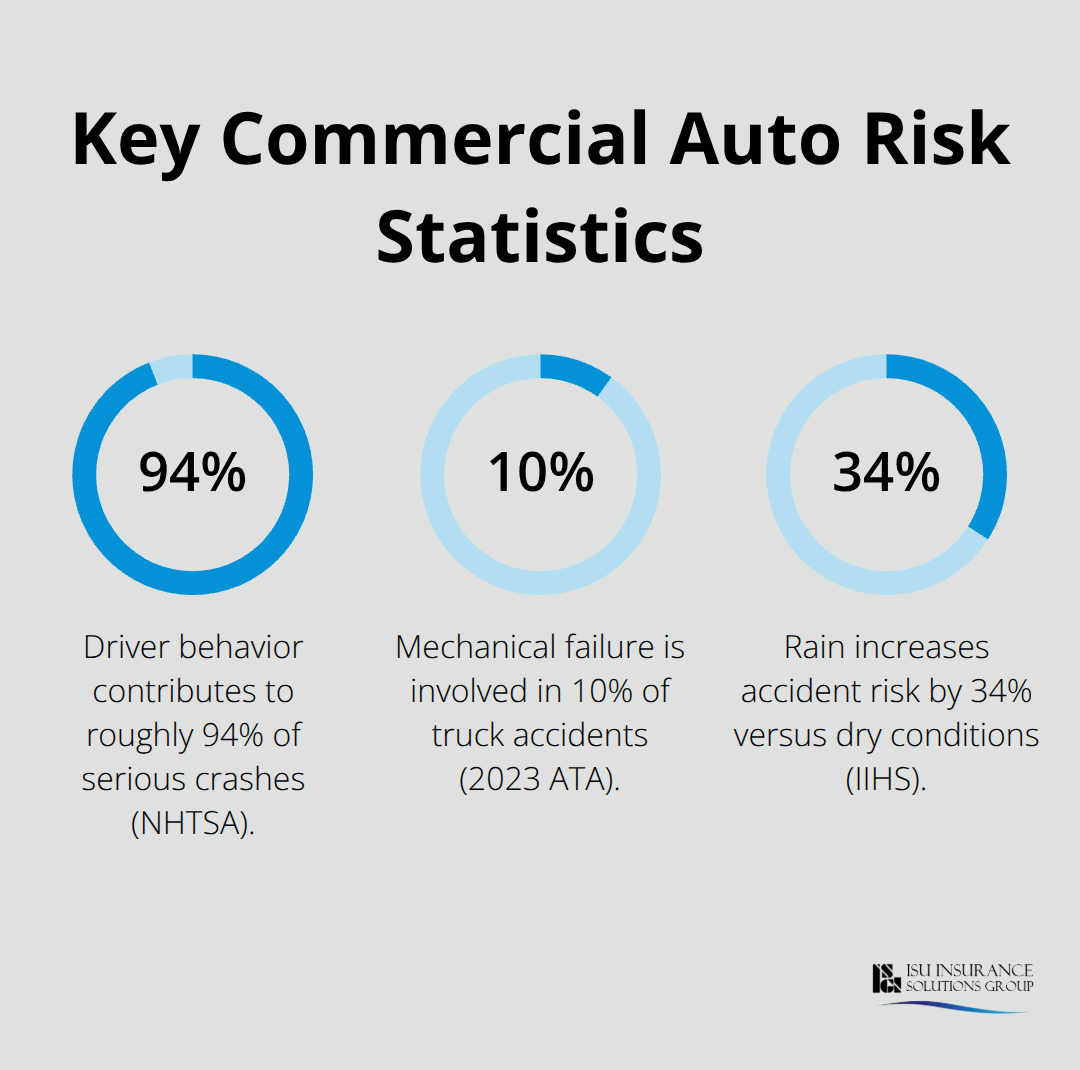
Driver behavior causes roughly 94% of serious crashes, according to the National Highway Traffic Safety Administration, making human error the dominant risk factor in commercial auto fleets. Speeding, distracted driving, and aggressive maneuvers account for the bulk of claims. The problem intensifies with inexperienced drivers-those with less than two years of experience file claims at nearly double the rate of veterans. Fatigue compounds the issue significantly; the Federal Motor Carrier Safety Administration reports that drowsy driving contributes to thousands of commercial vehicle accidents annually.
Your drivers spend hours on the road daily, which means fatigue management directly impacts your loss ratios and insurance premiums. A tired driver makes poor decisions faster than a rested one, and those decisions translate into accidents that cost your business money.
Vehicle Maintenance Failures Create Hidden Exposure
Mechanical breakdowns don’t just cause accidents; they create liability exposure that extends beyond the immediate collision. Brake failures, tire blowouts, and steering problems represent the most dangerous maintenance gaps in commercial fleets. A 2023 American Trucking Associations report found that 10% of truck accidents involved mechanical failure, yet many of these were preventable through basic maintenance.
Oil changes, tire pressure checks, and brake inspections take hours but prevent incidents that cost tens of thousands in claims and downtime. Deferred maintenance often stems from budget pressure, but skipping scheduled service creates exponentially higher costs when a failure occurs on the road. One breakdown can sideline a vehicle for weeks and generate liability claims that dwarf the cost of preventive care.
Weather and Road Conditions Demand Adaptive Strategies
Weather and road conditions affect every fleet differently depending on geography, but the Pacific Northwest brings particular challenges-rain, fog, and occasional ice create hazardous conditions for eight months of the year. Rain alone increases accident risk by 34% compared to dry conditions, according to the Insurance Institute for Highway Safety.
Your drivers need condition-specific training, not generic safety videos. Road construction, congestion patterns, and seasonal hazards in Washington and Oregon require fleets to adjust routing, speed protocols, and vehicle spacing throughout the year. One-size-fits-all safety policies fail because they ignore the actual environment your vehicles navigate daily. Drivers operating in wet conditions need different guidance than those in dry climates, and that specificity matters when claims arrive.
Understanding these three risk categories sets the stage for implementing strategies that actually work. The next section outlines proven methods to address each exposure and lower your insurance costs.
Strategies to Reduce Fleet Risk and Lower Insurance Costs
Driver Training Programs That Match Real Conditions
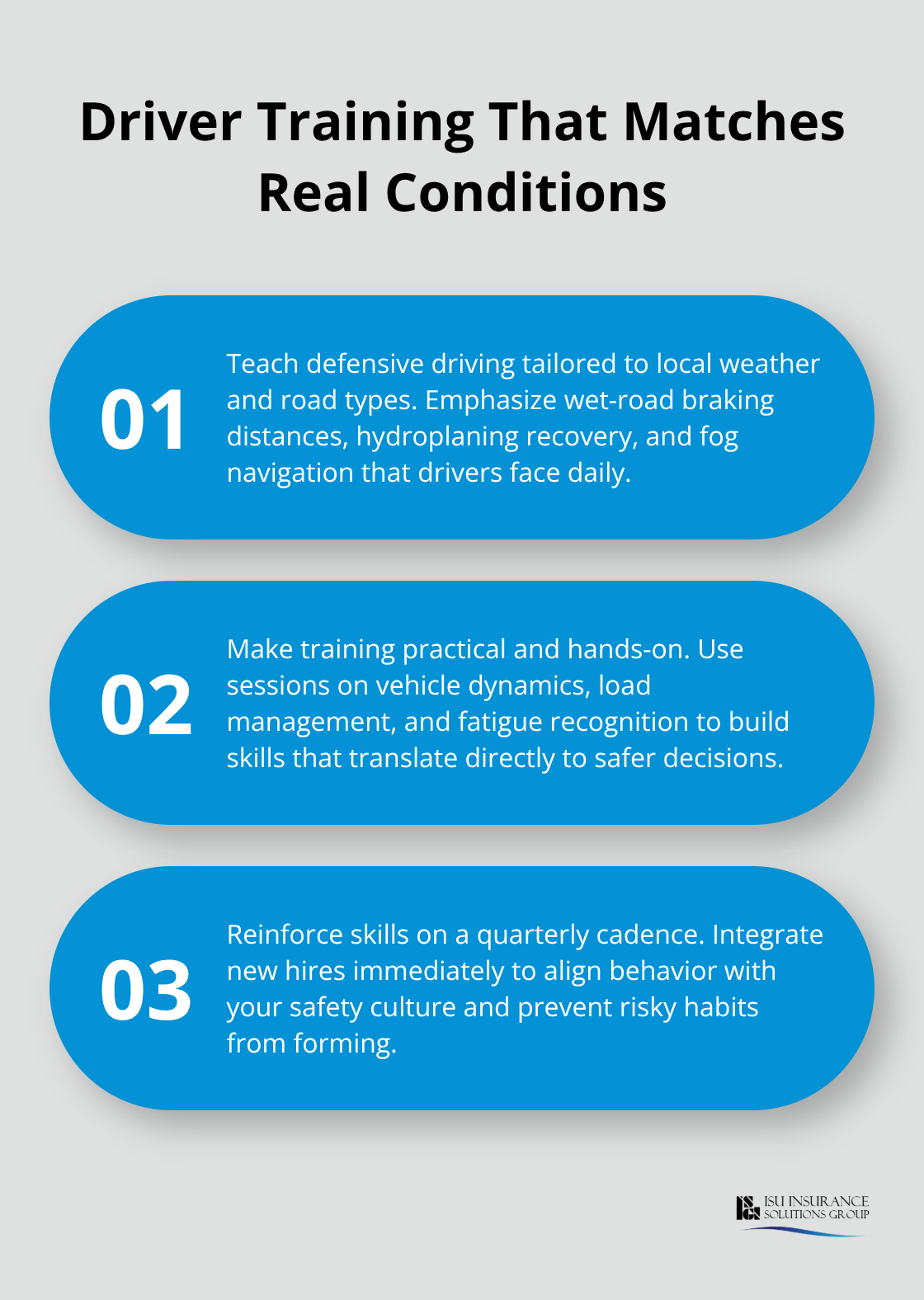
Driver training programs that focus on real-world conditions outperform generic safety courses by a significant margin. Effective programs teach defensive driving specific to weather patterns and road types your drivers encounter daily-not theoretical highway scenarios. In the Pacific Northwest, this means training on wet-road braking distances, hydroplaning recovery, and fog navigation rather than abstract safety principles.
Drivers need to understand that stopping distance increases by 40% on wet pavement compared to dry conditions. Practical training sessions covering vehicle dynamics, load management, and fatigue recognition produce measurable results. Schedule training quarterly rather than annually; muscle memory fades, and new drivers need integration into your safety culture immediately upon hire.
Telematics systems complement training by capturing real-time driver behavior-hard braking events, speeding, and rapid acceleration data reveal which drivers need additional coaching. Connect training outcomes directly to insurance premium discussions with your agent; carriers reward documented safety improvements with rate reductions.
Maintenance Schedules That Prevent Mechanical Failures
Vehicle maintenance schedules must follow manufacturer specifications, not budget cycles. Tire blowouts and brake failures represent the highest-liability maintenance gaps; implement monthly tire pressure and tread-depth checks rather than waiting for failure.
Assign maintenance accountability to a specific person or department-vague responsibility produces deferred service and eventual claims. Establish a digital maintenance log documenting every service, inspection, and repair; this documentation protects you during liability disputes and demonstrates due diligence to insurers. Preventive maintenance costs $500-1,500 per vehicle annually, while a single accident claim averages $15,000-40,000 depending on injury severity.
Real-Time Vehicle Monitoring Technology
Telematics technology monitors vehicle health diagnostics in real time, alerting you to brake wear, fluid leaks, and engine problems before they cause roadside failures. This combination of scheduled maintenance and continuous monitoring transforms your fleet from reactive to predictive, directly lowering both accident frequency and insurance exposure. The data these systems generate also strengthens your position during claims disputes and demonstrates proactive risk management to your insurance carrier.
These three strategies-targeted training, strict maintenance schedules, and continuous monitoring-work together to reduce claims. The next section examines how to formalize these practices through clear policies and regular assessments that keep your risk management program on track.
Best Practices for Commercial Auto Management
Document Your Safety Policies and Maintenance Records
Written safety policies transform good intentions into measurable risk reduction. Your policy document should specify speed limits for different road conditions, required following distances, phone use restrictions, and procedures for reporting unsafe driving behavior. Fleets with documented safety programs experience measurable safety improvements compared to those relying on informal practices.
Make your policy specific to Pacific Northwest conditions-wet-road protocols matter more than generic safety language because your drivers navigate rain and fog constantly. Require drivers to sign acknowledgment forms annually and during onboarding; this creates legal documentation proving they understood expectations. Update policies when you identify new risks through accident analysis or near-miss reports.
Maintenance records deserve equal documentation rigor. Photograph vehicle conditions during inspections, log all repairs with dates and parts replaced, and maintain digital copies accessible during claims disputes. Insurance carriers scrutinize this documentation when assessing your risk management maturity and deciding premium rates.
Conduct Quarterly Risk Assessments Based on Real Data
Systematic risk assessment uncovers exposures that routine operations hide. Identify your five highest-risk drivers based on telematics data and accident history, then assign targeted training to address specific behaviors rather than generic refresher courses. Review accidents within 48 hours while details remain fresh-identify root causes beyond driver error, such as vehicle maintenance gaps or routing decisions that placed drivers in hazardous conditions unnecessarily.
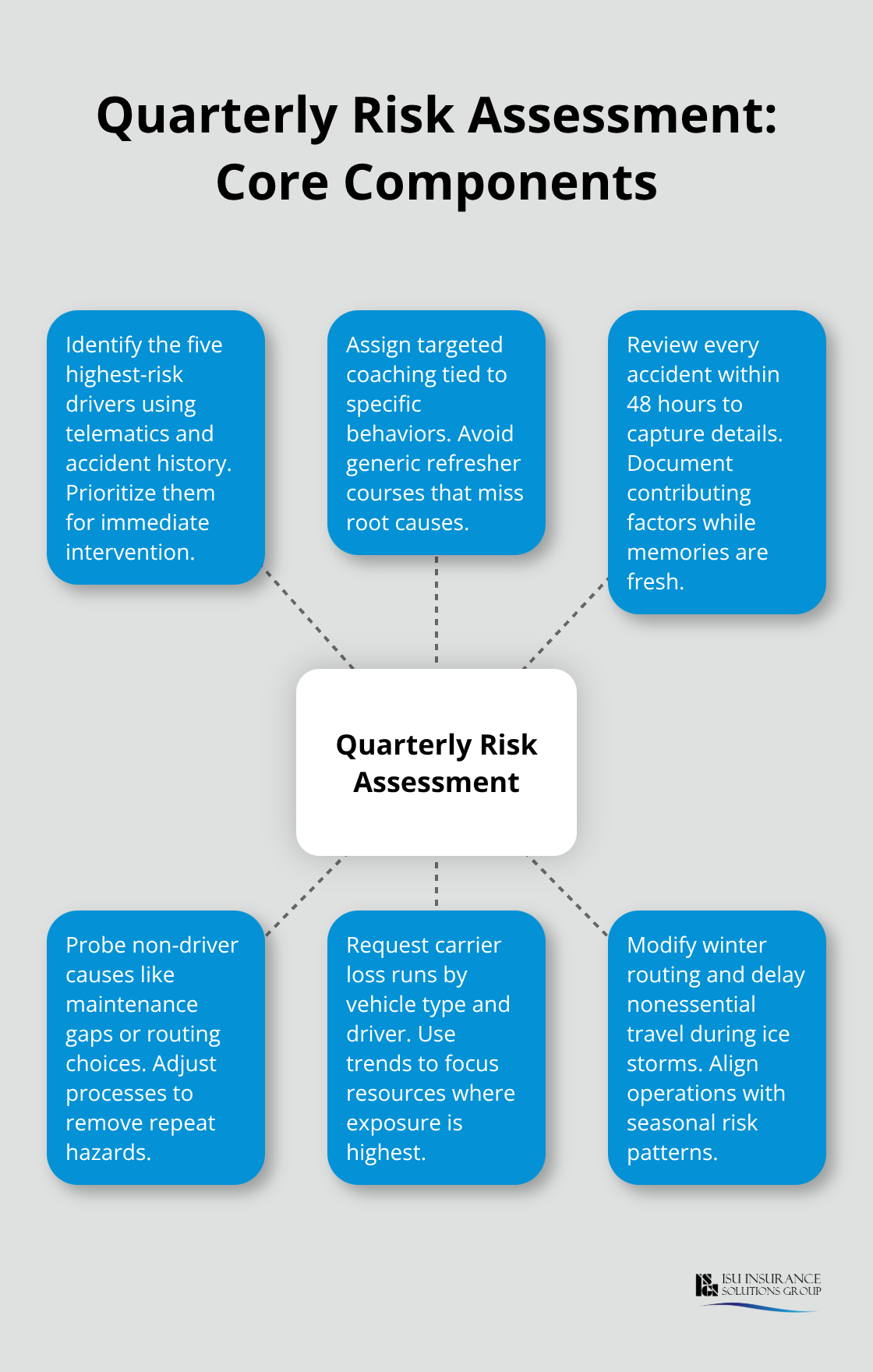
Request loss runs from your carrier showing claims frequency and severity by vehicle type and driver; this data reveals whether your commercial trucks or light vehicles generate more exposure. Assess your routing decisions during winter months-do drivers travel unnecessarily during ice storms, or can deliveries wait for safer conditions? These operational decisions directly impact your insurance profile and claim frequency.
Partner with Your Insurance Agent for Strategic Reviews
Schedule annual reviews with your insurance agent specifically to discuss your fleet’s loss history, emerging risk patterns, and available coverage adjustments. Carriers increasingly offer premium discounts for documented safety improvements-if you reduce your loss ratio by 15% over 12 months through training and maintenance investments, your agent can leverage that data during renewal negotiations to lower rates.
As an independent agency serving Washington and Oregon since 1983, we at ISU Insurance Solutions Group work with fleets to translate safety improvements into tangible rate reductions. Our agents understand Pacific Northwest operations and can identify which carriers reward your specific risk management efforts. One-call access to multiple carriers means your documented improvements reach decision-makers who control your premium.
Final Thoughts
Fleet accidents cost money, time, and reputation-but commercial auto risk management transforms these losses into measurable improvements. The strategies outlined here address the three dominant risk factors in commercial auto operations: driver behavior, vehicle maintenance, and environmental conditions. Fleets that commit to driver training tied to real Pacific Northwest weather patterns, strict maintenance schedules with documented records, and telematics technology see accident reductions of 20-30% within the first year, directly translating to lower insurance premiums and reduced downtime.
Start with your highest-risk drivers and vehicles, then assign a specific person accountability for maintenance scheduling and telematics monitoring. Schedule quarterly reviews of your loss data to identify emerging patterns before they become expensive claims, and request a premium review with your carrier once you’ve documented three months of safety improvements. Carriers reward measurable risk reduction with rate decreases, and your investment in training, maintenance discipline, and monitoring technology pays for itself within 12-18 months.
ISU Insurance Solutions Group has guided Washington and Oregon fleets through commercial auto risk management improvements since 1983. Our agents understand Pacific Northwest operations and work with multiple carriers to translate your safety investments into competitive rates. Contact us to discuss how your fleet’s specific exposures can be addressed through targeted strategies and appropriate coverage.
The information provided in this blog is for general informational purposes only and does not constitute legal, financial, or insurance advice. Coverage options, terms, and availability may vary. Please consult with a licensed professional for advice specific to your situation.