
Winery Product Liability Coverage: Shielding Your Wines from Risk
One contaminated batch or mislabeled bottle can expose your winery to significant financial and legal liability. Product liability claims in the wine industry are rising, with wineries facing risks from contamination, allergic reactions, and compliance violations that standard policies often don’t cover.
Winery product liability coverage protects your business from these specific threats. We at ISU Insurance Solutions Group help wineries understand what protection they actually need and how to close the gaps in their current policies.
What Actually Exposes Your Winery to Product Liability Claims
Contamination Threats That Trigger Major Claims
Contamination during fermentation or bottling remains the most dangerous threat to your winery’s financial stability. A single batch affected by wild yeast, bacteria, or equipment failure triggers lawsuits from customers who consumed the product and claims from distributors who stocked it. Defense costs alone drain your reserves even when claims lack merit.
Temperature fluctuations during storage, incorrect yeast strains, or cross-contamination between batches represent preventable scenarios that still occur regularly in wineries of all sizes. Your winemaker’s expertise matters, but mistakes happen-and insurance must cover the financial fallout when they do. Equipment failures that compromise wine quality expose you to multiple simultaneous claims from different parties in your supply chain.
Allergic Reactions and Labeling Violations
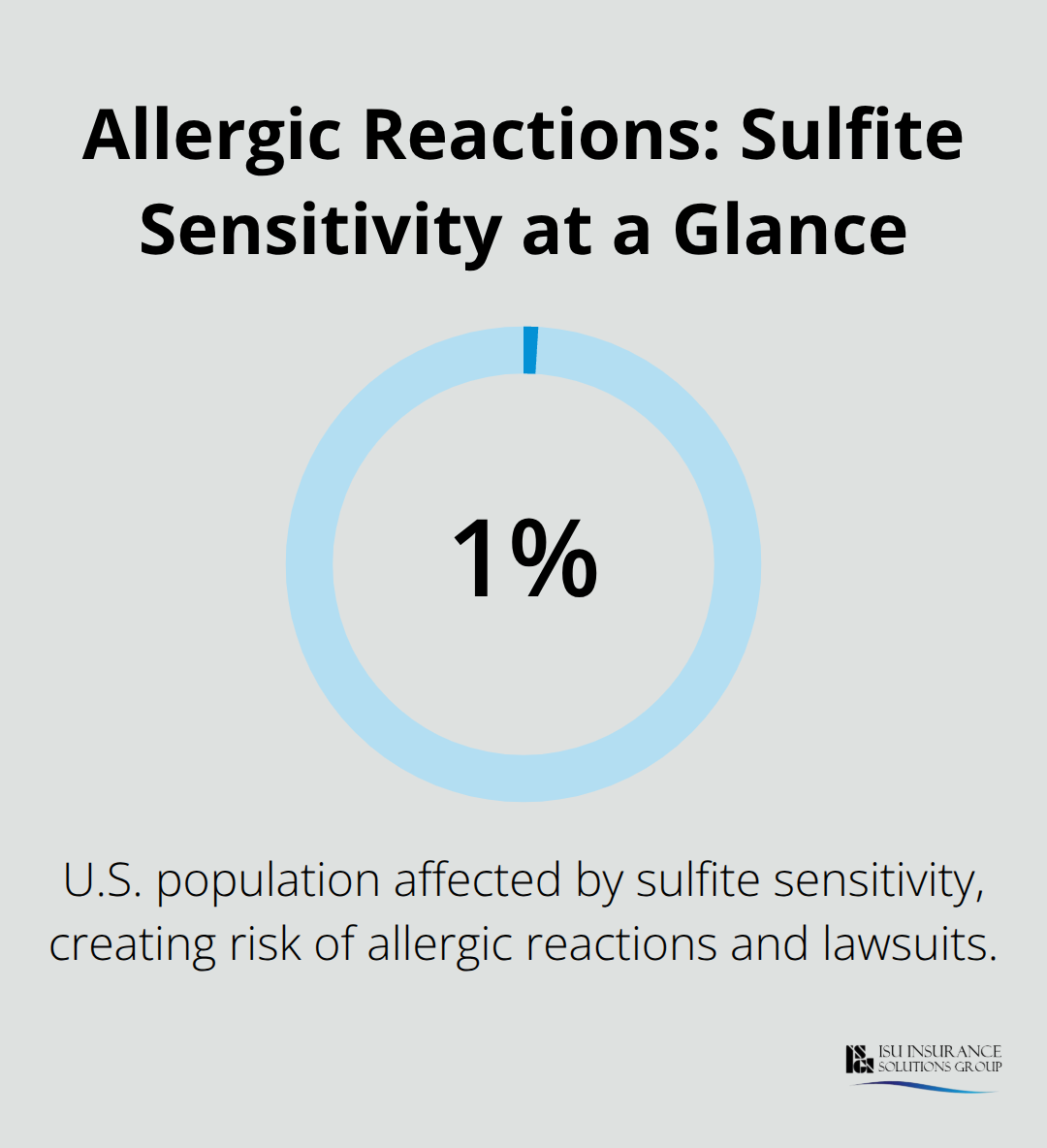
Allergic reactions to wine components create a separate liability exposure that many winery operators underestimate. Sulfite sensitivity affects roughly 1 percent of the population, yet undisclosed or inadequately labeled sulfites trigger allergic reactions that lead directly to lawsuits. Customers who experience reactions often pursue legal action against both the winery and retailers who sold the product.
Labeling violations compound this risk significantly. The Alcohol and Tobacco Tax and Trade Bureau enforces strict regulations on label content, ingredient disclosure, and health warnings, and violations result in product seizures, fines, and customer litigation. Mislabeled alcohol content, missing allergen warnings, or false health claims expose your winery to regulatory penalties and personal injury claims simultaneously.
Distribution Requirements and Coverage Limits
Distributors and retailers increasingly require wineries to carry minimum coverage limits of $1 million per occurrence, with many demanding $5 million or higher depending on distribution footprint. A winery selling exclusively at a tasting room operates differently from one shipping across multiple states, yet both face the same fundamental risk: one product defect destroys customer trust and triggers cascading claims that standard business insurance simply does not address.
Your distribution strategy directly determines the coverage limits you need. A nano-winery selling only locally may operate with lower limits, while operations distributing across ten states require substantially higher protection. Understanding your actual distribution footprint helps you identify the right coverage level before a claim forces the issue.
What Your Product Liability Coverage Actually Covers
Bodily Injury Claims and Medical Expenses
Product liability coverage protects your winery against bodily injury claims that arise when someone consumes your wine and experiences contamination, allergic reactions, or health complications. Your policy pays medical expenses, lost wages, and pain-and-suffering awards when a customer suffers sulfite sensitivity or bacterial contamination triggers gastrointestinal illness. This protection extends across your entire supply chain-customers who purchased directly from your tasting room and consumers who bought your wine through retailers in other states all fall under the same coverage umbrella.
Your coverage limit directly determines whether a single incident remains manageable or creates significant financial strain. Without adequate limits, one contamination event can wipe out years of profit and force operational shutdown.
Property Damage Liability and Legal Defense Costs
Property damage liability covers harm your wine causes to someone else’s property. If your product damages a customer’s property-for example, corrosive wine leaks during shipment and ruins someone’s flooring or inventory-your policy covers repair or replacement costs. This exposure matters most for wineries that ship products across state lines, where transit damage claims multiply with each shipment.
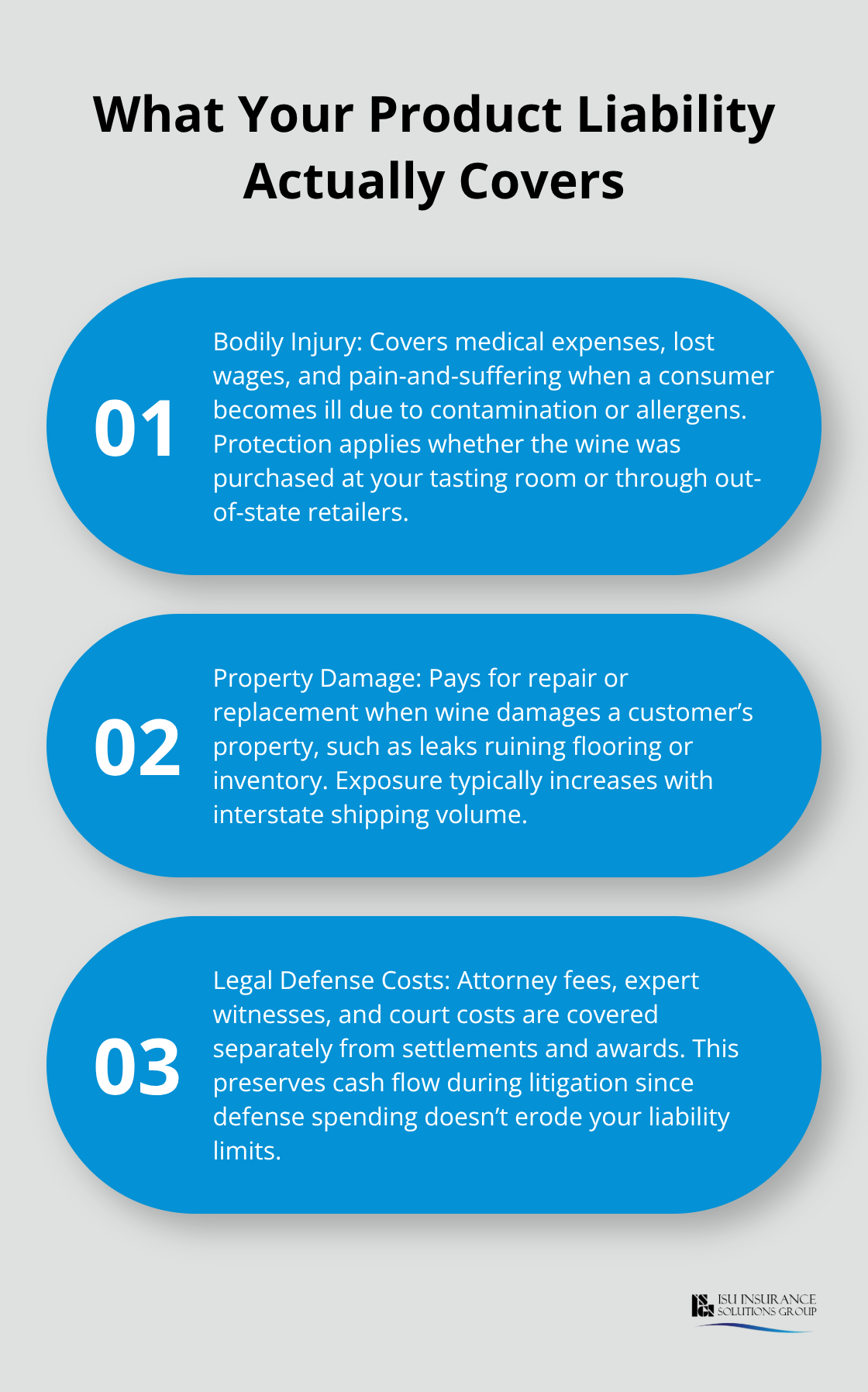
Legal defense costs get covered separately from settlement amounts, which matters enormously because defense expenses can reach six figures even when claims ultimately fail. Your insurer pays your attorney, expert witnesses, and court costs regardless of whether you win or lose, protecting your cash flow during lengthy litigation. This separation between defense costs and damages means your coverage limit applies only to settlements and awards, not to the cost of defending yourself in court.
Coverage Limits, Endorsements, and Premium Costs
Coverage limits must scale with your distribution footprint and vendor requirements. Distributors and retailers typically demand $1 million per occurrence as a baseline, though many require $5 million or higher depending on how many states you ship to. A winery distributing across ten states faces exponentially more exposure than one selling only at a tasting room, yet both need adequate limits before a contamination event forces the issue.
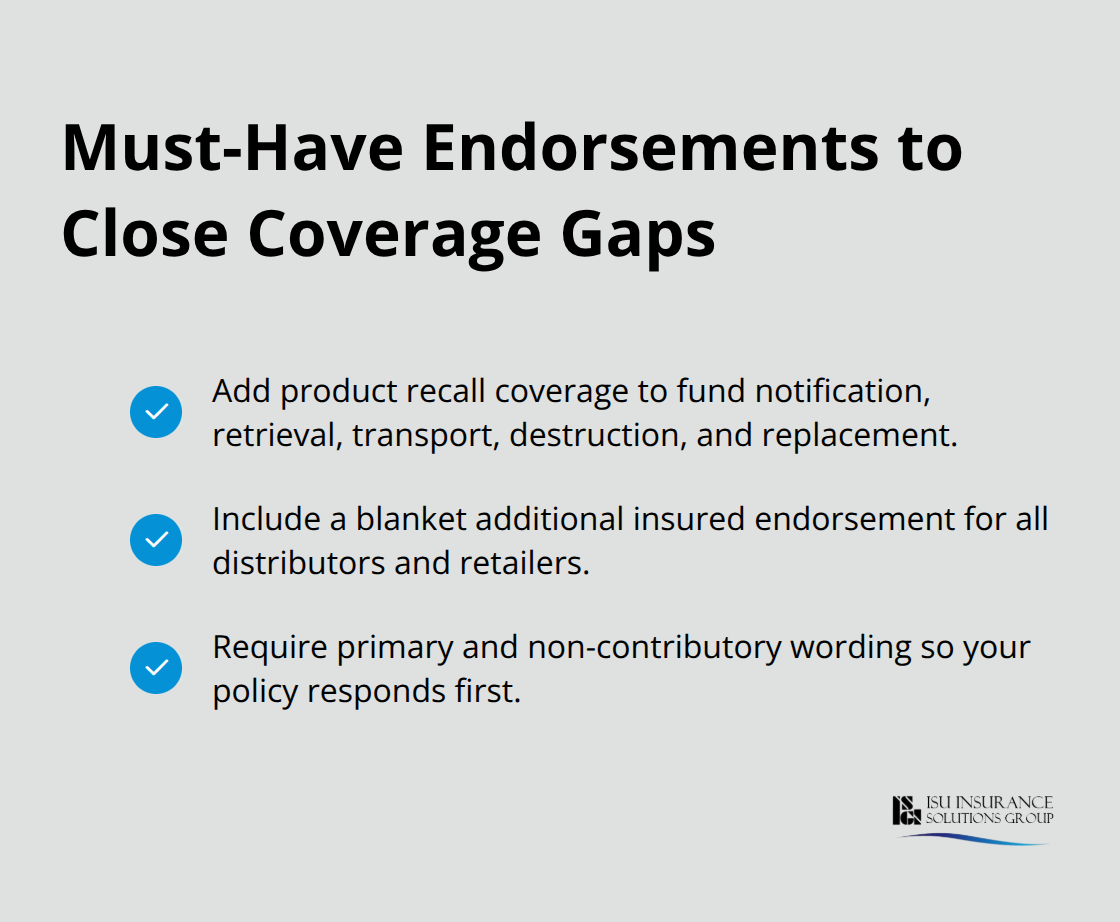
Product recall coverage requires a separate endorsement because standard product liability does not cover customer notification, product retrieval, transport, destruction, or replacement costs when you must pull contaminated inventory from shelves. Without this endorsement, you absorb these expenses directly from your operating budget. Your policy should also include a blanket additional insured endorsement, which automatically covers all your distributors and retailers without naming each individually-this reduces administrative headaches and meets vendor requirements without constant policy amendments.
Product liability insurance premiums for small businesses typically range from $736 to $2,431 annually, depending on your business profile. This makes product liability one of your most cost-effective risk management investments. The next step involves assessing your specific production volume and distribution strategy to determine which coverage limits actually protect your operation.
Matching Your Coverage to Your Winery’s Actual Risk Profile
Map Your Distribution Footprint First
Your distribution footprint determines everything about product liability coverage, yet most wineries select limits based on what competitors carry rather than what their operation actually needs. A tasting room winery selling exclusively to walk-in customers faces fundamentally different exposure than one shipping across ten states, yet both often carry identical $1 million limits simply because that number sounds standard. Start by mapping exactly where your wine goes: count the states you ship to, identify which distributors carry your product, and note whether you sell directly to consumers online or only through retail partners. This inventory takes an afternoon but reveals your true risk exposure.
Align Coverage Limits to Your Distribution Strategy
A nano-winery operating a single tasting room in Washington can operate efficiently with $1 million per occurrence coverage, while a winery distributed across five states needs minimum $2 million to $3 million protection, and operations shipping nationwide require $5 million or higher. Your vendor requirements matter equally-distributors and retailers increasingly demand $5 million limits regardless of your distribution footprint, making this a non-negotiable baseline for most commercial relationships. Premium costs scale predictably with limits: annual premiums typically range from $736 to $2,431 depending on your production volume and coverage tier, making higher limits surprisingly affordable when you account for the catastrophic financial exposure a single contamination event creates.
Identify Gaps in Your Current Coverage
Your existing business insurance almost certainly contains gaps that product liability coverage must fill. Standard business policies exclude product-related claims entirely, treating wine as a manufactured good that requires specialized protection separate from general liability. Review your current declarations page and identify what product liability coverage you carry-if your agent cannot immediately answer whether you have contamination coverage, recall endorsements, and blanket additional insured protection, you lack adequate protection.
The critical gap most wineries discover too late involves product recall endorsements, which standard product liability policies explicitly exclude. A contamination event forcing you to retrieve product from distributors and retailers triggers notification costs, retrieval expenses, transportation, destruction, and replacement inventory expenses that can exceed $100,000 even for small batches. Without this endorsement explicitly added to your policy, you absorb these costs directly.
Request Specialized Quotes That Close Gaps
Request quotes that include recall coverage as standard, blanket additional insured endorsements for all distributors and retailers, and primary and non-contributory language ensuring your policy pays first when multiple insurance policies exist. Comparing three quotes from carriers specializing in winery coverage typically reveals which gaps exist in your current protection and what premium increase closes them-often surprisingly modest when you consider the financial exposure involved.
Final Thoughts
Product liability coverage for wineries protects far more than your reputation-it protects your ability to operate when contamination or labeling violations strike. The financial exposure from a single incident extends across your entire supply chain, from customers at your tasting room to retailers stocking your wine across multiple states. Winery product liability coverage becomes non-negotiable the moment you distribute beyond your facility, yet most wineries carry limits that don’t match their actual distribution footprint or vendor requirements.
Your next step involves mapping your distribution strategy and requesting specialized quotes that include recall endorsements, blanket additional insured protection, and primary coverage language. Standard business policies leave dangerous gaps-product recall costs, contamination claims, and allergic reaction lawsuits fall outside conventional coverage. Comparing quotes from carriers experienced in wine operations reveals exactly where your current protection fails and what premium increase closes those gaps.
Agents unfamiliar with wine production often miss critical exposures like equipment failure contamination, sulfite labeling violations, and multi-state distribution requirements. They recommend generic limits that sound reasonable but leave you exposed when a real claim arrives. Contact us at ISU Insurance Solutions Group for a quote that covers your winery’s specific exposures and closes the gaps in your current protection.
The information provided in this blog is for general informational purposes only and does not constitute legal, financial, or insurance advice. Coverage options, terms, and availability may vary. Please consult with a licensed professional for advice specific to your situation.