Commercial Vehicle Fleet Insurance: Protect Your Entire Fleet

Managing multiple vehicles across your business creates real exposure. One accident, one liability claim, or one uninsured incident can drain your budget fast.

Commercial vehicle fleet insurance consolidates coverage for all your vehicles under one policy, cutting through the complexity of managing separate policies. We at ISU Insurance Solutions Group help businesses like yours find fleet solutions that actually reduce costs while strengthening protection.

What Your Fleet Insurance Actually Covers

Fleet insurance protects your entire operation against the specific risks your vehicles face on the road. Bodily injury liability covers medical expenses and legal costs when your driver injures someone else, while property damage liability handles damage to other people’s vehicles or property. Physical damage coverage-split into collision and comprehensive-protects your own vehicles from accidents and non-collision events like theft or weather damage. Cargo coverage becomes essential if you transport goods, protecting freight from loss or damage during transit. Uninsured motorist coverage fills a critical gap: roughly 12.6% of drivers nationwide carry no insurance, so this protection shields you when an uninsured or underinsured driver causes an accident. Medical payments coverage handles your drivers’ medical bills regardless of fault, reducing litigation risk. Non-owned auto coverage extends protection when employees use personal vehicles for business purposes, a real exposure many fleet operators overlook.

How Fleet Policies Simplify Your Operations

Individual vehicle policies require you to manage separate renewals, claims, and coverage limits for each vehicle-an administrative burden that grows quickly as your fleet expands. Fleet policies consolidate everything under one policy, meaning one renewal date, one claims process, and uniform liability limits across all vehicles. This simplification matters: you avoid coverage gaps that emerge when individual policies have different limits or exclusions. Premiums typically run around $1,000 per vehicle annually, though your actual cost depends on vehicle type, driver records, mileage, and location. Larger fleets enjoy lower per-vehicle premiums due to volume, while smaller fleets with two to five vehicles still benefit from better rates than individual policies. You can add or remove vehicles anytime without rewriting the entire policy, giving you flexibility as your operations change. Most carriers require at least two vehicles to qualify for fleet coverage, making this option accessible to small and mid-sized operations.

Which Vehicles Qualify for Fleet Coverage

Fleet insurance covers light vehicles like pickup trucks and vans, heavy trucks including semi-tractors and box trucks, and mixed fleets combining different vehicle types under one policy. Specialized vehicles such as those carrying cargo, equipment, or hazardous materials qualify, though cargo coverage and higher liability limits may be necessary. Newer vehicles with advanced safety features often qualify for lower premiums due to better crash protection and theft deterrents. Older vehicles still qualify but typically cost more to insure due to reduced safety technology and higher repair expenses. Most carriers allow you to mix vehicle types within a single policy-delivery vans alongside heavy trucks-without requiring separate policies.
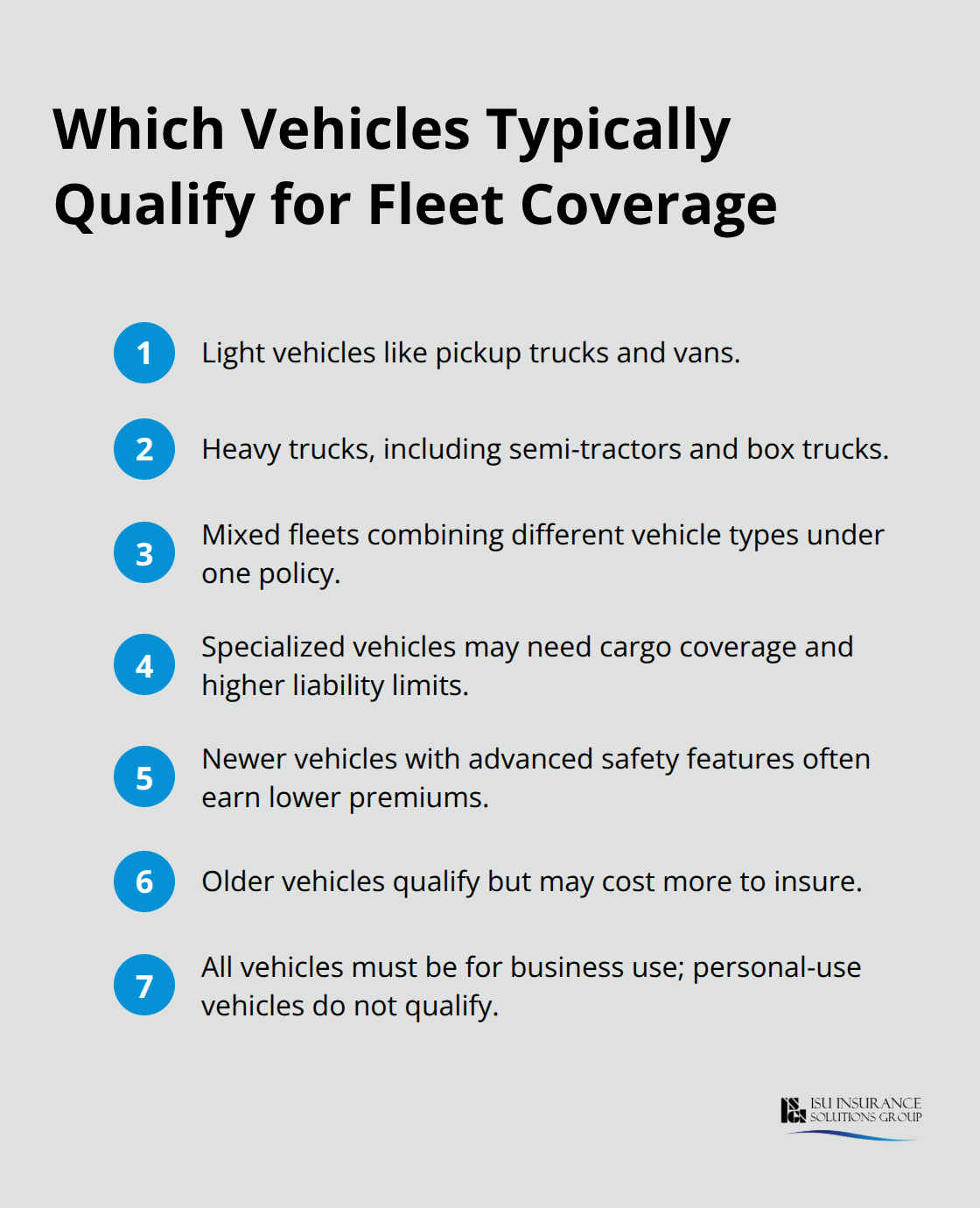
Compact list of vehicle eligibility points for commercial fleet insurance.

The key requirement is that all vehicles must serve business purposes; personal-use vehicles do not qualify for commercial fleet coverage.

Coverage Limits and Your Specific Needs

Your fleet’s risk profile determines which coverage limits you actually need. A delivery operation with light vehicles faces different exposure than a construction company with heavy equipment trucks or a logistics firm transporting high-value cargo. Review your coverage annually to verify that bodily injury, property damage, and uninsured motorist limits match your actual exposure. Consider hired and non-owned auto coverage if your team regularly uses rental vehicles or personal cars for business tasks. Tailor your policy using your safety data and driver records rather than accepting default insurer recommendations. This approach-selecting coverage that reflects your real operations-sets the foundation for managing your fleet’s total risk exposure.

How Fleet Insurance Cuts Your Operating Costs

Fleet insurance reduces your per-vehicle premium significantly compared to insuring each vehicle separately. On average, fleet insurance costs around $1,000 per vehicle annually, but this figure masks the real savings: larger fleets pay substantially lower per-vehicle rates due to volume discounts that individual policies simply cannot match. A five-vehicle fleet pays less per vehicle than a two-vehicle operation, and a twenty-vehicle fleet pays even less. Your actual premium depends on your specific risk profile-vehicle type, driver records, annual mileage, and location all factor in-but the consolidation itself creates immediate administrative savings.

One Policy Replaces the Administrative Burden

Instead of managing separate renewal dates, separate claims files, and separate coverage limits across multiple policies, you handle one renewal, one claims process, and uniform liability limits. Managing ten individual policies means ten opportunities for coverage gaps, ten different deductibles to track, and ten separate communications with insurers. One consolidated fleet policy eliminates that chaos. You can adjust coverage instantly as your fleet changes, adding or removing vehicles without rewriting entire policies. The bodily injury loss costs rose 9.2% from 2023 to 2024 according to the LexisNexis Risk Auto Insurance Trends Report, driven by uninsured motorists and medical cost inflation, making consolidated coverage and proper liability limits more important than ever.

Data-Driven Negotiations Lower Your Renewal Rates

When you consolidate your fleet, you also consolidate your negotiating power. Insurers recognize that managing one large account costs them less than managing multiple small accounts, and they price accordingly. You can share your fleet’s safety data-telematics information, maintenance logs, driver training records-with your carrier to demonstrate risk management and negotiate better renewal rates. This data-driven approach works: insurers reward fleets that show measurable safety improvements and compliance history.

Claims Processing Moves Faster With One Carrier

A single fleet policy means one claims department, one adjuster relationship, and one streamlined process when incidents occur. Compare this to managing claims across multiple carriers: you might wait for different adjusters, navigate conflicting coverage interpretations, and struggle to coordinate repairs across separate policies. With fleet insurance, your claims experience becomes predictable and faster. Most carriers offer 24/7 claims support and can coordinate repairs through established networks, minimizing vehicle downtime and keeping your operations running. You report the incident once, provide documentation once, and track one claim file rather than juggling multiple carriers’ systems. Every day a vehicle sits in the shop is revenue you do not generate, so faster claims processing means faster repairs and faster return to service.

Uniform Coverage Eliminates Liability Gaps

You also reduce your liability exposure significantly by consolidating coverage. When you maintain separate policies with different liability limits, you create gaps where a serious incident could exceed one policy’s coverage while leaving another policy underutilized. A consolidated fleet policy with uniform bodily injury and property damage limits across all vehicles means you have consistent protection regardless of which vehicle is involved in an accident. This uniform protection is especially critical given that large trucks account for about 9% of all vehicles involved in fatal crashes according to industry data. If your fleet includes heavy trucks, your liability exposure is substantial, and having adequate, consistent coverage across all vehicles protects your business from catastrophic losses. Speeding accounts for 28% of traffic fatalities, and 29% of speeding drivers in fatal crashes lacked valid licenses, according to the LexisNexis report.
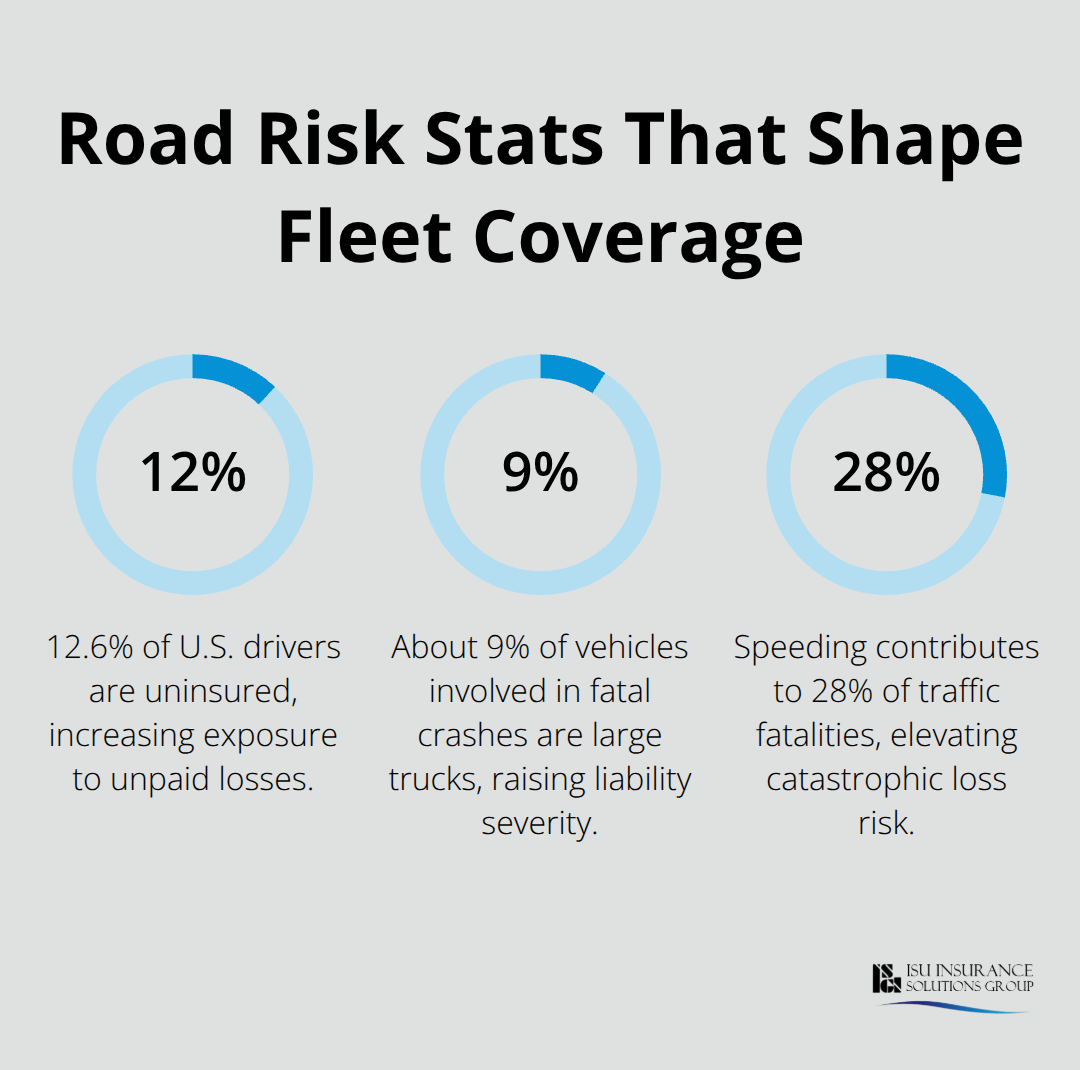
Key percentages that impact commercial fleet insurance risk and coverage decisions in the U.S. - Commercial vehicle fleet insurance

These statistics highlight why maintaining strong coverage limits matters: one serious incident can generate litigation costs far exceeding your premium savings. A consolidated fleet policy with proper limits prevents that exposure from bankrupting your operation.

The real cost of fleet insurance extends beyond premiums-it includes the risk management strategies that lower your claims frequency and demonstrate safety leadership to insurers.

Finding the Right Fleet Insurer for Your Operation

Selecting a fleet insurance carrier matters far more than chasing the lowest quote. Your insurer becomes a partner in managing your fleet’s risk, and the wrong choice costs you in claims delays, coverage gaps, and missed opportunities to reduce premiums through data-driven safety programs. Start by identifying carriers that specialize in commercial auto and understand your specific industry. A carrier experienced in construction fleets thinks differently about risk than one focused on delivery services or logistics operations. Ask potential insurers directly: what discounts do they offer for telematics adoption, driver training programs, and safety certifications? Carriers like Progressive offer 24/7 claims support and extensive truck repair networks, which matters when you need to minimize downtime. The real differentiator is whether your carrier will actively engage with your safety data. Some insurers simply collect telematics information and ignore it; the best ones use that data to identify high-risk drivers, reward safety improvements at renewal, and provide actionable coaching recommendations.
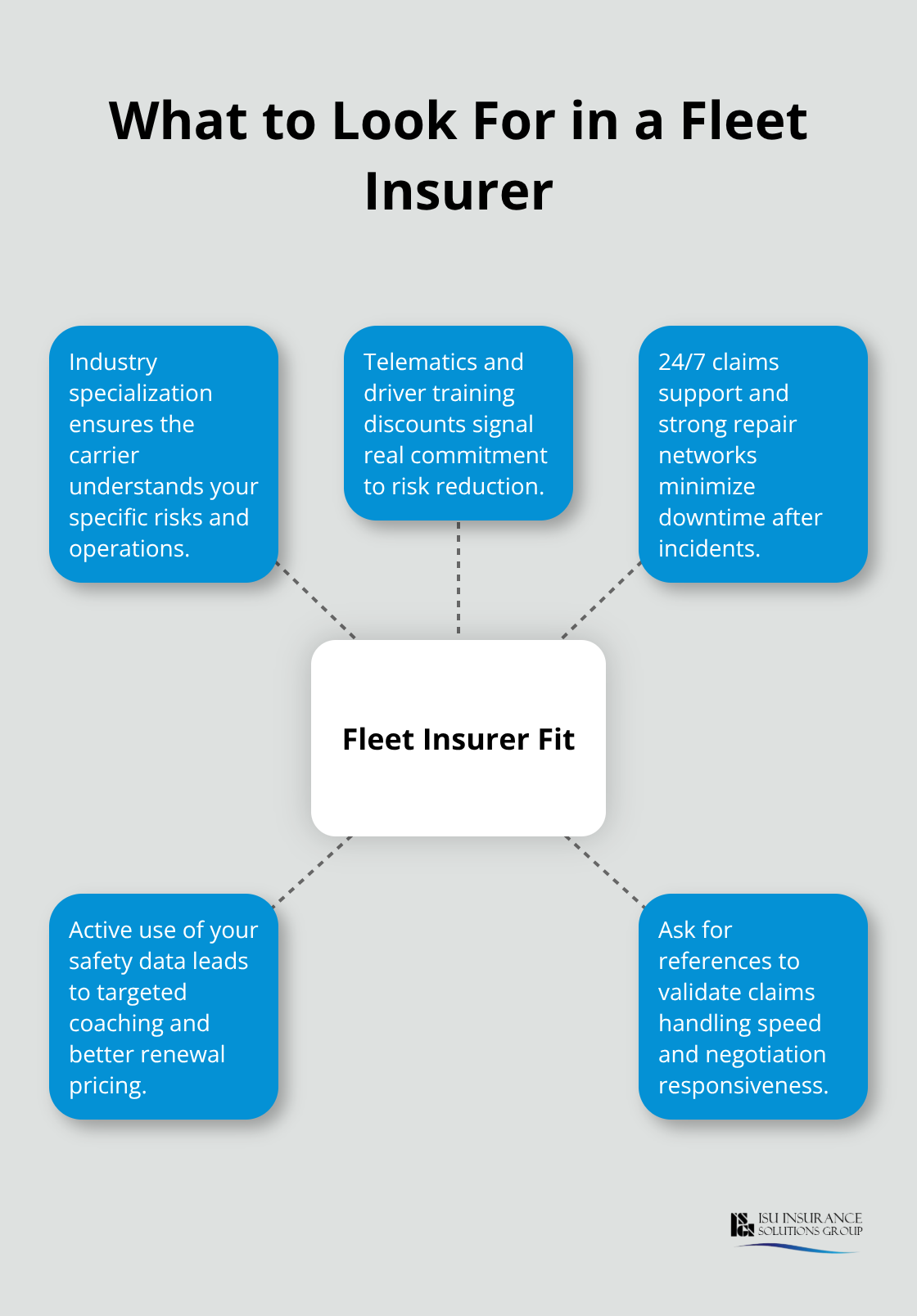
Hub-and-spoke diagram showing key factors when choosing a commercial fleet insurance carrier. - Commercial vehicle fleet insurance

Request references from other fleet operators in your industry and ask specifically about claims handling speed and how the insurer responds to premium renewal negotiations backed by safety improvements.

Assess Your Coverage Limits Honestly

Coverage limits require honest assessment of your actual exposure rather than accepting insurer defaults. If your fleet includes heavy trucks, your bodily injury liability limit should reflect that large trucks represent a significant portion of vehicles in fatal crashes. A construction company with equipment trucks faces different cargo exposure than a delivery service with light vans. Pull your accident history from the past three years and calculate the highest single claim you have experienced, then add 30 percent as your minimum bodily injury limit.

Compare Quotes From Multiple Carriers

Compare quotes from at least three carriers, but do not treat price as the primary factor. A carrier offering 10 percent lower premiums but requiring a $2,500 deductible may cost you more after a claim than a carrier with slightly higher premiums and a $1,000 deductible. Request itemized quotes that break down liability, physical damage, cargo, and uninsured motorist coverage separately so you can see exactly what each carrier charges for each component. During the quoting process, disclose your complete fleet composition, annual mileage, driver ages, and claims history accurately. Misrepresenting information to get lower quotes creates coverage issues when you file a claim.

Identify Carriers That Reward Safety Data

Ask each carrier whether they allow you to implement telematics and what premium reductions they offer for documented safety improvements over time. Carriers that offer 5 to 15 percent discounts for telematics adoption and driver training programs demonstrate commitment to risk reduction rather than just collecting premiums. This approach separates insurers who view your fleet as a long-term partnership from those who simply want your premium dollars.

Evaluate Claims Handling Quality

Claims handling quality separates good carriers from great ones. Request the claims contact information and call that number yourself during business hours to verify response times. Ask whether the carrier has preferred repair shops in your service area and whether they offer rental vehicle coverage while yours is being repaired. A 24-hour First Notice of Loss process and same-day adjuster assignment can reduce your operational disruption significantly. Finally, verify that your carrier can handle FMCSA compliance filings such as MCS-90 and BMC-91X if your fleet operates commercial trucks, as this administrative support prevents costly compliance gaps.

Final Thoughts

Commercial vehicle fleet insurance protects your entire operation by consolidating coverage, reducing administrative burden, and lowering your per-vehicle costs compared to managing separate policies. The real value emerges when you pair your fleet policy with data-driven risk management: telematics monitoring, driver training programs, and maintenance discipline demonstrate safety leadership to insurers and create measurable premium reductions at renewal. Your fleet’s safety record becomes your negotiating advantage, and carriers reward fleets that show consistent improvements in driver behavior and incident prevention.

Starting with fleet insurance requires three concrete steps. First, audit your current coverage across all vehicles and identify gaps where separate policies leave you exposed. Second, gather your fleet data: vehicle types, annual mileage, driver records, and claims history from the past three years. Third, request quotes from multiple carriers that specialize in commercial auto and ask specifically about discounts for telematics, driver training, and safety certifications.

A consolidated fleet policy with uniform coverage limits eliminates liability gaps that could expose your business to catastrophic losses, while faster claims processing keeps your vehicles on the road and your revenue flowing. ISU Insurance Solutions Group serves Washington and Oregon businesses with commercial vehicle fleet insurance tailored to your fleet’s specific needs. Our independent agency partners with over 20 carriers to deliver multi-carrier quotes and hands-on local expertise that finds the right balance of coverage and cost for your operation.

The information provided in this blog is for general informational purposes only and does not constitute legal, financial, or insurance advice. Coverage options, terms, and availability may vary. Please consult with a licensed professional for advice specific to your situation.
Independent Agent Professional Liability: Insurance That Grows With Your Practice

Independent agents face a unique set of risks that standard business insurance simply doesn’t cover. A single mistake in policy recommendations or client communication can trigger claims that threaten your practice and reputation.

At ISU Insurance Solutions Group, we’ve seen how the right professional liability coverage protects agents at every stage of growth. This guide walks you through the coverage options and strategies that keep your agency secure as you scale.

What Independent Agents Actually Need to Know About Professional Liability

The Coverage Gap That Exposes Your Practice

Standard commercial policies leave independent agents dangerously exposed. General liability covers third-party bodily injury and property damage-someone slips in your office or you damage a client’s property. Professional liability covers something entirely different: negligent advice, errors in policy placement, misrepresentation, or failure to deliver promised services. When you recommend a coverage option that turns out to be inadequate, or you miss a deadline that costs a client thousands in uninsured losses, general liability won’t help you. The gap between these two types of coverage is where most independent agents encounter serious trouble.

What the Data Reveals About E&O Claims

A 2025 Best Practices Study analyzing over 3,000 data points across agencies of all sizes found that governance practices and structured risk controls directly correlate with lower E&O claim frequency. Agencies without documented processes for client communication, policy review protocols, and staff training experience significantly higher liability exposure. Real claims against independent agents include misquoting premium amounts, failing to add required coverages, missing policy renewal deadlines, providing incorrect underwriting information to carriers, and giving advice outside their licensing scope. Each of these scenarios can result in client financial losses ranging from thousands to hundreds of thousands of dollars, and your agency bears the liability.

Why Your Advice Requires Specific Protection

Your errors and omissions insurance create exposures that general liability, property insurance, and workers’ compensation simply don’t address. A client who claims you misrepresented coverage terms, failed to explain policy exclusions, or recommended inadequate limits will pursue you directly. Defense costs alone can exceed $50,000 before any settlement or judgment. Professional liability policies cover defense expenses outside the policy limit in most quality plans, meaning your legal costs don’t reduce your available coverage for damages.

Cyber liability has become inseparable from professional liability for independent agents. As you move client data online and rely on digital communications, first-party breach costs and third-party liability from data mishandling require specific coverage. Standard policies exclude cyber incidents entirely.

Agency-Specific Policies Address Your Real Operations

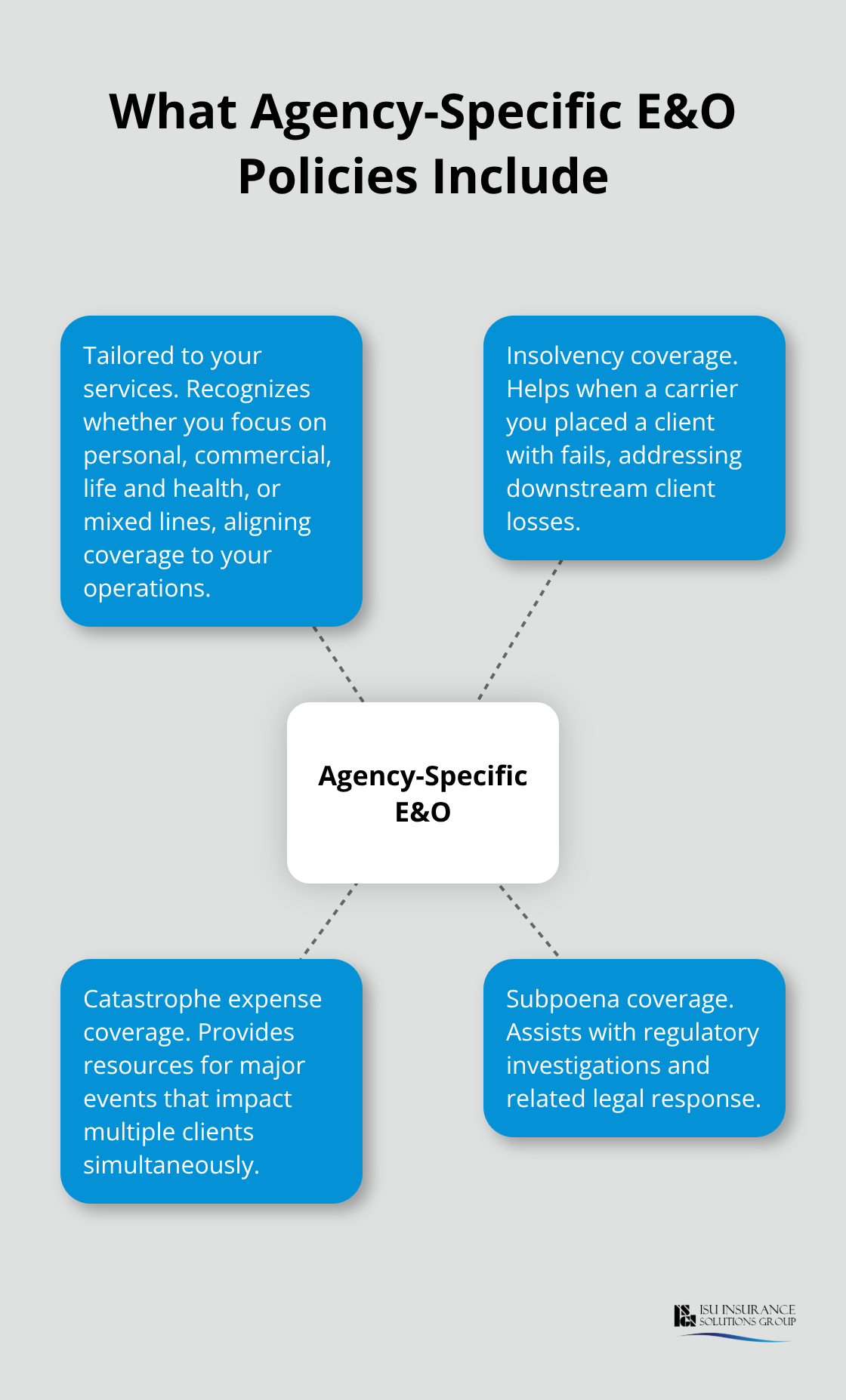
Agency-specific professional liability policies recognize the exact services you provide-whether you specialize in personal lines, commercial, life and health, or a combination-and tailor coverage accordingly. They include provisions for insolvency coverage if a carrier you placed a client with fails, catastrophe expense coverage for major events affecting multiple clients, and subpoena coverage for regulatory investigations. These aren’t add-ons; they’re built into policies designed specifically for how independent agents operate.

Infographic highlighting core features built into agency-specific professional liability policies for independent insurance agencies - Independent agent professional liability

The market has shifted from soft to hard in recent years, meaning broader coverage is harder to find and rates have increased. This shift makes it critical to secure agency-specific protection rather than hoping general business insurance will suffice. Your next step involves understanding what coverage limits actually protect your practice as it grows.

Coverage Limits That Protect Growing Agencies

Matching Coverage to Your Agency Size

Professional liability policies for independent agents vary significantly based on your agency size and service mix. A solo agent handling personal lines needs different protection than a 20-person shop writing commercial accounts across multiple states. The 2025 Best Practices Study tracking over 3,000 data points across seven revenue bands shows that agencies under $1.25 million annual revenue typically carry $1 million per claim limits, while agencies between $10 million and $25 million in revenue average $5 million per claim. This pattern reflects reality: higher revenue means more clients, more transactions, and statistically higher exposure to larger claims.

How Risk Controls Lower Your Costs

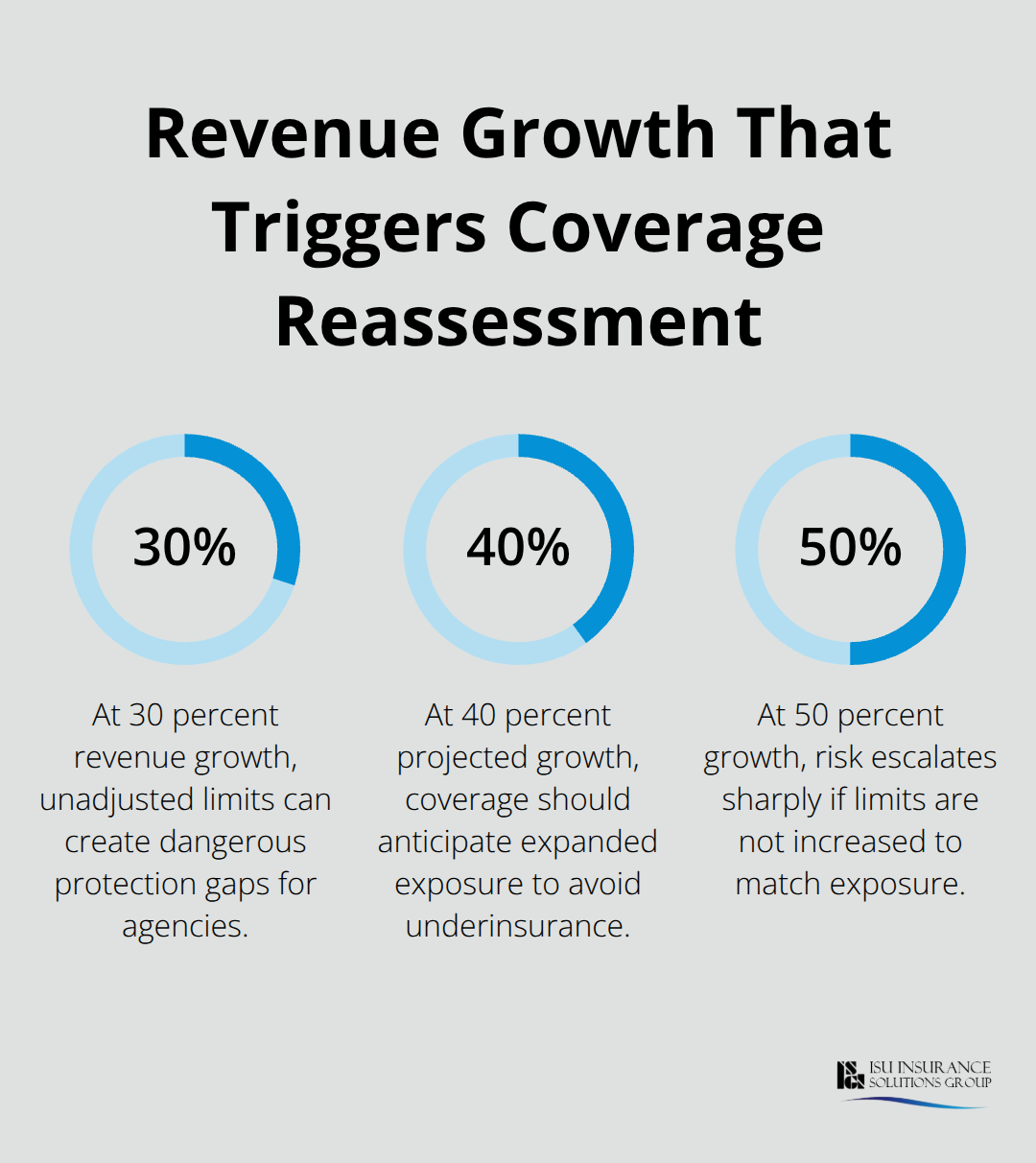
The same study reveals that agencies with documented risk controls and governance practices-client communication protocols, policy review checklists, staff training records-secure better rates and lower deductibles than those operating without structure. Your policy limits should reflect not just your current size but your growth trajectory over the next three years. If you project 40 percent revenue growth, your coverage should anticipate that expanded exposure now rather than leaving you underinsured during your growth phase.

Percentages showing revenue growth milestones that should prompt professional liability limit adjustments - Independent agent professional liability

Defense Costs Outside Your Limit

A single E&O claim generates legal bills that start accumulating before any settlement discussion begins. Quality professional liability policies place defense costs outside the policy limit, meaning your $2 million coverage for damages remains intact while defense expenses-expert witnesses, depositions, discovery, trial preparation-stack up separately. This structure matters enormously. If your policy lumps defense costs inside your limit, a $150,000 legal defense consumes 7.5 percent of your available coverage before you’ve resolved the claim. The Big I Professional Liability Program includes defense costs outside limits as standard, along with catastrophe expense coverage of $25,000 per policy period for events affecting multiple clients simultaneously.

Cyber Coverage as a Core Component

Cyber liability has shifted from optional to essential. As your agency digitizes client files and communication, your exposure to data breach costs and third-party liability from mishandled information increases dramatically. Cyber coverage under professional liability policies typically covers first-party breach costs-forensics, notification, credit monitoring-plus third-party liability if your systems fail and damage client data. The Big I program includes $25,000 in first-party cyber costs and $1 million in third-party cyber liability as standard components. This coverage protects you when ransomware hits your systems or a hacked email account sends fraudulent policy cancellations to clients. Without it, you absorb breach notification costs, regulatory fines, and client lawsuits directly.

Scaling Your Protection as Revenue Grows

Your coverage limits today won’t match your needs in two years. Agencies that grow their revenue by 30 to 50 percent without adjusting their professional liability limits create dangerous gaps in protection. The next step involves assessing your actual risk exposure and determining which coverage adjustments align with your specific growth plans.

How to Assess and Adjust Your Professional Liability Coverage as You Scale

Start With Your Current Numbers

Most independent agents wait until a claim hits to realize their coverage limits no longer match their practice. The 2025 Best Practices Study tracked over 3,000 data points across agencies of varying sizes and found that agencies reviewing their professional liability coverage annually experience significantly fewer coverage gaps than those reviewing every two to three years. Your assessment starts with three specific metrics: your current annual gross revenue, your projected revenue for the next 24 months, and the number of active clients you service. Agencies under $1.25 million in annual revenue typically carry $1 million per claim limits, while those between $10 million and $25 million average $5 million per claim. This pattern reflects actual claim patterns across the industry, not arbitrary scaling.

If you project 35 to 50 percent revenue growth, your current limits are already insufficient. Calculate your growth trajectory honestly and adjust your coverage accordingly. A solo agent expanding to a three-person team fundamentally changes your exposure profile-more staff means more transactions, more client interactions, and statistically higher probability of errors reaching clients.

Document Your Exact Service Mix

Document the specific services you provide right now: personal lines, commercial, life and health, specialty classes like contractors or wineries. Your coverage should match exactly what you sell, not what you might sell someday. Agencies that misalign their coverage with their actual service mix pay unnecessarily high premiums or carry gaps they don’t realize exist. When you approach your carrier or broker about increasing limits as you grow, accuracy in your service description prevents both overpricing and underinsurance.

Leverage Your Risk Controls for Better Rates

Your risk controls directly impact both your rates and your ability to secure higher limits. Agencies with documented client communication protocols, policy review checklists, and staff training records consistently receive better pricing than those operating informally. The data supports this: governance practices correlate directly with lower E&O claim frequency. Present your risk controls as evidence of your commitment to accuracy and client service when you request higher limits.

Prioritize Defense Costs Outside Your Limit

Defense costs outside your policy limit matter more as your revenue grows. A $2 million limit with defense costs inside the limit looks adequate until a single claim generates $250,000 in legal expenses, instantly consuming 12.5 percent of your coverage. Quality policies place defense costs outside limits, meaning your damage coverage remains intact regardless of legal costs. This structure protects your available coverage for actual damages and settlements.

Time Your Policy Review Strategically

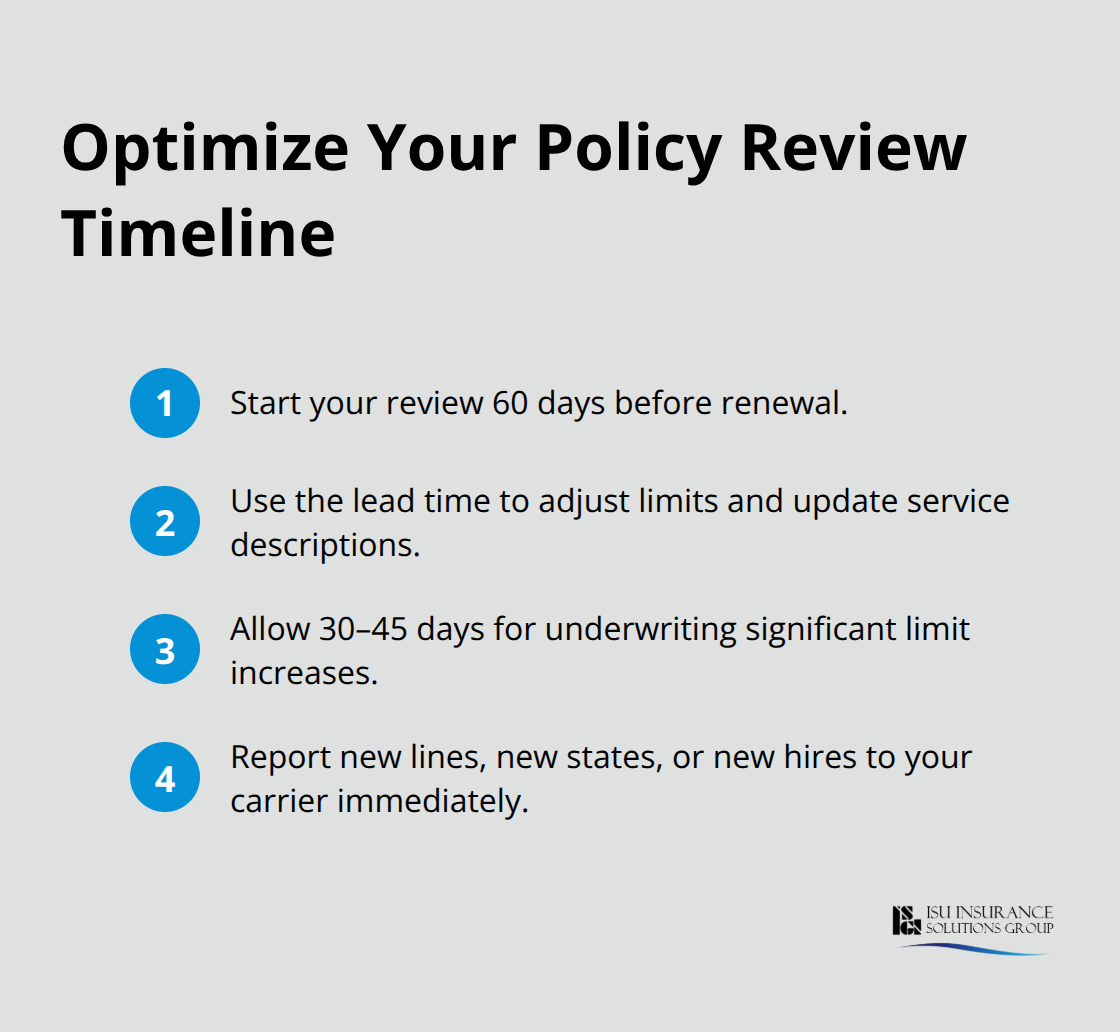
Schedule your policy review 60 days before renewal, not at renewal itself. This timing gives you room to adjust limits, update your service descriptions, and make coverage changes without rushing. Carriers need 30 to 45 days to underwrite significant limit increases, so starting early prevents coverage gaps when your policy renews. If you’ve added new service lines, expanded into new states, or hired staff, communicate these changes to your carrier immediately rather than waiting for renewal.

Compact checklist of timing actions to keep professional liability coverage aligned with agency changes

Mid-term endorsements cost less than repricing at renewal, and they prevent you from unknowingly operating outside your coverage scope.

Final Thoughts

Professional liability coverage for independent agents is not optional in today’s market. Hard market conditions, rising claim frequency, and regulatory scrutiny mean that agencies without proper coverage face serious financial and reputational risk. A single claim can drain your reserves, damage your reputation, and force closure-but agencies with documented risk controls and appropriate independent agent professional liability coverage experience significantly fewer claims and recover faster when issues arise.

Taking action means moving beyond general business insurance and securing coverage tailored to your specific operations. Your coverage needs change as your agency grows, your service mix expands, and your client base increases, so schedule a policy review now and document your current revenue alongside your projected growth. Defense costs outside your policy limit, cyber liability protection, and catastrophe expense coverage should form the foundation of your plan.

We at ISU Insurance Solutions Group understand the specific risks you face as an independent agent. Our team works with multiple carriers to deliver personalized solutions that grow with your practice, and we can help you assess your current exposure and build a professional liability strategy that protects both your agency and your clients. Contact us today to discuss your coverage needs.

The information provided in this blog is for general informational purposes only and does not constitute legal, financial, or insurance advice. Coverage options, terms, and availability may vary. Please consult with a licensed professional for advice specific to your situation.
Small Business Professional Liability: What It Covers for Startups

One mistake in your service delivery can cost your startup thousands in legal fees and settlements. Small business professional liability insurance protects you from these financial disasters.

At ISU Insurance Solutions Group, we’ve seen startups lose clients and credibility after a single claim. The right coverage gives you peace of mind and shows your clients you take responsibility seriously.

What Professional Liability Actually Covers

How Professional Liability Protects Your Startup

Professional liability insurance protects your startup when clients claim your work caused them financial harm. This coverage pays for legal defense costs from the moment a claim arrives, regardless of whether you’re ultimately found at fault. According to The Hartford, E&O specifically covers mistakes in the products or services you deliver-think a bookkeeping error that costs a client thousands, web development work that tanks their sales, or incorrect tax filings that trigger an audit. The policy typically covers lawyer fees, court costs, expert witness testimony, settlements, and judgments. Many policies include a right-and-duty-to-defend provision, meaning your insurer takes over the legal defense rather than leaving you to manage it alone.

Why Legal Defense Costs Matter

Even winning a lawsuit can drain significant legal fees before any judgment is reached. For IT consultants, software developers, management consultants, accountants, and designers-professions The Hartford identifies as most needing this coverage-a single mistake can trigger client litigation that would otherwise force you to pay out of pocket. This financial exposure makes professional liability coverage essential for service-based startups.

Understanding Claims-Made Policies and Tail Coverage

Most professional liability policies operate on a claims-made basis, which means coverage applies only if the policy is active when the claim is filed, not when the work was performed. This distinction is critical: if you cancel coverage and a client sues six months later over work you did last year, you have no protection unless you purchased tail coverage beforehand. Your coverage limits matter too-standard policies offer $1 million per occurrence and $2 million aggregate, though you can purchase higher limits if larger clients demand it.

Cost and Coverage Variations by Industry

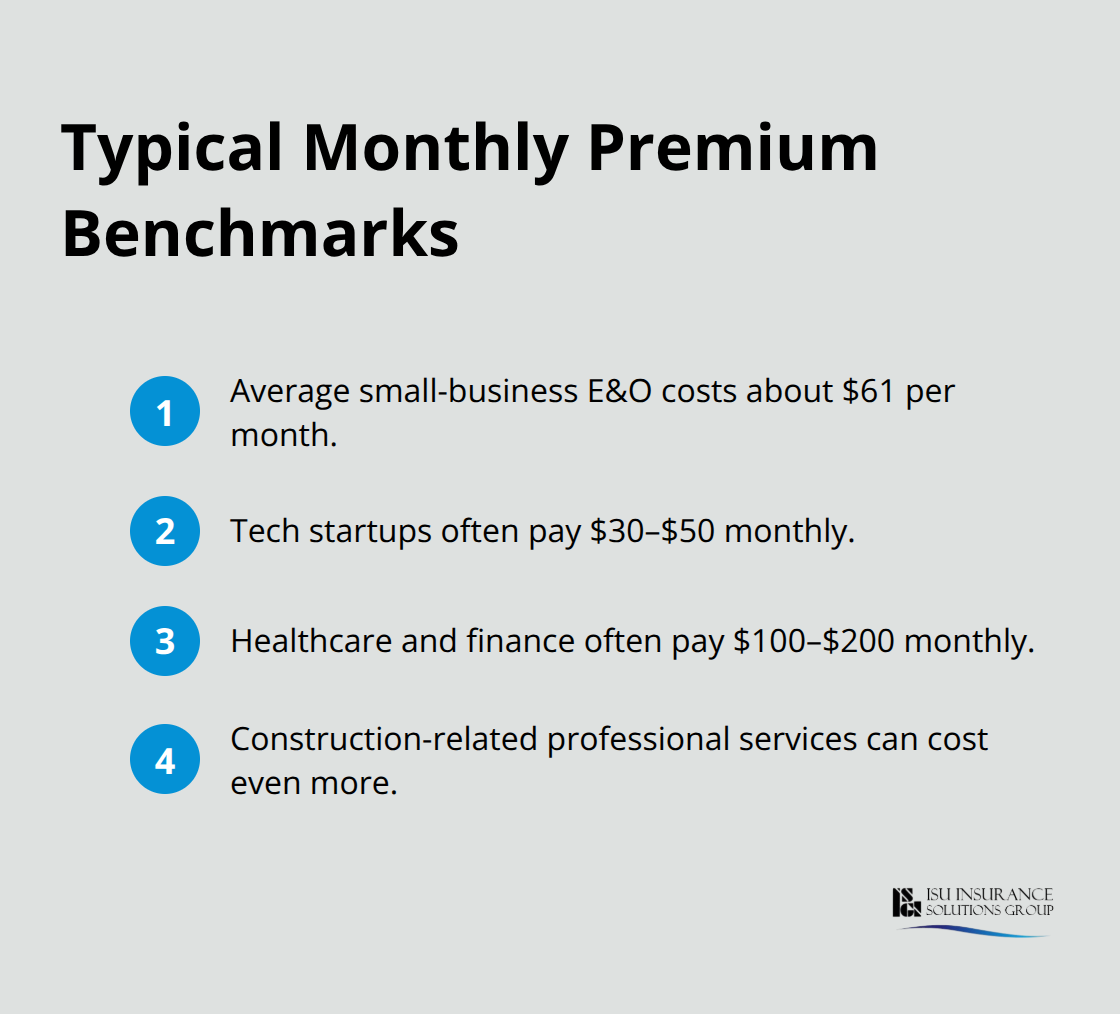
Professional liability insurance costs vary significantly by industry and risk profile. According to Insureon data, professional liability insurance averages around $61 per month. A tech startup might pay $30 to $50 monthly, while a healthcare or finance startup could face $100 to $200 monthly due to higher regulatory risk. The policy excludes illegal acts and intentional wrongdoing, so it won’t cover fraud or deliberate misconduct.

Layering Professional Liability with Other Coverages

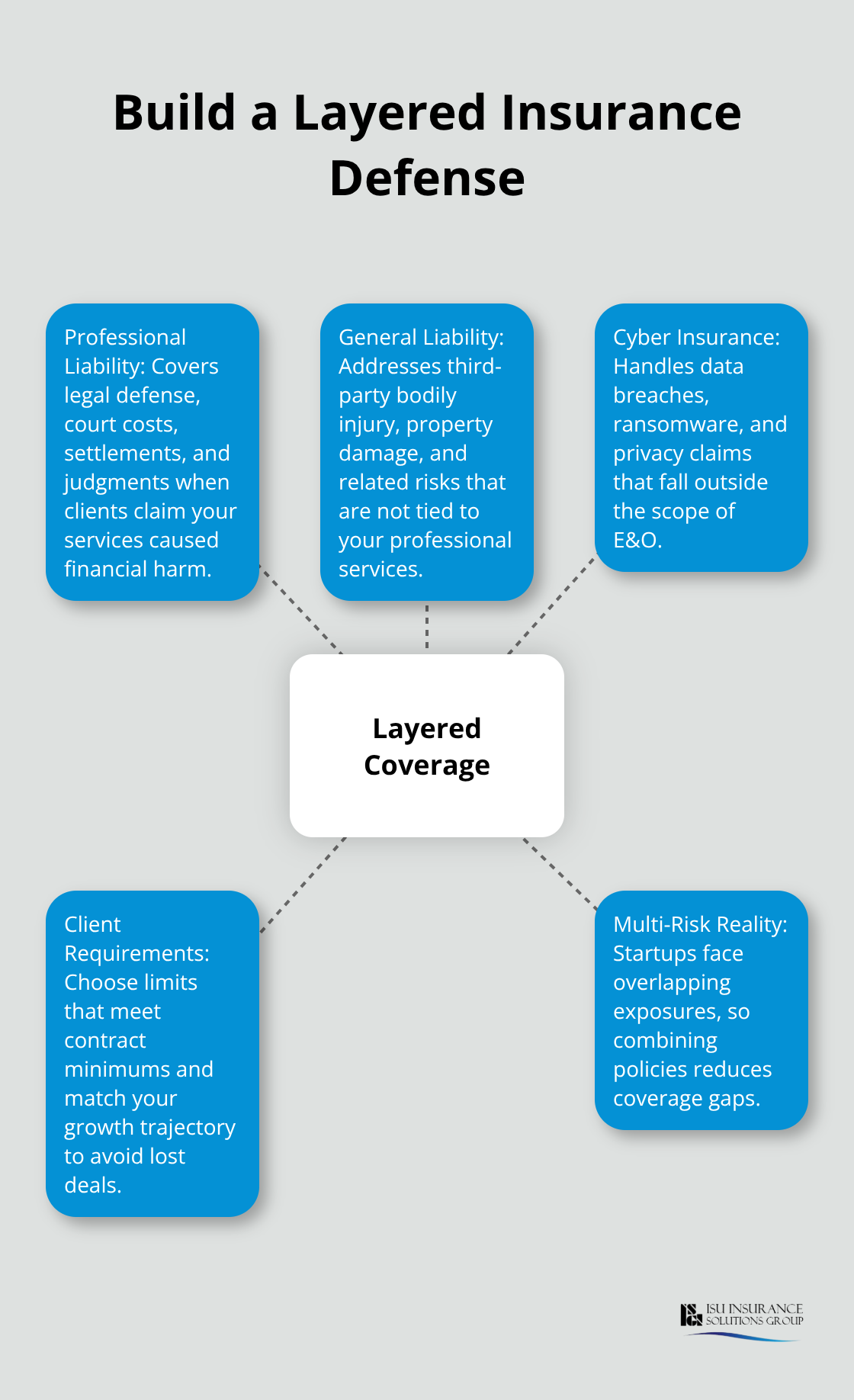
Professional liability works best alongside other coverages like general liability and cyber insurance, creating a layered defense against different types of claims. This combination addresses the reality that startups face multiple risk exposures simultaneously. As you assess your specific industry risks and determine what coverage limits your clients will require, the next step involves selecting a policy that aligns with your business model and growth trajectory.

Diagram showing how professional liability, general liability, and cyber insurance work together for startups

Why Your Startup Needs Professional Liability Coverage

Larger Clients Won’t Work Without It

Mid-market and enterprise clients demand professional liability coverage before they sign contracts with you. They’ll request a certificate of insurance showing your coverage limits, and this requirement isn’t negotiable. Many clients require minimum coverage of $1 million per occurrence, while others demand $2 million. Without proof of coverage, you lose deals before your first pitch. Professional liability insurance is now standard for consultants, accountants, IT professionals, designers, and software developers. Your competitors already carry it, so clients expect you to have it too. If you operate without coverage and a client demands it mid-negotiation, you either walk away from revenue or scramble to purchase a policy at higher rates. Securing coverage before your first pitch keeps you competitive and ready to close deals.

Lawsuits Arrive Regardless of Your Intentions

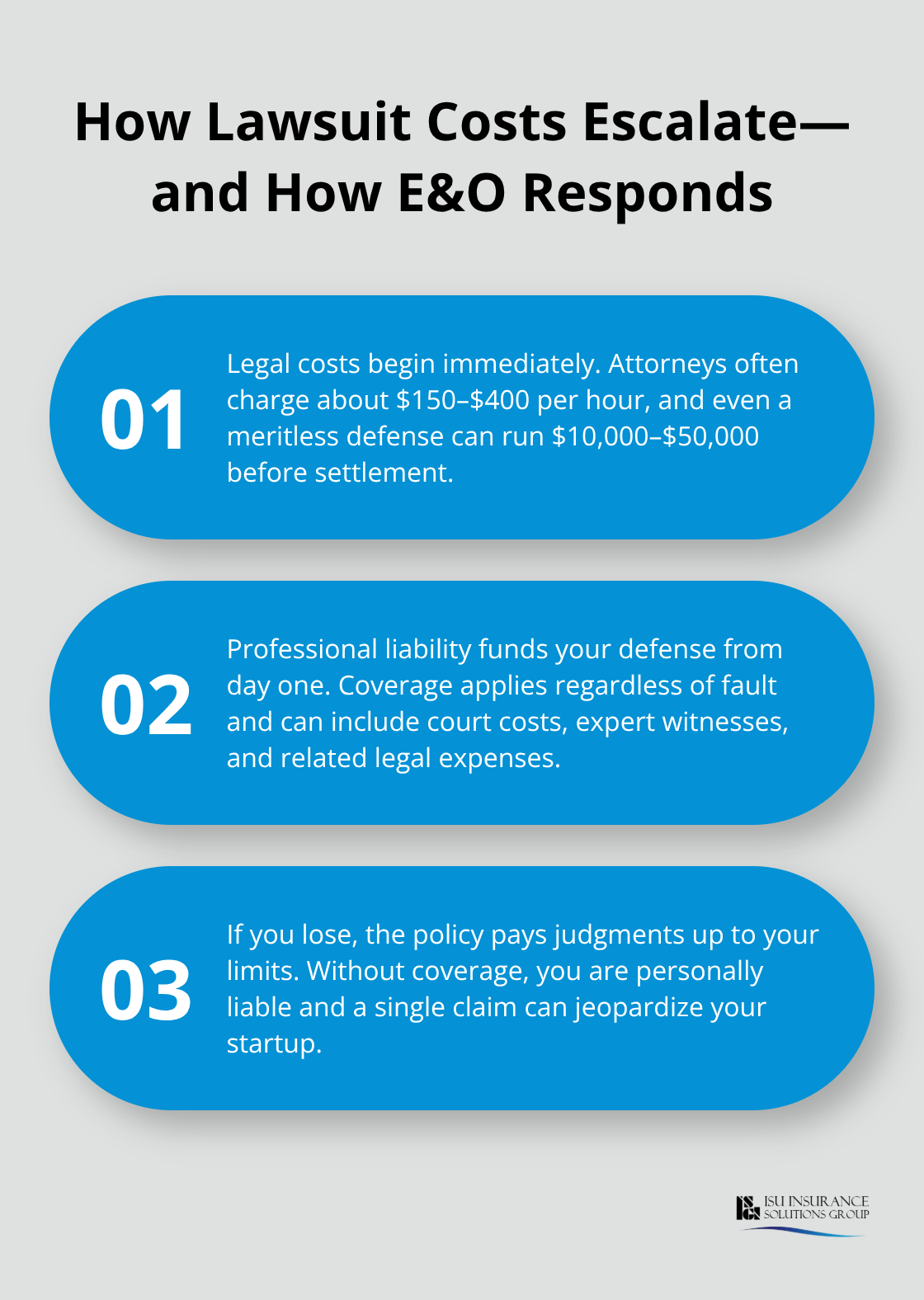
A bookkeeping error that costs a client $50,000 triggers litigation whether you made an honest mistake or acted deliberately. Insureon data from 40,000 small business policies shows that professional liability claims arrive constantly across service industries. Your legal defense costs start immediately-lawyers charge $150 to $400 per hour, and defending even a meritless claim runs $10,000 to $50,000 before settlement. Professional liability insurance covers these costs from day one, regardless of fault. If you lose and owe damages, the policy pays the judgment up to your coverage limits. Without it, you remain personally liable for every dollar.

Three-point overview of legal cost escalation and professional liability protection - Small business professional liability

A single claim can bankrupt a young startup or force you to liquidate personal assets.

Your Insurer Takes Over the Legal Battle

The right-and-duty-to-defend provision in most professional liability policies means your insurer takes over the legal defense rather than leaving you to manage lawyers and court filings while running your business. This matters because defending yourself while building your company is impossible. You focus on operations while your insurer handles the legal strategy, court appearances, and settlement negotiations. This separation protects your time and mental energy during a stressful period.

Professional Liability Protects Your Reputation

Professional liability coverage signals to clients that you’ve insured against risk, which demonstrates professionalism and accountability. Clients see that you take responsibility seriously and have the financial backing to make them whole if something goes wrong. This trust translates into stronger client relationships and repeat business. Your startup’s reputation depends on delivering results, and this coverage protects both your finances and your ability to continue operating after a claim surfaces. As you assess your specific industry risks and determine what coverage limits your clients will require, the next step involves selecting a policy that aligns with your business model and growth trajectory.

Which Coverage Limits Do You Actually Need

Your industry determines your baseline coverage limits more than anything else. A software developer facing a $500,000 client loss needs different protection than an accountant handling million-dollar tax strategies. Start by examining your largest client contracts-most will specify minimum coverage requirements, typically $1 million per occurrence and $2 million aggregate. This isn’t arbitrary; clients set these numbers based on their potential exposure if your work fails. If your biggest prospect demands $2 million in coverage and you only carry $1 million, you lose the deal.

Insureon data from 40,000 small business policies shows that technology startups average $30 to $50 monthly for professional liability, while healthcare and finance startups face $100 to $200 monthly because their error exposure runs higher. Construction-related professional services cost even more due to regulatory complexity.

Compact list comparing professional liability premiums by industry - Small business professional liability

Your coverage limits and deductibles directly affect your premium-higher limits cost more, but underinsuring yourself creates gaps that could bankrupt you. Try limits that match your actual client demands plus a safety margin, not the minimum that sounds affordable.

Comparing Quotes from Multiple Carriers

Never accept a single quote as your baseline. The Hartford, Liberty Mutual, and Acuity all price professional liability differently based on their underwriting criteria and risk tolerance. One carrier might charge $75 monthly for your IT consulting startup while another quotes $120 for identical coverage. Request quotes from at least three carriers to identify genuine pricing variations. Online platforms can streamline this process and often deliver quotes within hours, but verify that each quote covers the same limits, deductibles, and retroactive dates before comparing prices.

Understanding Deductibles and Their Impact

Deductibles matter significantly-increasing your deductible from $500 to $1,000 can reduce your premium, but only if you can actually afford that deductible during a claim. Most startups overlook this detail and choose the lowest premium without calculating whether they could handle the deductible if litigation arrived next month. A $1,000 deductible sounds manageable until you face a real claim and discover your cash reserves can’t cover it while you wait for settlement.

State Requirements and Location Factors

Your state requirements also affect pricing; some states mandate specific coverage minimums for licensed professions, while others allow flexibility. Location influences rates too-operating in Washington or Oregon may cost differently than other states due to local claims patterns and regulatory environments. If you operate across multiple states, verify that your policy covers all jurisdictions where you conduct business.

Tail Coverage and Policy Transitions

As you evaluate quotes, verify that tail coverage options exist if you ever need to transition carriers, since claims-made policies leave you exposed after cancellation without it. Tail coverage (also called extended reporting period coverage) protects you if a client sues after your policy ends for work you performed while insured. The cost typically runs 150 to 300 percent of your annual premium, but it’s far cheaper than facing an uninsured claim years later.

Final Thoughts

Professional liability insurance protects your startup from financial ruin when clients claim your work caused them harm. Your clients demand it, larger prospects require it in contracts, and a single mistake can cost more than you’ll earn in your first year. Small business professional liability covers legal fees immediately, shifts defense responsibility to your insurer, and pays settlements or judgments up to your policy limits-without it, you remain personally liable for every dollar.

We at ISU Insurance Solutions Group have guided startups and established businesses through this process since 1983. As a Woodinville-based independent agency serving Washington and Oregon, we partner with 20+ carriers to deliver personalized quotes and competitive rates tailored to your specific industry and risk profile. Contact ISU Insurance Solutions Group for a one-call multi-carrier quote and hands-on guidance through the entire process.

Request quotes from multiple carriers to compare pricing and terms, verify that coverage limits match your client requirements, and confirm that tail coverage options exist for future transitions. Most startups secure a policy within days and start operations with protection in place, and the cost averages $61 monthly-a small investment compared to the financial exposure you face without it.

The information provided in this blog is for general informational purposes only and does not constitute legal, financial, or insurance advice. Coverage options, terms, and availability may vary. Please consult with a licensed professional for advice specific to your situation.