Washington Brewery Liability Coverage: What It Means for Craft Brewers

Washington brewery liability coverage isn’t optional-it’s a business necessity. Standard commercial insurance policies leave craft brewers exposed to risks that come with serving alcohol and operating a production facility.

At ISU Insurance Solutions Group, we’ve seen breweries face claims they never anticipated. The right coverage protects your taproom, your product, and your bottom line.

Why Brewery Operations Face Risks Standard Policies Won’t Cover

Equipment Failures Trigger Losses Standard Coverage Excludes

Brewing isn’t like running a typical retail business, and your insurance needs to reflect that reality. A standard commercial general liability policy treats your brewery the same way it treats an office or retail shop-which means massive coverage gaps the moment fermentation starts. Equipment breakdown claims rank among the costliest losses breweries face, yet general liability policies exclude mechanical and electrical failures entirely. When a glycol system fails and destroys thousands of dollars in inventory, or a boiler malfunction shuts down production for weeks, standard coverage leaves you exposed.

Replacement costs in the Seattle area have risen roughly 20% since 2020, so a tank or chiller that cost $50,000 five years ago now costs $60,000 to replace. Temperature control failures are relentless in Washington’s climate. One power outage or refrigeration breakdown can spoil entire batches of finished beer or raw ingredients. Spoilage coverage isn’t standard-it’s a specialized endorsement that reimburses destroyed inventory, disposal fees, and lost production time.
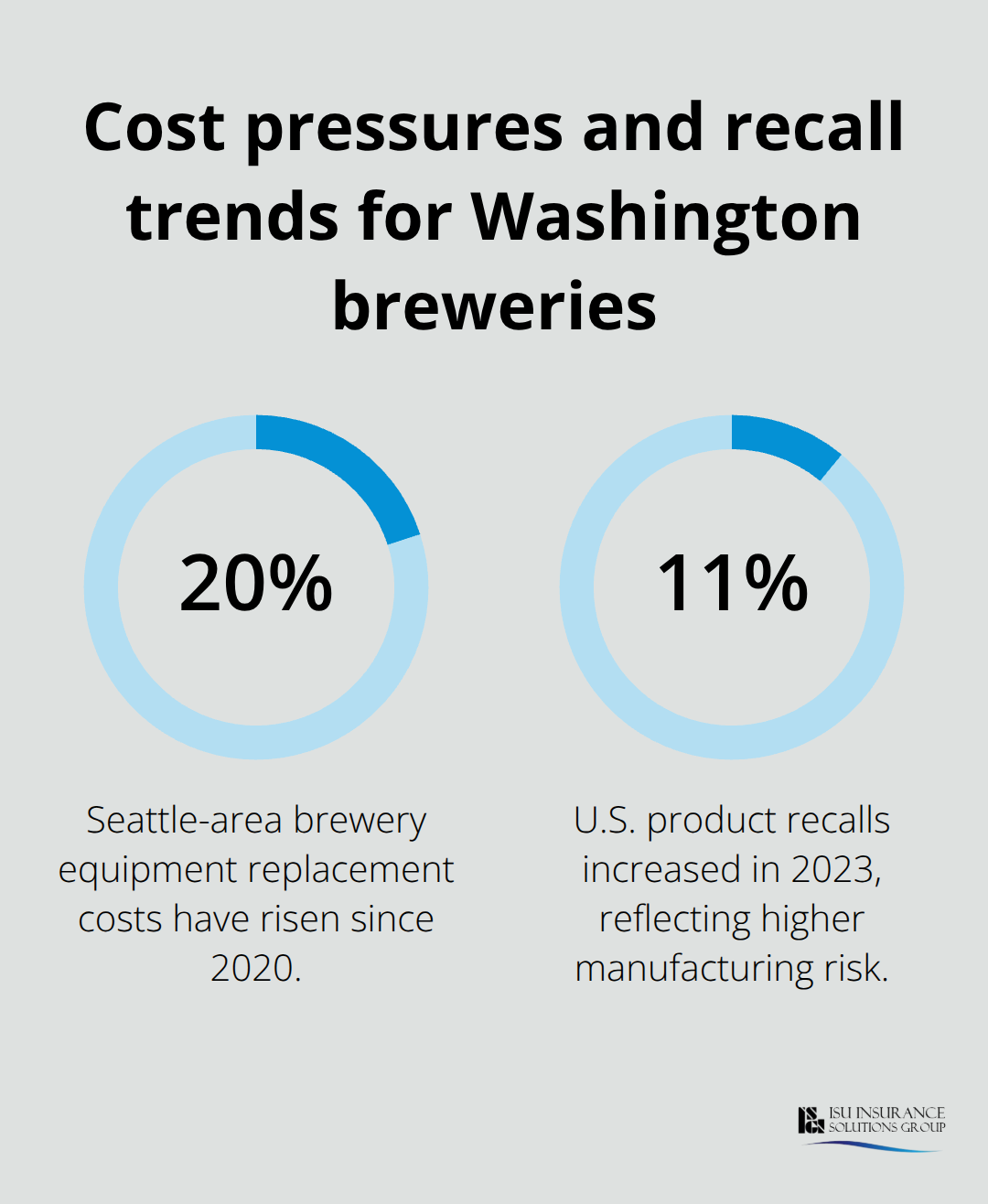
Percentage metrics showing Seattle-area replacement cost increases and U.S. product recall rise - Washington brewery liability coverage

Without it, a single incident wipes out months of profit.

Alcohol Service Creates Legal Exposures Standard Policies Exclude

Washington’s Liquor and Cannabis Board requires minimum $1,000,000 in Commercial General Liability coverage for licensing, but that’s just the baseline. The real exposure comes from alcohol-related incidents, which standard policies explicitly exclude. If a customer suffers injury at your taproom after consuming alcohol, or if someone leaves your premises intoxicated and causes harm to a third party, your general liability policy won’t cover it. That’s where liquor liability and dram shop coverage becomes non-negotiable. These policies protect against assault-and-battery claims, over-service incidents, and third-party bodily injury claims tied to alcohol consumption.

Many brokers recommend at least $2 million in combined single limits for breweries hosting tours or events. Tasting rooms that function as event spaces for festivals, weddings, or concerts face even higher exposure. Each event multiplies your liability footprint. Assault-and-battery sublimits are critical for on-premises incidents. If a customer suffers injury in an altercation at your taproom, your standard general liability won’t touch it.

Product Liability and Recalls Demand Specialized Protection

Product liability and recall protection rounds out the picture. The Brewers Association reported that US product recalls rose 11% in 2023, the largest jump in seven years. If contamination or foreign material reaches market, recall costs-product destruction, freight, retailer chargebacks, and legal defense-can exceed six figures. Standard policies don’t cover any of it. Multi-state distribution under the Three-Tier System amplifies this risk. One contaminated batch shipped across state lines turns a local incident into a multi-state nightmare.

These three coverage gaps-equipment breakdown, alcohol-related liability, and product recall exposure-form the foundation of what separates brewery insurance from standard commercial policies. The next section examines each coverage type breweries actually need and how they work together to protect your operation.

The Three Coverage Pillars Every Washington Brewery Needs

General Liability Forms Your Foundation-But It’s Not Enough

General liability forms the foundation, but it’s insufficient on its own. Washington’s Liquor and Cannabis Board mandates minimum $1,000,000 in Commercial General Liability coverage before you receive a license, yet this baseline covers only bodily injury and property damage from standard premises incidents. The moment alcohol enters the equation or equipment malfunctions occur, gaps emerge. Industry brokers familiar with Washington operations recommend $2 million in combined single limits for breweries hosting tours or events. Your general liability policy protects against slip-and-fall injuries in your taproom or brewery, customer property damage, and advertising injury claims. However, it explicitly excludes mechanical failures, alcohol-related bodily injury, and product contamination.

Liquor Liability Protects Against Alcohol-Service Claims

Liquor liability and dram shop coverage fills the alcohol gap by protecting against claims arising from over-service, assault-and-battery incidents at your taproom, and third-party injuries caused by intoxicated customers who left your premises. This coverage is separate and essential because standard policies treat alcohol service as an excluded peril. If a customer suffers assault at your taproom or leaves intoxicated and causes a car accident, your general liability won’t respond. Assault-and-battery sublimits within your liquor policy should align with your taproom’s capacity and event frequency.

Product Liability and Recall Protection Address Manufacturing Risks

Product liability and recall protection addresses contamination, foreign material, and multi-state distribution risks. A single contaminated batch can trigger recall costs exceeding $100,000 when you factor in product destruction, freight, retailer chargebacks, and legal defense. This coverage reimburses those direct costs plus business interruption losses during the recall period. For breweries distributing across state lines under the Three-Tier System, recall protection isn’t optional-it’s essential insurance against a scenario that could disable your operation for months.

How These Three Pillars Work Together
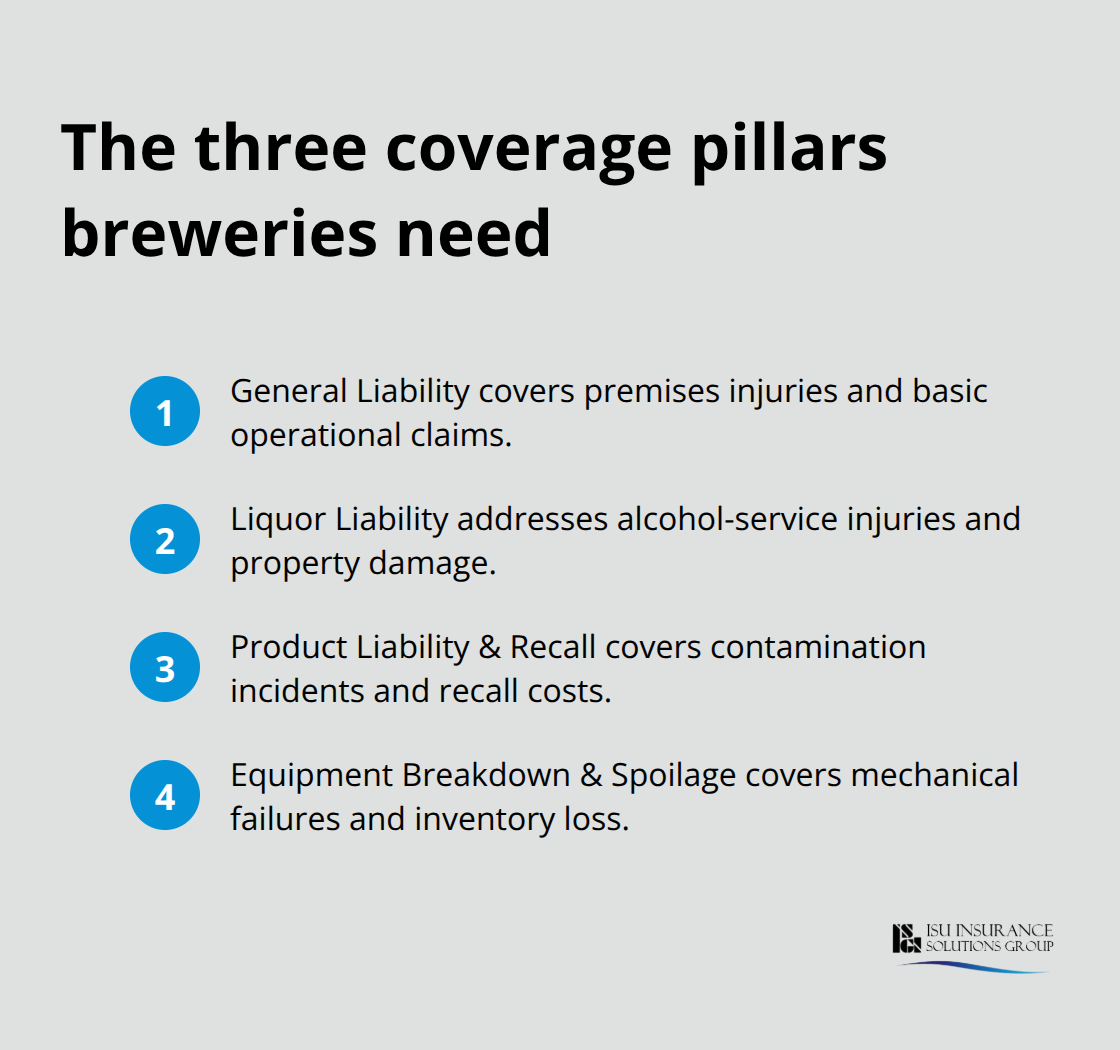
Compact summary of core insurance pillars for Washington breweries

These three coverage types work together because each addresses a distinct exposure. General liability handles premises incidents and basic operational claims. Liquor liability protects against alcohol-service-specific bodily injury and property damage. Product liability and recall protection cover manufacturing defects and contamination. Microbreweries typically spend $500 to $1,500 monthly on comprehensive coverage spanning all three areas, with larger operations or those hosting frequent events paying significantly more. The cost reflects real claims data from Washington breweries. Equipment breakdown coverage layers on top because spoilage from temperature failures, glycol system leaks, or boiler malfunctions represents a separate class of loss. Replacement costs in the Seattle area have risen 20% since 2020, making adequate property valuations critical.

Building Your Customized Coverage Program

Work with a broker who understands brewing operations and can document your specific exposures-tank capacity, fermentation processes, taproom guest count, and distribution geography. An independent agency serving Washington and Oregon can partner with multiple carriers to build customized brewery packages that address these three pillars plus equipment and spoilage coverage in one coordinated program. Your next step involves identifying which additional endorsements and limits match your specific operation-a decision that depends on your production volume, event frequency, and distribution footprint.

What Happens When Claims Hit Your Brewery

Slip-and-Fall Injuries Expose Coverage Gaps at Taprooms

Slip-and-fall injuries at your taproom represent one of the most common claim scenarios across Washington breweries. A customer trips on wet brewery flooring, suffers a fracture, and files suit. Your general liability policy responds to the slip-and-fall claim itself, covering medical expenses and legal defense. However, if that same customer consumed alcohol at your taproom before the fall, the claim narrative shifts. Now the plaintiff’s attorney argues over-service contributed to the injury. Your general liability explicitly excludes alcohol-related bodily injury claims, leaving you exposed for defense costs and any settlement.

Taproom staff need clear protocols on how many drinks constitute over-service, documented last-call procedures, and responsible alcohol service training on recognizing impairment. Breweries face slip hazards from wet floors near coolers, burn risks from hot wort transfer, and repetitive strain from lifting heavy ingredient bags. Your coverage should include business interruption protection because a serious injury claim can trigger weeks of legal proceedings and operational disruption.

Product Contamination Claims Escalate Faster and Cost More

Product contamination claims escalate faster and cost more than premises injuries. Foreign material, bacterial contamination, or yeast cross-contamination in finished beer triggers recalls that ripple across multiple retailers and distributors. A single contaminated batch distributed across Washington and Oregon generates recall logistics costs (freight, storage, destruction), retailer chargebacks, and third-party liability exposure if a customer suffers illness.

Recall protection reimburses product destruction, freight costs, lost revenue during the recall period, and legal defense if a consumer lawsuit follows. Quality control becomes your first line of defense. Implement microbiological testing, pH monitoring, temperature logging, and sensory analysis of finished product before shipment. Many Washington breweries now conduct ingredient inspection, monitor fermentation temperature continuously, and maintain documented batch records that defend against contamination claims.
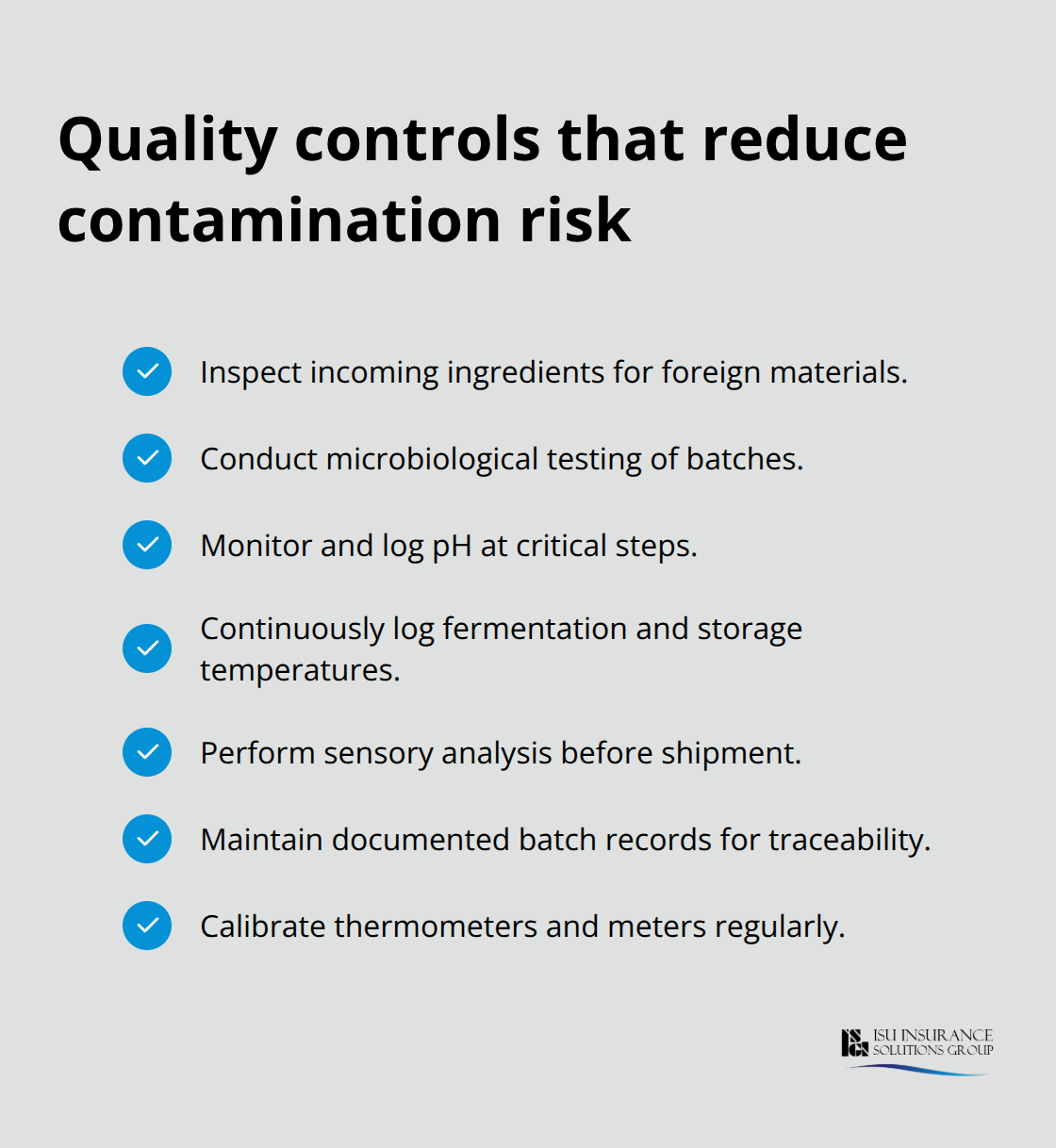
Checklist of brewery quality control practices to limit recall exposure - Washington brewery liability coverage

Your product liability limit should align with your distribution footprint. A 15-barrel brewery distributing to five counties faces lower exposure than a 30-barrel operation shipping statewide.

Third-Party Alcohol-Related Incidents Create Off-Premises Liability

Third-party alcohol-related incidents occur when your customer leaves intoxicated and causes injury or property damage to someone else. A customer drinks at your taproom, drives away, and causes a motor vehicle accident injuring another driver. The injured third party sues your brewery for over-service and negligent alcohol service. Your general liability won’t cover this scenario because the injury occurred off-premises and involves alcohol. Your liquor liability policy responds because it covers third-party bodily injury claims arising from alcohol service at your licensed premises.

This exposure intensifies if your taproom hosts events. Festivals, live music nights, and special releases draw larger crowds and increase the statistical probability of over-service incidents. Peak-season endorsements automatically raise your liquor liability limits during high-volume periods when event activity peaks. This prevents underinsurance during your riskiest operating periods. Work with your broker to model claims scenarios specific to your operation. If you host 40 events annually with 200 guests each, your exposure differs significantly from a brewery hosting four annual tastings. Your liquor liability sublimits should reflect this reality.

Building Defenses Against Over-Service Claims

Document your staff training on responsible service, maintain pour records if you track consumption, and implement last-call procedures that demonstrate reasonable care against over-service claims. An independent agency serving Washington and Oregon can partner with multiple carriers to build customized brewery packages that address your specific event frequency and guest capacity. Your broker should document your taproom’s operational realities-how many events you host annually, typical guest counts, and whether you serve food alongside alcohol. This documentation strengthens your defense if a claim arises and demonstrates that your coverage limits match your actual exposure.

Final Thoughts

Standard commercial policies treat breweries like retail shops, which is why they fail when fermentation starts. Equipment breakdown, alcohol-service claims, and product recalls fall outside typical coverage because insurers designed those policies for businesses that don’t manufacture beverages or serve alcohol. A slip-and-fall claim becomes an over-service claim the moment alcohol enters the narrative, a temperature failure becomes a six-figure loss when spoilage coverage is missing, and a contaminated batch becomes a multi-state nightmare without recall protection.

Finding the right coverage requires working with specialists who understand brewing operations, not generalists who quote standard business packages. Your broker needs to know the difference between a 10-barrel system and a 30-barrel system, why glycol system failures matter, and how event frequency affects your liquor liability exposure. They need to understand Washington’s Liquor and Cannabis Board requirements, local fire marshal expectations, and how replacement costs in the Seattle area have risen 20% since 2020.

At ISU Insurance Solutions Group, we partner with multiple carriers to build customized Washington brewery liability coverage that addresses your actual exposures rather than forcing you into generic templates. We handle certificate turnaround for licensing, support you during recalls, and adjust your coverage as your operation scales. Contact us to discuss how tailored brewery liability coverage protects your operation and your bottom line.

The information provided in this blog is for general informational purposes only and does not constitute legal, financial, or insurance advice. Coverage options, terms, and availability may vary. Please consult with a licensed professional for advice specific to your situation.
Professional Liability for Consultants: Reducing Risk in Consulting

Consultants face a growing number of liability claims each year, from missed deadlines to data breaches. Professional liability for consultants isn’t optional-it’s a business necessity that protects your reputation and finances.

At ISU Insurance Solutions Group, we’ve seen firsthand how the right coverage and risk management practices separate thriving consulting firms from those struggling with claims. This guide walks you through the risks you face and how to address them.

What Professional Liability Actually Covers

Professional liability insurance covers claims arising from errors, mistakes, or negligence in the delivery of professional services. It covers legal defense costs, settlements, and judgments when a client alleges you failed to deliver promised services, gave negligent advice, or made errors in your work. This isn’t about property damage or bodily injury-those fall under general liability. Professional liability specifically addresses claims that your professional work caused the client financial loss. The coverage applies to errors and omissions you made during service delivery, breach of confidentiality if you accidentally disclosed client data, and negligence where your work fell below accepted industry standards. Most professional liability policies are claims-made, meaning they cover claims reported during the policy period, not when the work was performed. This distinction matters because if you switch insurers or retire, you’ll need tail coverage to protect against claims filed after your policy ends.

Why General Liability Leaves You Exposed

Your general liability policy won’t cover professional liability claims. General liability covers third-party bodily injury, property damage, and advertising injury-someone slips in your office, you damage a client’s equipment during a meeting, or you make a false advertising claim. When a client sues because your advice cost them money or your deliverable was incomplete, general liability rejects the claim. Consultants often mistakenly believe their general liability covers professional work, then face significant legal bills out of pocket. The gap is real and expensive. E&O claims show that missed scope and ambiguous engagements remain top drivers of disputes, with clients claiming they didn’t receive what was promised. Without professional liability coverage, you’re personally liable for every dollar of defense costs and any settlement or judgment.

The Claims That Actually Happen

Consultants face concrete claim scenarios regularly. A management consultant provides strategic recommendations that a client follows, resulting in operational losses-the client sues for negligent advice. An IT consultant implements software that fails to meet performance specifications, delaying the client’s project launch and costing them revenue. A financial consultant makes calculation errors in a proposal, leading to incorrect pricing and client losses. A contractor hires a technical consultant who fails to flag a major implementation risk, and the project fails catastrophically. Fee disputes escalate into claims when clients claim they were misled about costs or deliverables. Data breaches happen when consultants store client information insecurely, triggering breach notification costs, forensic investigations, and regulatory fines. These aren’t hypothetical-they’re the claims that land on desks every day, and they cost tens of thousands in legal defense alone, before any settlement.

How Claims-Made Policies Affect Your Protection

Claims-made policies create a critical timing issue that many consultants overlook. The policy covers claims reported during the active policy period, not claims arising from work performed years earlier. If you complete a project in 2025 but the client doesn’t sue until 2027, your 2025 policy won’t cover that claim unless you’ve purchased tail coverage. Tail coverage (also called run-off coverage) extends your protection after you leave the business or switch insurers, typically covering claims filed within a set period after the policy ends. Without tail coverage, you face a dangerous gap where old claims arrive with no active policy to defend you. This makes continuity planning essential for any consultant who plans to retire or change insurance providers.

What You Need to Know Before the Next Step

Professional liability insurance addresses the financial and legal fallout from client disputes, but it works best alongside strong risk management practices. The right coverage protects your finances, but clear contracts, detailed documentation, and quality control processes prevent claims from happening in the first place. Understanding what professional liability covers-and what it doesn’t-helps you make informed decisions about the coverage limits and deductibles that fit your consulting practice. The next section walks you through the specific risks you should address before a claim arrives at your door.

Specific Risks That Drive Consultant Claims

Errors and Omissions Create the Biggest Exposure

Errors and omissions in client projects remain the leading source of professional liability claims, and they happen more often than most consultants expect. A missed deadline, incomplete deliverable, or incorrect calculation triggers a lawsuit even when you intended to do good work. Industry claims trends in 2025 show that missed scope and ambiguous engagements rank as top drivers of E&O claims. This means the problem isn’t always about your competence-it’s about mismatched expectations between you and your client.

When you tell a client you’ll deliver something by Friday but they understood you meant the following Friday, that gap becomes a claim. When you implement a software solution but the client expected it to solve a different problem, they sue. The solution isn’t to work harder; it’s to write everything down. Your contract or statement of work must detail every deliverable, timeline, and specification. If the scope changes mid-project, document it in writing and update your fee estimate. Issue a change order that both you and the client sign. This single practice eliminates most scope-related disputes because no ambiguity exists about what was promised.

Data Breaches and Confidentiality Violations

Breach of confidentiality and data protection create a different but equally serious exposure. Consultants routinely handle sensitive client information-financial records, proprietary strategies, employee data, customer lists. A data breach costs tens of thousands of dollars in forensic investigation, breach notification, legal fees, and regulatory fines, and that’s before any client lawsuit.

If you store client data, review your technology provider’s security protocols and the liability insurance they carry to protect your business from breaches cascading from third-party systems. Practical cyber hygiene includes installing antivirus software on all systems, applying security patches promptly, using complex passwords, educating staff about phishing, and routinely backing up files on a separate server. These steps reduce your exposure significantly and demonstrate due diligence if a breach occurs.

Fee Disputes Escalate Into Claims

Fee disputes escalate into E&O claims more often than consultants realize. When clients claim they were misled about costs or deliverables, they sue. Prevent this by specifying payment terms and due dates clearly in every contract, requiring partial upfront payments, and documenting the value you deliver. Even if you provide additional work outside the agreed scope, issue an invoice for it-even if the amount is zero-to create a paper trail that proves you recognized the extra work and its value. This documentation protects you when disputes arise and demonstrates transparency throughout the engagement.

Understanding these three risk categories-scope ambiguity, data protection, and fee disputes-positions you to implement the preventive controls that stop claims before they start. The next section shows you exactly how to build those controls into your consulting practice.

How to Stop Claims Before They Start

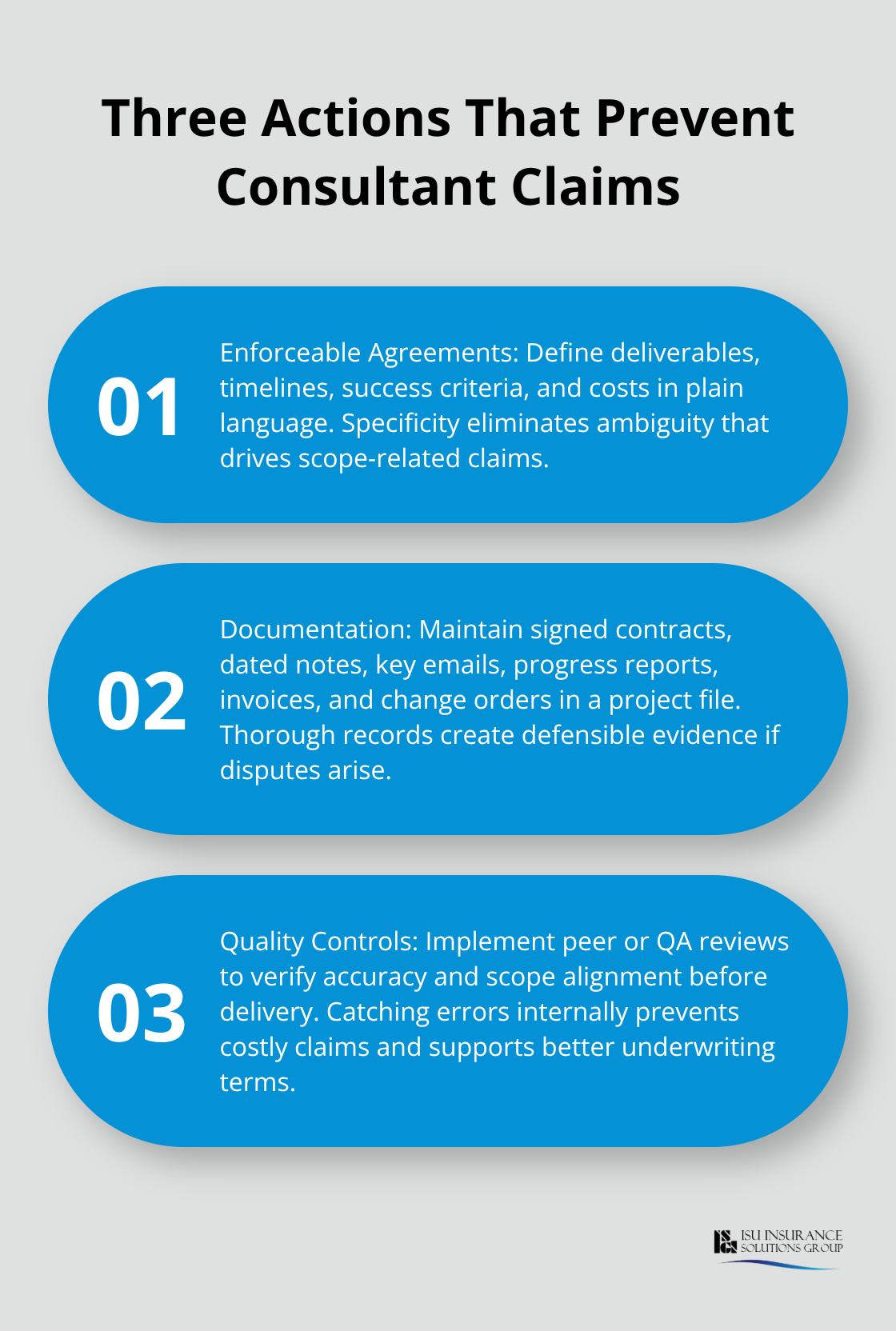
The gap between what you promise and what clients expect is where most liability claims originate. Closing that gap requires three concrete actions: write enforceable agreements that spell out exactly what you’ll deliver, maintain documentation that proves you delivered it, and implement quality checks that catch errors before clients see them. These practices work together to prevent claims from happening in the first place, and when disputes do arise, they give you a defensible record.

Contracts That Actually Prevent Disputes

Your engagement letter or statement of work is your most powerful liability tool. It must specify every deliverable, timeline, success criteria, and cost. Vague language like “we’ll improve your processes” or “we’ll provide strategic recommendations” guarantees future disputes. Instead, write “we will deliver a 50-page process improvement report by March 15th that includes current-state analysis, recommendations ranked by implementation cost, and a 12-month implementation roadmap.”

Ordered list of three preventive practices consultants can use to reduce liability claims - Professional liability for consultants

This specificity eliminates the ambiguity that triggers claims.

Include a section on scope changes that explicitly states any work outside the original agreement will be documented in a written change order and billed separately. This prevents scope creep, which is a major claim driver. Have an attorney draft your standard contract template covering service scope, deliverables, timelines, payment terms, limitation of liability, and indemnification clauses. This upfront investment pays dividends by protecting you across dozens of engagements. Require clients to sign the engagement letter before you start work, and keep a copy in your project file.

Documentation That Defends You

Project documentation transforms vague memories into concrete evidence. Create a project file for every engagement containing the signed engagement letter, all email correspondence with the client, meeting notes dated and summarized in writing, progress reports sent to the client, invoices showing work performed, and any change orders or scope amendments. If a dispute arises two years later, this file proves what you promised, what you delivered, and when you communicated issues to the client.

Progress reports sent monthly or at key milestones serve double duty: they keep clients informed and create a timestamped record of your work. Include in these reports what was completed, what’s pending, any obstacles encountered, and how you’re addressing them. When you flag risks or limitations in your recommendations, document that communication in writing. A consultant who warns a client that a recommendation carries implementation risk (and documents that warning) has strong protection against a failure-to-advise claim.

Quality Control Before the Client Sees It

Implement a review process where work is checked before delivery. For deliverables like reports, proposals, or implementation plans, assign a second person to review for accuracy, completeness, and alignment with the engagement scope. For technical work, have someone other than the primary consultant validate that the solution meets specifications. This catches errors before they become claims and demonstrates due diligence if a claim occurs.

Small firms can use peer review; larger firms might assign a quality assurance role. The investment in review time is minimal compared to the cost of defending a claim. When errors are caught internally and corrected before client delivery, no claim ever materializes. Industry claims trends show that consultants with documented quality controls and governance processes experience better underwriting terms and lower claim frequency than those without these safeguards.

Final Thoughts

Professional liability for consultants protects your business when disputes happen despite your best efforts, absorbing legal defense costs, settlements, and judgments that would otherwise drain your reserves. The risks are real-scope ambiguity, data breaches, fee disputes, and missed deadlines create claims that cost tens of thousands in legal defense alone. But these risks become manageable when you combine clear contracts that specify exactly what you’ll deliver, documentation that proves you delivered it, and quality controls that catch errors before clients see them.

Clients increasingly require professional liability insurance as a contractual condition before engagement, and underwriters now favor consulting firms with documented risk controls and governance processes. Start by reviewing your current policy to confirm it matches your services and client requirements, then strengthen your risk controls through written engagement letters, detailed project files, and a review process for deliverables. Claims trends show that consultants with strong documentation practices experience better coverage terms and lower claim frequency than those without these safeguards.

ISU Insurance Solutions Group has served Washington and Oregon businesses since 1983, helping consultants assess their specific risks and secure appropriate coverage tailored to their practice. Our agents work with multiple carriers to find competitive rates and comprehensive protection for your consulting business. Contact us today to review your coverage and ensure your business is protected.

The information provided in this blog is for general informational purposes only and does not constitute legal, financial, or insurance advice. Coverage options, terms, and availability may vary. Please consult with a licensed professional for advice specific to your situation.
Brewery Property Coverage Washington: Protecting Your Taproom and Tanks

Running a brewery in Washington means protecting assets that standard commercial insurance simply doesn’t cover. Fermentation tanks, brewing equipment, and thousands of dollars in inventory require specialized brewery property coverage in Washington.

At ISU Insurance Solutions Group, we work with breweries across Washington and Oregon to build protection plans that actually fit your operation. The risks you face-from equipment failures to fire hazards-demand more than generic policies.

Why Brewery Equipment Needs Different Protection

Washington breweries operate equipment that standard commercial policies simply refuse to cover or severely limit. Fermentation tanks, glycol cooling systems, canning lines, and pressure vessels represent hundreds of thousands of dollars in specialized assets that require dedicated protection. A glycol system failure at a mid-size facility triggers losses exceeding $100,000 when you account for spoilage, equipment repair, and lost production time. Standard property policies treat these as generic machinery, missing the reality that a single temperature control failure ruins entire batches of beer worth tens of thousands of dollars.

Equipment breakdown coverage specifically protects boilers, chillers, and refrigeration systems that are absolutely essential to brewing operations. Without this coverage, you face six-figure repair bills and production delays that stretch weeks or months. Washington’s craft beer industry contributes approximately $1.2 billion to the state’s economy, and that scale of operation demands insurance designed for manufacturing complexity, not retail simplicity. The Brewers Association reports that Washington has the second-largest hop acreage in the world and ranks fourth nationally for licensed breweries, meaning your inventory of raw materials and finished beer represents serious asset concentration.

Temperature Control Failures Cost More Than You Think

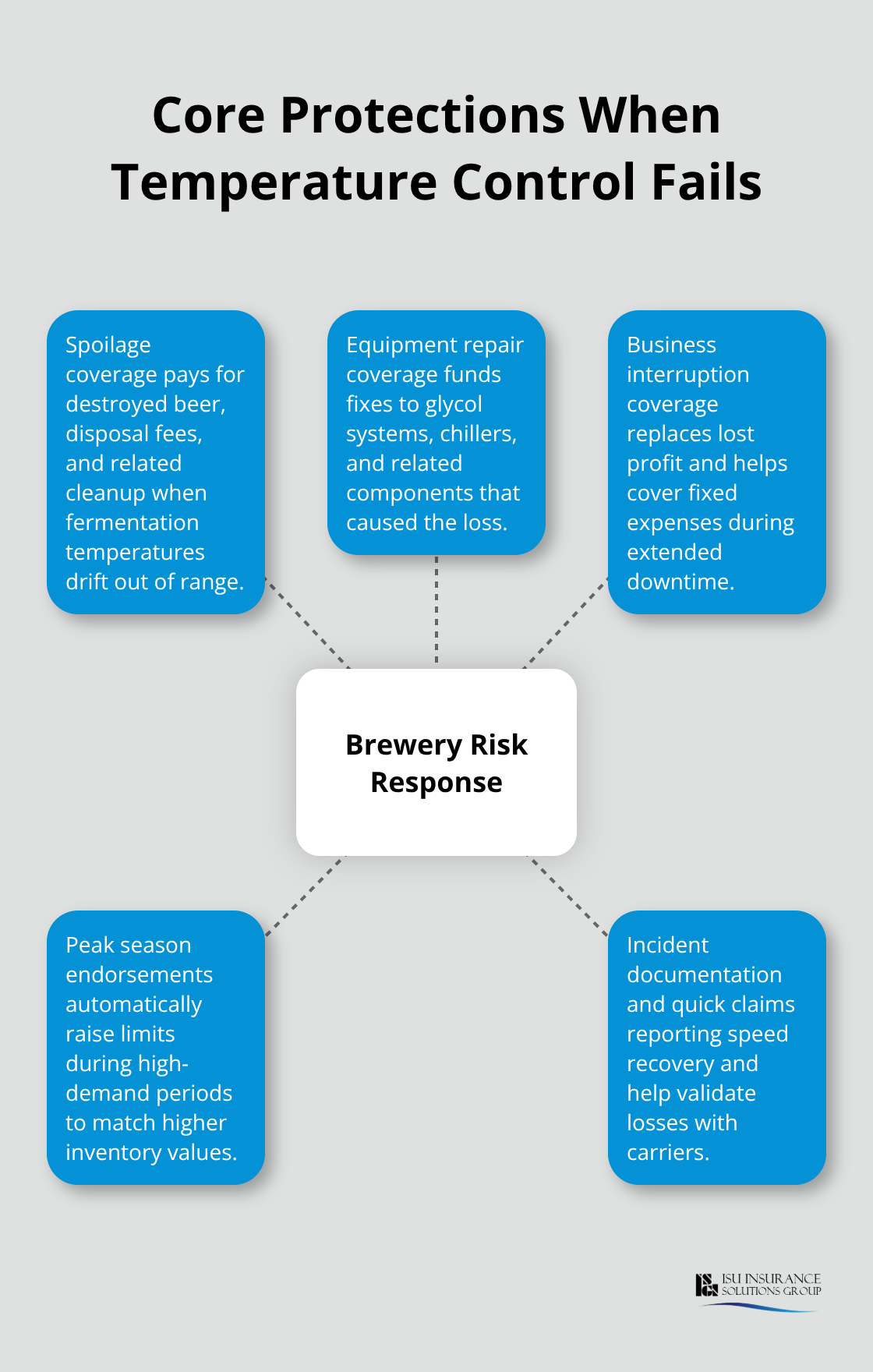
Glycol system failures represent the single most common and expensive claim in Washington breweries. These systems maintain fermentation temperatures within narrow ranges, and when they fail, you lose entire fermentation cycles instantly. Spoilage coverage that extends beyond standard property policies covers the cost of destroyed inventory, disposal fees, and lost production time while equipment repair occurs.

Visual map of key coverages that respond to temperature control failures in Washington breweries - Brewery property coverage Washington

Replacement lead times for specialized tanks exceed 26 weeks, which makes business interruption coverage critical during extended downtime. Peak season endorsements adjust your coverage limits to reflect higher inventory values during peak demand periods, preventing underinsurance when you produce at capacity.

Regulatory Requirements Shape Your Coverage Obligations

Washington’s Liquor and Cannabis Board requires proof of Commercial General Liability insurance with minimum limits of $1,000,000 before you receive a license. The LCB also mandates liquor liability coverage specifically, which is a separate policy requirement from general liability. Local fire marshals impose additional requirements for facilities larger than 10,000 square feet, often requiring documented proof of adequate property and boiler coverage. Pierce County breweries face wastewater pollution-control requirements that affect environmental liability coverage needs.

These regulatory mandates are not optional suggestions-they are licensing prerequisites that directly influence which coverage types you must carry to remain compliant and operational. Your insurance decisions ultimately determine whether you can legally operate and whether you can recover from major losses. Understanding what regulators require helps you avoid coverage gaps that could cost your brewery its license or leave you unprotected after a catastrophic event. The next section examines the specific coverage types that protect your building, equipment, and inventory from the risks that actually threaten Washington breweries.

Building Real Protection Into Your Brewery Coverage

Foundation: Structure and Building Protection

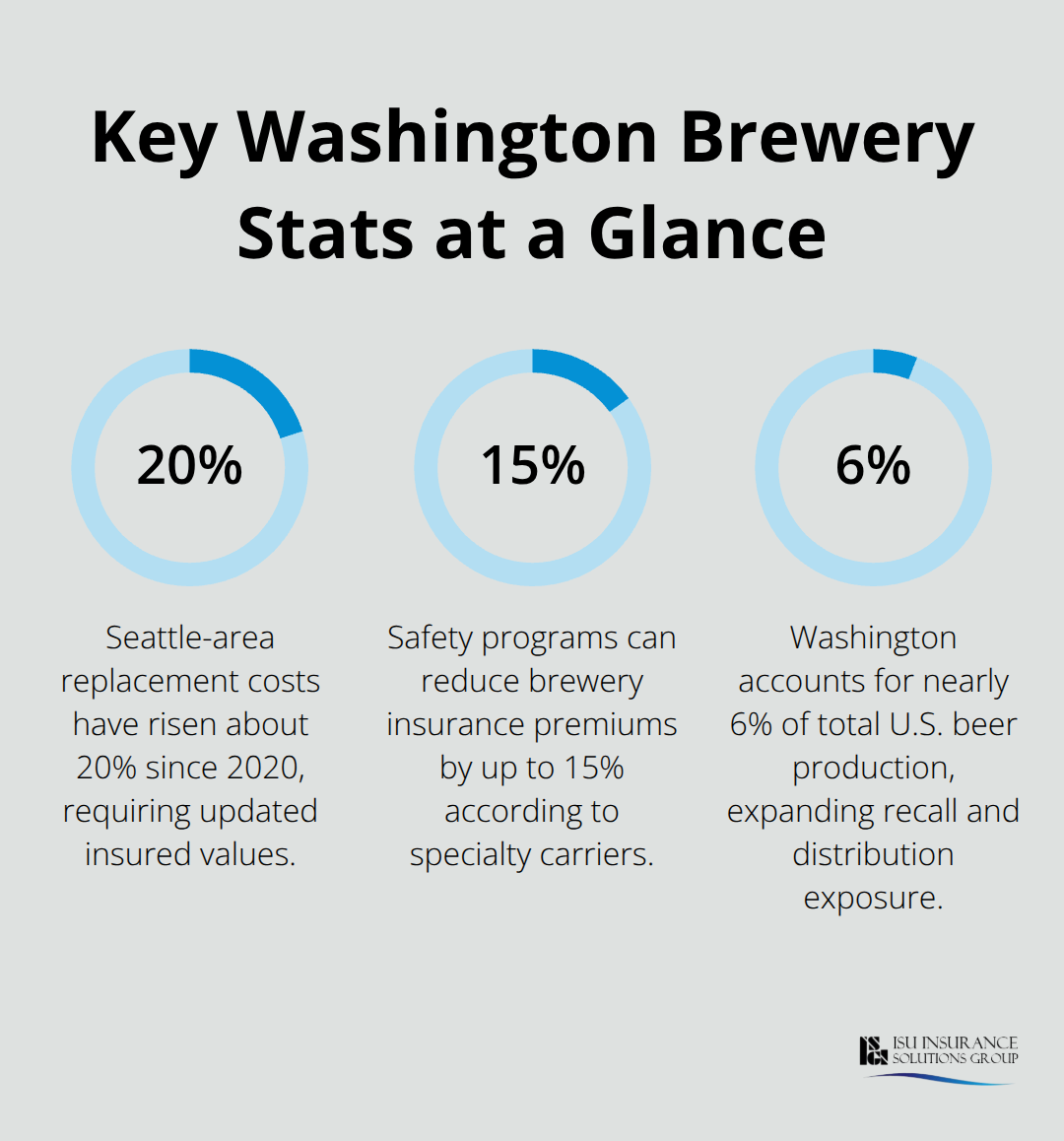
Your brewery’s physical assets demand coverage that goes far beyond standard commercial property policies. Building and structure protection forms the foundation, but it must account for replacement cost rather than depreciated book value. Seattle-area replacement costs have risen approximately 20% since 2020, which means your insured values need regular updates to reflect current construction expenses. A 15,000 square-foot brewery facility with concrete floors, specialized HVAC systems for temperature control, and reinforced structural supports for tank placement costs significantly more to rebuild than a generic commercial building. Fire marshals in Washington require documented proof of adequate property coverage for facilities exceeding 10,000 square feet, so your coverage limits directly determine licensing compliance.

Equipment Breakdown: Protecting Your Most Valuable Assets

Equipment breakdown coverage operates separately from standard property protection and covers the specific machinery that defines your operation. Boilers, pressure vessels, chillers, and canning lines represent the highest-value components in most breweries, and a single failure triggers six-figure repair costs plus weeks of production downtime. The Brewers Association data shows Washington ranks fourth nationally for licensed breweries, and that concentration of equipment-heavy operations means carriers understand the real costs of these failures. Spoilage protection extends coverage to inventory destroyed when temperature control systems fail, which is critical because fermentation tanks worth $50,000 can hold beer valued at $30,000 to $80,000 depending on batch size and production stage. Peak season endorsements automatically increase your equipment and inventory limits during high-production periods, preventing the common mistake of carrying insufficient coverage when you need it most.

Inventory Protection: Raw Materials and Finished Products

Inventory and product protection requires honest assessment of what you actually have stored at any given time. Raw materials including hops, malt, and yeast stored in climate-controlled areas need specific coverage because standard property policies often exclude spoilage unless you add explicit protection. Finished inventory in kegs, cans, and bottles represents liquid assets that require scheduled coverage detailing quantities and locations, especially if you distribute across multiple warehouses or retail partners. Product liability and recall coverage protects against contamination claims and covers government-mandated recall costs, which matters when you distribute across state lines. Washington accounts for nearly 6% of national beer production, and that multi-state distribution exposure means contamination in one batch could trigger recalls affecting retailers across five or more states.

Business Interruption: Protecting Revenue During Downtime

Business interruption coverage reimburses lost profits when covered perils halt production, which is essential during equipment repairs or facility damage when lead times for replacement tanks exceed 26 weeks. Many breweries underestimate how much revenue they lose during downtime, particularly when they supply restaurants and retail accounts on regular schedules that cannot be disrupted without damaging customer relationships. Production stoppages cost far more than just repair bills-they cost customer relationships and market share that take months to rebuild. Your coverage should reflect actual monthly revenue so that interruption payments cover both fixed expenses and lost profit margins during extended downtime.

The specific coverage types you select determine whether your brewery survives a major loss or faces financial devastation. Brewery insurance in Washington requires careful assessment of your unique operational risks, and working with carriers experienced in craft production ensures you capture exposures that generic policies miss. Beyond these core protections, additional exposures emerge when you operate a taproom, host events, or expand distribution-each creating liability risks that demand their own specialized coverage solutions.

Common Claims and How to Prevent Them

Fire and Explosion Risks in Brewing Facilities

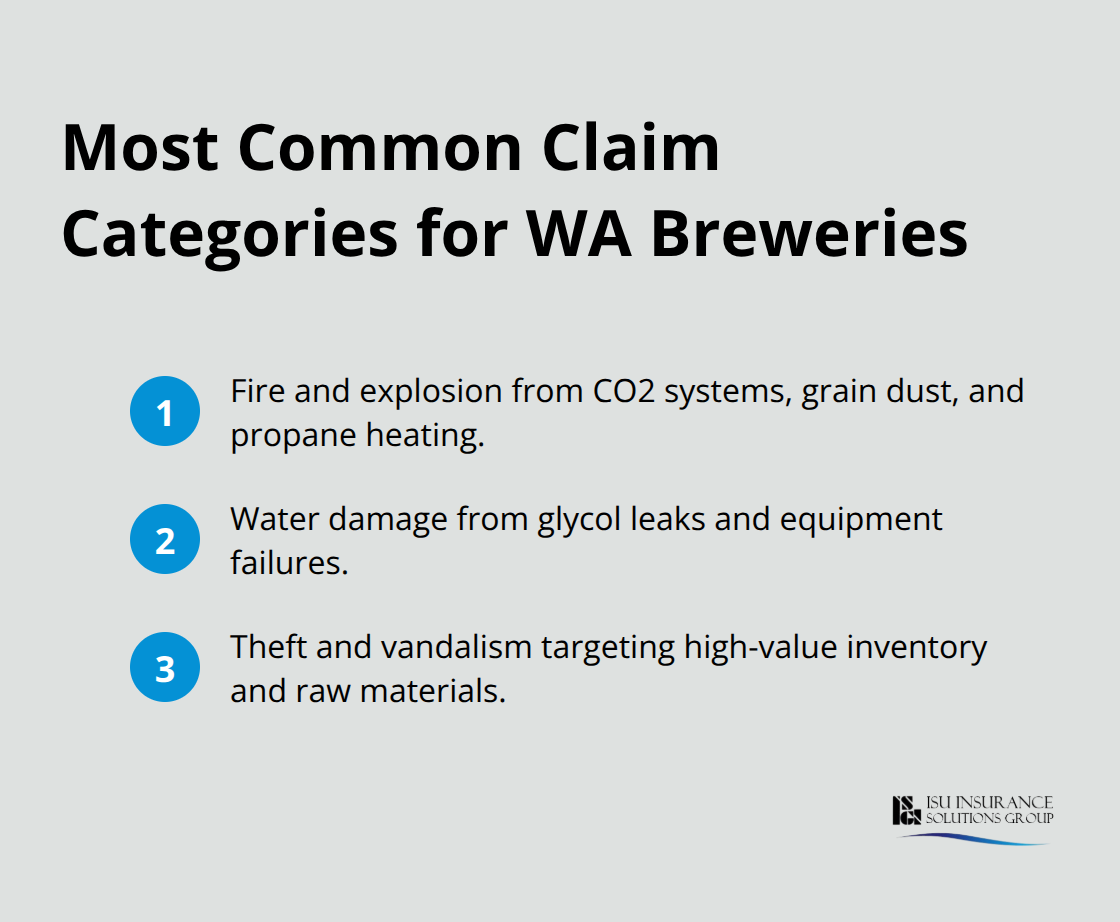
Fire and explosion risks in Washington breweries stem from specific operational hazards that most facility managers underestimate. CO2 systems pressurized to dangerous levels, grain dust accumulation in milling areas, and propane heating systems create genuine fire and explosion exposure that standard commercial policies treat as generic industrial risk. The Brewers Association reports Washington has over 475 craft breweries, and fire incidents at even one facility per year across the state demonstrate this is not theoretical concern.

A single propane system malfunction or electrical fault in fermentation areas can trigger catastrophic losses exceeding $500,000 when you account for building damage, equipment destruction, and inventory loss. Daily CO2 monitoring, regular boiler inspections documented in writing, and OSHA-style safety training reduce your premium costs by up to 15 percent according to carriers who specialize in brewery coverage. Fire marshals require proof of adequate property coverage for facilities exceeding 10,000 square feet, so your insurance limits directly determine whether your facility passes inspection and maintains operational licensing.

Percentage snapshot of Washington brewery risk and market figures - Brewery property coverage Washington

Water Damage from Equipment Failure

Water damage from equipment failure represents the second-largest claim category in Washington breweries, particularly from glycol system leaks that spread across production floors and destroy electrical systems, HVAC equipment, and inventory simultaneously. A mid-size facility experienced a glycol leak that triggered equipment breakdown, spoilage, and business interruption payments totaling over $150,000 because comprehensive coverage captured all three exposures.

Compact list of the top claim types affecting Washington breweries

Replacement lead times for specialized fermentation tanks exceed 26 weeks, which means business interruption coverage that extends through extended repair periods protects your revenue during months when you cannot produce. Temperature control failures demand immediate attention because even brief system malfunctions destroy fermentation cycles worth tens of thousands of dollars in raw materials and labor. Consider replacing aging water supply hoses with braided stainless steel alternatives, which have a longer lifespan and can help prevent costly water damage claims.

Theft and Vandalism Prevention Strategies

Theft and vandalism at brewery locations increased significantly post-2020, with break-ins targeting finished inventory in taproom storage areas and raw materials stored in accessible warehouse sections. Crime coverage addressing employee dishonesty and theft is often limited under standard property policies, which means standalone crime policies provide stronger protection for high-value inventory.

Implement daily inventory checks, secure raw material storage with keycard access, and install security cameras in high-value areas to reduce both loss frequency and insurance premiums. These controls demonstrate to carriers that you take asset protection seriously, which translates directly into lower renewal costs and faster claims resolution when incidents occur.

Final Thoughts

Protecting your Washington brewery requires specialized brewery property coverage that addresses temperature control failures, spoilage risks, equipment breakdown, and regulatory compliance simultaneously. The claims discussed throughout this guide reflect real losses that breweries face every year-fire and explosion risks from CO2 systems, water damage from glycol leaks, and theft of high-value inventory happen regularly across Washington’s 475+ craft breweries. The difference between financial recovery and operational collapse comes down to whether you carried the right coverage before the loss occurred.

Building comprehensive protection means starting with building and structure coverage based on replacement cost rather than depreciated value, adding equipment breakdown protection for your most critical machinery, and including inventory coverage that reflects both raw materials and finished products. Business interruption coverage protects your revenue during extended downtime when replacement lead times exceed 26 weeks, and peak season endorsements ensure you maintain adequate limits during high-production periods when your asset concentration peaks. Finding the right coverage requires working with carriers and agents who understand brewing operations specifically, since generic commercial insurance brokers lack the expertise to identify exposures unique to fermentation and temperature control.

We at ISU Insurance Solutions Group specialize in brewery and winery coverage through partnerships with multiple carriers and understand Pacific Northwest brewing operations thoroughly. Contact us for a brewery insurance quote that compares coverage options and competitive rates from carriers who actually understand your risks.

The information provided in this blog is for general informational purposes only and does not constitute legal, financial, or insurance advice. Coverage options, terms, and availability may vary. Please consult with a licensed professional for advice specific to your situation.