Auto Insurance for Businesses: Protecting Assets and People

Your business vehicles are more than just transportation-they’re assets that need protection. Auto insurance for businesses isn’t optional; it’s a legal requirement in every state, and it shields your company from devastating financial losses.

At ISU Insurance Solutions Group, we help business owners understand what coverage actually matters. The right policy protects your employees, your vehicles, and your bottom line when accidents happen.

Why Your Business Needs Commercial Auto Insurance

Every state requires commercial auto insurance if your business operates vehicles, and this isn’t just a legal checkbox. Most states mandate liability coverage for bodily injury and property damage when vehicles are used for business purposes. The financial exposure from a single accident can be catastrophic-without proper coverage, your business faces unlimited liability for injuries, medical bills, lost wages, and property damage claims. A serious collision involving an employee could result in settlement costs exceeding $100,000 or more, and without commercial auto insurance, that liability falls directly on your business. Personal auto policies explicitly exclude business use, which means your employees’ personal insurance won’t cover accidents that occur while conducting company business. If an employee uses their personal vehicle for work-related tasks and causes an accident, your business could face negligent entrustment liability-the legal consequence of allowing someone to operate a vehicle for business when you haven’t verified their qualifications or driving history.

What Commercial Auto Insurance Actually Covers

Commercial auto insurance covers bodily injury and property damage that your business causes to others, but it also protects your employees and your assets. Medical payments coverage and personal injury protection pay for your drivers’ medical expenses, lost wages, and even funeral costs after an accident, regardless of who was at fault.

Three core protections in commercial auto policies for U.S. businesses - Auto insurance for businesses

Uninsured and underinsured motorist coverage has become increasingly important-the Transportation and Logistics industry, which represents the largest vertical needing commercial auto coverage, faces significant risk from uninsured drivers on the road. Collision coverage repairs or replaces your company vehicles after accidents, while comprehensive coverage protects against theft, fire, weather damage, and other non-collision losses.

Why Asset Protection Matters More Than Ever

For vehicles used for both business and personal purposes, the correct insured must be listed on the policy declarations to avoid claim denials-this detail matters more than most business owners realize. If your employees occasionally use personal vehicles for business errands, hired and non-owned auto coverage fills the gap that personal policies leave open, protecting your company when those accidents happen. The right coverage strategy (one that matches your actual fleet and operations) prevents costly gaps that could expose your business to unexpected expenses.

What Coverage Types Actually Protect Your Fleet

Liability Coverage Forms Your Foundation

Liability coverage forms the foundation of commercial auto insurance, and most states legally require it. When your business vehicle causes bodily injury or property damage to someone else, liability coverage pays for their medical bills, lost wages, property repairs, and legal settlements up to your policy limits. Carriers commonly use a Combined Single Limit approach, typically offering $500,000 or $1,000,000 in coverage for both bodily injury and property damage combined. The reality is that $500,000 limits expose mid-sized businesses to significant risk-a single serious accident involving multiple vehicles or pedestrians can easily exceed this threshold.

Most business owners underestimate their exposure because they focus on the vehicle’s value rather than the potential liability from injuries. If your company operates in transportation or logistics, where the industry faces the largest share of commercial auto claims, you need higher limits. The difference between $500,000 and $1,000,000 in coverage costs far less than the gap between what a major accident costs and what your policy actually pays.

Collision and Comprehensive Coverage Protect Your Assets

Collision and comprehensive coverage protect your actual fleet assets, and these matter differently depending on your vehicle values and usage patterns. Collision coverage pays for repairs or replacement after accidents, while comprehensive handles theft, fire, weather damage, and vandalism. The critical decision here involves your deductible-choosing a $1,000 deductible instead of $500 can lower your annual premium significantly, but only if your business can absorb that cost without strain.

For vehicles worth less than $5,000, comprehensive coverage often costs more than the vehicle’s value, making self-insurance the smarter choice. You should evaluate each vehicle individually rather than applying one deductible across your entire fleet. This approach prevents you from overpaying for protection on older or lower-value vehicles.

Uninsured and Underinsured Motorist Coverage Protects Your Drivers

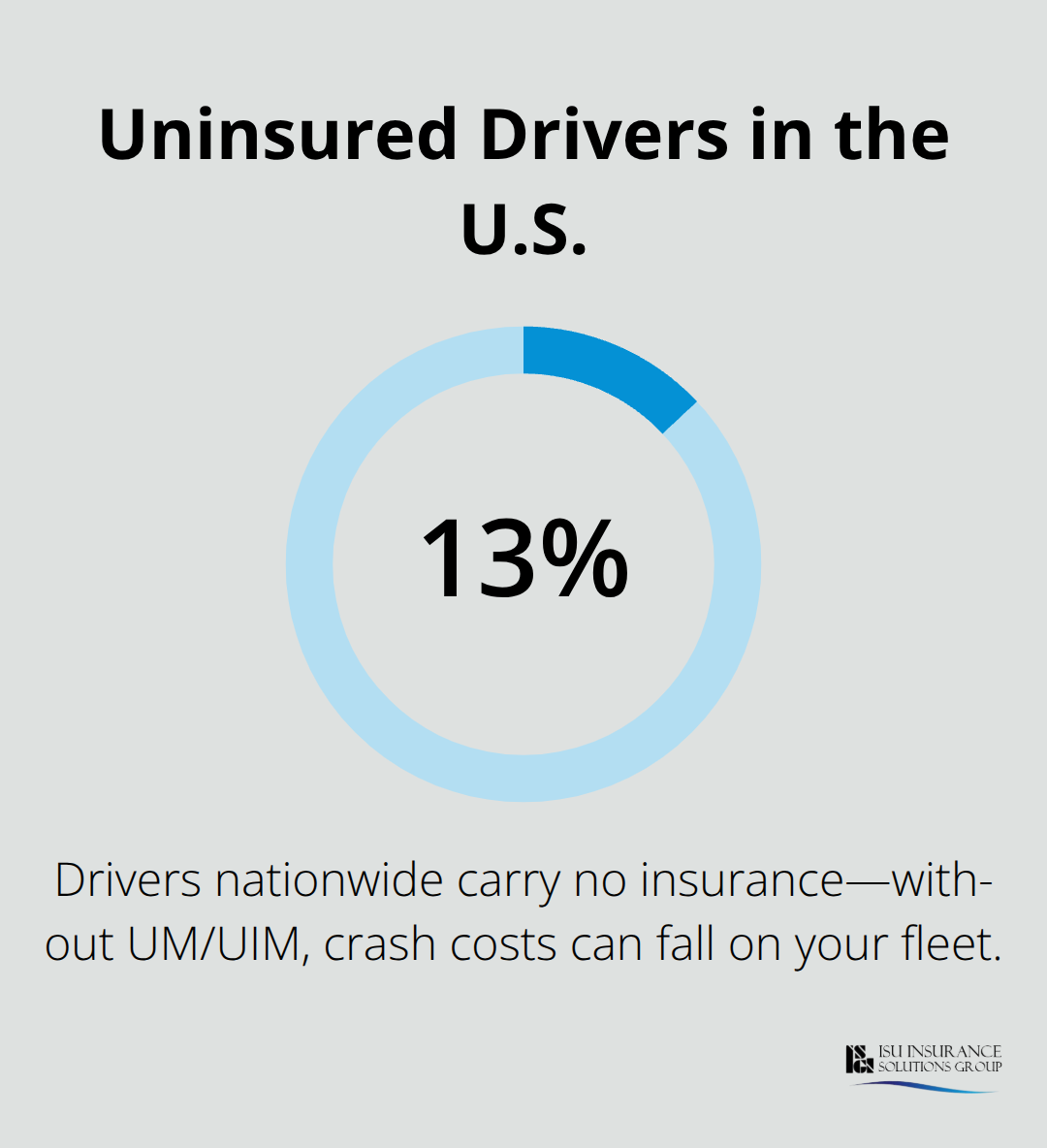
Uninsured and underinsured motorist coverage protects your drivers when the other party lacks sufficient insurance, and this has become non-negotiable. According to the Insurance Research Council, 15.4% of motorists were uninsured in 2023, meaning your employees face genuine risk from drivers who cannot pay for injuries they cause. This coverage pays your drivers’ medical expenses, lost wages, and damages when an uninsured driver hits them, protecting both your people and your payroll continuity when accidents happen.

Your drivers encounter this risk every time they operate a company vehicle, which makes this coverage essential rather than optional. Without it, your employees absorb the financial consequences of someone else’s lack of insurance. The cost of this protection remains minimal compared to the exposure your team faces on the road.

Matching Coverage to Your Actual Operations

The coverage you select should align with how your business actually uses vehicles. A delivery service operates under different risk conditions than a consulting firm with occasional client visits, and your policy should reflect that distinction. Transportation and logistics operations face higher frequency claims, while construction companies encounter different hazards entirely. Your coverage strategy must account for your specific industry, vehicle types, and how often employees drive for business purposes.

What Actually Drives Your Commercial Auto Premiums

Driver Records and Vehicle Types Set Your Base Rate

Your driver records and vehicle types are the two largest factors determining what you pay for commercial auto insurance, and understanding this reality helps you make smarter decisions about where to invest in risk reduction. A single driver with a history of accidents, traffic violations, or DUI convictions can increase your entire fleet’s premiums by 20 to 40 percent, which means one bad hire creates ongoing costs that compound across years. Vehicle type matters equally-trucks and vans used for heavy hauling or frequent deliveries generate higher claims than sedans used for occasional client visits, so carriers price them accordingly. The industry data shows that long-haul transportation and delivery services face the highest frequency of claims, which directly translates to higher base rates for those operations.

Hub-and-spoke view of the main factors influencing commercial auto insurance rates in the U.S.

Your location also influences costs significantly; businesses operating in urban areas with higher accident rates and theft risk pay more than those in rural regions, and this geographic factor sits outside your immediate control but should inform your coverage strategy.

Safety practices and driver training Lower Your Costs

The practical path to lower premiums focuses on controllable factors that directly reduce your risk profile. A documented cellphone and texting policy requiring hands-free operation for all drivers demonstrates risk awareness to carriers and qualifies your business for safety-focused discounts that typically save 10 to 15 percent annually. Detailed vehicle service records and annual inspections show carriers that your fleet receives professional upkeep, which reduces mechanical failure claims and demonstrates operational discipline. Driver training programs specifically addressing commercial driving hazards create another discount opportunity; many carriers offer reductions when drivers complete approved safety courses annually.

Policy Bundling and Deductible Choices Reduce Expenses

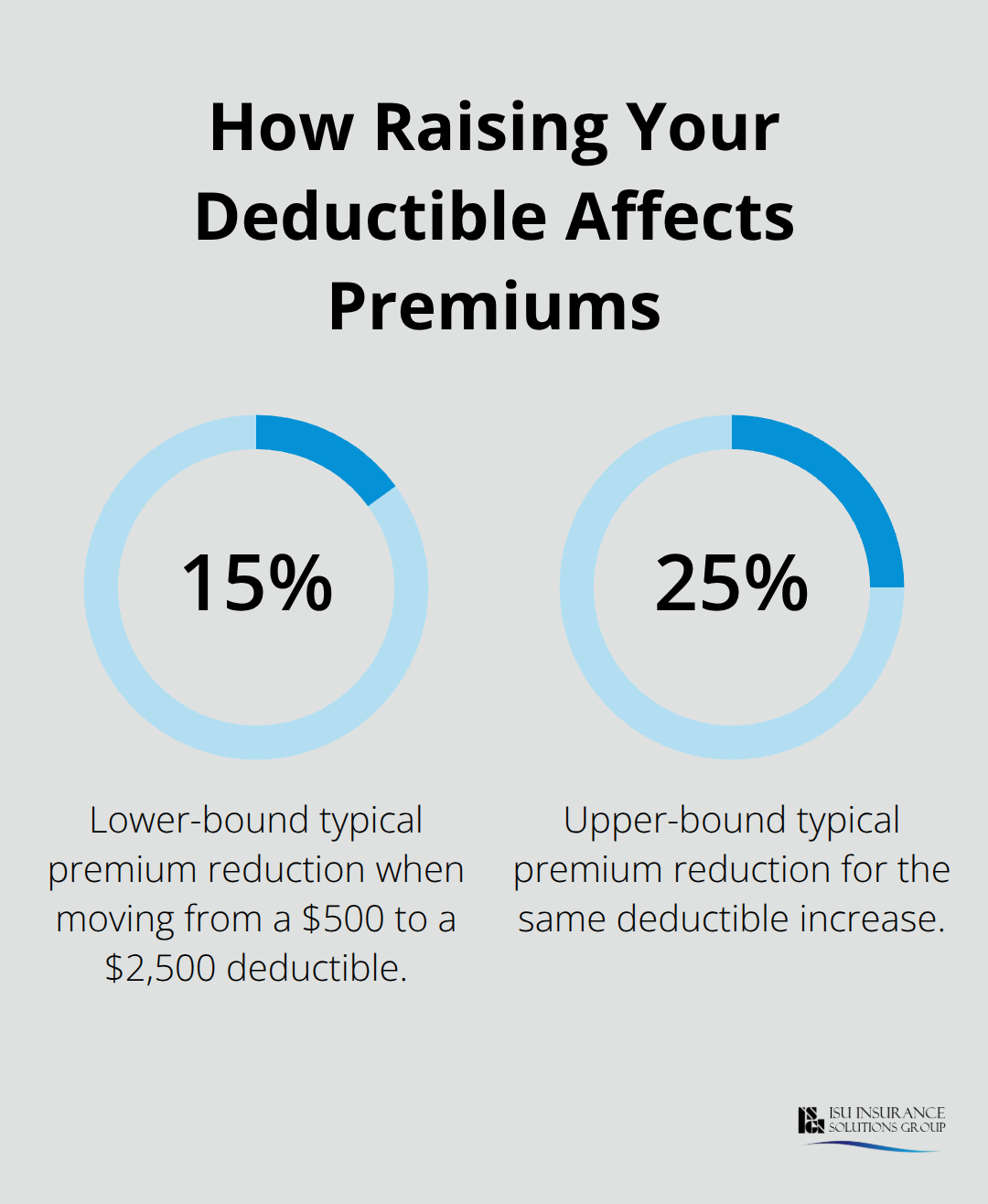
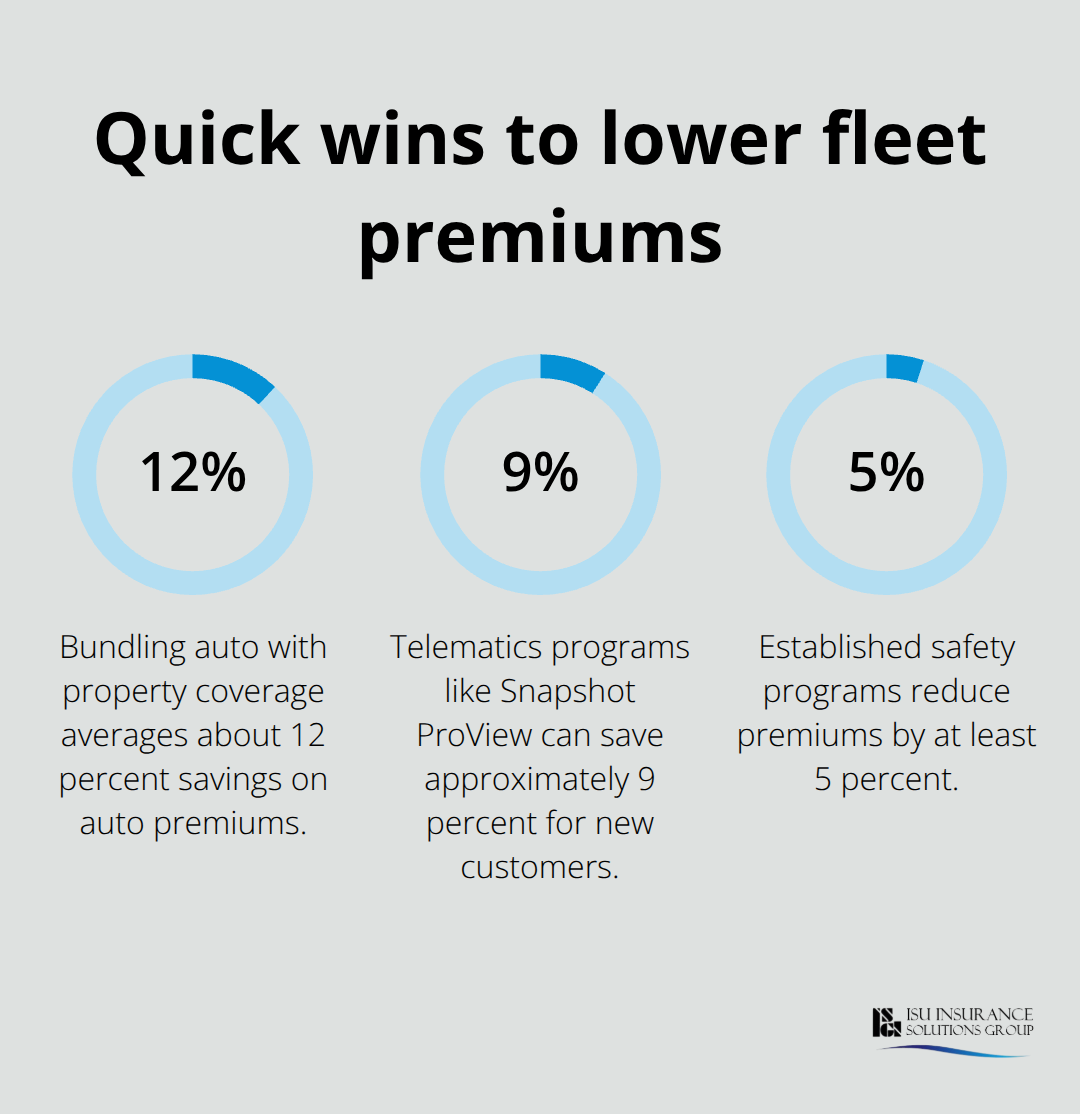
Bundling your commercial auto policy with general liability, workers’ compensation, or property coverage through the same carrier generates substantial savings-bundled policies typically cost 15 to 25 percent less than purchasing coverage separately from multiple insurers. Higher deductibles directly lower premiums, and choosing a $2,500 deductible instead of $500 can reduce your annual costs by 20 to 30 percent if your business maintains adequate cash reserves to absorb that expense. Paying your annual premium in full rather than monthly installments eliminates installment fees and often qualifies you for an additional 5 to 10 percent paid-in-full discount that compounds your savings.

Checklist of actionable savings strategies for commercial auto insurance in the United States - Auto insurance for businesses

Annual Policy Reviews Uncover Hidden Savings

Rate changes happen constantly, and carriers frequently apply discounts retroactively when you request policy reviews. Schedule an annual conversation with your agent rather than waiting for renewal notices-this proactive approach catches rate reductions and new discount programs that you might otherwise miss. The most overlooked strategy involves asking your agent about discounts you haven’t yet qualified for; many carriers offer reductions for safety equipment, driver certifications, or fleet management practices that your business may already have in place.

Final Thoughts

Commercial auto insurance for businesses protects far more than vehicles-it safeguards your employees, your assets, and your company’s financial stability when accidents happen. The coverage you select directly determines whether a single collision becomes a manageable claim or a catastrophic expense that threatens your operations. Liability protection covers the injuries and property damage your business causes to others, while collision and comprehensive coverage preserve your fleet’s value, and uninsured motorist protection shields your drivers from the financial consequences of someone else’s lack of insurance.

Choosing the right coverage means matching your policy to how your business actually operates. A delivery service faces different risks than a consulting firm, and your coverage should reflect that reality rather than following a generic template. Your driver records, vehicle types, location, and industry all influence both your risk profile and your premiums, which means understanding these factors helps you make smarter decisions about where to invest in protection.

We at ISU Insurance Solutions Group have served Washington and Oregon businesses since 1983, helping owners navigate the complexity of auto insurance for businesses through personalized guidance and competitive rates. Our independent agency partners with multiple carriers, which means we can compare coverage options and pricing across different insurers rather than limiting you to a single company’s offerings. Contact us today to review your current coverage or get quotes for your fleet.

The information provided in this blog is for general informational purposes only and does not constitute legal, financial, or insurance advice. Coverage options, terms, and availability may vary. Please consult with a licensed professional for advice specific to your situation.

Oregon Commercial Auto Insurance: Rates, Coverage, and Options

Oregon commercial auto insurance isn’t one-size-fits-all. Your business faces unique risks, and your coverage should reflect that.

We at ISU Insurance Solutions Group help Oregon business owners navigate rates, coverage options, and policy selection. This guide walks you through what affects your premiums, which protections matter most, and how to find competitive quotes that fit your operation.

What Drives Your Oregon Commercial Auto Premium

The Three Core Rate Factors

Your premium isn’t arbitrary. Oregon insurers examine three core factors that directly determine what you pay each month. Your driving record over the past three years carries real weight-a single at-fault accident or moving violation can push rates up 15–25%, while a clean history qualifies you for preferred pricing. Traffic violations hit harder than most business owners expect; a reckless driving citation can add $50–$100 monthly to your policy. Maintain zero incidents for three consecutive years and you’ll position yourself for renewal discounts that compound over time.

Vehicle type matters enormously. A light cargo van typically costs $225–$275 per month with full coverage in Oregon, but switching to a dual rear-wheel pickup truck can add $40–$50 monthly because insurers view them as higher-risk for towing-related claims. Semis and utility trailers trigger FMCSA requirements that demand additional liability coverage, pushing premiums substantially higher.

Visual summary of the three primary commercial auto rate factors in Oregon commercial auto pricing

Your industry classification and actual annual mileage determine baseline risk assessment. Construction contractors face rates between $325–$425 per vehicle monthly for general work, while higher-risk trades like structural work or excavation run $450–$600 or more. A contractor who operates within a 50-mile local radius saves roughly 10–15% compared to one covering a 200-mile territory, so verify your actual routes when quoting-insurers penalize overstated service areas.

New Business Surcharges and Geographic Pressures

New ventures face a 20–35% surcharge in their first three years, which gradually fades after maintaining a clean loss history. This front-loaded cost reflects insurer caution around unproven track records. Beyond these three anchors, Oregon’s specific geography adds pressure. Portland’s elevated theft rates for catalytic converters and tools push comprehensive coverage costs higher than rural areas like Bend.

Nationwide, commercial auto premiums rose 7–15% in 2026 due to social inflation (rising litigation costs) and vehicle repair expenses, including calibration of modern camera and sensor systems. Oregon tracks this national trend closely.

Strategies to Lower Your Costs

If you operate seasonally-say, a snow plow service-switch idle vehicles to comprehensive-only coverage during off-months and cut costs by 20–30%. Telematics enrollment proves worth pursuing aggressively; usage-based programs can reduce premiums by up to 30% for safe driving behavior. Install GPS trackers or AI dashcams to demonstrate risk reduction to insurers and directly lower your annual cost.

Bundle commercial auto with general liability or workers’ compensation to typically yield 5–15% total discounts and simplify claims handling across multiple policies. Mini-fleet pricing applies at just 2–3 vehicles, offering roughly 10–15% volume discounts. Hidden fees often surprise business owners-broker fees run 5–10%, installment charges add another 5–10%, and per-endorsement fees range from $25–$100 each. Request an itemized quote breakdown upfront to avoid surprises at renewal.

With these rate drivers in mind, the next step involves understanding which coverage types actually protect your operation and which ones your Oregon business truly needs.

What Coverage Actually Protects Your Oregon Business

Oregon’s Mandatory Minimums vs. Real-World Exposure

Oregon law mandates minimum liability limits of $25,000 per person and $50,000 per accident for bodily injury, plus $20,000 for property damage. Most Oregon businesses should ignore these minimums entirely. A single serious accident involving an employee driving a company vehicle generates medical bills, lost wages, and legal fees that far exceed state minimums. Construction contractors regularly face claims exceeding $100,000, so carrying $100,000 per person and $300,000 per accident protects your actual exposure rather than leaving your business vulnerable.

Personal injury protection (PIP) coverage is mandatory and covers medical expenses for you and passengers regardless of fault. This protection matters more than it initially appears when an employee injury claim lands on your desk. Uninsured and underinsured motorist coverage is also required, protecting your team when another driver lacks adequate insurance. Roughly one in eight Oregon drivers operates uninsured, meaning your employees face real risk on the road.

Hub-and-spoke diagram showing essential Oregon commercial auto coverages and what each does - Oregon commercial auto insurance

Physical Damage and Specialized Protections

Physical damage coverage splits into collision and comprehensive. Collision covers accidents with other vehicles or objects; comprehensive handles theft, vandalism, weather, and animal strikes. In Portland and surrounding urban areas, comprehensive claims spike due to catalytic converter theft and tool theft from vehicles, so this coverage isn’t optional if you park overnight in the metro area. Try a $500 deductible rather than $1,000 if your vehicles sit exposed; the monthly premium difference is typically $15–$25 but saves substantial out-of-pocket costs when claims occur.

Towing and labor coverage costs roughly $10–$20 monthly and covers roadside assistance after breakdowns or accidents. For contractors carrying tools or materials, this endorsement prevents a disabled vehicle from becoming an expensive towing bill. Loading and unloading coverage protects against liability when cargo is being loaded or unloaded from your vehicle. For seasonal operations like snow plowing, switching to comprehensive-only during off-months cuts costs while maintaining theft and weather protection.

Closing Coverage Gaps That Personal Policies Miss

Hidden coverage gaps create real problems. If your team occasionally uses personal vehicles for work tasks, hired and non-owned auto (HNOA) coverage fills the gap that personal auto policies deliberately exclude. HNOA covers accidents involving employee-owned or rented vehicles used for business purposes but does not cover damage to business-owned vehicles, so this is supplemental protection, not a replacement.

Medical payments coverage, separate from PIP, reimburses medical expenses for employees and passengers regardless of fault and typically costs $5–$10 monthly for meaningful limits. Bobtail coverage applies if your business operates tractors without trailers during non-work hours, ensuring coverage during periods when standard commercial policies may not apply.

Getting Quotes That Actually Compare

When evaluating quotes from multiple carriers, request identical coverage limits and deductibles across all quotes so actual rate differences become visible rather than buried in coverage variations. Oregon-based businesses often benefit from working with local agents who understand regional risks like Portland’s theft patterns and can recommend appropriate coverage without overselling unnecessary add-ons. These agents help you navigate the next critical step: comparing multiple quotes and selecting the policy that truly fits your operation’s needs and budget.

Comparing Quotes and Finding the Right Policy

Pull Multiple Quotes in One Conversation

Requesting quotes from multiple carriers is non-negotiable if you want competitive rates, but most Oregon business owners approach this backward. Don’t call five different insurers separately and spend three hours repeating your business details each time. Instead, contact one independent agent who represents 10+ carriers and can pull quotes from all of them in a single conversation. An agent working with multiple insurers like Progressive, State Farm, or regional carriers shows you rate differences immediately without forcing you to wait for callbacks.

When you request quotes, specify identical coverage limits across all carriers-use $100,000 per person and $300,000 per accident for liability if you’re a contractor, or $50,000 per person and $100,000 per accident if you run a smaller service business. This consistency lets you see which insurer actually offers the lowest premium rather than hiding price differences under different coverage tiers. Request an itemized breakdown showing base rate, endorsements, fees, and discounts applied. Broker fees (5–10%), installment charges (5–10%), and per-endorsement fees ($25–$100 each) often add $200–$400 annually, so catching these upfront prevents sticker shock at renewal.

Checklist to fairly compare Oregon commercial auto insurance quotes

Match Your Industry to the Right Carrier

Your industry and vehicle type dramatically shift which carrier offers the best rate. Construction contractors typically find better pricing from carriers that specialize in trades, while service-based businesses like cleaning or landscaping may get lower quotes from standard commercial auto carriers. A contractor operating a dual rear-wheel truck with a trailer will pay roughly $40–$50 more monthly than someone with a light cargo van, so some carriers price this spread more aggressively than others.

Local agents in Oregon understand these nuances and know which carriers price favorably for your specific operation rather than quoting you a one-size-fits-all rate. An experienced agent asks about your actual service radius, vehicle condition, safety equipment, and loss history, then matches you with carriers most likely to offer competitive pricing for your exact risk profile. Telematics enrollment matters during the quoting process-mention if you’re willing to install GPS tracking or dashcam technology, since some carriers offer 15–30% discounts for enrollment, making their higher base rate irrelevant.

Timing and Claims Service Matter

Request quotes in early spring or fall before renewal deadlines arrive, since carriers fill their books strategically and may offer better rates during slower periods. Once you have three to five competing quotes in hand, evaluate not just the monthly premium but also the carrier’s claims process, local repair networks, and how quickly they issue certificates of insurance. Some Oregon carriers issue certificates within 24 hours after purchase, while others take five business days-a factor that matters if you need coverage activated immediately for a new contract or client requirement.

Final Thoughts

Oregon commercial auto insurance protects your business from liability exposure that personal policies deliberately exclude. The three core rate factors-your driving record, vehicle type, and industry classification-determine what you pay monthly, but telematics enrollment cuts premiums by up to 30%, bundling policies yields 5–15% discounts, and mini-fleet pricing applies at just 2–3 vehicles. New business surcharges fade after three years of clean loss history, so your first renewal brings meaningful savings if you maintain a strong claims record.

Coverage requirements matter more than Oregon’s legal minimums suggest. State law mandates $25,000 per person and $50,000 per accident for bodily injury, but construction contractors and service businesses regularly face claims exceeding $100,000. Carrying $100,000 per person and $300,000 per accident reflects actual exposure rather than leaving your operation vulnerable, and physical damage coverage plus uninsured motorist protection close gaps that personal policies miss entirely.

We at ISU Insurance Solutions Group serve Oregon businesses with one-call multi-carrier quotes and hands-on local agents who understand Pacific Northwest risks. Contact an independent agent today to compare rates from 20+ carriers and find Oregon commercial auto insurance coverage that actually protects your operation without overpaying for unnecessary add-ons.

The information provided in this blog is for general informational purposes only and does not constitute legal, financial, or insurance advice. Coverage options, terms, and availability may vary. Please consult with a licensed professional for advice specific to your situation.

Oregon Winery Insurance Quotes: How to Compare and Save

Oregon winery insurance quotes vary wildly depending on your operation’s size, location, and risk profile. At ISU Insurance Solutions Group, we’ve helped countless winery owners navigate these quotes and cut their premiums significantly.

The right coverage protects your vineyard, equipment, and products from real threats. This guide walks you through comparing quotes effectively and finding genuine savings.

What Coverage Do Oregon Wineries Actually Need

General Liability and Liquor Liability Protection

General liability protection stands as the non-negotiable foundation for any Oregon winery operation. If a customer suffers heat stroke during a vineyard tour or slips in your tasting room, general liability covers your legal defense and damages up to your policy limit. Oregon wineries with on-site tastings where consumption occurs must carry liquor liability insurance with a minimum of $300,000 in coverage, with the Oregon Liquor and Cannabis Commission named as the certificate holder on an ACORD form. This requirement appears in the OLCC licensing process, and you cannot obtain your annual license without proof of this coverage. Many winery owners mistakenly believe their homeowners or personal liability policies cover business activities-they do not.

Checklist of OLCC liquor liability requirements and common coverage misconceptions for Oregon wineries. - Oregon winery insurance quotes

The gap between what people think they have and what actually protects their winery operations costs owners thousands annually when claims arise.

Property and Equipment Coverage

Property and equipment coverage protects the assets that generate your revenue. Your processing buildings, fermentation tanks, bottling lines, and tasting room furniture all require commercial property insurance because standard homeowners policies exclude business property. Oregon wineries face specific threats: wildfire smoke exposure can spoil entire vintages, equipment breakdowns during harvest season can destroy crops worth hundreds of thousands of dollars, and wine stored off-site or in transit needs inland marine coverage to prevent gaps in protection.

Product Liability and Recall Insurance

Product liability and recall insurance address the reality that contaminated wine batches, labeling errors, or allergen issues can trigger lawsuits and force expensive recalls. A single recall can cost $50,000 to $500,000 depending on distribution scope, and product liability insurance covers legal fees, settlements, and recall expenses that would otherwise devastate cash flow. Oregon wineries that sell directly to consumers through tasting rooms or special event licenses face higher product liability exposure than those selling exclusively to distributors.

The coverage types that matter most depend entirely on how you operate-a vineyard selling grapes differs fundamentally from a producer hosting 15,000 annual visitors in a tasting room. Your operation’s structure, sales channels, and guest activities determine which protections you actually need. Once you understand your specific coverage requirements, the next step involves comparing quotes from multiple carriers to find the best rates and terms for your situation.

Comparing Quotes Side by Side

Gather Operational Details Before Requesting Quotes

Gathering detailed information about your winery before requesting quotes accelerates the entire process and produces more accurate comparisons. Insurance carriers need specifics: annual production volume in cases, number of employees, whether you operate a tasting room and how many visitors annually, if you host events or provide food service, what equipment you own, whether you store wine off-site, and your distribution channels (direct-to-consumer, wholesale, or both). The Oregon Liquor and Cannabis Commission requires this operational detail for licensing anyway, so you likely have most of it documented. When you request quotes, provide the same information to all carriers-inconsistent details create apples-to-oranges comparisons that waste your time.

Request Quotes from Multiple Carriers

Request quotes from at least three carriers; many Oregon wineries discover that premiums vary by $2,000 to $5,000 annually for identical coverage simply because carriers price risk differently. Contact each carrier with the same operational details to ensure fair comparison. As an independent agency serving Washington and Oregon since 1983, ISU Insurance Solutions Group works with 20+ carriers and can provide multi-carrier quotes through a single contact point, eliminating the legwork of reaching out to multiple agencies separately.

Evaluate Coverage Limits and Deductibles

When evaluating quotes side by side, focus on three specific elements beyond premium price. First, verify that liquor liability meets the $300,000 OLCC minimum and that the policy actually covers your specific operations-some policies exclude special events or off-premises tastings, creating dangerous gaps. Second, compare property coverage limits against your actual equipment and building values; underinsuring by 20% is common, and it triggers coinsurance penalties when you file a claim, meaning the carrier pays less than you expect. Third, examine deductibles carefully: a $2,500 deductible saves perhaps $300 annually on premium but costs significantly more if you need coverage, so balance this based on your cash reserves and risk tolerance.

Percentages highlighting underinsurance risk and typical bundling savings for Oregon winery insurance.

Verify Complete Coverage in Your Quotes

Check whether quotes include product liability and recall coverage, as many standard policies exclude these entirely-you must add them separately, and quotes that omit them appear cheaper but leave you exposed. Request ACORD certificates from carriers before committing; this verifies they can meet OLCC requirements in the format Oregon requires. Most carriers cannot bind or modify policies online, so speak with a licensed representative who can explain coverage gaps specific to your operation rather than relying on automated quote systems. Once you’ve selected the right coverage and carrier, the real opportunity to reduce costs emerges through strategic bundling and operational risk management practices.

How to Cut Your Winery Insurance Costs Without Sacrificing Coverage

Bundle Policies for Immediate Savings

Consolidating your general liability, property, and product liability policies with a single carrier typically reduces your annual premium by 10 to 15 percent compared to purchasing each policy separately. Oregon wineries that consolidate coverage often discover they can afford higher coverage limits at lower total cost than they paid for minimal coverage across multiple carriers. When you request quotes, ask each carrier for bundled pricing on general liability plus property plus liquor liability, then compare the total package price rather than individual policy costs. Some carriers offer additional discounts for bundling commercial auto insurance if your winery operates delivery vehicles. The real trap occurs when winery owners chase the cheapest individual quote without calculating the bundled total-you may select a carrier offering the lowest general liability rate only to discover their property coverage costs significantly more than a competitor’s bundled package.

Implement Risk Management Practices That Carriers Reward

Risk management practices directly influence your insurance costs because carriers adjust premiums based on your operational safety record and loss history. Wineries that implement documented safety training for staff, maintain equipment regularly, and track visitor incidents typically qualify for safety discounts ranging from 5 to 20 percent depending on the carrier and your specific practices. Document everything: maintenance logs for fermentation tanks and bottling equipment, staff training records for food safety and alcohol service, incident reports from your tasting room, and any loss prevention improvements you’ve made. When requesting quotes, mention these practices explicitly because many carriers do not automatically apply discounts unless you highlight your risk management efforts.

Hub-and-spoke diagram showing risk management steps that can earn insurance discounts for Oregon wineries. - Oregon winery insurance quotes

Carriers want to see that you take safety seriously, and your documentation proves it.

Review and Adjust Coverage Annually

Review your coverage annually, particularly after operational changes like expanding your tasting room capacity, adding a special event license, increasing production volume, or hiring additional staff-each change shifts your risk profile and creates coverage gaps or opportunities for cost reduction. Oregon wineries that wait three to five years between policy reviews often discover they are either dramatically overinsured in areas where risk has decreased or dangerously underinsured in areas where operations have expanded. Request updated quotes every two years minimum, and request them immediately whenever your operation changes significantly. This approach (combined with the bundling and risk management strategies above) positions you to capture savings while maintaining the protection your winery actually needs.

Final Thoughts

Your winery’s insurance costs depend on five concrete factors: annual production volume, employee count, tasting room operations and annual visitor numbers, distribution channels, and documented safety practices. A small vineyard selling exclusively to distributors pays substantially less than a producer hosting 15,000 annual visitors with on-site consumption and special event licenses. Location matters too-Oregon wineries in wildfire-prone regions face higher property insurance costs due to smoke exposure and equipment loss risks.

Working with a local agent who understands Oregon’s specific regulatory environment transforms Oregon winery insurance quotes from confusing to actionable. An agent familiar with OLCC requirements verifies your liquor liability coverage meets the $300,000 minimum in the exact ACORD format Oregon requires, preventing licensing delays and coverage gaps. Local agents know which carriers price Oregon winery operations competitively and identify coverage gaps that online quote systems miss.

Your next step is straightforward: gather your operational details, request quotes from multiple carriers, and compare coverage limits and deductibles side by side rather than chasing the lowest premium. Contact ISU Insurance Solutions Group for a multi-carrier quote that eliminates the legwork of reaching out to separate agencies. A licensed representative will explain your specific coverage needs, identify cost-saving opportunities through bundling, and answer questions about OLCC requirements and Oregon-specific risks.

The information provided in this blog is for general informational purposes only and does not constitute legal, financial, or insurance advice. Coverage options, terms, and availability may vary. Please consult with a licensed professional for advice specific to your situation.