Washington Winery Insurance Quotes: Compare Local Coverage

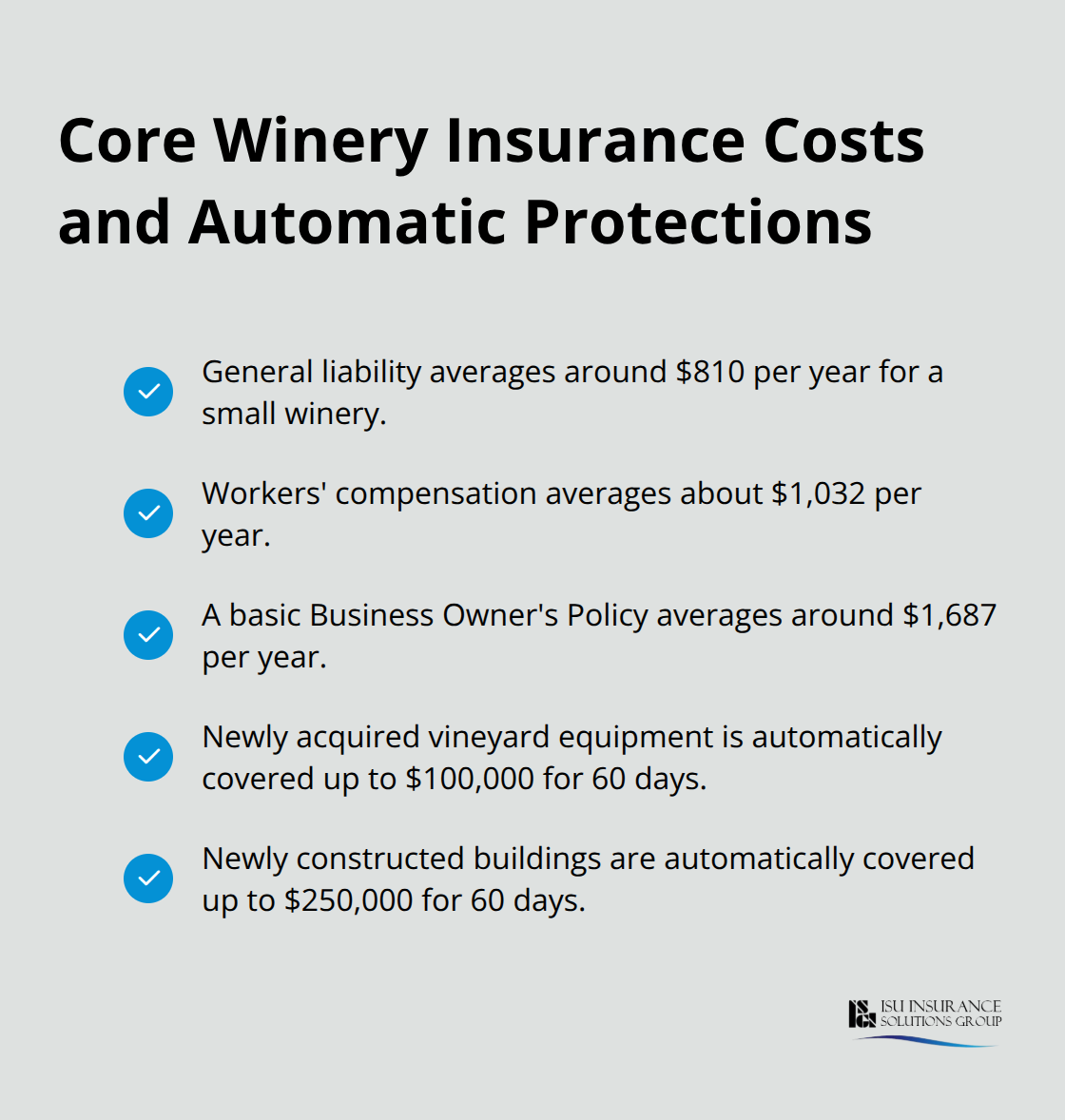
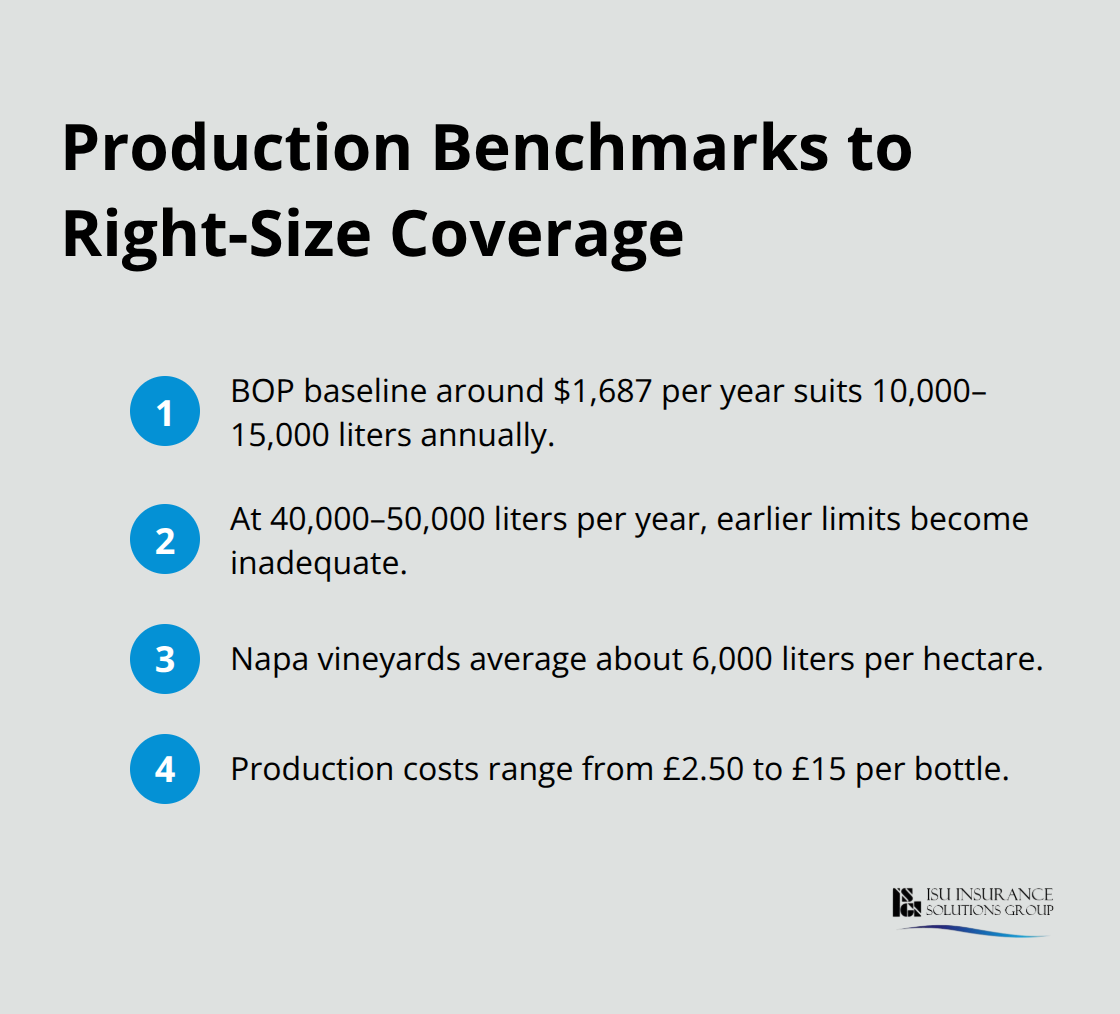
Washington winery insurance quotes require specialized knowledge that most standard business agents simply don’t have. Wine production involves unique risks-from fermentation hazards to inventory spoilage to liquor liability-that generic policies won’t cover properly.

We at ISU Insurance Solutions Group work with Washington wineries regularly, and we’ve seen too many owners settle for inadequate coverage. This guide walks you through exactly what coverage you need and how to compare quotes from carriers who actually understand Pacific Northwest operations.

Why Standard Business Policies Miss Winery Risks

A standard commercial general liability policy treats your winery like a typical retail business. That’s the problem. When Washington State Wine Commission data shows the state produces over 17 million cases annually across 60,000+ vineyard acres, and Cabernet Sauvignon vines alone carry a value around $13,000 per planted acre, your insurance needs to reflect agricultural production complexity plus hospitality exposure plus manufacturing hazards all at once.

Checklist of winery-specific risks often excluded by standard business insurance policies.

Standard policies ignore fermentation tank ruptures, wine oxidation from cork failure, contamination from cleaning solvents left in barrels, and the specific liability exposure when someone gets injured at your tasting room. A generic business package won’t cover a 5,000-gallon tank failure that costs roughly $600,000 in lost revenue, nor will it protect you when a guest claims they were over-served. Washington’s modified dram-shop rule creates real legal exposure-your winery faces liability claims even when a third party bears some responsibility. Your property coverage must account for crush pads, catwalks, climate-controlled aging rooms, and temperature-sensitive equipment like glycol chillers that cost tens of thousands to replace. Skagit County’s 2023 rebuild index shows insulated steel structures jumped 19% year over year, meaning replacement costs for winery buildings have climbed sharply. Standard policies also miss wine-specific inventory valuation. You need options to value finished stock at selling price minus discounts, irreplaceable wines at market value on the loss date, or stock in process based on the previous three years for that varietal. Equipment breakdown coverage protects high-cost fermentation tanks and bottling machinery, but only if your policy specifically includes it-standard packages skip this entirely.

Liquor Liability Exposure That Generic Policies Exclude

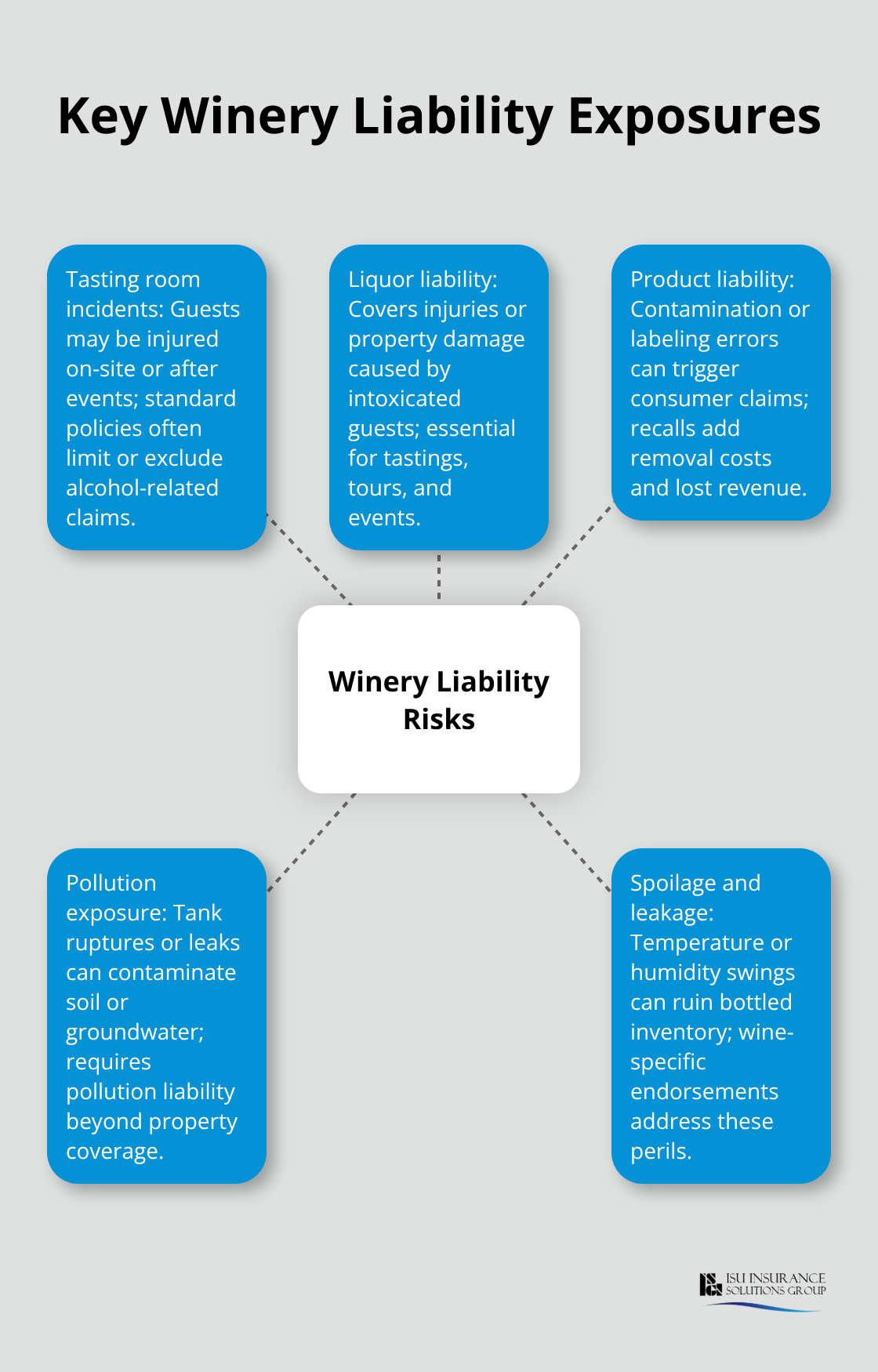
Liquor liability is non-negotiable in Washington. Your tasting room pours create exposure that a typical retail general liability policy excludes completely. Product liability goes beyond standard coverage too-wine contamination claims, cork taint affecting entire vintages, or oxidation from synthetic closures require specific product liability language that addresses the realities of wine production. Spoilage coverage protects perishable inventory from equipment failure, power outages, or mechanical breakdown, protecting up to $25,000 per occurrence in specialized winery programs. Wine leakage coverage addresses valve failures and tank ruptures that standard property policies treat as maintenance issues rather than covered losses.

Inventory Valuation and Equipment Protection Gaps

Your aging inventory represents months or years of work. Standard business property coverage values stock at cost, not at selling price. Specialized winery programs recognize that a barrel of premium Pinot Noir isn’t worth its production cost-it’s worth what a customer pays. Contingent transit coverage protects wine you’ve sold when a carrier causes loss during shipment, covering up to $50,000 per shipment in standard winery packages. Equipment coverage must extend to vineyard-specific assets: grape vines, stakes, trellises, harvested grapes, and the specialized storage structures like wine caves and cellars. A vineyard-specific cap of $1,000 per grape vine acknowledges replanting costs after frost or disease. Tank collapse and implosion coverage addresses a physical risk unique to winemaking-fermentation vessels can fail under pressure or structural stress.

Mobile Operations and Distribution Risks

Washington wineries that handle their own distribution face additional exposure. Mobile bottling equipment and harvest logistics introduce inland-marine exposures that require dedicated commercial auto and cargo coverage. Box trucks and mobile operations need protection that standard policies treat as secondary risks rather than core business assets. These distribution channels create gaps that generic coverage simply doesn’t address, which is why comparing quotes from carriers who understand winery operations becomes essential when you’re ready to move forward with actual coverage options.

Getting Your Winery Quote Right

Document Your Operation With Precision

Accuracy in winery insurance quotes starts with honest documentation of what you actually operate. Most agents request basic business information, but winery quotes demand specifics that generic intake forms miss entirely. You need to document your crush capacity in tons per year, fermentation tank volumes and materials, storage methods across different wine stages, and whether you age wine on-site or use third-party facilities.

Compact list of the key data points to gather for accurate winery insurance quotes. - Washington winery insurance quotes

List every piece of equipment that touches your product: bottling lines, labeling machines, temperature-control systems, mobile equipment for harvest. Note your tasting-room square footage, average daily visitors during peak season, and whether you host private events or weddings. Include details about your vineyard acreage, grape varieties, and whether you purchase additional grapes from other Washington producers. If you operate your own distribution or use mobile bottling, specify vehicle counts and annual miles.

Value Your Inventory at Market Price, Not Production Cost

Washington wineries often underestimate their inventory value because they think in production costs rather than market value. A 5,000-case inventory of premium Pinot Noir at $35 retail represents $175,000 in finished goods value, not the $8,000 production cost. Carriers need exact numbers for wine stored in different conditions: bulk tanks, barrels, bottles in climate-controlled cellars, and any wine caves.

Winery inventory valuation uses methods including first-in, first-out (FIFO), specific identification, average cost and last-in first-out (LIFO). Skagit County’s 2023 rebuild index showed insulated steel structures increased 19% year over year, so provide current replacement-cost estimates for your buildings and specialized structures like crush pads and catwalks. This data helps carriers calculate accurate property limits that reflect actual rebuilding expenses.

Select an Agent With Winery-Specific Expertise

The agent you choose shapes your quote quality fundamentally. An agent unfamiliar with Pacific Northwest agriculture will miss frost-damage risks that Washington State University research shows wind machines reduce by about 68% in late-spring freezes, potentially lowering your property premiums if you operate these protections. Carriers specializing in agribusiness and beverage operations understand that Washington produces over 17 million cases annually across 19 AVAs with distinct risk profiles.

When evaluating agents, ask specifically whether they’ve quoted wineries in your county and what carriers they work with for wine-specific programs. A quality independent agency accesses multiple carriers rather than pushing one standard template. Request quotes that itemize coverage for wine leakage, oxidation, contamination from cleaning solvents, and valuation methods so you can compare apples to apples across proposals.

Compare Coverage Details Across Proposals

Some carriers offer blanket limits with no co-insurance clauses that simplify budgeting, while others use per-occurrence caps that create hidden gaps. Ask whether peak-season coverage automatically increases by 25% to reflect your highest inventory levels, as some winery programs include this adjustment. Request specific dollar limits for spoilage coverage, contingent transit protection, and processors’ liability if you send grapes to contract crushers.

Percentage highlights: peak-season inventory bump, rebuild cost increases, and frost-risk reduction. - Washington winery insurance quotes

The Washington State Liquor and Cannabis Board and federal Alcohol and Tobacco Tax and Trade Bureau impose specific regulatory requirements that affect your coverage design, so confirm your agent understands compliance obligations beyond insurance. When you receive quotes, compare them side by side using a spreadsheet that lists deductibles, limits, exclusions, and premium costs for each coverage type. A $2,000 deductible with a $500,000 limit at a lower premium might expose you to more risk than a $1,000 deductible with the same limit at higher cost, depending on your loss history and risk tolerance.

With your quotes in hand and coverage details clearly mapped, you’re ready to evaluate the specific protection types that separate adequate winery insurance from policies that leave you exposed.

Key Coverage Types Washington Wineries Need

General Liability Protects Your Tasting Room and Vineyard Operations

General liability covers bodily injury and property damage claims that occur when guests visit your property. A slip on wet tasting-room floors, a guest struck by equipment during harvest, or damage to a visitor’s vehicle parked on your grounds all trigger general liability exposure. Washington wineries face a specific risk that most other businesses don’t: your tasting room operates under modified dram-shop liability rules, meaning your winery can face legal claims if you serve alcohol to intoxicated customers who then cause harm.

Your general liability limit should reflect both your tasting-room traffic and your vineyard size. A small boutique operation with 50 visitors weekly faces different exposure than a facility drawing 500 visitors daily during peak season. Most carriers recommend minimum limits of $1 million per occurrence and $2 million aggregate for Washington wineries, though larger operations or those hosting frequent events should carry $3 million or higher.

Wine Inventory and Spoilage Protection Covers Your Most Valuable Assets

Your stock represents months or years of production cost plus market value waiting to be realized. Equipment breakdown coverage specifically protects fermentation tanks, glycol chillers, bottling lines, and temperature-control systems from mechanical failure, power outages, and electrical damage. A single power outage lasting 48 hours in your climate-controlled barrel room can spoil thousands of gallons of aging wine.

Spoilage coverage reimburses up to $25,000 per occurrence in most winery programs, though you should verify this limit matches your actual inventory value at risk. Wine leakage coverage addresses tank ruptures, valve failures, and barrel seepage that standard property policies treat as maintenance rather than insured losses. A 5,000-gallon tank failure costs approximately $600,000 in lost revenue when you factor in the wine itself plus the production time invested.

Liquor Liability Creates Mandatory Coverage Requirements in Washington

Liquor liability insurance is mandatory in Washington because your tasting-room pours create exposure that general liability excludes entirely. Unlike a retail store selling sealed bottles, your staff serves alcohol directly to guests, creating legal liability if someone over-served claims injury or property damage after leaving your property. Washington’s modified dram-shop rule means your winery can face liability if you serve alcohol to intoxicated customers who then cause harm.

Liquor liability premiums vary based on your tasting-room volume, number of events hosted, and whether you serve food alongside wine. A high-volume tasting room with frequent private events and weddings pays significantly more than a production-focused winery with minimal hospitality. Carriers examine your pour counts, event frequency, and staff training records when calculating premiums.

Some policies include product liability within liquor liability coverage, protecting you against claims that your wine caused harm, though you should confirm this explicitly because wine contamination, cork taint, or oxidation defects can trigger expensive recalls and customer claims. Request quotes that specify coverage limits of at least $1 million per occurrence for liquor liability, with defense costs included outside your limit rather than reducing your coverage when legal costs mount.

Final Thoughts

Your winery’s protection depends on coverage that reflects your actual operation, not a generic business template. Washington winery insurance quotes must include general liability with adequate tasting-room limits, liquor liability meeting Washington’s dram-shop requirements, equipment breakdown protection for fermentation tanks and chillers, spoilage coverage for inventory at risk, wine leakage and contamination protection, and property insurance covering crush pads and climate-controlled storage. Verify that your agent quotes wine-specific valuation methods-selling price for finished stock, market value for irreplaceable wines, and three-year averages for stock in process.

Local expertise matters because Washington winery risks differ fundamentally from operations in other regions. Frost damage patterns, wildfire smoke taint exposure, and the specific liability landscape under Washington’s modified dram-shop rule require agents who understand Pacific Northwest agriculture and hospitality combined. An agent unfamiliar with your county’s rebuild costs, frost-protection practices, or local carrier preferences will miss opportunities to lower premiums through risk-management credits.

Contact ISU Insurance Solutions Group to request quotes that itemize wine leakage, oxidation, contamination, valuation methods, and blanket limits so you can compare protection levels across carriers. Our Woodinville location puts us directly in the heart of Washington wine country, with local agents who understand the specific coverage gaps that generic policies create. The difference between adequate coverage and exposure that costs thousands in uninsured losses often comes down to working with agents who actually understand winery operations.

The information provided in this blog is for general informational purposes only and does not constitute legal, financial, or insurance advice. Coverage options, terms, and availability may vary. Please consult with a licensed professional for advice specific to your situation.
Personal Auto Insurance Oregon: What Drivers Should Know

Oregon drivers face a complex insurance landscape with state-mandated requirements and optional coverage choices that directly impact protection and costs. Getting personal auto insurance in Oregon right means understanding both what’s legally required and what makes financial sense for your situation.

We at ISU Insurance Solutions Group help drivers navigate these decisions by breaking down coverage types, rate factors, and practical strategies for finding affordable policies. This guide walks you through everything you need to know to make informed choices about your auto insurance.

Oregon Auto Insurance Requirements and Coverage Types

State-Mandated Minimum Coverage

Oregon law mandates that every driver carry minimum liability coverage of 25/50/20, meaning $25,000 per person and $50,000 per accident for bodily injury, plus $20,000 for property damage. You also need $15,000 in Personal Injury Protection per person and uninsured motorist coverage at 25/50. Driving without these minimums is illegal and can result in fines, license suspension, and SR-22 requirements lasting up to three years.

Visual summary of Oregons minimum liability, PIP, uninsured motorist requirements, and penalties for noncompliance - Personal auto insurance Oregon

State minimums are genuinely inadequate for real-world protection. A single serious accident can easily exceed these limits, leaving you personally liable for medical bills, lost wages, and vehicle repairs. Higher limits like 100/300/100 or 250/500/250 cost only modestly more than minimums while providing substantially better protection. According to data from Quadrant Information Services, the difference between minimum and full coverage in Oregon averages roughly $1,280 annually, but that gap narrows significantly when you compare minimum coverage to higher liability limits alone.

Physical Damage Coverage for Your Vehicle

Comprehensive and collision coverage protects your own vehicle rather than others, which is why lenders require these when you finance or lease a car. Comprehensive covers theft, weather, vandalism, and animal strikes, while collision handles accidents with other vehicles or objects. These aren’t legally required if you own your car outright, but skipping them is financially risky.

The real decision involves your deductible: raising it from $250 to $500 or $1,000 substantially lowers your premium, but you pay that amount out-of-pocket when you file a claim. This trade-off works well if you have emergency savings to cover a higher deductible, but it creates real financial strain if an accident happens and you lack those reserves.

Protection Against Uninsured Drivers

Uninsured motorist coverage protects you if an uninsured or hit-and-run driver causes an accident. Given that uninsured drivers pose a genuine risk on Oregon roads, this coverage deserves serious consideration even though it’s optional. Uninsured motorist property damage is also optional but worth evaluating, especially if you drive a vehicle where repair costs might exceed your deductible anyway.

These optional coverages matter because they fill gaps that state minimums leave wide open. Once you understand what Oregon requires and what optional protections actually serve your situation, the next step involves recognizing which factors most heavily influence what you’ll actually pay for that coverage.

What Drives Your Auto Insurance Rates in Oregon

Your Driving Record Sets the Foundation

Your driving record is the single most powerful factor determining what you pay for auto insurance in Oregon, and the impact is severe. A single at-fault accident raises your premium by roughly 49%, according to data from Quadrant Information Services, while a speeding ticket adds about 24%. A DUI conviction increases rates by 54% to 86% compared to a clean record. Insurers review your driving history from the past three years, pulling records from the Oregon DMV and other states, so one bad decision affects your wallet for years.

Defensive driving saves money far more effectively than any discount or policy adjustment ever will. If you’ve already accumulated violations, an approved defensive driving course can help offset rate increases and demonstrates commitment to safer driving.

Credit Score Creates Massive Rate Gaps

Credit score matters almost as much as your driving record, and the gap between poor and excellent credit is staggering. Drivers with poor credit pay roughly 78% more than Oregon’s state average, while excellent credit lowers costs by about 15% below average.

Percent differences in Oregon auto insurance costs for poor vs. excellent credit

This means a driver with poor credit might pay $303 monthly while someone with excellent credit on the same policy pays $139-a difference of $1,968 annually.

Improving your credit score produces measurable savings over time. Even modest improvements in your credit profile can lower your monthly payments substantially, making this one of the few rate factors you can actively control.

Vehicle Type and Age Shape Your Costs

Vehicle type significantly influences rates; a BMW 330i costs around $2,548 per year for full coverage while a Toyota Prius runs about $2,148, and a Honda Odyssey roughly $1,883. Age creates dramatic rate variations too-a 25-year-old pays approximately $2,723 annually for full coverage while a 60-year-old pays roughly $1,906 for identical protection.

Young drivers face the harshest penalty; an 18-year-old on their own policy pays around $6,100 per year, making a parent’s policy substantially cheaper until you can demonstrate a clean driving record. These factors interact constantly, meaning your exact situation determines your exact rate.

Taking Control of What You Can Change

If you’re shopping for coverage and have multiple factors working against you (young age, recent ticket, lower credit score), focus on what you can control. Maintaining a clean driving record going forward and raising your deductible to lower premiums are concrete actions that produce measurable savings.

Understanding these rate drivers prepares you to shop strategically. The next step involves knowing where to find the most competitive quotes and which discounts actually move the needle on your final bill.

Finding the Best Rates Without Wasting Time

Compare Quotes Across Multiple Carriers

Shopping for auto insurance in Oregon means obtaining quotes from multiple carriers because rates vary wildly between insurers for identical coverage. Progressive offers Oregon’s most affordable rates for full coverage, while Country Financial averages about $172 monthly for the same protection. That difference makes quote comparison genuinely worth your effort. For minimum liability coverage, Travelers posts the lowest rates at roughly $56 per month compared to Country Financial at about $92-another significant gap that justifies spending 30 minutes to gather quotes from at least three carriers before you decide.

Leverage Discounts That Actually Save Money

Your credit score and driving record lock in your base rate, but discounts and deductible choices create the second layer of savings. Bundling auto with home insurance typically reduces your auto premium by 5-15%, while paying your full premium upfront rather than monthly often saves another 3-5%. Paperless billing discounts exist across most carriers, and Oregon offers a specific 55+ defensive driving discount worth pursuing if you qualify. Raising your collision and comprehensive deductible from $250 to $500 cuts premiums noticeably, though this strategy only works if you have emergency savings to cover that deductible after an accident.

Actionable discounts and deductible strategies that reduce Oregon auto insurance costs - Personal auto insurance Oregon

Adjust Your Deductible Strategy

The deductible you select directly impacts what you pay each month and what you owe when you file a claim. Higher deductibles reduce your premium substantially, but they create real financial strain if an accident happens and you lack emergency reserves. Try a $500 or $1,000 deductible only if you can actually afford to pay that amount out-of-pocket without hardship.

Monitor Rates and Re-Shop Annually

Rate changes happen constantly, and Oregon drivers should re-shop their coverage annually or after major life changes like moving, getting married, or purchasing a vehicle, since your current insurer’s renewal quote may no longer be competitive. Travelers tends to offer smaller rate increases after at-fault accidents compared to other major Oregon carriers, which matters if you’re rebuilding from a recent claim. Checking rates once per year takes minimal time and frequently uncovers savings you wouldn’t find otherwise.

Final Thoughts

Personal auto insurance in Oregon requires you to balance legal minimums with realistic protection for your situation. State-mandated coverage of 25/50/20 liability, $15,000 PIP, and 25/50 uninsured motorist protection keeps you legal, but these limits leave you exposed to substantial out-of-pocket costs after a serious accident. Higher liability limits like 100/300/100 cost only modestly more while protecting your assets far better, and raising your deductible from $250 to $500 or $1,000 meaningfully reduces your monthly premium if you have emergency savings to cover that amount.

Your driving record and credit score determine your base rate more than any other factor. A clean driving record saves you thousands annually compared to someone with recent violations, while excellent credit cuts costs roughly 15% below Oregon’s average. Comparing quotes from at least three carriers typically reveals rate differences exceeding $100 monthly for identical coverage, making this effort genuinely worthwhile, and bundling auto with home insurance, paying your premium upfront, and pursuing available discounts add another layer of savings without reducing your protection.

Rate changes happen constantly, so reviewing your coverage annually or after major life changes prevents you from overpaying. We at ISU Insurance Solutions Group help Oregon drivers navigate personal auto insurance decisions with personalized quotes from multiple carriers and hands-on guidance tailored to your specific situation. Contact us today to compare your options and secure the right policy for your circumstances.

The information provided in this blog is for general informational purposes only and does not constitute legal, financial, or insurance advice. Coverage options, terms, and availability may vary. Please consult with a licensed professional for advice specific to your situation.
Commercial Auto Insurance Washington: Rates, Regulations, and Coverage

Running a business in Washington means understanding your commercial auto insurance obligations. The state has specific requirements that differ from other regions, and getting them wrong can cost you thousands in fines or leave your company exposed.

We at ISU Insurance Solutions Group help Washington business owners navigate these rules while finding coverage that actually fits their needs. This guide breaks down rates, regulations, and the protection your fleet requires.

What Determines Your Commercial Auto Insurance Costs in Washington

Washington commercial auto insurance averages about $206 per month or $2,469 annually according to Insureon data, but this number tells only part of the story. Your actual premium depends on factors specific to your operation, and understanding them gives you real leverage to control costs.

How Your Fleet Characteristics Shape Your Rate

The number of vehicles you own directly impacts your rate because insurers view fleet size as a risk indicator. A single delivery van costs far less to insure than five service trucks. Vehicle type and value matter significantly too-a heavy-duty truck rated for cargo transport carries different risk than a standard pickup used occasionally for business. How you use these vehicles shapes your premium more than most owners realize. A contractor who hauls equipment daily faces steeper rates than one who primarily drives to job sites. Your location within Washington also influences pricing; urban areas with higher accident rates and theft typically cost more than rural regions.

The Role of Driver Records and Claims History

Claims history and driver records are non-negotiable factors that insurers scrutinize closely. One at-fault accident or a driver with traffic violations can spike your premium by hundreds annually. Your chosen deductibles and coverage limits directly affect what you pay monthly-higher deductibles lower premiums but increase out-of-pocket costs when claims happen.

Understanding Washington’s Rate Landscape

Washington’s insurance market operates differently than most states because the Office of the Insurance Commissioner reviews and approves all rate filings before insurers can implement them. This regulatory oversight means rates here stay relatively competitive compared to national averages. However, this does not mean all insurers price identically. Rates vary substantially between carriers, which is why shopping multiple quotes matters far more than accepting the first offer.

Some insurers specialize in specific industries like landscaping or construction and offer better pricing than generalists. Your best strategy involves requesting quotes from multiple carriers to identify which one values your particular risk profile most favorably. Request written explanations when comparing quotes so you understand exactly what drives price differences. Starting June 1, 2027, insurers must provide written explanations when your renewal premium increases by 10 percent or more, showing you the main reasons for the jump. This transparency requirement gives you concrete data to challenge unjustified increases or shop competitively. If you disagree with a rate increase, contact the Washington Office of the Insurance Commissioner’s Consumer Advocacy line at 800-562-6900 during business hours Monday through Friday, or use their online Ask an Insurance Expert form for assistance.

Practical Steps to Reduce Your Premium

Increasing your deductible from $500 to $1,000 typically reduces your premium by 10 to 15 percent, making this the fastest way to lower costs if you have adequate cash reserves for claims. Installing safety devices like GPS tracking, dash cameras, or anti-theft systems on your vehicles qualifies you for discounts with many carriers because these reduce claim frequency. Bundling your commercial auto policy with other business coverage like general liability or property insurance often yields 10 to 20 percent discounts across your entire account.

Maintain clean driver records across your entire fleet because one driver’s violations can increase rates for your entire operation. Remove drivers with poor records from your policy or require them to complete defensive driving courses to demonstrate risk management to insurers. Usage-based insurance programs that track actual mileage and driving behavior can save money if your vehicles sit idle frequently or drivers operate safely. The key is finding an insurer willing to credit your specific operational practices rather than applying generic rates.

Checklist of practical steps Washington businesses can take to reduce commercial auto insurance premiums. - Commercial auto insurance Washington

Now that you understand what shapes your costs, the next section covers the specific liability requirements Washington imposes on all commercial operators and how these regulations directly impact what coverage you must carry.

Washington’s Minimum Coverage Requirements and What They Actually Mean

Washington imposes non-negotiable minimum liability coverage that every commercial vehicle must carry: $25,000 per person and $50,000 per accident for bodily injury liability, plus $10,000 per accident for property damage liability. These minimums apply whether you operate a single service vehicle or manage a fleet of twenty trucks. Many business owners believe these minimums sufficiently protect them, but this assumption exposes your company to substantial financial risk. If your driver causes an accident injuring two people with $35,000 in damages each, your $25,000 per-person limit covers only 71 percent of actual costs. The injured parties can pursue your business assets for the remaining $45,000, which is why higher limits than Washington’s legal minimum make financial sense. A $100,000 per-person limit costs only marginally more than the minimum but shields your business from catastrophic liability claims that could force bankruptcy.

How Washington’s Regulatory Framework Differs from Other States

Washington’s regulatory environment differs sharply from other states because the Office of the Insurance Commissioner mandates that insurers must carry primary coverage during any period your driver is logged into a commercial transportation platform or actively provides a prearranged ride. This means your commercial auto policy must provide continuous protection, not just during active customer service periods. If you operate a rideshare or delivery service, your primary policy must include combined single limit liability of $1,000,000 during prearranged rides, plus underinsured motorist coverage of $100,000 per person and $300,000 per accident. These requirements exist because Washington law places the burden of claims directly on your business if your insurance lapses at any moment during commercial service.

Coverage Beyond the Minimum That Protects Your Operation

Washington does not require Personal Injury Protection or uninsured motorist coverage for standard commercial operations, but adding these protections is strategically sound. PIP coverage covers your employees’ medical expenses regardless of fault, preventing workers compensation claims from mounting, while underinsured motorist protection safeguards your operation when at-fault drivers carry insufficient insurance. These optional coverages function as financial buffers that absorb costs your minimum liability limits cannot reach. The difference between carrying only minimums and adding these protections often amounts to just $50 to $100 monthly-a small price against exposure that could devastate your business.

Deductible Selection and Its Impact on Your Budget

Your chosen deductible directly impacts your operational budget because you pay this amount out-of-pocket before insurance begins coverage. Selecting a $2,500 deductible instead of $500 can reduce your annual premium by 15 to 25 percent, but only if your cash reserves can absorb unexpected repair costs without disrupting operations. Lower deductibles ($500–$1,000) suit businesses with tight cash flow or those operating high-value vehicles, while higher deductibles work for established operations with substantial reserves. Test your deductible choice against your worst-case scenario: if a vehicle suffers major damage, can your business cover that deductible and still meet payroll and vendor obligations?

Understanding these regulatory requirements and coverage options positions you to make informed decisions about protection levels. The next section examines the specific types of commercial auto coverage available and which ones your particular business actually needs.

What Coverage Your Washington Business Actually Needs

Understanding Liability Coverage and Its Real Limits

Liability coverage forms the legal foundation of your commercial auto policy, but most Washington business owners misunderstand what it actually protects. Your liability coverage pays for injuries and property damage your driver causes to others-not damage to your own vehicle or injuries to your employees. Washington requires minimum liability coverage of at least $50,000 per person for bodily injury and $100,000 per accident. The injured party sues your business directly, and your liability limit becomes the financial ceiling of protection your company receives. If you cause an accident with $150,000 in damages but carry only the minimum, your business pays the remaining amount from operating capital or faces asset seizure.

Carrying limits of at least $100,000 per person and $300,000 per accident makes financial sense-the premium difference between minimums and these higher limits typically runs $30 to $60 monthly. This modest increase shields your business from catastrophic claims that could force bankruptcy.

Collision and Comprehensive Coverage for Vehicle Protection

Collision coverage pays to repair or replace your vehicles after accidents regardless of fault, while comprehensive coverage handles theft, vandalism, weather damage, and fire. These coverages are optional in Washington but essential if your vehicles have financed loans or lease obligations-lenders require them. The deductible you select for collision and comprehensive directly affects your monthly cost; a $1,000 deductible costs substantially less than $250, but you absorb that $1,000 out-of-pocket when damage occurs.

For vehicles worth less than $8,000, collision and comprehensive often cost more annually than the vehicle’s replacement value, making these coverages uneconomical unless financing requires them. Calculate your vehicle’s actual value before committing to these optional protections.

Medical Payments and Motorist Coverage for Accident Protection

Medical payments coverage covers employee and passenger medical expenses after an accident regardless of fault, protecting your business from workers compensation claims escalating when employees suffer injuries in company vehicles. Uninsured motorist coverage protects your operation when at-fault drivers carry no insurance-a reality affecting roughly 12 percent of Washington drivers according to insurance industry data. Underinsured motorist protection covers damages exceeding the at-fault driver’s policy limits, preventing your business from absorbing shortfalls when settlements fall short of actual costs.

Percentage highlights showing uninsured drivers, explanation threshold, and example coverage shortfall in Washington. - Commercial auto insurance Washington

These optional coverages function as financial buffers that absorb costs your minimum liability limits cannot reach. The difference between carrying only minimums and adding these protections often amounts to just $50 to $100 monthly.

Specialized Coverage for Specific Business Operations

Loading and unloading coverage protects cargo and materials during transport, which standard policies explicitly exclude; contractors and delivery services absolutely need this if cargo damage represents a financial threat. Non-owned vehicle coverage extends protection to rental vehicles or employee personal vehicles used for business purposes, eliminating coverage gaps when your fleet cannot handle all business transportation needs. Towing and labor coverage reimburses roadside assistance costs, which matters for service businesses operating vehicles in remote areas where professional towing reaches $500 to $1,200 per incident.

Bobtail coverage insures tractors operating without trailers during non-hauling periods, critical for owner-operators who occasionally drive for personal use. The coverage combination that protects your business depends entirely on your operation’s specific risks, which is why generic policies from online quotes often miss critical gaps. An independent agent can identify which specialized coverages align with your actual operational risks rather than applying standard bundles that include unnecessary protection while leaving dangerous gaps.

Hub-and-spoke diagram showing specialized commercial auto coverages that address common gaps for Washington businesses.

Final Thoughts

Commercial auto insurance in Washington requires you to balance regulatory compliance with practical protection that matches your actual business risks. The minimum liability limits Washington mandates-$25,000 per person and $50,000 per accident for bodily injury-leave your business financially exposed when accidents exceed these thresholds, yet higher limits cost only marginally more and prevent catastrophic claims from forcing you to liquidate business assets. Your deductible selection, vehicle characteristics, driver records, and operational practices directly determine what you pay annually, giving you concrete levers to control costs without sacrificing protection.

The regulatory framework Washington enforces through the Office of the Insurance Commissioner creates transparency requirements that benefit your business. Starting June 1, 2027, insurers must explain premium increases of 10 percent or more in writing, giving you documented reasons to challenge unjustified hikes or shop competitively. Request quotes from multiple carriers because rates vary substantially between insurers, and some specialize in your specific industry and risk profile.

Getting the right commercial auto insurance Washington coverage means moving beyond generic online quotes that apply standard bundles missing your actual operational risks. Specialized coverages like loading and unloading protection, non-owned vehicle coverage, or bobtail insurance address specific business needs that standard policies explicitly exclude. ISU Insurance Solutions Group serves Washington and Oregon businesses since 1983, offering one-call multi-carrier quotes through partnerships with 20+ carriers, and their local agents understand Pacific Northwest operations to deliver personalized coverage that adapts to your specific risks and budget constraints.

The information provided in this blog is for general informational purposes only and does not constitute legal, financial, or insurance advice. Coverage options, terms, and availability may vary. Please consult with a licensed professional for advice specific to your situation.