Craft Brewery General Liability Essentials for Small Breweries

Craft breweries face real liability risks that most owners underestimate. From contaminated products to accidents during tastings, one claim can threaten your entire operation.

We at ISU Insurance Solutions Group work with breweries across the Pacific Northwest, and we’ve seen how the right general liability coverage makes the difference between a manageable incident and a business-ending lawsuit. This guide walks you through what protection you actually need.

Coverage Gaps That Put Craft Breweries at Risk

Your general liability policy has limits. Understanding where those limits fail protects your brewery from catastrophic exposure. Most owners assume GL covers everything-it doesn’t. The gap between what you think you’re protected against and what your policy actually covers is where claims become devastating.

Contaminated Beer and Product Defects Slip Through Standard Coverage

Contaminated beer creates liability that general liability policies routinely exclude. If a customer gets sick from a spoiled batch or discovers foreign material in a can, they will sue. Your standard GL policy won’t cover it because product liability insurance protects against claims arising from injuries or illnesses caused by contaminated or defective beer, but this coverage is separate from standard GL. A single product recall-whether from mold, bacterial contamination, or packaging errors-forces you to absorb disposal costs, customer notifications, and replacement inventory out of pocket.

The Beer Institute reports that over 350,000 kegs are stolen annually, costing roughly $50 million in losses across the industry. While keg theft represents a different exposure, it shows how much breweries lose when they lack comprehensive coverage. Without specific product recall coverage or spoilage protection, you pay for something that could have been insured.

Taproom and Event Injuries Reach Your GL Limits Fast

Your tasting room is a liability magnet. Slippery floors from spilled beer, tangled electrical cords near seating areas, and crowded events create conditions for serious injuries. A customer who trips over equipment and breaks a leg will have a claim that reaches your GL limits quickly. Medical expenses alone for a severe injury exceed $100,000 before legal costs enter the picture.

Events multiply your exposure. If you host weddings, fundraisers, or private parties, your standard GL policy may exclude large gatherings or require special event endorsements that you don’t have. NFPA occupancy guidelines determine how many people your space can safely hold, but many breweries ignore this and pack in crowds without adjusting their insurance. An injury during an overcrowded event gives your insurer grounds to deny the claim entirely, leaving you liable for the full amount. Liquor liability is a separate coverage that GL doesn’t touch-if alcohol is served and someone leaves your event intoxicated and causes harm, GL won’t defend you.

Equipment and Inventory in Transit Lack Protection

Once your beer leaves the brewery, GL coverage stops protecting it. Transit to distributors, retailers, or festivals requires inland marine or transit coverage-something most standard policies don’t include. A delivery truck hit by another vehicle destroys your inventory with no recovery available. Kegs damaged during loading represent a total loss you absorb alone.

Hub-and-spoke infographic showing major liability gaps not covered by standard general liability for U.S. craft breweries

Equipment breakdown during production creates another gap. A glycol chiller or canning line costs six figures to replace. Equipment failure without breakdown coverage means you absorb the entire replacement cost plus lost production time. Property damage liability during your own operations covers damage you cause to someone else’s property, but only up to your limits. Damage to a distributor’s facility or a retailer’s equipment caused by your delivery process can quickly exceed standard limits and leave you personally responsible.

These gaps explain why choosing the right coverage requires more than a standard GL policy. The next section walks you through what your brewery actually needs to stay protected.

What Craft Breweries Need in General Liability Coverage

Coverage Limits That Match Your Actual Exposure

A standard GL policy with $1,000,000 in coverage sounds adequate until a serious injury happens. For breweries in Washington and Oregon, that limit evaporates quickly when medical bills, legal defense costs, and court awards stack up. A customer who suffers a spinal injury from a fall in your tasting room will generate $200,000 to $500,000 in immediate medical expenses before litigation costs arrive.

Percentage chart showing recommended percentage add-ons for brewery general liability limits in the U.S. - Craft brewery general liability

If your GL limit sits at $1,000,000, one major claim consumes half your coverage with nothing left for additional incidents or punitive damages.

Breweries that operate taprooms or host events should carry a minimum of $2,000,000 in GL coverage, with $1,000,000 per occurrence and $2,000,000 aggregate. Breweries that host frequent events, weddings, or large gatherings should push toward $3,000,000 to $5,000,000 in total limits. Your actual number depends on how many people you pack into your space and how often.

Calculate potential medical costs for your worst-case injury scenario-spinal cord damage, traumatic brain injury, or permanent disability-then add 50 percent for legal costs. That figure tells you what your limit should be. In Washington, regulators require Commercial General Liability insurance with minimum limits of $1,000,000 before you receive a license.

Event and Tour Coverage That Actually Protects You

Events and tours require specific protection that standard GL policies routinely exclude or severely limit. Your policy likely contains language that caps coverage during large gatherings or excludes events altogether. If you host a wedding with 150 guests and someone gets hurt, your insurer can deny the claim based on occupancy limits or event-related exclusions buried in the fine print.

A special events endorsement or separate special events policy explicitly covers the types of gatherings you run. This endorsement must list your brewery as the primary insured and include liquor liability protection if alcohol flows during the event. Without this protection, you absorb the full cost of any injury claim that occurs during your events.

Equipment and Inventory Protection Beyond Standard GL

Brewery-specific endorsements for equipment and inventory protect against equipment breakdown and spoilage losses that GL ignores. A glycol chiller failure during fermentation costs $150,000 to replace plus thousands in lost product. Equipment breakdown coverage reimburses replacement costs and covers extra expenses to keep production moving.

Spoilage and contamination coverage protects your inventory if temperature swings, power outages, or contamination destroy a batch. These endorsements transform your GL policy from a liability-only tool into a comprehensive protection plan that actually reflects how breweries operate and where they lose money. The right combination of coverages means you recover from equipment failures and contamination incidents instead of absorbing losses that threaten your operation.

Your GL policy forms the foundation of your brewery’s protection, but it only works when you pair it with the right endorsements and limits. The next section shows you how to evaluate carriers and policies to find coverage that actually matches your brewery’s specific risks.

How to Choose the Right Carrier and Policy

Match Coverage Limits to Your Production and Distribution Scale

Start with your production volume and distribution footprint. A brewery producing 500 barrels annually with sales limited to a three-county area faces different exposures than one producing 5,000 barrels and shipping across multiple states. Your GL limits should scale with your reach. A smaller operation with taproom-only sales needs $1,000,000 to $2,000,000 in coverage, while breweries distributing regionally should carry at least $1 million per incident with consideration for higher limits if events are frequent.

Calculate your actual risk with real numbers. Document how many people visit your facility monthly, how many events you host annually, and whether your distribution involves third-party logistics. Write these numbers down. Most brewery owners guess at their exposure rather than measuring it, which leads to underinsurance.

Your GL limit must account for worst-case medical scenarios specific to your operation. A customer who suffers a spinal cord injury from a fall in your tasting room could generate $300,000 to $1,000,000 in lifetime medical costs. Add legal defense expenses of $150,000 to $250,000, and your $1,000,000 limit disappears entirely. Breweries that host events should add 30 to 50 percent to their base limit because event claims tend toward higher damages.

If you operate in Washington, state licensing requirements mandate $1,000,000 minimum GL coverage before you receive approval. Oregon has similar expectations, though enforcement varies by county. Check your specific jurisdiction’s requirements before finalizing your limits.

Select Carriers With Actual Brewery Experience

The carrier you choose matters enormously because not all insurers understand brewery-specific risks equally. Many standard commercial carriers treat breweries like generic manufacturing operations and miss the nuances of taproom liability, equipment breakdown, and product contamination. You need a carrier with actual brewery experience who understands that a canning line failure isn’t just equipment damage-it’s lost production time, spoiled inventory, and potential customer defaults.

Travelers offers IndustryEdge craft brewery insurance specifically designed for food and beverage manufacturers, with specialized knowledge of equipment breakdown and spoilage coverage. Philadelphia Insurance, Nationwide, and Auto-Owners also serve brewery clients, though their depth of brewery expertise varies. An independent agency can quote multiple carriers in a single conversation, which saves you weeks of phone calls and ensures you compare apples to apples.

Demand Transparency on Policy Exclusions and Endorsements

When comparing carriers, demand transparency on what each policy excludes. Most GL policies contain standard exclusions for product liability, liquor liability, and equipment breakdown-you already know this. What matters is whether the carrier offers affordable endorsements to fill those gaps or forces you to purchase separate policies at inflated rates. A carrier charging $500 to add spoilage coverage through an endorsement is far superior to one requiring a $2,000 separate policy.

Ask each carrier specifically whether their standard GL excludes events and whether event coverage requires an endorsement or separate policy. Ask whether equipment breakdown, spoilage, and contamination coverage are available as add-ons. Ask whether liquor liability coverage is available through the same policy or requires a separate quote. Request sample policy language showing exactly what’s covered and what’s excluded-don’t accept summaries or verbal explanations.

Read the exclusions section carefully, not the summary. Exclusions buried in subsections often contradict what sales materials promise. A policy that claims to cover product liability but excludes contamination discovered more than 30 days after purchase creates a gap that destroys your protection in real claims.

Align Coverage Structure to Your Actual Operations

Your distribution method directly impacts which endorsements you need. If you distribute through wholesalers only, your transit exposure is lower than if you deliver directly to retailers or consumers. Direct distribution requires inland marine or transit coverage to protect beer in transit and during loading. If you operate a taproom with events, special events liability becomes non-negotiable. If you operate a production facility only with no taproom, your event exposure disappears but your equipment breakdown exposure increases.

Match your coverage structure to how your brewery actually operates, not how you think it operates. Many owners purchase coverage based on assumptions, then discover gaps when claims arise. A detailed risk assessment before you finalize any quote protects you from this mistake-walk through your facility, document every potential injury point, list every piece of equipment over $50,000, and describe your event schedule in detail.

Checklist of brewery risk assessment actions to align insurance coverage with real operations - Craft brewery general liability

That assessment becomes the foundation for your coverage decisions and ensures you don’t purchase unnecessary coverage while missing critical gaps.

Final Thoughts

Craft brewery general liability coverage only protects your business when it matches your actual operations. Standard GL policies leave breweries exposed because they fail to account for taproom injuries, equipment failures, and product recalls. Adding the right endorsements and limits transforms your policy from a liability-only document into genuine protection that pays claims when they matter most.

An independent agent with brewery experience can quote multiple carriers in one conversation and compare exclusions side by side. You shouldn’t spend weeks calling carriers individually or guessing at coverage limits. A knowledgeable agent eliminates that burden and ensures you purchase adequate coverage without paying for unnecessary add-ons.

Contact ISU Insurance Solutions Group to discuss your brewery’s specific coverage needs and receive a multi-carrier quote that compares options side by side. Our local agents understand Pacific Northwest brewery operations and the liability exposures you face. Your brewery’s survival depends on having the right protection in place today.

The information provided in this blog is for general informational purposes only and does not constitute legal, financial, or insurance advice. Coverage options, terms, and availability may vary. Please consult with a licensed professional for advice specific to your situation.
Commercial Vehicle Fleet Insurance: Protect Your Entire Fleet

Managing multiple vehicles across your business creates real exposure. One accident, one liability claim, or one uninsured incident can drain your budget fast.

Commercial vehicle fleet insurance consolidates coverage for all your vehicles under one policy, cutting through the complexity of managing separate policies. We at ISU Insurance Solutions Group help businesses like yours find fleet solutions that actually reduce costs while strengthening protection.

What Your Fleet Insurance Actually Covers

Fleet insurance protects your entire operation against the specific risks your vehicles face on the road. Bodily injury liability covers medical expenses and legal costs when your driver injures someone else, while property damage liability handles damage to other people’s vehicles or property. Physical damage coverage-split into collision and comprehensive-protects your own vehicles from accidents and non-collision events like theft or weather damage. Cargo coverage becomes essential if you transport goods, protecting freight from loss or damage during transit. Uninsured motorist coverage fills a critical gap: roughly 12.6% of drivers nationwide carry no insurance, so this protection shields you when an uninsured or underinsured driver causes an accident. Medical payments coverage handles your drivers’ medical bills regardless of fault, reducing litigation risk. Non-owned auto coverage extends protection when employees use personal vehicles for business purposes, a real exposure many fleet operators overlook.

How Fleet Policies Simplify Your Operations

Individual vehicle policies require you to manage separate renewals, claims, and coverage limits for each vehicle-an administrative burden that grows quickly as your fleet expands. Fleet policies consolidate everything under one policy, meaning one renewal date, one claims process, and uniform liability limits across all vehicles. This simplification matters: you avoid coverage gaps that emerge when individual policies have different limits or exclusions. Premiums typically run around $1,000 per vehicle annually, though your actual cost depends on vehicle type, driver records, mileage, and location. Larger fleets enjoy lower per-vehicle premiums due to volume, while smaller fleets with two to five vehicles still benefit from better rates than individual policies. You can add or remove vehicles anytime without rewriting the entire policy, giving you flexibility as your operations change. Most carriers require at least two vehicles to qualify for fleet coverage, making this option accessible to small and mid-sized operations.

Which Vehicles Qualify for Fleet Coverage

Fleet insurance covers light vehicles like pickup trucks and vans, heavy trucks including semi-tractors and box trucks, and mixed fleets combining different vehicle types under one policy. Specialized vehicles such as those carrying cargo, equipment, or hazardous materials qualify, though cargo coverage and higher liability limits may be necessary. Newer vehicles with advanced safety features often qualify for lower premiums due to better crash protection and theft deterrents. Older vehicles still qualify but typically cost more to insure due to reduced safety technology and higher repair expenses. Most carriers allow you to mix vehicle types within a single policy-delivery vans alongside heavy trucks-without requiring separate policies.

Compact list of vehicle eligibility points for commercial fleet insurance.

The key requirement is that all vehicles must serve business purposes; personal-use vehicles do not qualify for commercial fleet coverage.

Coverage Limits and Your Specific Needs

Your fleet’s risk profile determines which coverage limits you actually need. A delivery operation with light vehicles faces different exposure than a construction company with heavy equipment trucks or a logistics firm transporting high-value cargo. Review your coverage annually to verify that bodily injury, property damage, and uninsured motorist limits match your actual exposure. Consider hired and non-owned auto coverage if your team regularly uses rental vehicles or personal cars for business tasks. Tailor your policy using your safety data and driver records rather than accepting default insurer recommendations. This approach-selecting coverage that reflects your real operations-sets the foundation for managing your fleet’s total risk exposure.

How Fleet Insurance Cuts Your Operating Costs

Fleet insurance reduces your per-vehicle premium significantly compared to insuring each vehicle separately. On average, fleet insurance costs around $1,000 per vehicle annually, but this figure masks the real savings: larger fleets pay substantially lower per-vehicle rates due to volume discounts that individual policies simply cannot match. A five-vehicle fleet pays less per vehicle than a two-vehicle operation, and a twenty-vehicle fleet pays even less. Your actual premium depends on your specific risk profile-vehicle type, driver records, annual mileage, and location all factor in-but the consolidation itself creates immediate administrative savings.

One Policy Replaces the Administrative Burden

Instead of managing separate renewal dates, separate claims files, and separate coverage limits across multiple policies, you handle one renewal, one claims process, and uniform liability limits. Managing ten individual policies means ten opportunities for coverage gaps, ten different deductibles to track, and ten separate communications with insurers. One consolidated fleet policy eliminates that chaos. You can adjust coverage instantly as your fleet changes, adding or removing vehicles without rewriting entire policies. The bodily injury loss costs rose 9.2% from 2023 to 2024 according to the LexisNexis Risk Auto Insurance Trends Report, driven by uninsured motorists and medical cost inflation, making consolidated coverage and proper liability limits more important than ever.

Data-Driven Negotiations Lower Your Renewal Rates

When you consolidate your fleet, you also consolidate your negotiating power. Insurers recognize that managing one large account costs them less than managing multiple small accounts, and they price accordingly. You can share your fleet’s safety data-telematics information, maintenance logs, driver training records-with your carrier to demonstrate risk management and negotiate better renewal rates. This data-driven approach works: insurers reward fleets that show measurable safety improvements and compliance history.

Claims Processing Moves Faster With One Carrier

A single fleet policy means one claims department, one adjuster relationship, and one streamlined process when incidents occur. Compare this to managing claims across multiple carriers: you might wait for different adjusters, navigate conflicting coverage interpretations, and struggle to coordinate repairs across separate policies. With fleet insurance, your claims experience becomes predictable and faster. Most carriers offer 24/7 claims support and can coordinate repairs through established networks, minimizing vehicle downtime and keeping your operations running. You report the incident once, provide documentation once, and track one claim file rather than juggling multiple carriers’ systems. Every day a vehicle sits in the shop is revenue you do not generate, so faster claims processing means faster repairs and faster return to service.

Uniform Coverage Eliminates Liability Gaps

You also reduce your liability exposure significantly by consolidating coverage. When you maintain separate policies with different liability limits, you create gaps where a serious incident could exceed one policy’s coverage while leaving another policy underutilized. A consolidated fleet policy with uniform bodily injury and property damage limits across all vehicles means you have consistent protection regardless of which vehicle is involved in an accident. This uniform protection is especially critical given that large trucks account for about 9% of all vehicles involved in fatal crashes according to industry data. If your fleet includes heavy trucks, your liability exposure is substantial, and having adequate, consistent coverage across all vehicles protects your business from catastrophic losses. Speeding accounts for 28% of traffic fatalities, and 29% of speeding drivers in fatal crashes lacked valid licenses, according to the LexisNexis report.

Key percentages that impact commercial fleet insurance risk and coverage decisions in the U.S. - Commercial vehicle fleet insurance

These statistics highlight why maintaining strong coverage limits matters: one serious incident can generate litigation costs far exceeding your premium savings. A consolidated fleet policy with proper limits prevents that exposure from bankrupting your operation.

The real cost of fleet insurance extends beyond premiums-it includes the risk management strategies that lower your claims frequency and demonstrate safety leadership to insurers.

Finding the Right Fleet Insurer for Your Operation

Selecting a fleet insurance carrier matters far more than chasing the lowest quote. Your insurer becomes a partner in managing your fleet’s risk, and the wrong choice costs you in claims delays, coverage gaps, and missed opportunities to reduce premiums through data-driven safety programs. Start by identifying carriers that specialize in commercial auto and understand your specific industry. A carrier experienced in construction fleets thinks differently about risk than one focused on delivery services or logistics operations. Ask potential insurers directly: what discounts do they offer for telematics adoption, driver training programs, and safety certifications? Carriers like Progressive offer 24/7 claims support and extensive truck repair networks, which matters when you need to minimize downtime. The real differentiator is whether your carrier will actively engage with your safety data. Some insurers simply collect telematics information and ignore it; the best ones use that data to identify high-risk drivers, reward safety improvements at renewal, and provide actionable coaching recommendations.

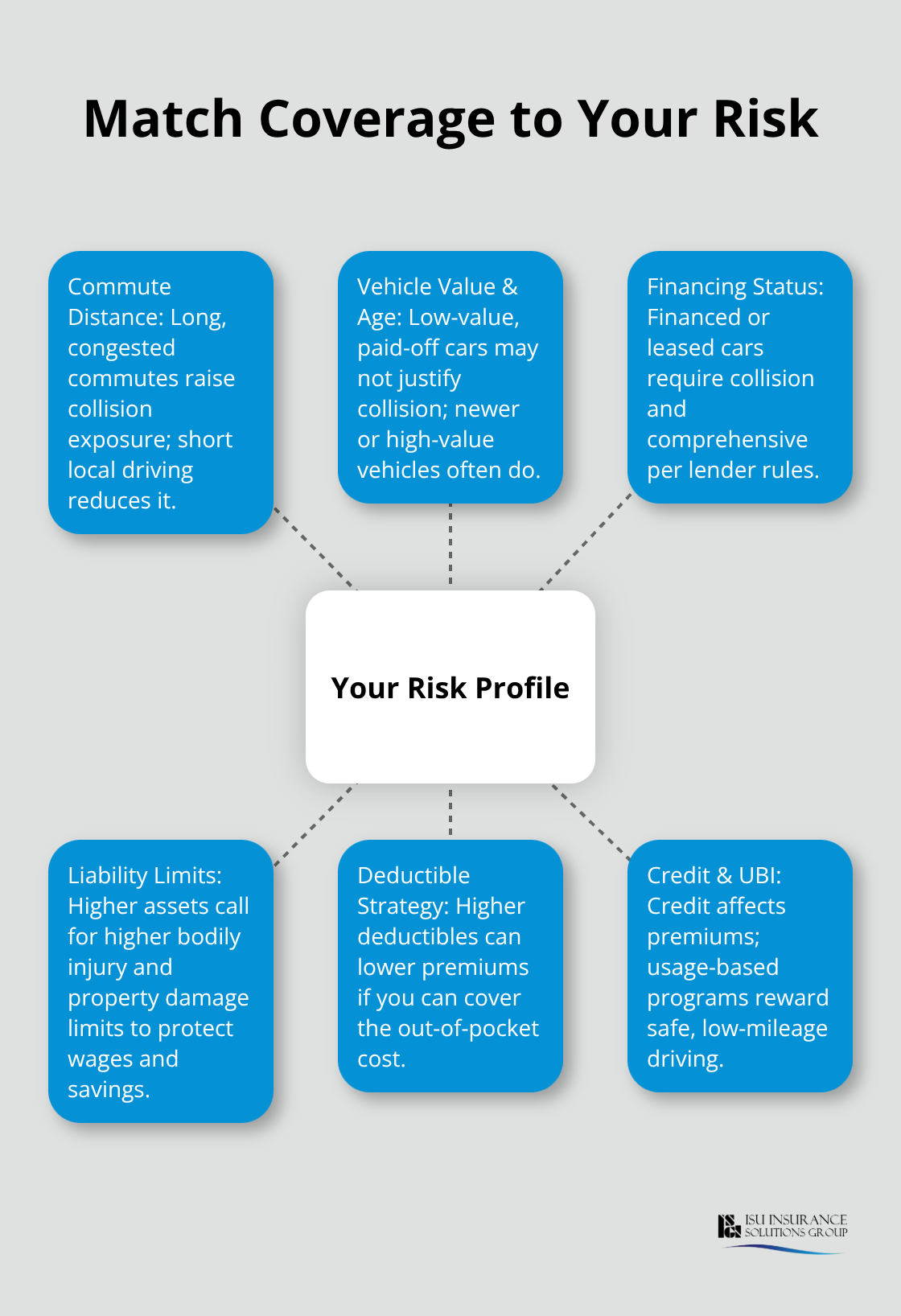
Hub-and-spoke diagram showing key factors when choosing a commercial fleet insurance carrier. - Commercial vehicle fleet insurance

Request references from other fleet operators in your industry and ask specifically about claims handling speed and how the insurer responds to premium renewal negotiations backed by safety improvements.

Assess Your Coverage Limits Honestly

Coverage limits require honest assessment of your actual exposure rather than accepting insurer defaults. If your fleet includes heavy trucks, your bodily injury liability limit should reflect that large trucks represent a significant portion of vehicles in fatal crashes. A construction company with equipment trucks faces different cargo exposure than a delivery service with light vans. Pull your accident history from the past three years and calculate the highest single claim you have experienced, then add 30 percent as your minimum bodily injury limit.

Compare Quotes From Multiple Carriers

Compare quotes from at least three carriers, but do not treat price as the primary factor. A carrier offering 10 percent lower premiums but requiring a $2,500 deductible may cost you more after a claim than a carrier with slightly higher premiums and a $1,000 deductible. Request itemized quotes that break down liability, physical damage, cargo, and uninsured motorist coverage separately so you can see exactly what each carrier charges for each component. During the quoting process, disclose your complete fleet composition, annual mileage, driver ages, and claims history accurately. Misrepresenting information to get lower quotes creates coverage issues when you file a claim.

Identify Carriers That Reward Safety Data

Ask each carrier whether they allow you to implement telematics and what premium reductions they offer for documented safety improvements over time. Carriers that offer 5 to 15 percent discounts for telematics adoption and driver training programs demonstrate commitment to risk reduction rather than just collecting premiums. This approach separates insurers who view your fleet as a long-term partnership from those who simply want your premium dollars.

Evaluate Claims Handling Quality

Claims handling quality separates good carriers from great ones. Request the claims contact information and call that number yourself during business hours to verify response times. Ask whether the carrier has preferred repair shops in your service area and whether they offer rental vehicle coverage while yours is being repaired. A 24-hour First Notice of Loss process and same-day adjuster assignment can reduce your operational disruption significantly. Finally, verify that your carrier can handle FMCSA compliance filings such as MCS-90 and BMC-91X if your fleet operates commercial trucks, as this administrative support prevents costly compliance gaps.

Final Thoughts

Commercial vehicle fleet insurance protects your entire operation by consolidating coverage, reducing administrative burden, and lowering your per-vehicle costs compared to managing separate policies. The real value emerges when you pair your fleet policy with data-driven risk management: telematics monitoring, driver training programs, and maintenance discipline demonstrate safety leadership to insurers and create measurable premium reductions at renewal. Your fleet’s safety record becomes your negotiating advantage, and carriers reward fleets that show consistent improvements in driver behavior and incident prevention.

Starting with fleet insurance requires three concrete steps. First, audit your current coverage across all vehicles and identify gaps where separate policies leave you exposed. Second, gather your fleet data: vehicle types, annual mileage, driver records, and claims history from the past three years. Third, request quotes from multiple carriers that specialize in commercial auto and ask specifically about discounts for telematics, driver training, and safety certifications.

A consolidated fleet policy with uniform coverage limits eliminates liability gaps that could expose your business to catastrophic losses, while faster claims processing keeps your vehicles on the road and your revenue flowing. ISU Insurance Solutions Group serves Washington and Oregon businesses with commercial vehicle fleet insurance tailored to your fleet’s specific needs. Our independent agency partners with over 20 carriers to deliver multi-carrier quotes and hands-on local expertise that finds the right balance of coverage and cost for your operation.

The information provided in this blog is for general informational purposes only and does not constitute legal, financial, or insurance advice. Coverage options, terms, and availability may vary. Please consult with a licensed professional for advice specific to your situation.
Independent Agent Professional Liability: Insurance That Grows With Your Practice

Independent agents face a unique set of risks that standard business insurance simply doesn’t cover. A single mistake in policy recommendations or client communication can trigger claims that threaten your practice and reputation.

At ISU Insurance Solutions Group, we’ve seen how the right professional liability coverage protects agents at every stage of growth. This guide walks you through the coverage options and strategies that keep your agency secure as you scale.

What Independent Agents Actually Need to Know About Professional Liability

The Coverage Gap That Exposes Your Practice

Standard commercial policies leave independent agents dangerously exposed. General liability covers third-party bodily injury and property damage-someone slips in your office or you damage a client’s property. Professional liability covers something entirely different: negligent advice, errors in policy placement, misrepresentation, or failure to deliver promised services. When you recommend a coverage option that turns out to be inadequate, or you miss a deadline that costs a client thousands in uninsured losses, general liability won’t help you. The gap between these two types of coverage is where most independent agents encounter serious trouble.

What the Data Reveals About E&O Claims

A 2025 Best Practices Study analyzing over 3,000 data points across agencies of all sizes found that governance practices and structured risk controls directly correlate with lower E&O claim frequency. Agencies without documented processes for client communication, policy review protocols, and staff training experience significantly higher liability exposure. Real claims against independent agents include misquoting premium amounts, failing to add required coverages, missing policy renewal deadlines, providing incorrect underwriting information to carriers, and giving advice outside their licensing scope. Each of these scenarios can result in client financial losses ranging from thousands to hundreds of thousands of dollars, and your agency bears the liability.

Why Your Advice Requires Specific Protection

Your errors and omissions insurance create exposures that general liability, property insurance, and workers’ compensation simply don’t address. A client who claims you misrepresented coverage terms, failed to explain policy exclusions, or recommended inadequate limits will pursue you directly. Defense costs alone can exceed $50,000 before any settlement or judgment. Professional liability policies cover defense expenses outside the policy limit in most quality plans, meaning your legal costs don’t reduce your available coverage for damages.

Cyber liability has become inseparable from professional liability for independent agents. As you move client data online and rely on digital communications, first-party breach costs and third-party liability from data mishandling require specific coverage. Standard policies exclude cyber incidents entirely.

Agency-Specific Policies Address Your Real Operations

Agency-specific professional liability policies recognize the exact services you provide-whether you specialize in personal lines, commercial, life and health, or a combination-and tailor coverage accordingly. They include provisions for insolvency coverage if a carrier you placed a client with fails, catastrophe expense coverage for major events affecting multiple clients, and subpoena coverage for regulatory investigations. These aren’t add-ons; they’re built into policies designed specifically for how independent agents operate.

Infographic highlighting core features built into agency-specific professional liability policies for independent insurance agencies - Independent agent professional liability

The market has shifted from soft to hard in recent years, meaning broader coverage is harder to find and rates have increased. This shift makes it critical to secure agency-specific protection rather than hoping general business insurance will suffice. Your next step involves understanding what coverage limits actually protect your practice as it grows.

Coverage Limits That Protect Growing Agencies

Matching Coverage to Your Agency Size

Professional liability policies for independent agents vary significantly based on your agency size and service mix. A solo agent handling personal lines needs different protection than a 20-person shop writing commercial accounts across multiple states. The 2025 Best Practices Study tracking over 3,000 data points across seven revenue bands shows that agencies under $1.25 million annual revenue typically carry $1 million per claim limits, while agencies between $10 million and $25 million in revenue average $5 million per claim. This pattern reflects reality: higher revenue means more clients, more transactions, and statistically higher exposure to larger claims.

How Risk Controls Lower Your Costs

The same study reveals that agencies with documented risk controls and governance practices-client communication protocols, policy review checklists, staff training records-secure better rates and lower deductibles than those operating without structure. Your policy limits should reflect not just your current size but your growth trajectory over the next three years. If you project 40 percent revenue growth, your coverage should anticipate that expanded exposure now rather than leaving you underinsured during your growth phase.

Percentages showing revenue growth milestones that should prompt professional liability limit adjustments - Independent agent professional liability

Defense Costs Outside Your Limit

A single E&O claim generates legal bills that start accumulating before any settlement discussion begins. Quality professional liability policies place defense costs outside the policy limit, meaning your $2 million coverage for damages remains intact while defense expenses-expert witnesses, depositions, discovery, trial preparation-stack up separately. This structure matters enormously. If your policy lumps defense costs inside your limit, a $150,000 legal defense consumes 7.5 percent of your available coverage before you’ve resolved the claim. The Big I Professional Liability Program includes defense costs outside limits as standard, along with catastrophe expense coverage of $25,000 per policy period for events affecting multiple clients simultaneously.

Cyber Coverage as a Core Component

Cyber liability has shifted from optional to essential. As your agency digitizes client files and communication, your exposure to data breach costs and third-party liability from mishandled information increases dramatically. Cyber coverage under professional liability policies typically covers first-party breach costs-forensics, notification, credit monitoring-plus third-party liability if your systems fail and damage client data. The Big I program includes $25,000 in first-party cyber costs and $1 million in third-party cyber liability as standard components. This coverage protects you when ransomware hits your systems or a hacked email account sends fraudulent policy cancellations to clients. Without it, you absorb breach notification costs, regulatory fines, and client lawsuits directly.

Scaling Your Protection as Revenue Grows

Your coverage limits today won’t match your needs in two years. Agencies that grow their revenue by 30 to 50 percent without adjusting their professional liability limits create dangerous gaps in protection. The next step involves assessing your actual risk exposure and determining which coverage adjustments align with your specific growth plans.

How to Assess and Adjust Your Professional Liability Coverage as You Scale

Start With Your Current Numbers

Most independent agents wait until a claim hits to realize their coverage limits no longer match their practice. The 2025 Best Practices Study tracked over 3,000 data points across agencies of varying sizes and found that agencies reviewing their professional liability coverage annually experience significantly fewer coverage gaps than those reviewing every two to three years. Your assessment starts with three specific metrics: your current annual gross revenue, your projected revenue for the next 24 months, and the number of active clients you service. Agencies under $1.25 million in annual revenue typically carry $1 million per claim limits, while those between $10 million and $25 million average $5 million per claim. This pattern reflects actual claim patterns across the industry, not arbitrary scaling.

If you project 35 to 50 percent revenue growth, your current limits are already insufficient. Calculate your growth trajectory honestly and adjust your coverage accordingly. A solo agent expanding to a three-person team fundamentally changes your exposure profile-more staff means more transactions, more client interactions, and statistically higher probability of errors reaching clients.

Document Your Exact Service Mix

Document the specific services you provide right now: personal lines, commercial, life and health, specialty classes like contractors or wineries. Your coverage should match exactly what you sell, not what you might sell someday. Agencies that misalign their coverage with their actual service mix pay unnecessarily high premiums or carry gaps they don’t realize exist. When you approach your carrier or broker about increasing limits as you grow, accuracy in your service description prevents both overpricing and underinsurance.

Leverage Your Risk Controls for Better Rates

Your risk controls directly impact both your rates and your ability to secure higher limits. Agencies with documented client communication protocols, policy review checklists, and staff training records consistently receive better pricing than those operating informally. The data supports this: governance practices correlate directly with lower E&O claim frequency. Present your risk controls as evidence of your commitment to accuracy and client service when you request higher limits.

Prioritize Defense Costs Outside Your Limit

Defense costs outside your policy limit matter more as your revenue grows. A $2 million limit with defense costs inside the limit looks adequate until a single claim generates $250,000 in legal expenses, instantly consuming 12.5 percent of your coverage. Quality policies place defense costs outside limits, meaning your damage coverage remains intact regardless of legal costs. This structure protects your available coverage for actual damages and settlements.

Time Your Policy Review Strategically

Schedule your policy review 60 days before renewal, not at renewal itself. This timing gives you room to adjust limits, update your service descriptions, and make coverage changes without rushing. Carriers need 30 to 45 days to underwrite significant limit increases, so starting early prevents coverage gaps when your policy renews. If you’ve added new service lines, expanded into new states, or hired staff, communicate these changes to your carrier immediately rather than waiting for renewal.

Compact checklist of timing actions to keep professional liability coverage aligned with agency changes

Mid-term endorsements cost less than repricing at renewal, and they prevent you from unknowingly operating outside your coverage scope.

Final Thoughts

Professional liability coverage for independent agents is not optional in today’s market. Hard market conditions, rising claim frequency, and regulatory scrutiny mean that agencies without proper coverage face serious financial and reputational risk. A single claim can drain your reserves, damage your reputation, and force closure-but agencies with documented risk controls and appropriate independent agent professional liability coverage experience significantly fewer claims and recover faster when issues arise.

Taking action means moving beyond general business insurance and securing coverage tailored to your specific operations. Your coverage needs change as your agency grows, your service mix expands, and your client base increases, so schedule a policy review now and document your current revenue alongside your projected growth. Defense costs outside your policy limit, cyber liability protection, and catastrophe expense coverage should form the foundation of your plan.

We at ISU Insurance Solutions Group understand the specific risks you face as an independent agent. Our team works with multiple carriers to deliver personalized solutions that grow with your practice, and we can help you assess your current exposure and build a professional liability strategy that protects both your agency and your clients. Contact us today to discuss your coverage needs.

The information provided in this blog is for general informational purposes only and does not constitute legal, financial, or insurance advice. Coverage options, terms, and availability may vary. Please consult with a licensed professional for advice specific to your situation.