Small Business Professional Liability: What It Covers for Startups

One mistake in your service delivery can cost your startup thousands in legal fees and settlements. Small business professional liability insurance protects you from these financial disasters.

At ISU Insurance Solutions Group, we’ve seen startups lose clients and credibility after a single claim. The right coverage gives you peace of mind and shows your clients you take responsibility seriously.

What Professional Liability Actually Covers

How Professional Liability Protects Your Startup

Professional liability insurance protects your startup when clients claim your work caused them financial harm. This coverage pays for legal defense costs from the moment a claim arrives, regardless of whether you’re ultimately found at fault. According to The Hartford, E&O specifically covers mistakes in the products or services you deliver-think a bookkeeping error that costs a client thousands, web development work that tanks their sales, or incorrect tax filings that trigger an audit. The policy typically covers lawyer fees, court costs, expert witness testimony, settlements, and judgments. Many policies include a right-and-duty-to-defend provision, meaning your insurer takes over the legal defense rather than leaving you to manage it alone.

Why Legal Defense Costs Matter

Even winning a lawsuit can drain significant legal fees before any judgment is reached. For IT consultants, software developers, management consultants, accountants, and designers-professions The Hartford identifies as most needing this coverage-a single mistake can trigger client litigation that would otherwise force you to pay out of pocket. This financial exposure makes professional liability coverage essential for service-based startups.

Understanding Claims-Made Policies and Tail Coverage

Most professional liability policies operate on a claims-made basis, which means coverage applies only if the policy is active when the claim is filed, not when the work was performed. This distinction is critical: if you cancel coverage and a client sues six months later over work you did last year, you have no protection unless you purchased tail coverage beforehand. Your coverage limits matter too-standard policies offer $1 million per occurrence and $2 million aggregate, though you can purchase higher limits if larger clients demand it.

Cost and Coverage Variations by Industry

Professional liability insurance costs vary significantly by industry and risk profile. According to Insureon data, professional liability insurance averages around $61 per month. A tech startup might pay $30 to $50 monthly, while a healthcare or finance startup could face $100 to $200 monthly due to higher regulatory risk. The policy excludes illegal acts and intentional wrongdoing, so it won’t cover fraud or deliberate misconduct.

Layering Professional Liability with Other Coverages

Professional liability works best alongside other coverages like general liability and cyber insurance, creating a layered defense against different types of claims. This combination addresses the reality that startups face multiple risk exposures simultaneously. As you assess your specific industry risks and determine what coverage limits your clients will require, the next step involves selecting a policy that aligns with your business model and growth trajectory.

Diagram showing how professional liability, general liability, and cyber insurance work together for startups

Why Your Startup Needs Professional Liability Coverage

Larger Clients Won’t Work Without It

Mid-market and enterprise clients demand professional liability coverage before they sign contracts with you. They’ll request a certificate of insurance showing your coverage limits, and this requirement isn’t negotiable. Many clients require minimum coverage of $1 million per occurrence, while others demand $2 million. Without proof of coverage, you lose deals before your first pitch. Professional liability insurance is now standard for consultants, accountants, IT professionals, designers, and software developers. Your competitors already carry it, so clients expect you to have it too. If you operate without coverage and a client demands it mid-negotiation, you either walk away from revenue or scramble to purchase a policy at higher rates. Securing coverage before your first pitch keeps you competitive and ready to close deals.

Lawsuits Arrive Regardless of Your Intentions

A bookkeeping error that costs a client $50,000 triggers litigation whether you made an honest mistake or acted deliberately. Insureon data from 40,000 small business policies shows that professional liability claims arrive constantly across service industries. Your legal defense costs start immediately-lawyers charge $150 to $400 per hour, and defending even a meritless claim runs $10,000 to $50,000 before settlement. Professional liability insurance covers these costs from day one, regardless of fault. If you lose and owe damages, the policy pays the judgment up to your coverage limits. Without it, you remain personally liable for every dollar.

Three-point overview of legal cost escalation and professional liability protection - Small business professional liability

A single claim can bankrupt a young startup or force you to liquidate personal assets.

Your Insurer Takes Over the Legal Battle

The right-and-duty-to-defend provision in most professional liability policies means your insurer takes over the legal defense rather than leaving you to manage lawyers and court filings while running your business. This matters because defending yourself while building your company is impossible. You focus on operations while your insurer handles the legal strategy, court appearances, and settlement negotiations. This separation protects your time and mental energy during a stressful period.

Professional Liability Protects Your Reputation

Professional liability coverage signals to clients that you’ve insured against risk, which demonstrates professionalism and accountability. Clients see that you take responsibility seriously and have the financial backing to make them whole if something goes wrong. This trust translates into stronger client relationships and repeat business. Your startup’s reputation depends on delivering results, and this coverage protects both your finances and your ability to continue operating after a claim surfaces. As you assess your specific industry risks and determine what coverage limits your clients will require, the next step involves selecting a policy that aligns with your business model and growth trajectory.

Which Coverage Limits Do You Actually Need

Your industry determines your baseline coverage limits more than anything else. A software developer facing a $500,000 client loss needs different protection than an accountant handling million-dollar tax strategies. Start by examining your largest client contracts-most will specify minimum coverage requirements, typically $1 million per occurrence and $2 million aggregate. This isn’t arbitrary; clients set these numbers based on their potential exposure if your work fails. If your biggest prospect demands $2 million in coverage and you only carry $1 million, you lose the deal.

Insureon data from 40,000 small business policies shows that technology startups average $30 to $50 monthly for professional liability, while healthcare and finance startups face $100 to $200 monthly because their error exposure runs higher. Construction-related professional services cost even more due to regulatory complexity.

Compact list comparing professional liability premiums by industry - Small business professional liability

Your coverage limits and deductibles directly affect your premium-higher limits cost more, but underinsuring yourself creates gaps that could bankrupt you. Try limits that match your actual client demands plus a safety margin, not the minimum that sounds affordable.

Comparing Quotes from Multiple Carriers

Never accept a single quote as your baseline. The Hartford, Liberty Mutual, and Acuity all price professional liability differently based on their underwriting criteria and risk tolerance. One carrier might charge $75 monthly for your IT consulting startup while another quotes $120 for identical coverage. Request quotes from at least three carriers to identify genuine pricing variations. Online platforms can streamline this process and often deliver quotes within hours, but verify that each quote covers the same limits, deductibles, and retroactive dates before comparing prices.

Understanding Deductibles and Their Impact

Deductibles matter significantly-increasing your deductible from $500 to $1,000 can reduce your premium, but only if you can actually afford that deductible during a claim. Most startups overlook this detail and choose the lowest premium without calculating whether they could handle the deductible if litigation arrived next month. A $1,000 deductible sounds manageable until you face a real claim and discover your cash reserves can’t cover it while you wait for settlement.

State Requirements and Location Factors

Your state requirements also affect pricing; some states mandate specific coverage minimums for licensed professions, while others allow flexibility. Location influences rates too-operating in Washington or Oregon may cost differently than other states due to local claims patterns and regulatory environments. If you operate across multiple states, verify that your policy covers all jurisdictions where you conduct business.

Tail Coverage and Policy Transitions

As you evaluate quotes, verify that tail coverage options exist if you ever need to transition carriers, since claims-made policies leave you exposed after cancellation without it. Tail coverage (also called extended reporting period coverage) protects you if a client sues after your policy ends for work you performed while insured. The cost typically runs 150 to 300 percent of your annual premium, but it’s far cheaper than facing an uninsured claim years later.

Final Thoughts

Professional liability insurance protects your startup from financial ruin when clients claim your work caused them harm. Your clients demand it, larger prospects require it in contracts, and a single mistake can cost more than you’ll earn in your first year. Small business professional liability covers legal fees immediately, shifts defense responsibility to your insurer, and pays settlements or judgments up to your policy limits-without it, you remain personally liable for every dollar.

We at ISU Insurance Solutions Group have guided startups and established businesses through this process since 1983. As a Woodinville-based independent agency serving Washington and Oregon, we partner with 20+ carriers to deliver personalized quotes and competitive rates tailored to your specific industry and risk profile. Contact ISU Insurance Solutions Group for a one-call multi-carrier quote and hands-on guidance through the entire process.

Request quotes from multiple carriers to compare pricing and terms, verify that coverage limits match your client requirements, and confirm that tail coverage options exist for future transitions. Most startups secure a policy within days and start operations with protection in place, and the cost averages $61 monthly-a small investment compared to the financial exposure you face without it.

The information provided in this blog is for general informational purposes only and does not constitute legal, financial, or insurance advice. Coverage options, terms, and availability may vary. Please consult with a licensed professional for advice specific to your situation.
Architect Professional Liability Insurance: From Design to Defense

One mistake in your building plans can cost thousands in repairs and legal fees. Architect professional liability insurance protects your firm when design errors, missed site details, or project delays lead to client claims.

We at ISU Insurance Solutions Group know that most architects operate without understanding their actual exposure. The right coverage isn’t optional-it’s the difference between staying in business and facing financial ruin.

What Your Professional Liability Policy Actually Covers

Architect professional liability insurance protects your firm when design errors, omissions, or negligent advice result in client claims. The coverage pays for legal defense costs, settlements, and judgments-typically in addition to damages under most policy structures. If a client alleges that your blueprints contained calculation errors, that you failed to verify building code compliance, or that inadequate site supervision led to construction defects, this insurance activates to defend your firm and cover the financial fallout. The policy applies to professional services spanning from initial design conception through construction administration, meaning claims can arise years after project completion. Typical annual premiums range from $300 to $4,000 depending on your firm’s size, claims history, years in business, and location. Firms with $500,000 to $999,999 in annual gross fees generally face claim limits of $500,000 per claim and $2,000,000 aggregate, while larger practices with $1,000,000+ in fees carry $1,000,000 per claim and $4,000,000 aggregate limits. The policy operates on a claims-made basis, meaning the claim must be reported during your active policy period-gaps in coverage can severely restrict your ability to defend against future allegations tied to past work.

Quick view of common liability limits by annual fees and why continuous coverage matters - Architect professional liability insurance

Design Errors Stop Claims Before They Start

Most architect claims stem directly from design errors and calculation mistakes. A roof design error that miscalculates water runoff creates interior leakage and structural damage; a column spacing change that bypasses established engineering standards forces costly rebuilds; dimension conversion errors render components unusable and trigger multi-faceted losses (including site rework and shared liability exposure). The best defense involves preventing these errors through rigorous cross-checking procedures, especially on high-stakes structural elements, and validating designs against credible standards like Post-Tension Institute guidelines. Your professional liability policy covers the defense costs and damages when these errors slip through, but prevention reduces claims frequency and keeps your premiums lower over time.

Supervision Gaps Create Liability Exposure

Inadequate on-site supervision exposes architects to significant liability because you have a duty to monitor contractor adherence to plans and safety requirements. If your daily site logs document problems-water intrusion, material substitutions, code violations-but your team fails to report these issues to the contractor or owner, you’ve created a liability trail that insurers scrutinize closely. Architects who conduct minimal site visits or rely on passive observation without documented corrective action face higher claim risk. Your professional liability coverage protects you when supervision disputes arise, but clear contractual language limiting your duties to defined scope and explicit documentation of site communications strengthen your defense position substantially.

Hub-and-spoke visualization of top claim triggers for U.S. architects - Architect professional liability insurance

Why Claims Arise Years Later

Claims can surface long after project completion because construction defects often remain hidden until occupancy or seasonal weather stress reveals them. A design flaw in waterproofing details may not manifest until the second winter of building operation; structural miscalculations might only become apparent when the structure bears full load. This delayed discovery means your firm needs continuous coverage (not gaps) to defend against allegations tied to work completed years earlier. The claims-made structure of professional liability policies makes this timing critical-you must maintain active coverage when the claim is reported, not when the work occurred.

Coverage Limits Match Your Firm’s Scale

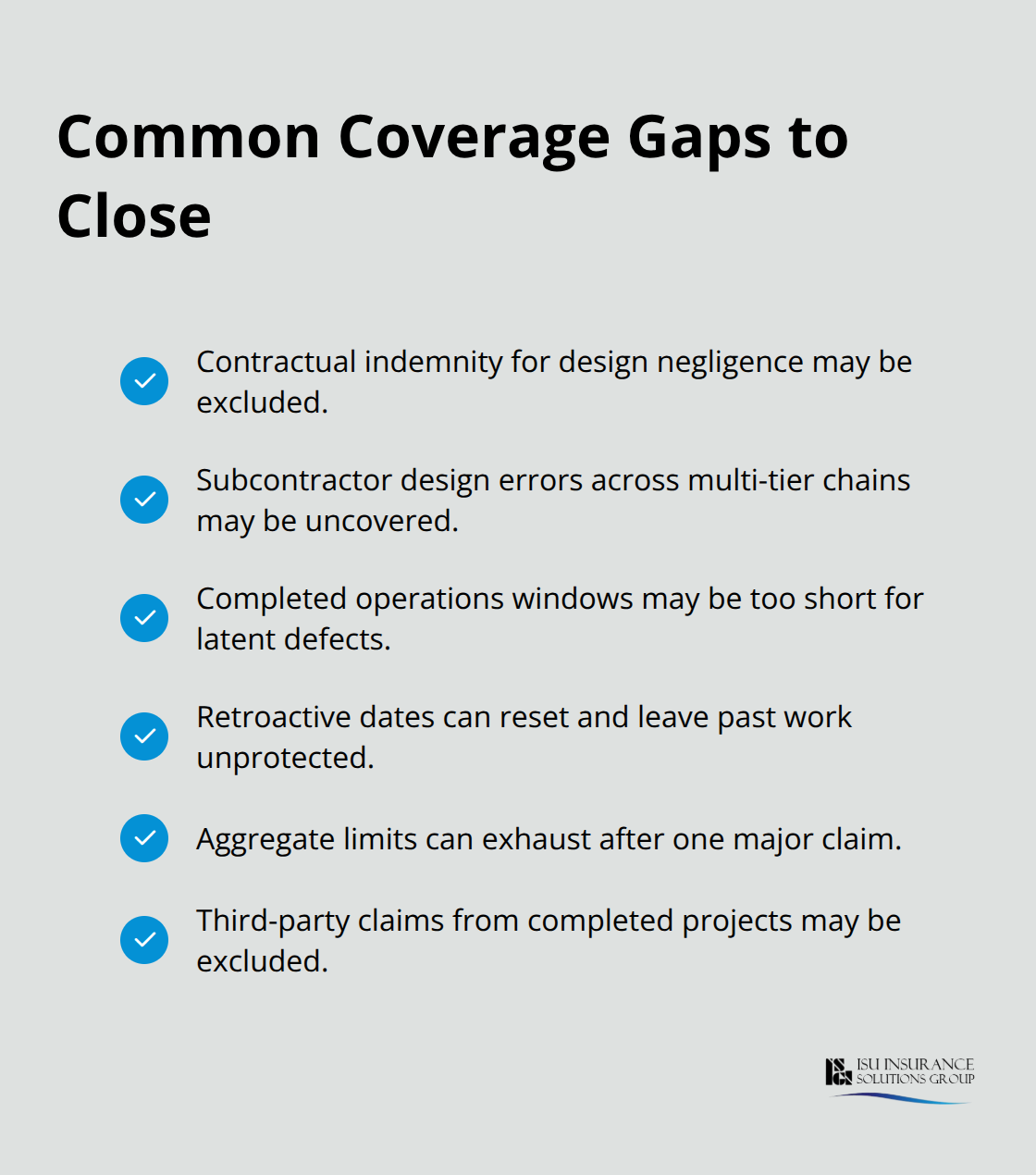
Your policy limits should reflect both your firm’s revenue and the complexity of projects you undertake. Smaller practices handling residential or light commercial work typically operate with lower limits, while firms managing large institutional or mixed-use projects require higher protection. The standard tiering system ties limits directly to annual gross fees, which means your coverage grows as your practice expands. Understanding these limits (claim limit, project limit, and aggregate limit) helps you plan for risk exposure and identify whether additional coverage or risk management strategies are necessary for larger or higher-risk engagements.

The specific risks your firm faces depend heavily on project type, client relationships, and how your team manages design changes and site coordination. Understanding these exposure points prepares you to select the right policy and implement the risk controls that keep claims from materializing in the first place.

What Claims Actually Cost Your Firm

Structural Design Flaws Drive the Highest Claim Costs

Structural design flaws represent the costliest claims architects face, and they’re entirely preventable through disciplined verification processes. A column spacing error that contradicts established engineering standards forces contractors to halt work, rebuild structural elements, and absorb cascading delays across the entire project timeline. Material specification failures-such as failing to verify that fire-retardant materials meet local building codes before approval-trigger remediation costs that can reach tens of thousands of dollars, plus project delays measured in months. One calculation error in scale conversion or dimension verification renders components unusable and creates shared liability exposure across multiple parties on site. Your professional liability insurance covers defense costs and damages when these errors surface in claims, but the real financial damage extends beyond insurance: reputation harm, project delays that strain client relationships, and the internal costs of rework that insurance doesn’t cover. The Post-Tension Institute and similar authoritative design references exist specifically to prevent these errors, yet architects who skip validation against credible standards face substantially higher claim frequency and premium costs over time.

How Budget Overruns Escalate Into Claims

Budget overruns and project delays stem almost entirely from poor site analysis, unclear scope definition, and inadequate contract administration. Architects who underestimate costs to satisfy clients early in the process create financial strain that inevitably surfaces in disputes later, and these disputes frequently escalate into claims alleging negligent cost projections or scope mismanagement. Inadequate site analysis-missing soil conditions, drainage challenges, or access constraints-leads to design changes mid-construction that force cost increases and timeline extensions. Your professional liability policy protects you when clients sue over these cost and delay issues, but prevention requires upfront investment in thorough site investigation, explicit scope documentation in contracts that clearly defines what your firm will and won’t do, and rigorous contract administration by qualified personnel trained to catch scope creep before it becomes a liability exposure.

Why Contract Administration Determines Claim Frequency

Firms that assign contract administration to junior staff without ongoing training consistently experience higher claim rates than those with designated, experienced administrators managing client communication and change order documentation. The difference in claim frequency directly impacts your insurance premiums and your firm’s financial stability. Qualified administrators catch problems early, document decisions thoroughly, and prevent the miscommunication that triggers disputes. This single operational choice-investing in experienced contract administration-reduces your exposure more effectively than any other risk control measure available to architectural practices.

The specific risks your firm faces depend heavily on project type, client relationships, and how your team manages design changes and site coordination. Understanding these essential protections prepares you to select the right policy and implement the risk controls that keep claims from materializing in the first place. The next section examines how to assess your firm’s actual risk exposure and match it to the right coverage limits and policy structure.

Matching Your Coverage to Your Firm’s Actual Risk Profile

Your firm’s risk exposure isn’t generic-it depends on project type, client expectations, employee experience, and how tightly you manage scope creep. A five-person residential design practice faces fundamentally different exposures than a twenty-person firm handling institutional projects, yet many architects select coverage limits based on what competitors carry rather than what their specific work demands.

Categorize Your Projects and Identify Your Highest-Risk Work

Start with your project portfolio over the past three years: residential, commercial, institutional, or mixed-use. Identify which category generates the highest revenue and carries the greatest complexity. Institutional and mixed-use projects typically trigger higher claim frequency because they involve more stakeholders, longer timelines, and stricter building codes. Your firm’s claims history matters significantly-if you’ve had zero claims in five years, you’ll qualify for better rates than a firm with two claims in the same period. Underwriters also consider near-misses and complaints that didn’t formally materialize into claims.

Align Your Limits to Revenue and Project Scope

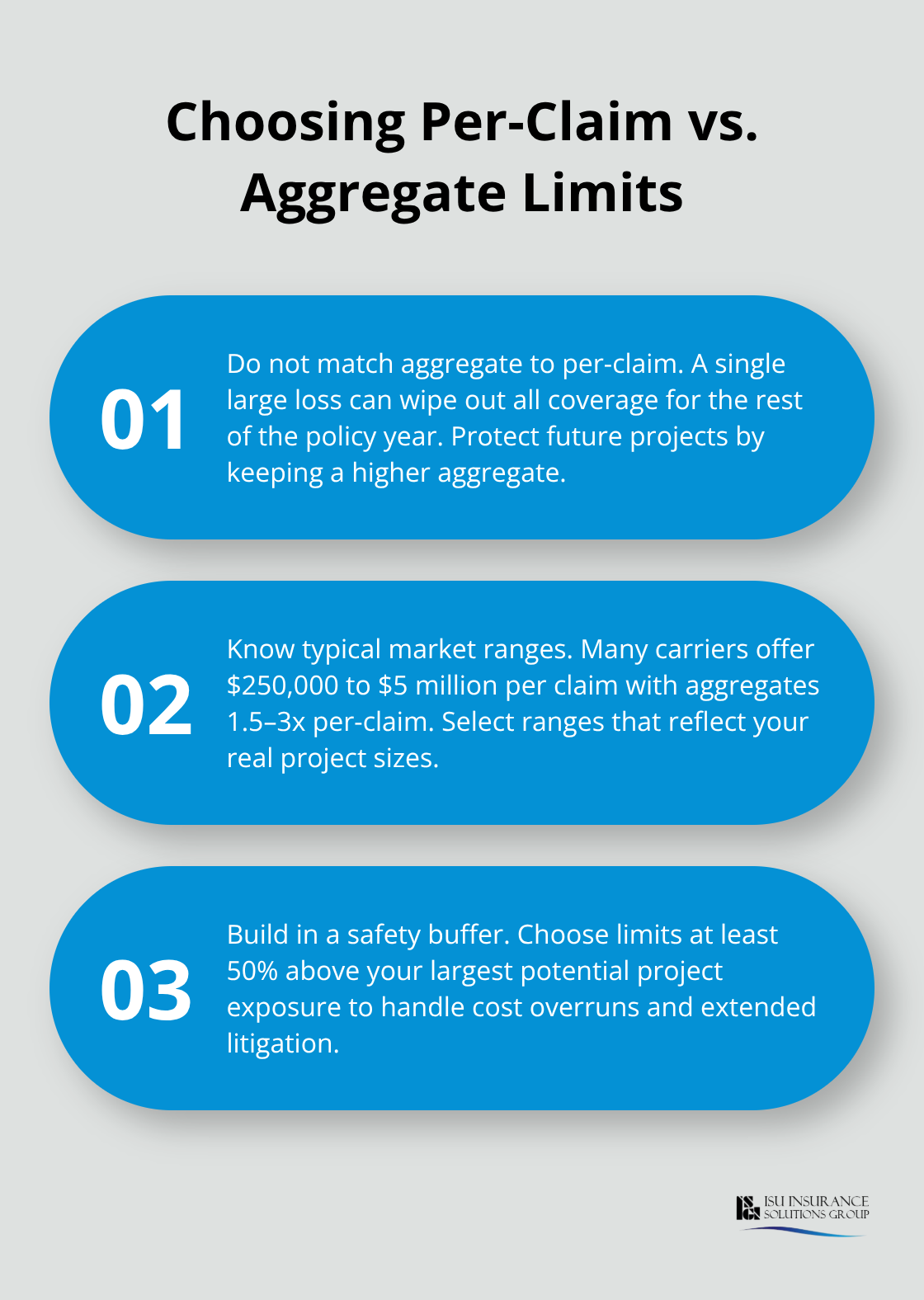
The standard tiering system ties your claim limits directly to annual gross fees. Firms earning $500,000 to $999,999 annually typically carry $500,000 per claim and $2,000,000 aggregate limits, while those exceeding $1,000,000 in fees require $1,000,000 per claim and $4,000,000 aggregate. However, these minimums don’t account for project-specific risk. A residential firm with $600,000 in annual revenue handling a single large institutional project may need temporary higher limits for that engagement, which you can address through project-specific endorsements rather than permanently increasing your base policy.

Choose Your Deductible Based on Cash Flow and Claims History

Your deductible choice directly impacts your annual premium and your out-of-pocket exposure when claims arise. Most architects select $25,000 deductibles as a middle ground, but firms with strong cash reserves and consistent project success can justify $50,000 deductibles to reduce annual premiums by 15 to 25 percent. Conversely, firms with tight cash flow or higher historical claims should stay with lower deductibles even if premiums cost more annually-the financial stability matters more than premium savings when a claim surfaces.

Premium reduction range when selecting a $50,000 deductible

Verify Coverage for Exclusions and Special Risks

Policy exclusions deserve serious attention because water ingress claims are typically excluded unless your designs meet specific technical requirements schedules that your carrier publishes. If your firm designs projects in wet climates or handles substantial waterproofing work, verify whether your carrier offers a path to coverage for water-related claims through technical compliance rather than accepting blanket exclusion. Cyber and data breach coverage isn’t mandatory but becomes relevant if your firm stores client information, project files, or financial data electronically. General liability coverage complements your professional liability policy by protecting against third-party bodily injury or property damage claims unrelated to design services, and workers’ compensation is non-negotiable in every state where you employ staff.

Request Complete Documentation Before Committing

Request a complete declarations page and policy summary from any carrier you’re considering, then have your agent walk through exclusions, limits, and how defense costs apply to your specific situation before committing to any policy. This step prevents surprises when claims arise and confirms that your coverage actually matches your firm’s risk profile.

Final Thoughts

Architect professional liability insurance separates firms that survive claims from those that face financial devastation. Without coverage, a single design error or supervision dispute forces your firm to pay tens of thousands in legal fees and damages directly from operating capital, while coverage allows your practice to continue serving clients without interruption. The right policy protects your reputation and financial stability when claims arise.

Three actions move you forward immediately. Audit your current coverage against your actual project portfolio and revenue to confirm you carry adequate limits for the work you perform. Document your firm’s risk controls-rigorous design verification, qualified contract administrators, thorough site analysis-because these operational practices directly reduce your premiums and claim frequency over time. Schedule a conversation with an agent who understands architectural practice and can walk through your specific exposures rather than offering generic quotes.

We at ISU Insurance Solutions Group work with 20+ carriers to find architect professional liability insurance policies that match your firm’s size, project type, and risk profile. Contact us today for a multi-carrier quote that reflects your actual exposure. Your firm’s protection starts with one conversation.

The information provided in this blog is for general informational purposes only and does not constitute legal, financial, or insurance advice. Coverage options, terms, and availability may vary. Please consult with a licensed professional for advice specific to your situation.

Professional Services Liability Insurance: Common Pitfalls and Protections

Professional service providers face real financial risks every day. A single mistake-missed deadline, miscommunication, or overlooked detail-can trigger a lawsuit that threatens your entire practice.

At ISU Insurance Solutions Group, we’ve seen how the right professional services liability insurance protects firms from these costly exposures. This guide walks you through the pitfalls that leave providers vulnerable and the protections that actually work.

Common Pitfalls That Expose Professional Service Providers

Documentation Failures Leave You Defenseless

Inadequate documentation creates the largest exposure most service providers never see coming. When you finish a project or complete work for a client, the details fade quickly-but if a dispute arises months or years later, your records become the only evidence of what you actually delivered. Courts and insurers don’t care about your memory; they care about what you can prove.

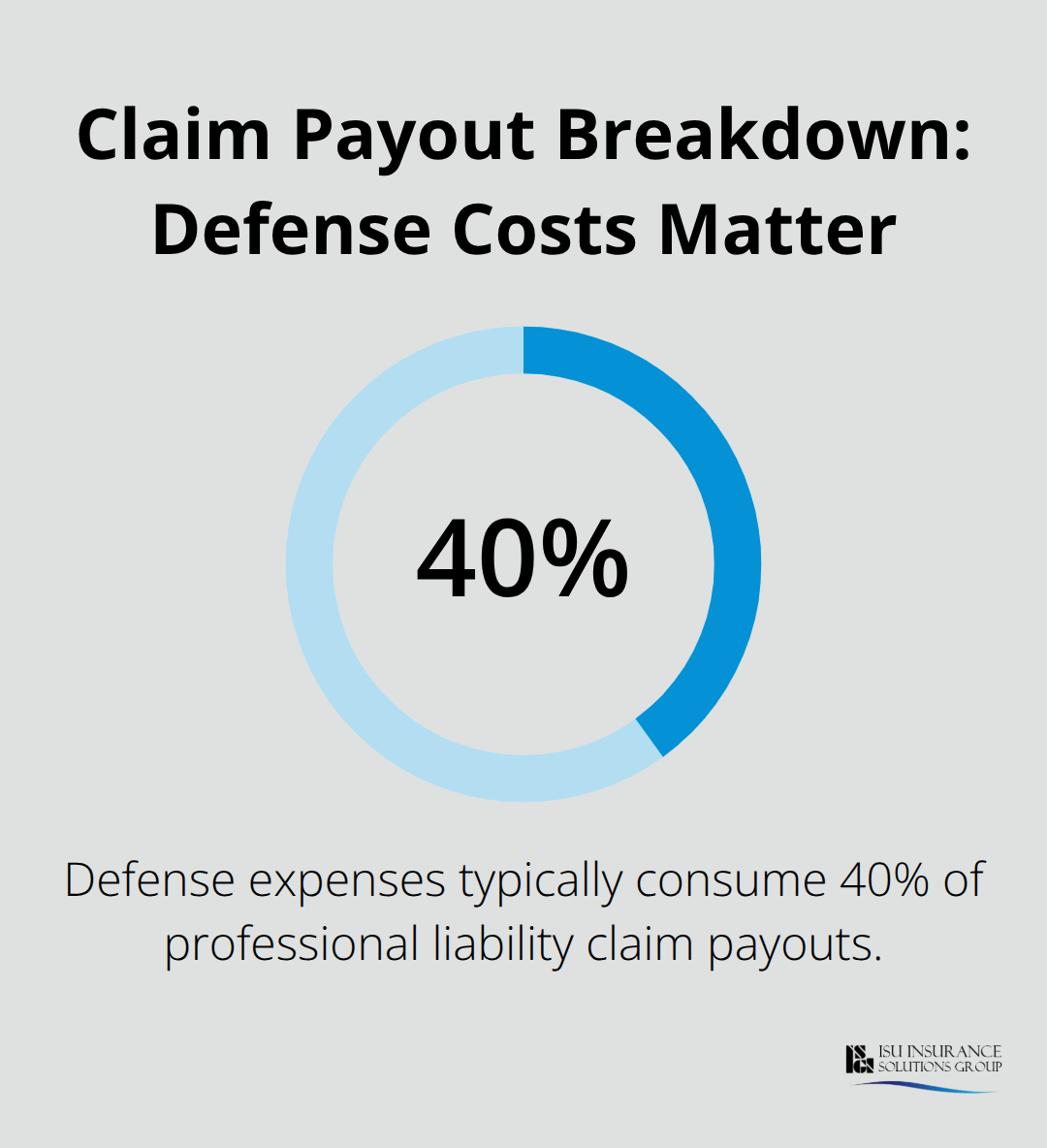
A consultant who fails to document scope changes in writing, an engineer who doesn’t keep detailed notes on design decisions, or an accountant who doesn’t record client instructions all face the same problem: when a claim lands, they have no way to demonstrate they met their obligations. The American Institute of Architects reports that documentation failures appear in roughly 40% of professional liability claims across design disciplines.

Chart showing that documentation failures appear in roughly 40% of professional liability claims across design disciplines.

Start maintaining a system today that captures client instructions in writing, records project changes with client sign-off, and preserves communications showing what work was completed and when. Email confirmations, project logs, and signed scope documents cost nothing to create but become priceless if you ever need to defend yourself.

Scope Creep and Unmet Expectations Trigger Claims

Scope creep and undefined expectations destroy more professional relationships than actual mistakes do. A client requests one deliverable, but during the project they casually mention three additional tasks they assumed were included. You complete the work thinking you’ve done a solid job, but they feel shortchanged because their unstated expectations weren’t met. This gap between what you promised and what they thought they’d get becomes the foundation for a liability claim.

Set expectations in writing before work begins-specify exactly what services you’ll provide, what’s excluded, timelines, and revision limits. If a client requests additional work mid-project, document the change and confirm whether it’s included in the original fee or costs extra.

Coverage Limits Must Match Your Real Risk

Insurance coverage limits matter just as much as the coverage itself, yet many service providers choose limits based on affordability rather than actual risk. A $1 million per-claim limit sounds substantial until a single error costs $2 million. Review your client contracts carefully; many require minimum coverage limits before they’ll hire you.

If a $5 million project requires $2 million in coverage and you only carry $1 million, you’ve created an uninsurable gap. Evaluate what damages could realistically result from your work-consider lost client revenue, project delays, and legal defense costs-then set your limits accordingly. The right coverage protects both your finances and your ability to take on higher-value work, which leads directly to understanding what protections actually prevent these pitfalls from becoming expensive claims.

What Professional Liability Insurance Actually Covers

Professional liability insurance protects you when a client claims your work caused them financial loss through negligence, mistakes, or failure to deliver promised services. This coverage pays for legal defense costs, settlements, and court judgments up to your policy limits, which means you avoid personal liability for damages that could exceed your annual revenue. The protection applies whether you made an actual error or simply failed to meet unstated client expectations-a distinction that matters enormously when defending against a claim.

Hub-and-spoke chart summarizing what professional liability insurance includes and excludes for U.S. professional service providers. - Professional services liability insurance

The coverage typically includes defense costs for allegations of negligence, incorrect advice, breach of contract, copyright infringement, and failure to deliver services as promised. What it doesn’t cover matters equally: intentional acts, employee discrimination, property damage, worker injuries, cyber incidents, and vehicle-related incidents all fall outside professional liability and require separate policies.

Claims-Made vs. Occurrence: Your Career Path Determines the Right Choice

Most professional liability policies operate on a claims-made basis, meaning coverage applies only to claims filed while your policy is active. This structure creates a critical vulnerability when you change jobs or retire-a claim filed after your policy expires won’t be covered unless you purchase tail coverage, an extended reporting period that costs up to twice your annual premium. An occurrence policy covers incidents that happen during the policy period regardless of when the claim is filed, offering better protection if you plan career transitions, but occurrence policies typically cost more upfront. If you stay with your current firm long-term, a claims-made policy with a retroactive date works fine and saves money. However, if you consider a job change within the next five years, calculate whether tail coverage costs make sense now or whether switching to an occurrence policy would be more economical. Maryland allows discovery periods extending up to five years after an incident is discovered, meaning claims can surface years later-another reason to verify your policy form matches your career stability.

Industry-Specific Coverage Gaps That Generic Policies Miss

Construction and engineering firms face distinct exposures that generic professional liability policies miss entirely. Environmental liability, pollution coverage, and care-custody-control exclusions create dangerous gaps on projects involving hazardous materials or site work. Software developers and IT consultants need coverage for client losses caused by code defects or faulty implementation advice, yet many standard policies exclude technology-related errors unless specifically endorsed. Healthcare providers often rely on employer-provided malpractice coverage that vanishes when you change positions or retire, leaving you exposed for claims arising from prior work. Verify what your employer actually covers before assuming you’re protected-many employer policies include restrictive language that excludes coverage once you’ve left the organization. The fastest-growing segment in professional liability claims involves surgical errors in healthcare, with surgical-specific endorsements becoming standard for operating physicians and surgical specialists. If your profession handles client funds, fiduciary liability coverage should supplement your professional liability policy to cover investment losses or mismanagement claims.

Finding an Agent Who Understands Your Discipline

Work with an insurance agent who understands your specific discipline rather than accepting a generic quote, because the difference between adequate and inadequate coverage often comes down to industry-specific endorsements that generic carriers miss entirely. An agent familiar with your profession identifies exposures you wouldn’t spot alone and recommends endorsements tailored to your actual work. This specialized knowledge becomes especially valuable when you operate across multiple states or handle complex client relationships, as coverage requirements and claim patterns vary significantly by jurisdiction and service type. The right agent also helps you navigate policy exclusions and confirms that your coverage aligns with what your clients require in their contracts-a mismatch that could disqualify you from bidding on projects or leave you uninsured for work you’ve already completed.

Selecting Coverage That Matches Your Actual Exposure

Review Client Contracts for Coverage Requirements

Pull your three largest client contracts and review their insurance requirements line by line. Most contracts specify minimum coverage limits, and if you fall short, you lose the work entirely-this isn’t negotiable. A construction firm bidding on a $10 million project typically faces a requirement for $2 million or $5 million in professional liability coverage, and submitting a bid without meeting that threshold wastes everyone’s time. Document these requirements across your client base to identify the highest limit you actually need to carry.

Many service providers set their limits based on what feels affordable rather than what their clients demand, which creates a predictable disaster: you win a contract, complete the work flawlessly, then discover the client’s claim exceeds your policy limit and you’re personally liable for the difference.

Understand How Industry Risk Affects Your Costs

Industry data shows that higher-risk professions like engineering and architecture typically pay $800 to $1,200 annually per employee for adequate coverage, while lower-risk consultants might spend $400 to $600. These figures mean nothing, however, if your limit is too low. Your actual costs depend on your discipline, location, years in business, prior claims history, and the coverage limits you select-not on what competitors in your field pay.

Compare Multiple Carriers and Policy Terms

Compare quotes from at least three carriers rather than accepting the first proposal. Progressive reported a national median cost of $42 per month for professional liability insurance in 2024, but that average obscures massive variation by discipline and risk profile. Request quotes that specify per-claim limits, annual aggregate limits, whether defense costs are included within the limit or paid separately, and the retroactive date on claims-made policies.

Compact checklist of key policy terms to compare across professional liability quotes. - Professional services liability insurance

A carrier offering $1 million coverage at $50 per month might include defense costs within the limit, meaning a $100,000 legal bill reduces your coverage to $900,000 for damages. Another carrier’s $65 monthly quote pays defense costs outside the limit, giving you the full $1 million for damages plus separate defense coverage. These differences dramatically affect your actual protection.

Ask Carriers About Industry Specialization

Ask each carrier directly whether their underwriters specialize in your discipline and what endorsements they recommend for your specific work. An agent who understands your industry spots these differences immediately and steers you toward carriers with favorable terms for your profession rather than pushing you toward the cheapest option. An independent agency with access to multiple carriers (such as ISU Insurance Solutions Group, which partners with 20+ carriers) can compare these policy details across different underwriters and identify which carriers offer the best terms for your specific discipline and risk profile.

Final Thoughts

Professional services liability insurance protects your practice from the financial devastation that follows a claim, whether the error was yours or simply a mismatch between what you delivered and what the client expected. The pitfalls we’ve covered-poor documentation, undefined scope, and inadequate limits-occur regularly across every discipline, and they cost providers thousands in legal fees and damages that proper coverage would have prevented. Your next step is straightforward: pull your client contracts to identify the highest coverage limit any client requires, calculate realistic damages from your work, and compare quotes from multiple carriers while focusing on policy terms rather than price alone.

If you’re changing jobs or retiring within five years, ask about tail coverage costs now rather than discovering them later when you’ve left your employer. Verify that your coverage includes industry-specific endorsements for your discipline and confirm whether your policy operates on a claims-made or occurrence basis. If your employer provides coverage, request written confirmation of what’s actually covered and whether protection extends after you leave the organization.

We at ISU Insurance Solutions Group have helped professional service providers across Washington and Oregon find professional services liability insurance that matches their actual risks since 1983. Our agents understand the exposures specific to your discipline and compare terms across 20+ carriers to identify the best fit for your practice. Contact us for a consultation and quotes tailored to your professional liability needs.

The information provided in this blog is for general informational purposes only and does not constitute legal, financial, or insurance advice. Coverage options, terms, and availability may vary. Please consult with a licensed professional for advice specific to your situation.