Commercial Auto Rates: How to Find the Best Value

Commercial auto rates vary wildly depending on your vehicle, drivers, and business type. Most business owners overpay because they don’t understand what actually moves the needle on their premiums.

We at ISU Insurance Solutions Group help companies cut through the noise and find real savings. This guide walks you through the factors that matter, how to compare quotes properly, and concrete tactics to lower what you pay.

What Actually Moves the Needle on Your Commercial Auto Rates

Vehicle Type and Usage Shape Your Baseline

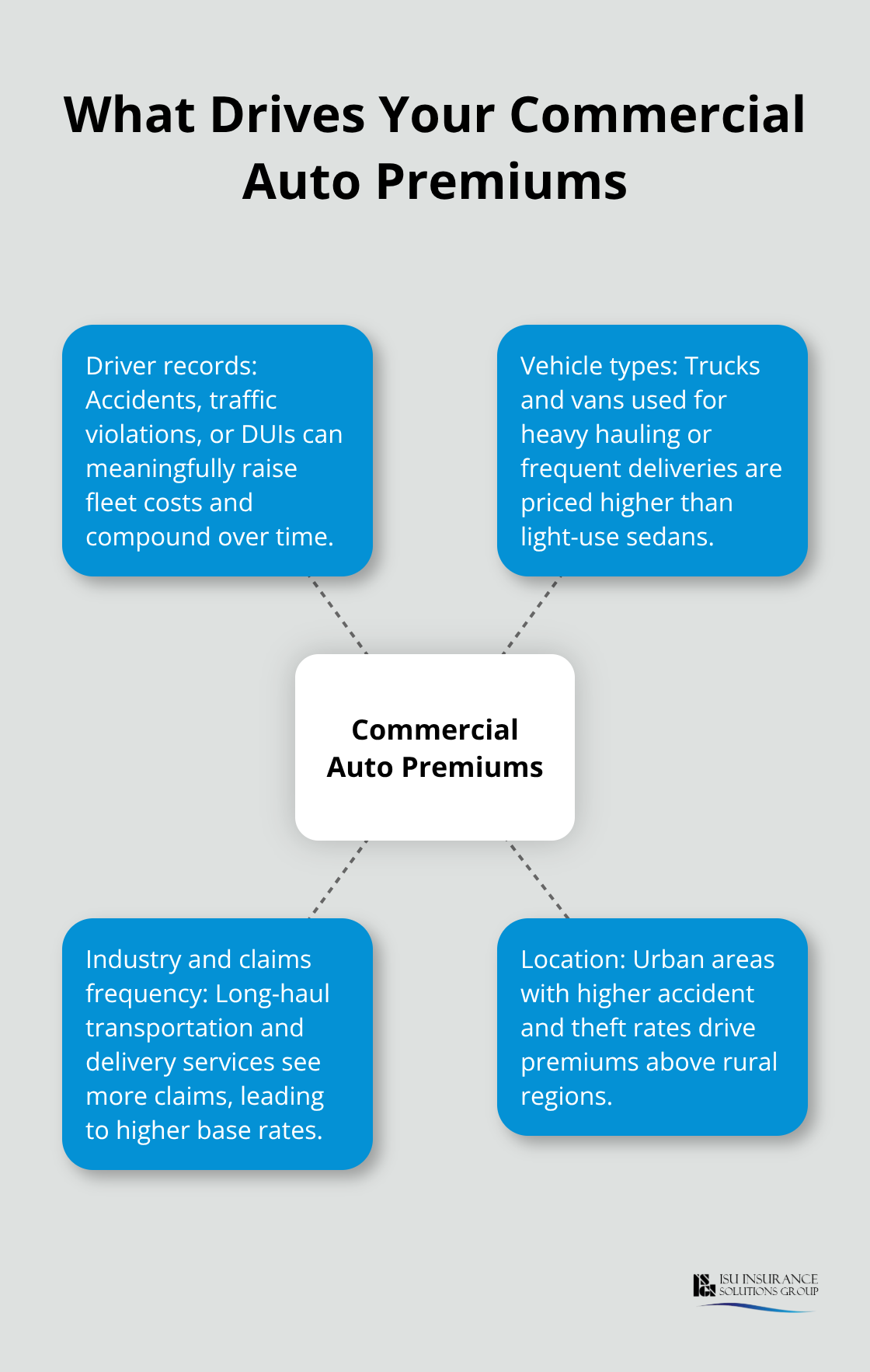
Vehicle type sits at the top of the rate-setting pyramid, and insurers price it ruthlessly. A box truck carrying general cargo costs far less to insure than a food truck with specialized equipment, which can drive premiums up 20–30% according to industry data. Heavy-duty vehicles like dump trucks or cement mixers face even steeper costs because they operate in high-risk environments. How you use that vehicle matters just as much. Delivery fleets need higher liability limits because drivers spend more time on the road, exposing the business to greater accident risk. Transporting hazardous materials or passengers kicks rates even higher.

Location and distance traveled directly affect what you pay. Urban delivery operations pay 15–20% more than rural routes, simply because congestion and traffic density create more claim opportunities. A fleet running within a 100-mile radius pays 10–15% less than long-haul operations. If you operate two vehicles versus one, fleet insurance often beats buying two separate commercial auto policies, so consolidating under one carrier makes financial sense.

Compact list highlighting how urban routes, operating radius, and fleet consolidation affect commercial auto insurance premiums.

Driver History Determines Half Your Premium

Your worst drivers cost you the most. A single accident or violation can lock in higher rates for years, while clean driving records can reduce premiums compared to fleets with violations or claims. Industry data shows that having no insurance claims in the past three years saves up to 30% on premiums versus fleets with multiple claims. Younger drivers aged 18–25 carry higher crash risk and require targeted training to offset their premium impact.

Hire drivers with clean licenses and notify insurers immediately of any penalty points. Formal driver training programs reduce driver risk, and some insurers offer discounts when they recognize the training provider. Telematics devices that monitor driving behavior can cut premiums around 15%, giving you data-backed proof that your safety investments work. Dash cams and in-cab cameras defend against fraudulent claims and reveal dangerous behavior for coaching, making them worth the investment.

Industry Type and Mileage Create the Baseline

Construction and transportation sit at the high end-premiums run up to 30% higher than low-risk industries. According to Insureon data, industry monthly averages vary significantly: auto services average about $69, while construction and contracting average $173, and IT or technology services average $198. Your annual mileage directly correlates with claims frequency. More time on the road means more exposure to accidents and incidents.

Vehicle age influences your rate substantially. Vehicles with recent model years benefit from advanced safety features and better security systems, which can reduce premiums. Older vehicles, especially those without modern anti-lock brakes or airbags, cost more to insure. Maintenance habits matter too-well-maintained fleets avoid breakdowns that create incidents and raise premiums. Secure overnight parking at depots or with robust locking systems lowers theft risk and insurance costs.

Understanding these three factors gives you the foundation to shop effectively. The next step involves gathering quotes from multiple carriers and comparing them side by side to identify where real savings hide.

How to Compare Commercial Auto Quotes from Multiple Carriers

Collecting quotes from different insurers is non-negotiable if you want real savings. Quote differences for similar coverage can reach 30%, meaning the carrier you choose matters far more than the coverage level you select. Most business owners request one or two quotes and stop, leaving thousands of dollars on the table. You should request quotes from at least three to five carriers within 24 hours, which is the standard turnaround time. Progressive offers customized quotes online or by phone, while independent agencies access 20+ carriers through one application, eliminating the need to contact each insurer separately.

Percentage chart showing quote differences and popular discount savings for commercial auto insurance. - Commercial auto rates

This matters because comparing quotes manually wastes time and guarantees you’ll miss options.

Focus on Coverage Differences, Not Just Price

When you evaluate quotes, focus on what changes between them rather than staring at the bottom-line premium. Two quotes at $150 and $180 per month look different until you realize one includes comprehensive and collision coverage while the other only covers liability. Liability limits vary too-one carrier might quote $100,000 per accident while another assumes $300,000, which shifts the entire risk picture. Delivery fleets need higher liability limits than construction crews, so you should align each quote’s coverage to your actual operation.

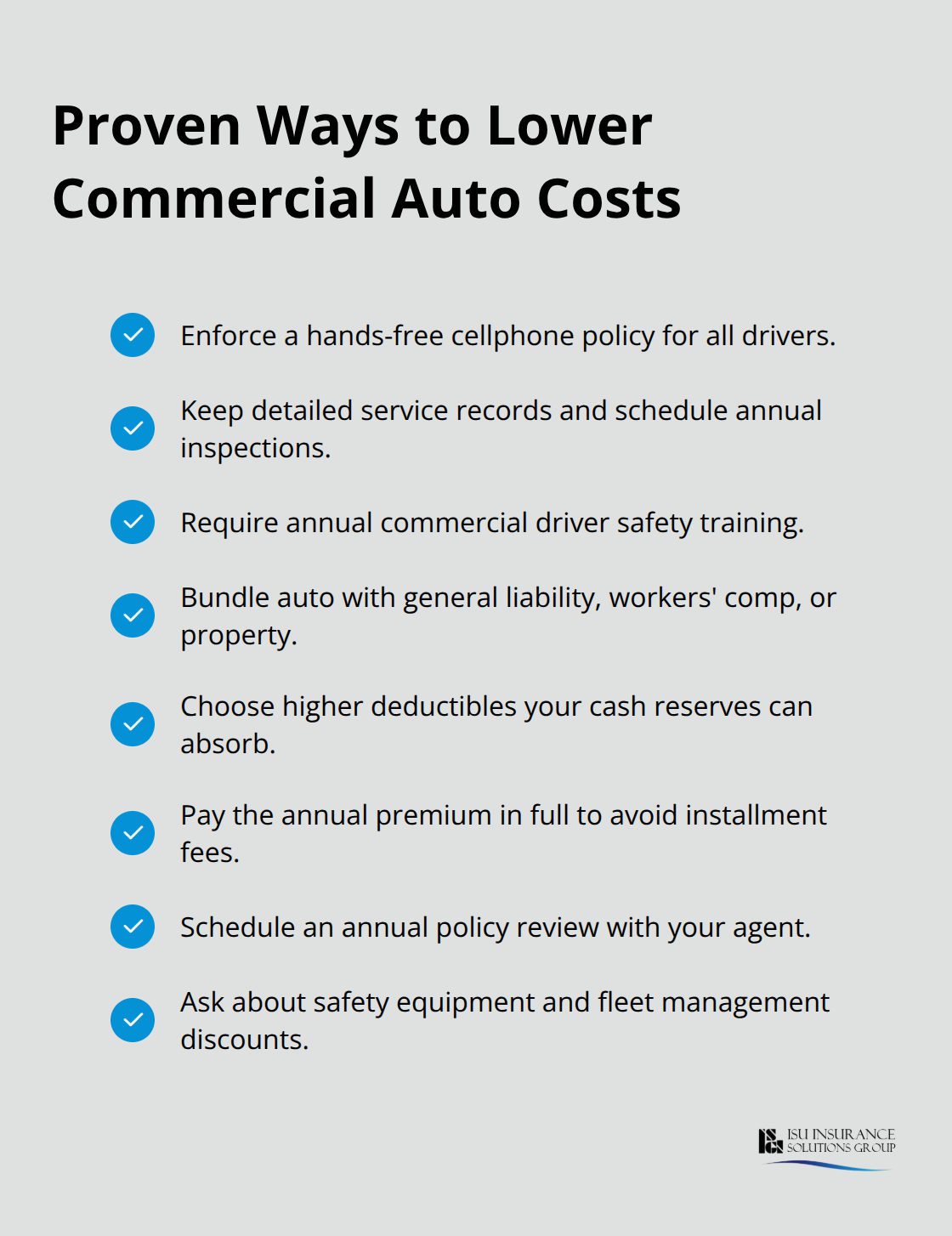
Bundling commercial auto with general liability or property insurance yields discounts, sometimes reaching significant savings on total costs. You should ask each carrier what bundling savings apply before comparing standalone auto rates. Higher deductibles reduce premiums by 10–20%, but only increase your deductible if you can actually cover that amount out-of-pocket after a claim. A $1,000 deductible saves money monthly but costs you significantly if you need to file a claim within weeks of switching.

Select Coverage That Matches Your Operation

Core coverages-liability, collision, comprehensive, uninsured motorist, and medical payments-form the foundation, but your industry dictates what matters most. Hazmat transporters need pollution liability that general cargo haulers skip entirely. Food delivery operations face different exposure than construction material haulers. You should avoid paying for coverage you’ll never use, but don’t strip coverage just to hit a lower premium. If your fleet includes older vehicles worth less than $5,000 each, dropping comprehensive coverage on those units saves money without meaningful risk.

Progressive’s Snapshot ProView program automatically saves 5% when enrolled, and fleets with three or more vehicles access free fleet management tools at no extra cost. This data-driven pricing means your actual driving behavior influences rates at renewal, so premiums can rise or fall based on telematics results.

Stack Discounts to Maximize Savings

Paid-in-full discounts save 13% or more for most customers at Progressive, making annual payments smarter than monthly installments if your cash flow allows it. Prior insurance savings reward continuous coverage-maintaining insurance for the last 12 months qualifies you for additional discounts. Personal auto discounts apply if you insure your personal vehicles under a commercial policy. Smart Haul programs for truck customers save an average of $1,261 on premiums by sharing electronic logging device data, though this program doesn’t operate in all states and requires DOT filing with ICC.

Hub-and-spoke chart illustrating key commercial auto discounts that can be combined for greater savings. - Commercial auto rates

These discounts compound when stacked, turning a $200 monthly quote into something far more competitive. Independent agents negotiate carrier-specific discounts you won’t find online, making professional guidance worth the conversation. Once you’ve identified your best quote and locked in discounts, the real work begins-implementing the safety and maintenance strategies that keep your rates from climbing at renewal.

How to Cut Your Premium Without Cutting Coverage

Safety Programs and Driver Training Deliver Real Returns

Safety programs and driver training produce measurable returns that most fleet operators overlook. A formal driver training program costs $200–$500 per driver annually, but insurers recognize these programs and offer discounts that recover that investment within months. Telematics devices that monitor driving behavior cut premiums around 15% on average, and dash cams provide fault evidence that defends against fraudulent claims while revealing dangerous driving patterns you can address through coaching.

Roughly 10–15% of any fleet drives recklessly and inflates your rates disproportionately. Identify your worst drivers through telematics data, then invest in targeted mentoring or consider separate policy options that contain their premium impact. Progressive’s Smart Haul program saves truck customers an average of $1,261 annually by sharing electronic logging device data, though this requires DOT filing with ICC and operates only in select states. Data-backed safety improvements aren’t optional expenses-they’re rate reductions disguised as operational costs.

Bundling and Payment Strategies Cut Costs Immediately

Bundling commercial auto with general liability or property insurance yields 10–15% discounts on total costs, sometimes reaching 20%, making this the fastest path to immediate savings. Paid-in-full discounts save 13% or more at Progressive when you pay your annual premium in one lump sum instead of monthly installments. Prior insurance savings reward continuous coverage over the past 12 months, which means switching carriers for a lower quote costs you this discount at your new insurer unless you maintain coverage without gaps.

Fleet Maintenance and Parking Lower Your Risk Profile

Fleet maintenance directly affects premiums because well-maintained vehicles avoid breakdowns that create incidents and trigger rate increases at renewal. Secure overnight parking at depots with robust locking systems lowers theft risk substantially, and insurers adjust rates downward for fleets that demonstrate this commitment. These operational practices signal to carriers that you manage risk seriously.

Deductibles and Policy Reviews Optimize Coverage

Higher deductibles reduce premiums by 10–20%, but only increase yours if you can actually cover that amount after a claim-a $1,000 deductible saves money monthly but becomes expensive if you file a claim within weeks. Schedule annual policy reviews to adjust coverage as your fleet and operations change, avoiding over-insurance on older vehicles while maintaining adequate protection on newer units. An independent agent provides access to multiple carriers through one application, eliminating the manual legwork of contacting each insurer separately while negotiating carrier-specific discounts you won’t find online.

Final Thoughts

Finding real value in commercial auto rates requires three concrete actions: understanding what moves your premiums, comparing quotes across multiple carriers, and implementing safety strategies that stick. Most business owners pay too much because they treat insurance as a one-time purchase rather than an ongoing negotiation. Your vehicle type, driver history, and industry baseline set the foundation, but bundling policies, raising deductibles strategically, and investing in telematics can cut your costs by thousands annually without sacrificing protection.

The gap between your current rate and what you should pay often reaches 30% or more. That difference disappears only when you request quotes from at least three to five carriers within 24 hours and compare coverage side by side rather than chasing the lowest number. Paid-in-full discounts, prior insurance savings, and multi-product bundling compound quickly when stacked together, and safety programs deliver measurable returns that offset their costs within months through premium reductions.

Contact ISU Insurance Solutions Group today to start comparing quotes and lock in real savings on your commercial auto rates. Our local agents understand Pacific Northwest risks and can secure quotes that reflect your actual exposure. Whether you run a construction fleet, delivery operation, or specialized transport business, we partner with 20+ carriers to deliver competitive rates tailored to your operation.

The information provided in this blog is for general informational purposes only and does not constitute legal, financial, or insurance advice. Coverage options, terms, and availability may vary. Please consult with a licensed professional for advice specific to your situation.
Washington Brewery Liability Coverage: What It Means for Craft Brewers

Washington brewery liability coverage isn’t optional-it’s a business necessity. Standard commercial insurance policies leave craft brewers exposed to risks that come with serving alcohol and operating a production facility.

At ISU Insurance Solutions Group, we’ve seen breweries face claims they never anticipated. The right coverage protects your taproom, your product, and your bottom line.

Why Brewery Operations Face Risks Standard Policies Won’t Cover

Equipment Failures Trigger Losses Standard Coverage Excludes

Brewing isn’t like running a typical retail business, and your insurance needs to reflect that reality. A standard commercial general liability policy treats your brewery the same way it treats an office or retail shop-which means massive coverage gaps the moment fermentation starts. Equipment breakdown claims rank among the costliest losses breweries face, yet general liability policies exclude mechanical and electrical failures entirely. When a glycol system fails and destroys thousands of dollars in inventory, or a boiler malfunction shuts down production for weeks, standard coverage leaves you exposed.

Replacement costs in the Seattle area have risen roughly 20% since 2020, so a tank or chiller that cost $50,000 five years ago now costs $60,000 to replace. Temperature control failures are relentless in Washington’s climate. One power outage or refrigeration breakdown can spoil entire batches of finished beer or raw ingredients. Spoilage coverage isn’t standard-it’s a specialized endorsement that reimburses destroyed inventory, disposal fees, and lost production time.

Percentage metrics showing Seattle-area replacement cost increases and U.S. product recall rise - Washington brewery liability coverage

Without it, a single incident wipes out months of profit.

Alcohol Service Creates Legal Exposures Standard Policies Exclude

Washington’s Liquor and Cannabis Board requires minimum $1,000,000 in Commercial General Liability coverage for licensing, but that’s just the baseline. The real exposure comes from alcohol-related incidents, which standard policies explicitly exclude. If a customer suffers injury at your taproom after consuming alcohol, or if someone leaves your premises intoxicated and causes harm to a third party, your general liability policy won’t cover it. That’s where liquor liability and dram shop coverage becomes non-negotiable. These policies protect against assault-and-battery claims, over-service incidents, and third-party bodily injury claims tied to alcohol consumption.

Many brokers recommend at least $2 million in combined single limits for breweries hosting tours or events. Tasting rooms that function as event spaces for festivals, weddings, or concerts face even higher exposure. Each event multiplies your liability footprint. Assault-and-battery sublimits are critical for on-premises incidents. If a customer suffers injury in an altercation at your taproom, your standard general liability won’t touch it.

Product Liability and Recalls Demand Specialized Protection

Product liability and recall protection rounds out the picture. The Brewers Association reported that US product recalls rose 11% in 2023, the largest jump in seven years. If contamination or foreign material reaches market, recall costs-product destruction, freight, retailer chargebacks, and legal defense-can exceed six figures. Standard policies don’t cover any of it. Multi-state distribution under the Three-Tier System amplifies this risk. One contaminated batch shipped across state lines turns a local incident into a multi-state nightmare.

These three coverage gaps-equipment breakdown, alcohol-related liability, and product recall exposure-form the foundation of what separates brewery insurance from standard commercial policies. The next section examines each coverage type breweries actually need and how they work together to protect your operation.

The Three Coverage Pillars Every Washington Brewery Needs

General Liability Forms Your Foundation-But It’s Not Enough

General liability forms the foundation, but it’s insufficient on its own. Washington’s Liquor and Cannabis Board mandates minimum $1,000,000 in Commercial General Liability coverage before you receive a license, yet this baseline covers only bodily injury and property damage from standard premises incidents. The moment alcohol enters the equation or equipment malfunctions occur, gaps emerge. Industry brokers familiar with Washington operations recommend $2 million in combined single limits for breweries hosting tours or events. Your general liability policy protects against slip-and-fall injuries in your taproom or brewery, customer property damage, and advertising injury claims. However, it explicitly excludes mechanical failures, alcohol-related bodily injury, and product contamination.

Liquor Liability Protects Against Alcohol-Service Claims

Liquor liability and dram shop coverage fills the alcohol gap by protecting against claims arising from over-service, assault-and-battery incidents at your taproom, and third-party injuries caused by intoxicated customers who left your premises. This coverage is separate and essential because standard policies treat alcohol service as an excluded peril. If a customer suffers assault at your taproom or leaves intoxicated and causes a car accident, your general liability won’t respond. Assault-and-battery sublimits within your liquor policy should align with your taproom’s capacity and event frequency.

Product Liability and Recall Protection Address Manufacturing Risks

Product liability and recall protection addresses contamination, foreign material, and multi-state distribution risks. A single contaminated batch can trigger recall costs exceeding $100,000 when you factor in product destruction, freight, retailer chargebacks, and legal defense. This coverage reimburses those direct costs plus business interruption losses during the recall period. For breweries distributing across state lines under the Three-Tier System, recall protection isn’t optional-it’s essential insurance against a scenario that could disable your operation for months.

How These Three Pillars Work Together

Compact summary of core insurance pillars for Washington breweries

These three coverage types work together because each addresses a distinct exposure. General liability handles premises incidents and basic operational claims. Liquor liability protects against alcohol-service-specific bodily injury and property damage. Product liability and recall protection cover manufacturing defects and contamination. Microbreweries typically spend $500 to $1,500 monthly on comprehensive coverage spanning all three areas, with larger operations or those hosting frequent events paying significantly more. The cost reflects real claims data from Washington breweries. Equipment breakdown coverage layers on top because spoilage from temperature failures, glycol system leaks, or boiler malfunctions represents a separate class of loss. Replacement costs in the Seattle area have risen 20% since 2020, making adequate property valuations critical.

Building Your Customized Coverage Program

Work with a broker who understands brewing operations and can document your specific exposures-tank capacity, fermentation processes, taproom guest count, and distribution geography. An independent agency serving Washington and Oregon can partner with multiple carriers to build customized brewery packages that address these three pillars plus equipment and spoilage coverage in one coordinated program. Your next step involves identifying which additional endorsements and limits match your specific operation-a decision that depends on your production volume, event frequency, and distribution footprint.

What Happens When Claims Hit Your Brewery

Slip-and-Fall Injuries Expose Coverage Gaps at Taprooms

Slip-and-fall injuries at your taproom represent one of the most common claim scenarios across Washington breweries. A customer trips on wet brewery flooring, suffers a fracture, and files suit. Your general liability policy responds to the slip-and-fall claim itself, covering medical expenses and legal defense. However, if that same customer consumed alcohol at your taproom before the fall, the claim narrative shifts. Now the plaintiff’s attorney argues over-service contributed to the injury. Your general liability explicitly excludes alcohol-related bodily injury claims, leaving you exposed for defense costs and any settlement.

Taproom staff need clear protocols on how many drinks constitute over-service, documented last-call procedures, and responsible alcohol service training on recognizing impairment. Breweries face slip hazards from wet floors near coolers, burn risks from hot wort transfer, and repetitive strain from lifting heavy ingredient bags. Your coverage should include business interruption protection because a serious injury claim can trigger weeks of legal proceedings and operational disruption.

Product Contamination Claims Escalate Faster and Cost More

Product contamination claims escalate faster and cost more than premises injuries. Foreign material, bacterial contamination, or yeast cross-contamination in finished beer triggers recalls that ripple across multiple retailers and distributors. A single contaminated batch distributed across Washington and Oregon generates recall logistics costs (freight, storage, destruction), retailer chargebacks, and third-party liability exposure if a customer suffers illness.

Recall protection reimburses product destruction, freight costs, lost revenue during the recall period, and legal defense if a consumer lawsuit follows. Quality control becomes your first line of defense. Implement microbiological testing, pH monitoring, temperature logging, and sensory analysis of finished product before shipment. Many Washington breweries now conduct ingredient inspection, monitor fermentation temperature continuously, and maintain documented batch records that defend against contamination claims.

Checklist of brewery quality control practices to limit recall exposure - Washington brewery liability coverage

Your product liability limit should align with your distribution footprint. A 15-barrel brewery distributing to five counties faces lower exposure than a 30-barrel operation shipping statewide.

Third-Party Alcohol-Related Incidents Create Off-Premises Liability

Third-party alcohol-related incidents occur when your customer leaves intoxicated and causes injury or property damage to someone else. A customer drinks at your taproom, drives away, and causes a motor vehicle accident injuring another driver. The injured third party sues your brewery for over-service and negligent alcohol service. Your general liability won’t cover this scenario because the injury occurred off-premises and involves alcohol. Your liquor liability policy responds because it covers third-party bodily injury claims arising from alcohol service at your licensed premises.

This exposure intensifies if your taproom hosts events. Festivals, live music nights, and special releases draw larger crowds and increase the statistical probability of over-service incidents. Peak-season endorsements automatically raise your liquor liability limits during high-volume periods when event activity peaks. This prevents underinsurance during your riskiest operating periods. Work with your broker to model claims scenarios specific to your operation. If you host 40 events annually with 200 guests each, your exposure differs significantly from a brewery hosting four annual tastings. Your liquor liability sublimits should reflect this reality.

Building Defenses Against Over-Service Claims

Document your staff training on responsible service, maintain pour records if you track consumption, and implement last-call procedures that demonstrate reasonable care against over-service claims. An independent agency serving Washington and Oregon can partner with multiple carriers to build customized brewery packages that address your specific event frequency and guest capacity. Your broker should document your taproom’s operational realities-how many events you host annually, typical guest counts, and whether you serve food alongside alcohol. This documentation strengthens your defense if a claim arises and demonstrates that your coverage limits match your actual exposure.

Final Thoughts

Standard commercial policies treat breweries like retail shops, which is why they fail when fermentation starts. Equipment breakdown, alcohol-service claims, and product recalls fall outside typical coverage because insurers designed those policies for businesses that don’t manufacture beverages or serve alcohol. A slip-and-fall claim becomes an over-service claim the moment alcohol enters the narrative, a temperature failure becomes a six-figure loss when spoilage coverage is missing, and a contaminated batch becomes a multi-state nightmare without recall protection.

Finding the right coverage requires working with specialists who understand brewing operations, not generalists who quote standard business packages. Your broker needs to know the difference between a 10-barrel system and a 30-barrel system, why glycol system failures matter, and how event frequency affects your liquor liability exposure. They need to understand Washington’s Liquor and Cannabis Board requirements, local fire marshal expectations, and how replacement costs in the Seattle area have risen 20% since 2020.

At ISU Insurance Solutions Group, we partner with multiple carriers to build customized Washington brewery liability coverage that addresses your actual exposures rather than forcing you into generic templates. We handle certificate turnaround for licensing, support you during recalls, and adjust your coverage as your operation scales. Contact us to discuss how tailored brewery liability coverage protects your operation and your bottom line.

The information provided in this blog is for general informational purposes only and does not constitute legal, financial, or insurance advice. Coverage options, terms, and availability may vary. Please consult with a licensed professional for advice specific to your situation.
Professional Liability for Consultants: Reducing Risk in Consulting

Consultants face a growing number of liability claims each year, from missed deadlines to data breaches. Professional liability for consultants isn’t optional-it’s a business necessity that protects your reputation and finances.

At ISU Insurance Solutions Group, we’ve seen firsthand how the right coverage and risk management practices separate thriving consulting firms from those struggling with claims. This guide walks you through the risks you face and how to address them.

What Professional Liability Actually Covers

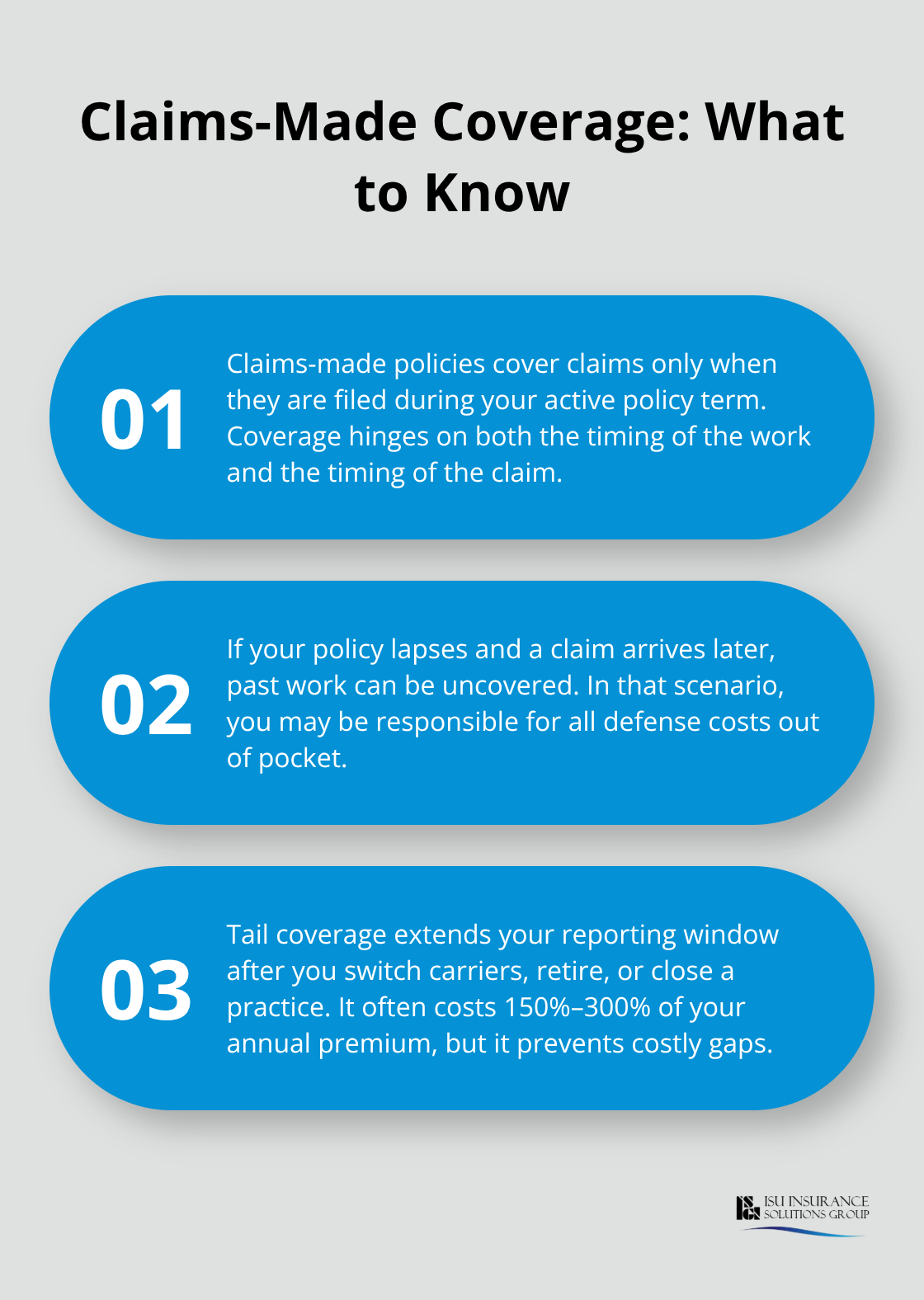
Professional liability insurance covers claims arising from errors, mistakes, or negligence in the delivery of professional services. It covers legal defense costs, settlements, and judgments when a client alleges you failed to deliver promised services, gave negligent advice, or made errors in your work. This isn’t about property damage or bodily injury-those fall under general liability. Professional liability specifically addresses claims that your professional work caused the client financial loss. The coverage applies to errors and omissions you made during service delivery, breach of confidentiality if you accidentally disclosed client data, and negligence where your work fell below accepted industry standards. Most professional liability policies are claims-made, meaning they cover claims reported during the policy period, not when the work was performed. This distinction matters because if you switch insurers or retire, you’ll need tail coverage to protect against claims filed after your policy ends.

Why General Liability Leaves You Exposed

Your general liability policy won’t cover professional liability claims. General liability covers third-party bodily injury, property damage, and advertising injury-someone slips in your office, you damage a client’s equipment during a meeting, or you make a false advertising claim. When a client sues because your advice cost them money or your deliverable was incomplete, general liability rejects the claim. Consultants often mistakenly believe their general liability covers professional work, then face significant legal bills out of pocket. The gap is real and expensive. E&O claims show that missed scope and ambiguous engagements remain top drivers of disputes, with clients claiming they didn’t receive what was promised. Without professional liability coverage, you’re personally liable for every dollar of defense costs and any settlement or judgment.

The Claims That Actually Happen

Consultants face concrete claim scenarios regularly. A management consultant provides strategic recommendations that a client follows, resulting in operational losses-the client sues for negligent advice. An IT consultant implements software that fails to meet performance specifications, delaying the client’s project launch and costing them revenue. A financial consultant makes calculation errors in a proposal, leading to incorrect pricing and client losses. A contractor hires a technical consultant who fails to flag a major implementation risk, and the project fails catastrophically. Fee disputes escalate into claims when clients claim they were misled about costs or deliverables. Data breaches happen when consultants store client information insecurely, triggering breach notification costs, forensic investigations, and regulatory fines. These aren’t hypothetical-they’re the claims that land on desks every day, and they cost tens of thousands in legal defense alone, before any settlement.

How Claims-Made Policies Affect Your Protection

Claims-made policies create a critical timing issue that many consultants overlook. The policy covers claims reported during the active policy period, not claims arising from work performed years earlier. If you complete a project in 2025 but the client doesn’t sue until 2027, your 2025 policy won’t cover that claim unless you’ve purchased tail coverage. Tail coverage (also called run-off coverage) extends your protection after you leave the business or switch insurers, typically covering claims filed within a set period after the policy ends. Without tail coverage, you face a dangerous gap where old claims arrive with no active policy to defend you. This makes continuity planning essential for any consultant who plans to retire or change insurance providers.

What You Need to Know Before the Next Step

Professional liability insurance addresses the financial and legal fallout from client disputes, but it works best alongside strong risk management practices. The right coverage protects your finances, but clear contracts, detailed documentation, and quality control processes prevent claims from happening in the first place. Understanding what professional liability covers-and what it doesn’t-helps you make informed decisions about the coverage limits and deductibles that fit your consulting practice. The next section walks you through the specific risks you should address before a claim arrives at your door.

Specific Risks That Drive Consultant Claims

Errors and Omissions Create the Biggest Exposure

Errors and omissions in client projects remain the leading source of professional liability claims, and they happen more often than most consultants expect. A missed deadline, incomplete deliverable, or incorrect calculation triggers a lawsuit even when you intended to do good work. Industry claims trends in 2025 show that missed scope and ambiguous engagements rank as top drivers of E&O claims. This means the problem isn’t always about your competence-it’s about mismatched expectations between you and your client.

When you tell a client you’ll deliver something by Friday but they understood you meant the following Friday, that gap becomes a claim. When you implement a software solution but the client expected it to solve a different problem, they sue. The solution isn’t to work harder; it’s to write everything down. Your contract or statement of work must detail every deliverable, timeline, and specification. If the scope changes mid-project, document it in writing and update your fee estimate. Issue a change order that both you and the client sign. This single practice eliminates most scope-related disputes because no ambiguity exists about what was promised.

Data Breaches and Confidentiality Violations

Breach of confidentiality and data protection create a different but equally serious exposure. Consultants routinely handle sensitive client information-financial records, proprietary strategies, employee data, customer lists. A data breach costs tens of thousands of dollars in forensic investigation, breach notification, legal fees, and regulatory fines, and that’s before any client lawsuit.

If you store client data, review your technology provider’s security protocols and the liability insurance they carry to protect your business from breaches cascading from third-party systems. Practical cyber hygiene includes installing antivirus software on all systems, applying security patches promptly, using complex passwords, educating staff about phishing, and routinely backing up files on a separate server. These steps reduce your exposure significantly and demonstrate due diligence if a breach occurs.

Fee Disputes Escalate Into Claims

Fee disputes escalate into E&O claims more often than consultants realize. When clients claim they were misled about costs or deliverables, they sue. Prevent this by specifying payment terms and due dates clearly in every contract, requiring partial upfront payments, and documenting the value you deliver. Even if you provide additional work outside the agreed scope, issue an invoice for it-even if the amount is zero-to create a paper trail that proves you recognized the extra work and its value. This documentation protects you when disputes arise and demonstrates transparency throughout the engagement.

Understanding these three risk categories-scope ambiguity, data protection, and fee disputes-positions you to implement the preventive controls that stop claims before they start. The next section shows you exactly how to build those controls into your consulting practice.

How to Stop Claims Before They Start

The gap between what you promise and what clients expect is where most liability claims originate. Closing that gap requires three concrete actions: write enforceable agreements that spell out exactly what you’ll deliver, maintain documentation that proves you delivered it, and implement quality checks that catch errors before clients see them. These practices work together to prevent claims from happening in the first place, and when disputes do arise, they give you a defensible record.

Contracts That Actually Prevent Disputes

Your engagement letter or statement of work is your most powerful liability tool. It must specify every deliverable, timeline, success criteria, and cost. Vague language like “we’ll improve your processes” or “we’ll provide strategic recommendations” guarantees future disputes. Instead, write “we will deliver a 50-page process improvement report by March 15th that includes current-state analysis, recommendations ranked by implementation cost, and a 12-month implementation roadmap.”

Ordered list of three preventive practices consultants can use to reduce liability claims - Professional liability for consultants

This specificity eliminates the ambiguity that triggers claims.

Include a section on scope changes that explicitly states any work outside the original agreement will be documented in a written change order and billed separately. This prevents scope creep, which is a major claim driver. Have an attorney draft your standard contract template covering service scope, deliverables, timelines, payment terms, limitation of liability, and indemnification clauses. This upfront investment pays dividends by protecting you across dozens of engagements. Require clients to sign the engagement letter before you start work, and keep a copy in your project file.

Documentation That Defends You

Project documentation transforms vague memories into concrete evidence. Create a project file for every engagement containing the signed engagement letter, all email correspondence with the client, meeting notes dated and summarized in writing, progress reports sent to the client, invoices showing work performed, and any change orders or scope amendments. If a dispute arises two years later, this file proves what you promised, what you delivered, and when you communicated issues to the client.

Progress reports sent monthly or at key milestones serve double duty: they keep clients informed and create a timestamped record of your work. Include in these reports what was completed, what’s pending, any obstacles encountered, and how you’re addressing them. When you flag risks or limitations in your recommendations, document that communication in writing. A consultant who warns a client that a recommendation carries implementation risk (and documents that warning) has strong protection against a failure-to-advise claim.

Quality Control Before the Client Sees It

Implement a review process where work is checked before delivery. For deliverables like reports, proposals, or implementation plans, assign a second person to review for accuracy, completeness, and alignment with the engagement scope. For technical work, have someone other than the primary consultant validate that the solution meets specifications. This catches errors before they become claims and demonstrates due diligence if a claim occurs.

Small firms can use peer review; larger firms might assign a quality assurance role. The investment in review time is minimal compared to the cost of defending a claim. When errors are caught internally and corrected before client delivery, no claim ever materializes. Industry claims trends show that consultants with documented quality controls and governance processes experience better underwriting terms and lower claim frequency than those without these safeguards.

Final Thoughts

Professional liability for consultants protects your business when disputes happen despite your best efforts, absorbing legal defense costs, settlements, and judgments that would otherwise drain your reserves. The risks are real-scope ambiguity, data breaches, fee disputes, and missed deadlines create claims that cost tens of thousands in legal defense alone. But these risks become manageable when you combine clear contracts that specify exactly what you’ll deliver, documentation that proves you delivered it, and quality controls that catch errors before clients see them.

Clients increasingly require professional liability insurance as a contractual condition before engagement, and underwriters now favor consulting firms with documented risk controls and governance processes. Start by reviewing your current policy to confirm it matches your services and client requirements, then strengthen your risk controls through written engagement letters, detailed project files, and a review process for deliverables. Claims trends show that consultants with strong documentation practices experience better coverage terms and lower claim frequency than those without these safeguards.

ISU Insurance Solutions Group has served Washington and Oregon businesses since 1983, helping consultants assess their specific risks and secure appropriate coverage tailored to their practice. Our agents work with multiple carriers to find competitive rates and comprehensive protection for your consulting business. Contact us today to review your coverage and ensure your business is protected.

The information provided in this blog is for general informational purposes only and does not constitute legal, financial, or insurance advice. Coverage options, terms, and availability may vary. Please consult with a licensed professional for advice specific to your situation.